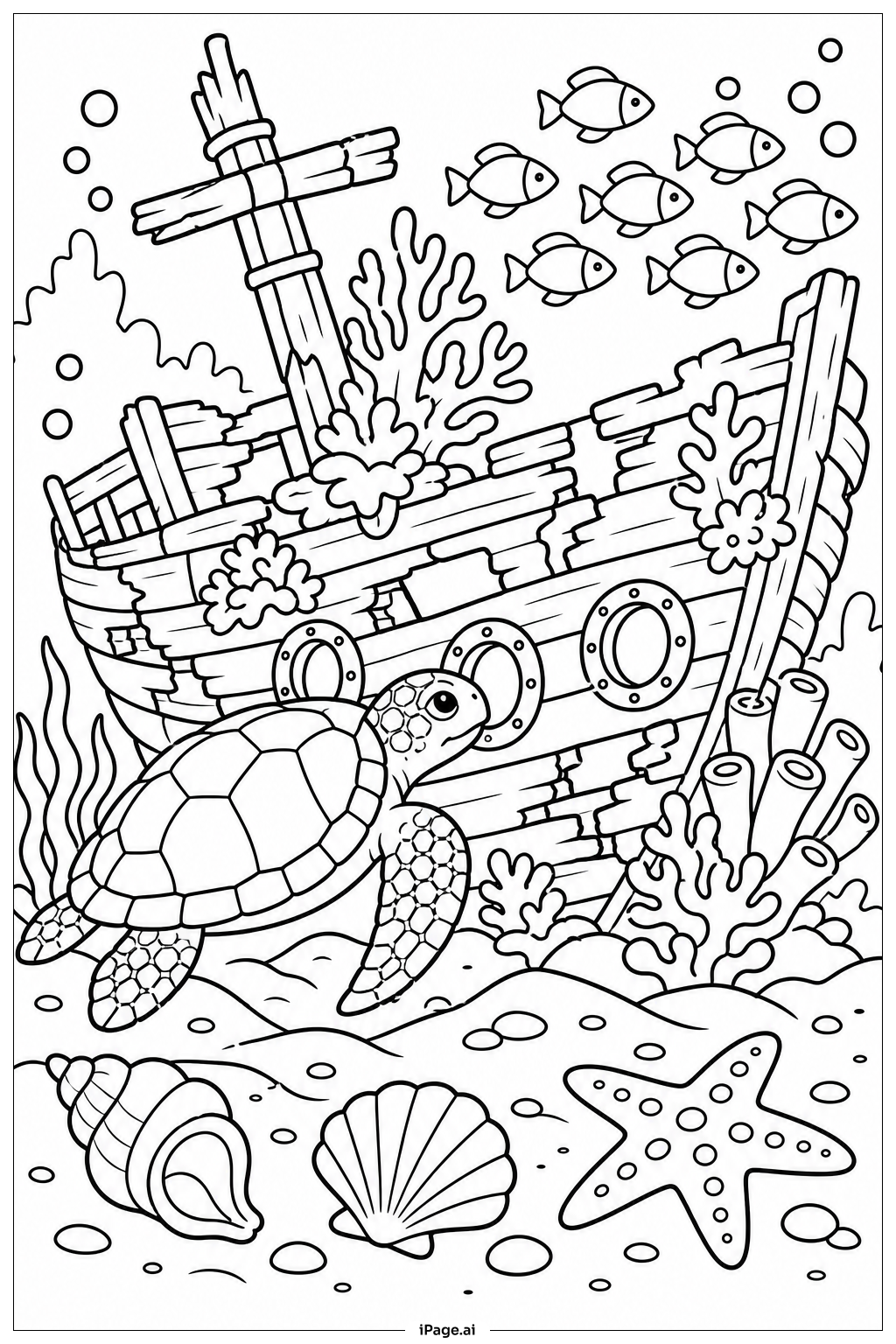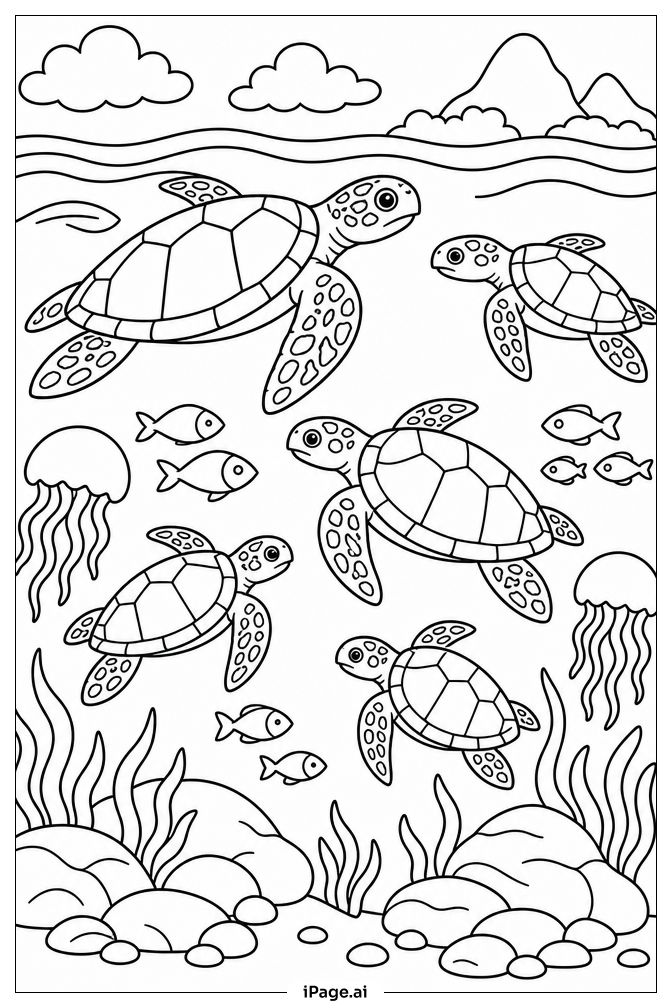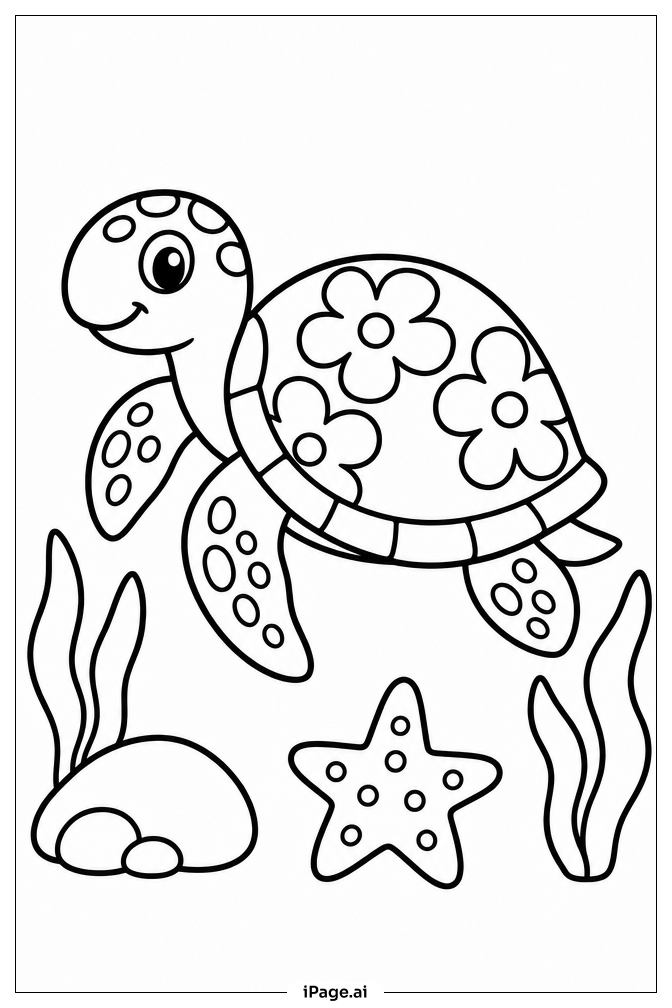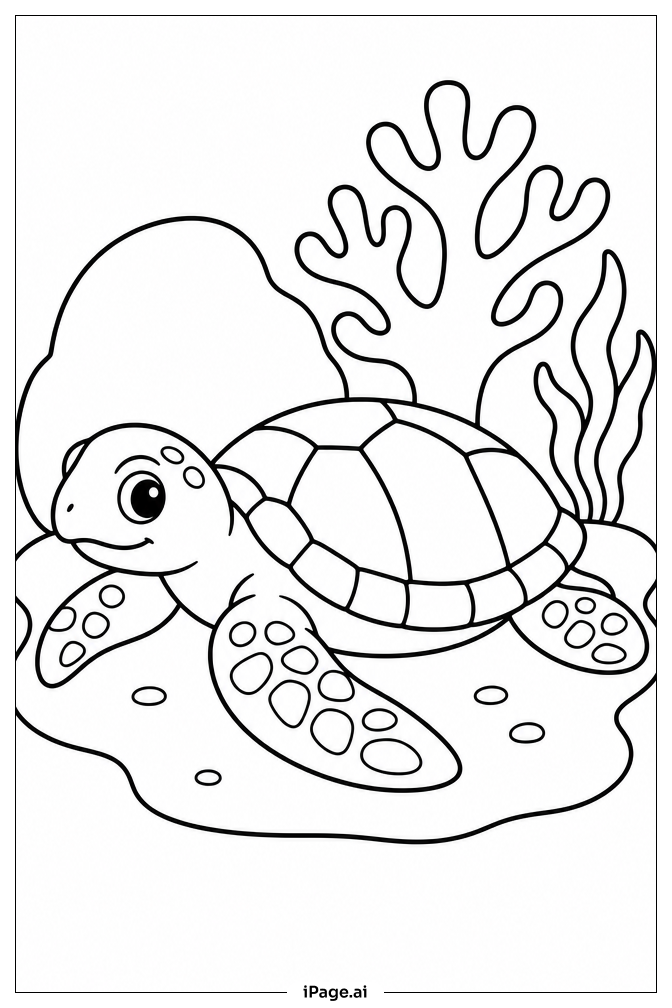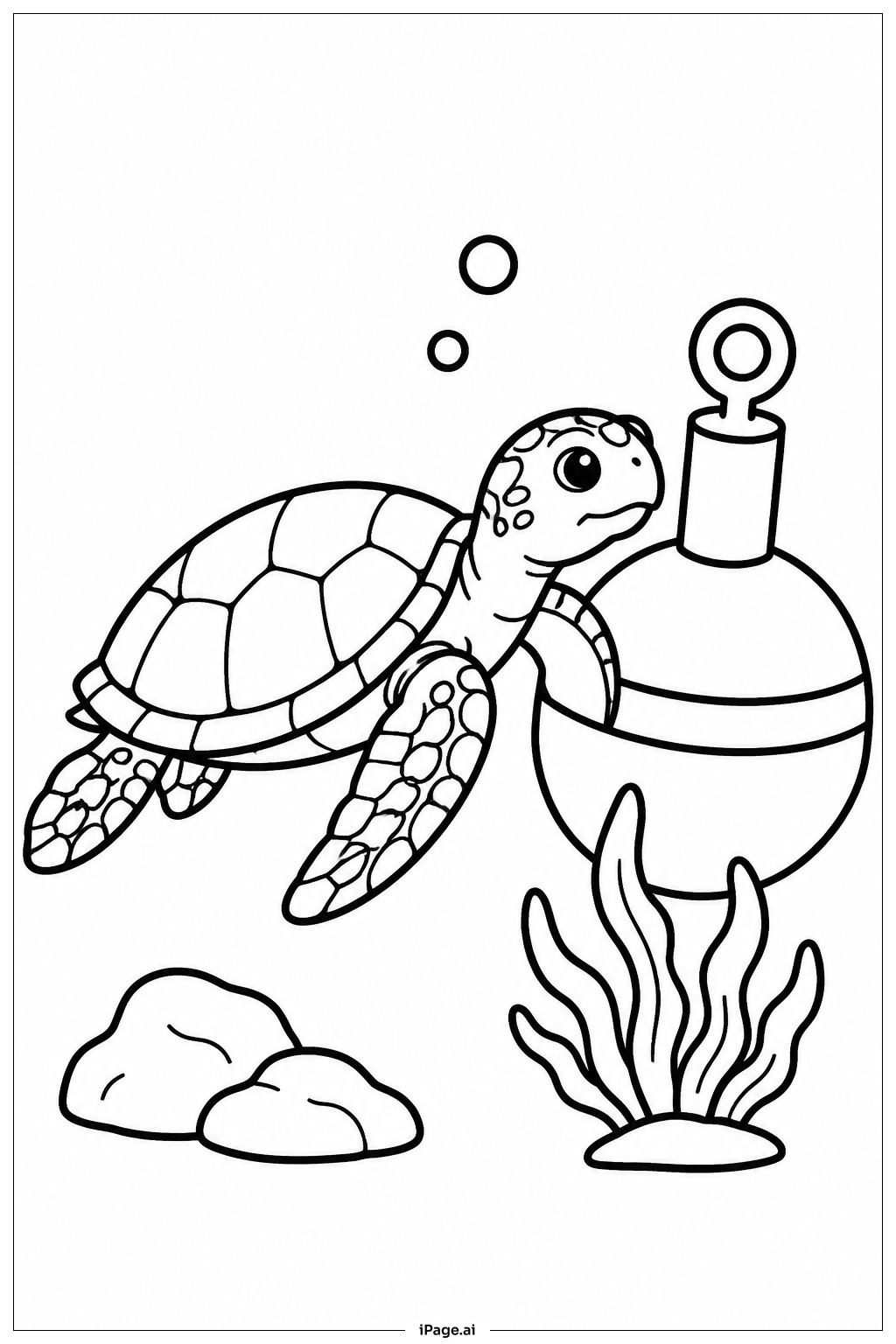
Coloring tips: How to color Sea Turtle Near Buoy coloring page well?
Start with the sea turtle's shell. Use different shades of green and brown for each section to make the pattern stand out. Try olive green or dark teal for the main shell plates, and a lighter tan or cream for the edges and borders. Color the turtle's skin with a mix of dark green and gray. For the flippers, use slightly lighter shades to show movement. The buoy can be painted in bright red, orange, or yellow to make it pop against the blue water. Use various shades of blue for the ocean, darker at the bottom and lighter near the surface. Add some light foam or white highlights on the wave tips. For any seaweed or background details, use greens and teals. Keep the rope or chain gray or brown. Feel free to add your own colors to bubbles or small sea creatures nearby to make the scene feel alive and full of ocean magic.
Coloring challenges: Which parts are difficult to color and need attention for Sea Turtle Near Buoy coloring page?
• Shell Pattern Complexity: The sea turtle's shell is made up of many separate sections called scutes. Each section has its own borders and inner details. Staying inside these small, irregular shapes takes patience and a steady hand. Using fine-tipped colored pencils or thin markers will help you fill each section neatly without crossing the lines.
• Skin Texture and Blending: The turtle's skin has a bumpy, scaly texture shown through many tiny lines and shapes. Coloring this area with smooth, even tones while still suggesting texture can be tricky. Try layering two or more shades of the same color, going over the area gently to blend them together.
• Water and Wave Shading: The ocean background is filled with flowing curved lines that represent waves and movement. Creating a natural-looking water effect means using multiple shades of blue and blending them smoothly. It can be hard to avoid harsh color boundaries. Work in the same direction as the lines to keep the flow natural.
• Buoy Details and Contrast: The buoy is a small but important element. It needs to stand out from the water without looking out of place. Getting the right level of brightness and making sure its shape looks round and three-dimensional requires careful shading on one side and leaving a highlight on the other.
• Background Depth: If the image includes background elements like seaweed, fish, or bubbles, keeping them visually separate from the main subject takes planning. Use lighter or cooler tones in the background so the turtle and buoy remain the focal points of the scene.
Benefits of coloring books: Advantages of drawing Sea Turtle Near Buoy coloring page
Coloring this Sea Turtle Near Buoy page offers a wonderful mix of fun and learning. For younger children, it helps develop fine motor skills as they practice staying within the lines of the shell sections, flippers, and water waves. The act of choosing colors builds decision-making confidence and sparks creativity.
For older kids and teens, the detailed shell pattern and flowing water background offer a satisfying challenge that encourages focus and concentration. Working through a complex image from start to finish builds patience and a sense of accomplishment.
This ocean scene also introduces children to the natural world. Coloring a sea turtle can inspire curiosity about marine life, ocean habitats, and the importance of protecting sea creatures and their environments. It can open conversations about ocean conservation in a gentle and engaging way.
For adults, this image provides a calming and mindful activity. The repetitive motion of filling in patterns and blending ocean tones helps reduce stress and quiet a busy mind. It is a great way to unplug from screens and enjoy a peaceful, creative break. Whether you are 5 or 55, this coloring page brings the beauty of the ocean right to your fingertips.