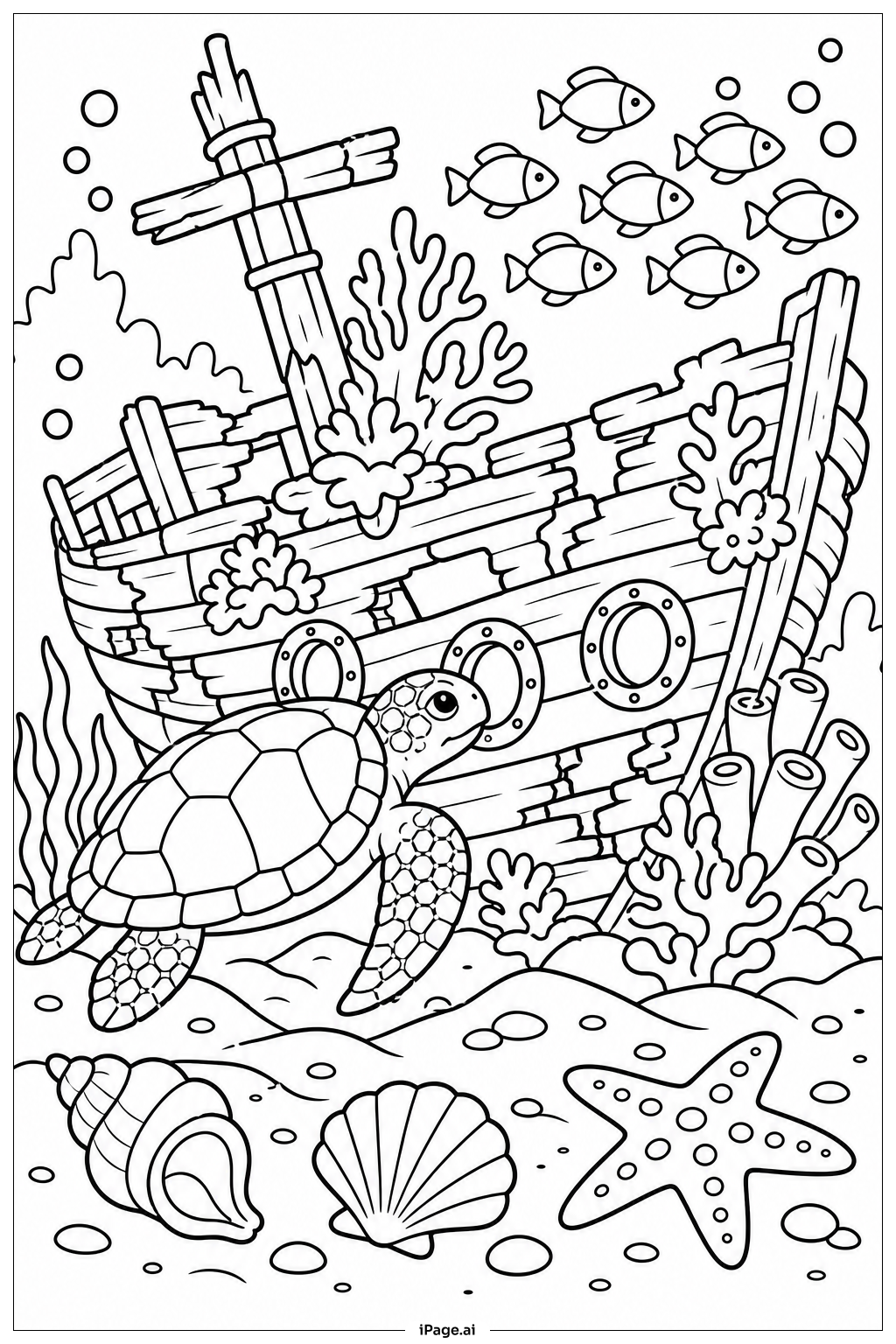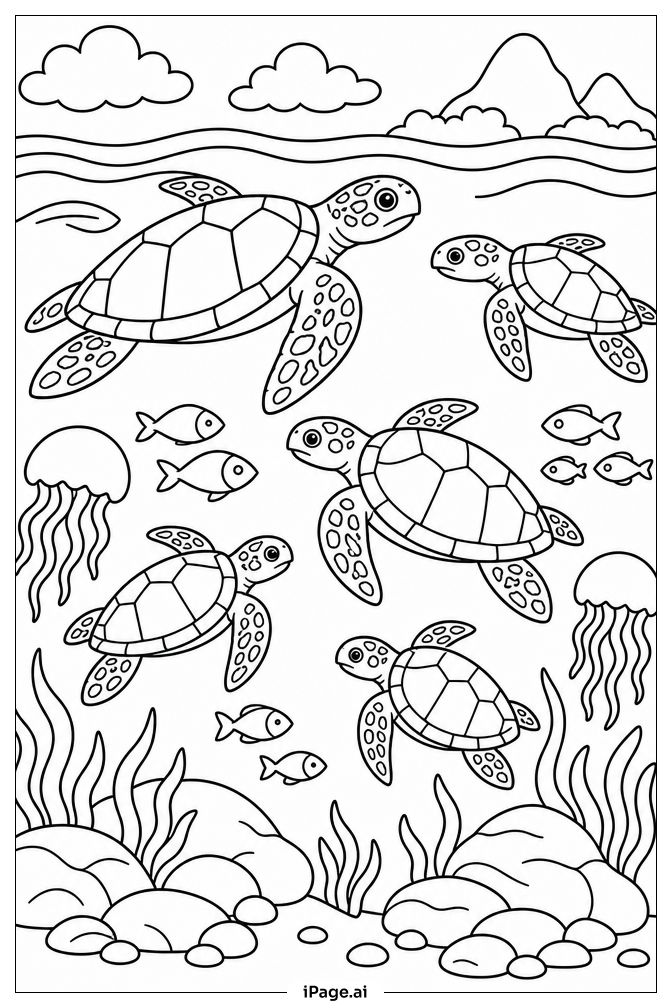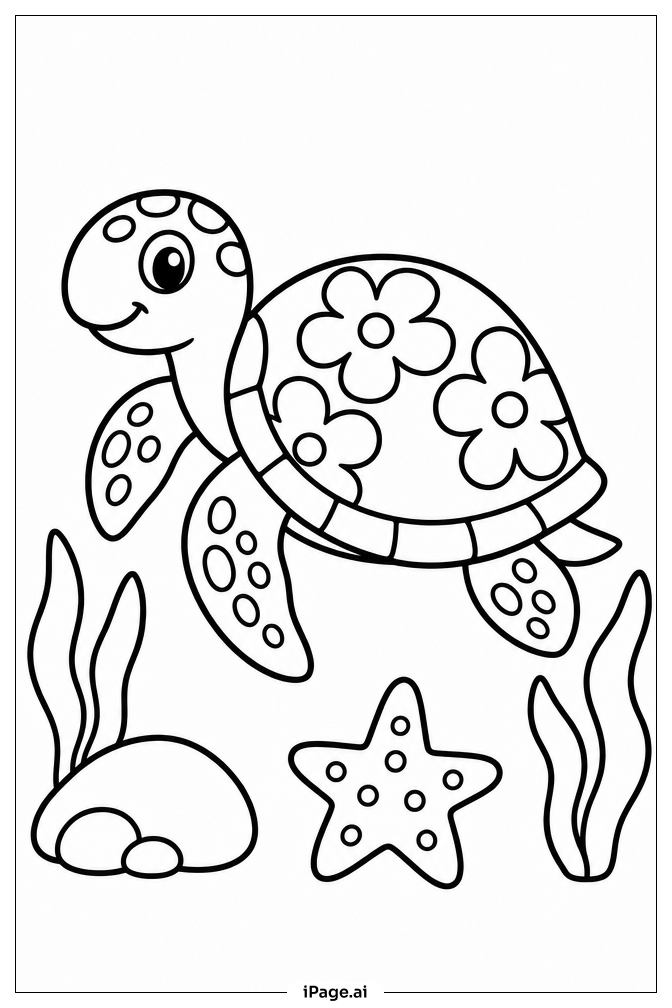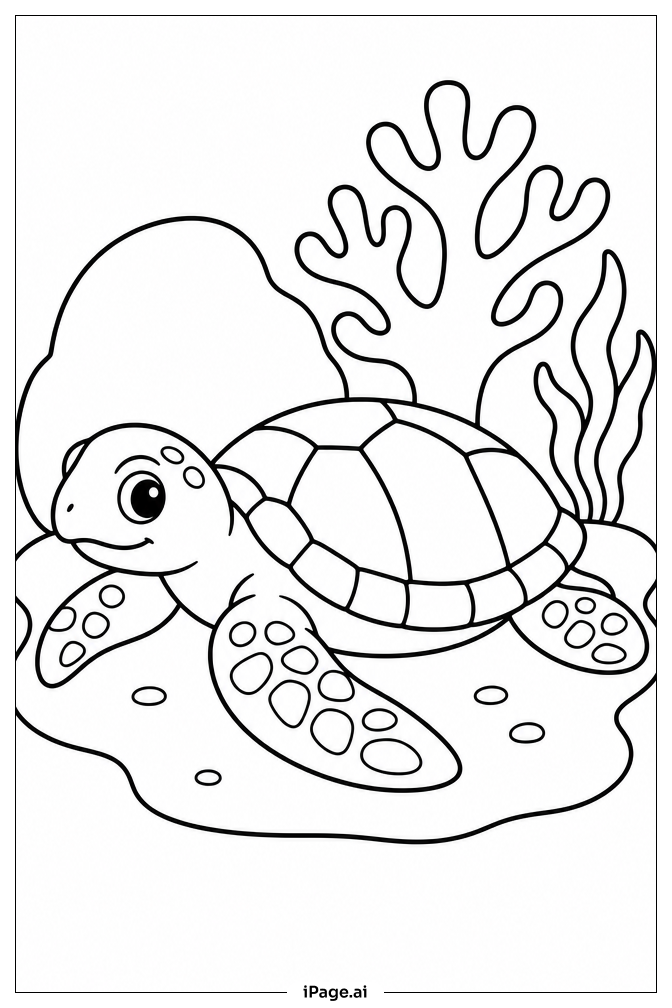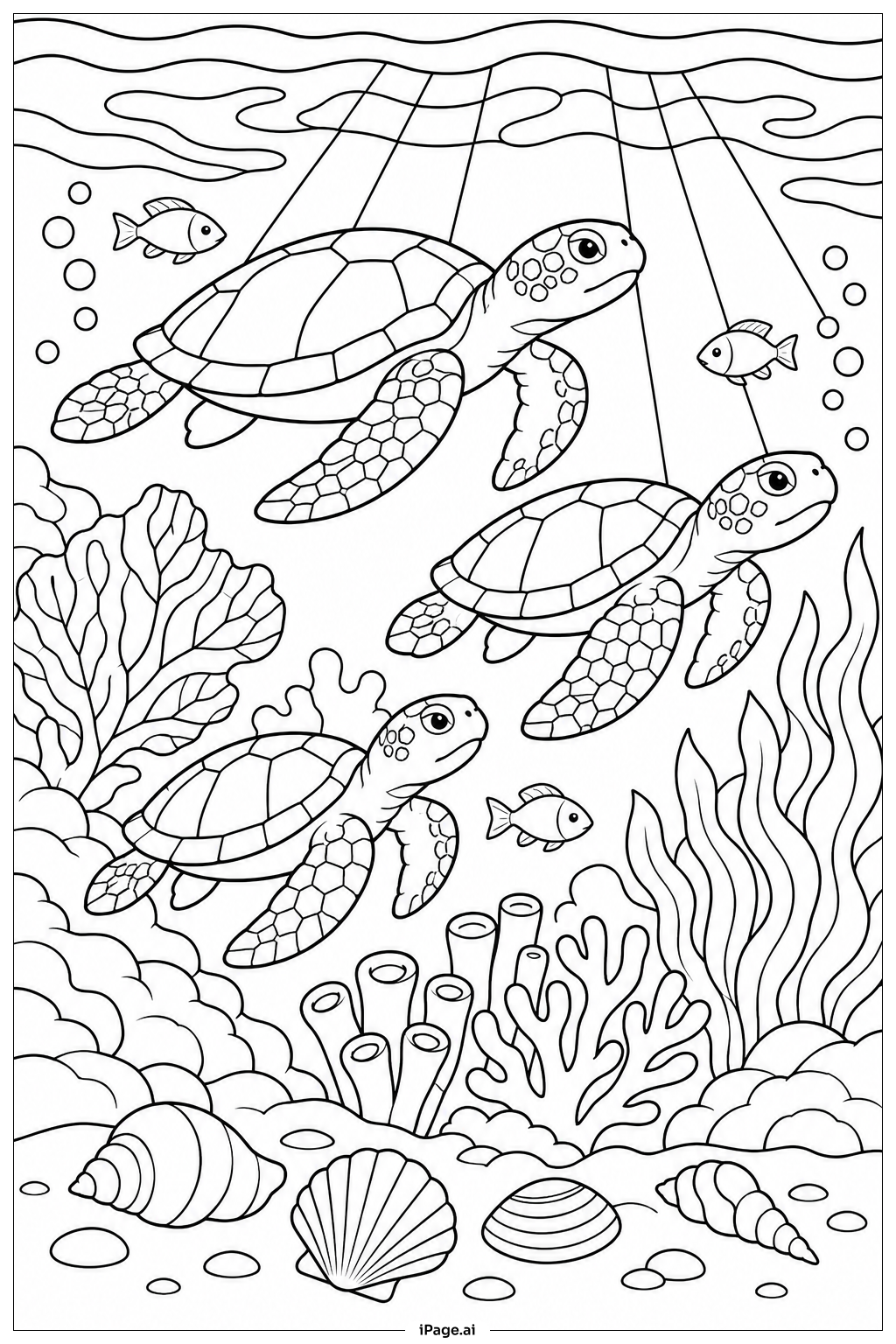
Coloring tips: How to color Sea Turtle Migrations coloring page well?
Start by coloring the sea turtle's shell using warm greens and deep browns. Use lighter shades for the center of each shell section and darker tones near the edges to create depth. Color the flippers and head with olive green or teal, adding a slightly lighter shade on the underside for a natural look. For the ocean background, use various shades of blue — from pale sky blue to deep navy — to suggest the turtle is swimming in open water. Add white highlights to bubbles and wave tips to make them sparkle. Use soft corals, purples, and pinks for any sea plants or coral details. Encourage kids to experiment with color blending. There are no wrong choices — the ocean is full of color and wonder!
Coloring challenges: Which parts are difficult to color and need attention for Sea Turtle Migrations coloring page?
• Shell Pattern Complexity: The sea turtle's shell is divided into many individual sections, each with its own inner texture and border. Staying within each segment while also varying shades to show depth can be tricky, especially for younger colorists. Take your time and use a fine-tipped tool for the smaller areas.
• Flipper Shading: The wide, flat flippers have subtle curves that are difficult to shade realistically. To make them look three-dimensional, you need to apply lighter color toward the center and gradually darken toward the outer edges. This kind of gradual blending takes patience and practice.
• Ocean Background Gradients: Creating a convincing underwater scene requires smooth color transitions. The water should shift from lighter blues near the surface to deeper, darker blues further down. Blending these tones without creating harsh lines is a common challenge, particularly when using colored pencils or crayons.
• Small Decorative Details: Elements like tiny bubbles, small fish, and fine plant tendrils are scattered around the turtle. These details are small and close together, making it hard to color them individually without smudging neighboring areas. Using a sharp pencil tip or thin marker helps maintain clean lines.
• Consistent Color Theme: Keeping a unified color palette throughout the whole image — so the turtle, background, and surrounding sea life all feel like part of the same underwater world — requires planning ahead. Randomly choosing colors for each section can make the final result look disjointed.
Benefits of coloring books: Advantages of drawing Sea Turtle Migrations coloring page
Coloring this Sea Turtle Migrations page offers a wonderful range of benefits for kids and families. First, it builds fine motor skills. Carefully coloring within the turtle's detailed shell sections and small surrounding elements strengthens hand muscles and improves pencil control. Second, it encourages focus and patience. The intricate patterns on the shell and the layered ocean background ask colorists to slow down and concentrate, which supports attention span development. Third, it sparks curiosity about nature. As children color the turtle and its ocean world, they may begin asking questions about real sea turtles, ocean habitats, and migration — turning a creative activity into a learning moment. Fourth, it supports emotional well-being. The calm, flowing imagery of the underwater scene creates a soothing, meditative experience that can help reduce stress and anxiety. Finally, it fosters creativity and self-expression. Choosing colors for the waves, plants, and shell patterns gives every child a chance to make the page uniquely their own. It is a simple, screen-free activity with lasting developmental value.