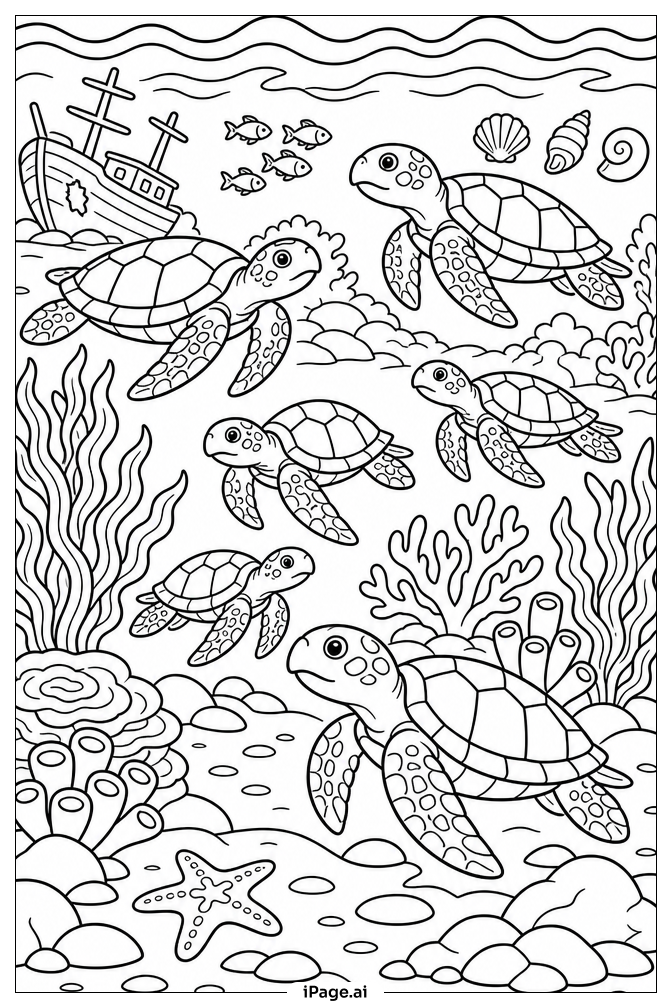
Coloring tips: How to color Sea Turtle Migrating Ocean Scene coloring page well?
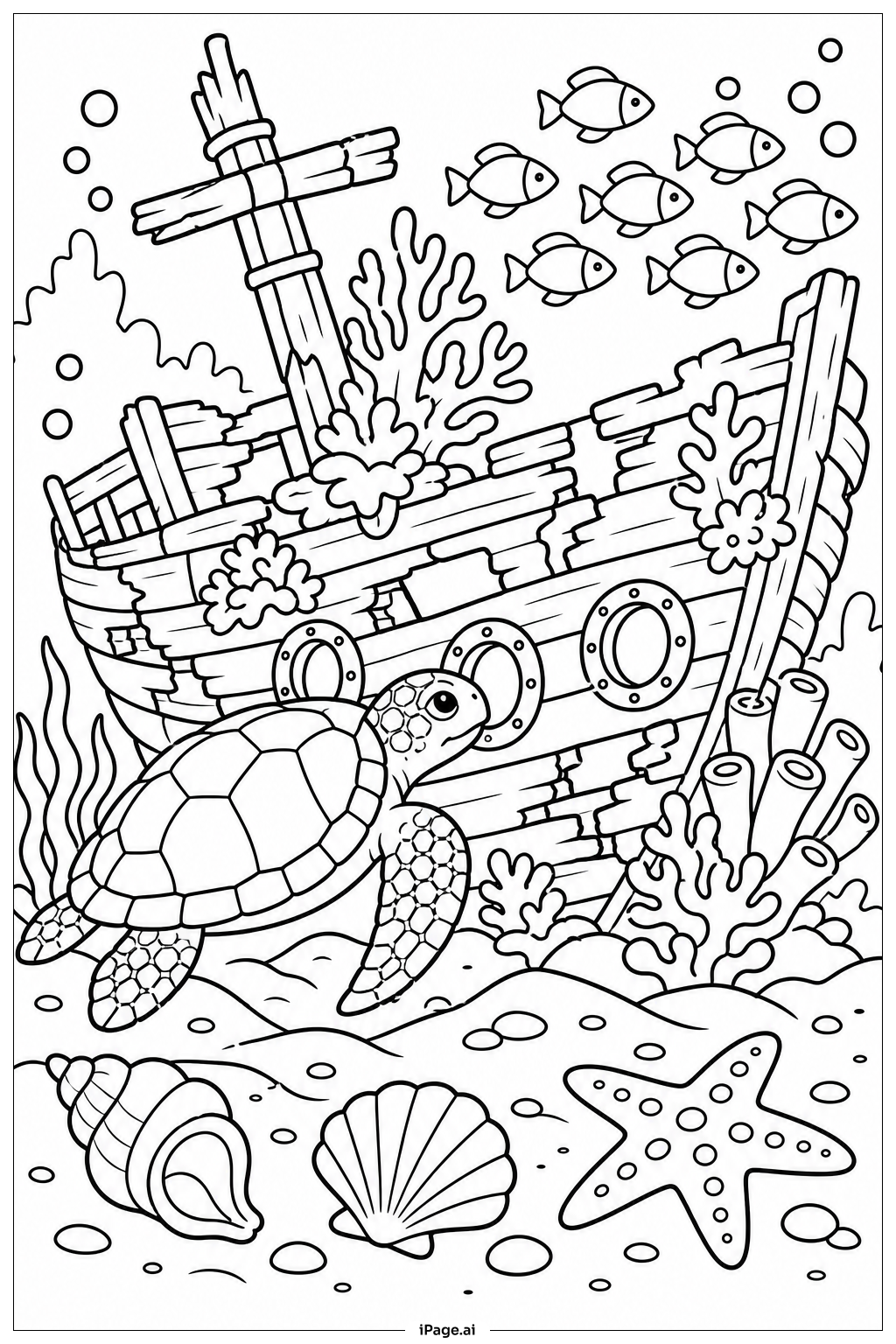
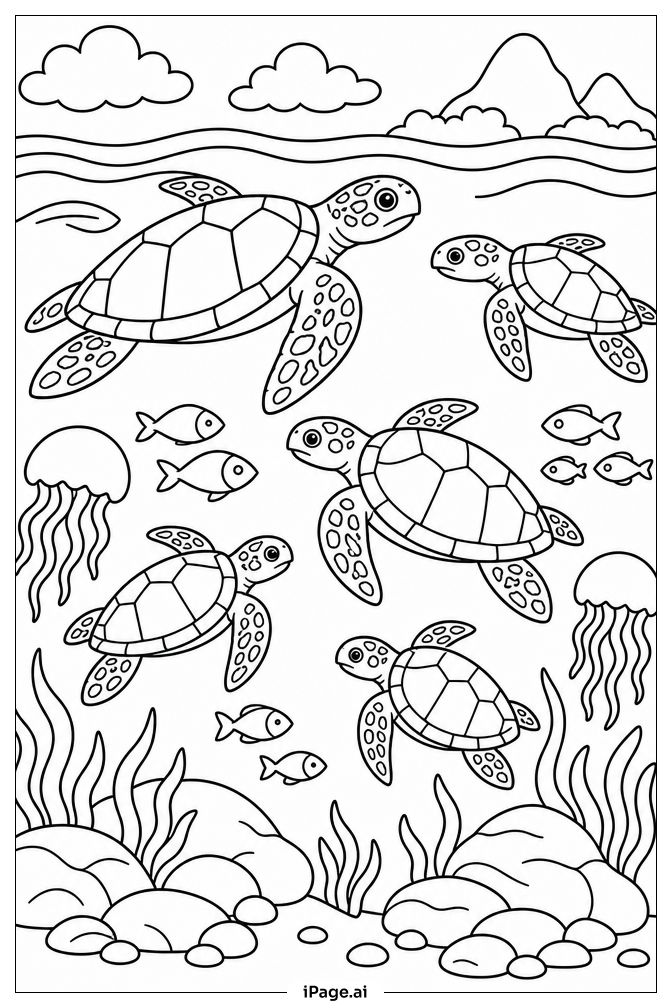
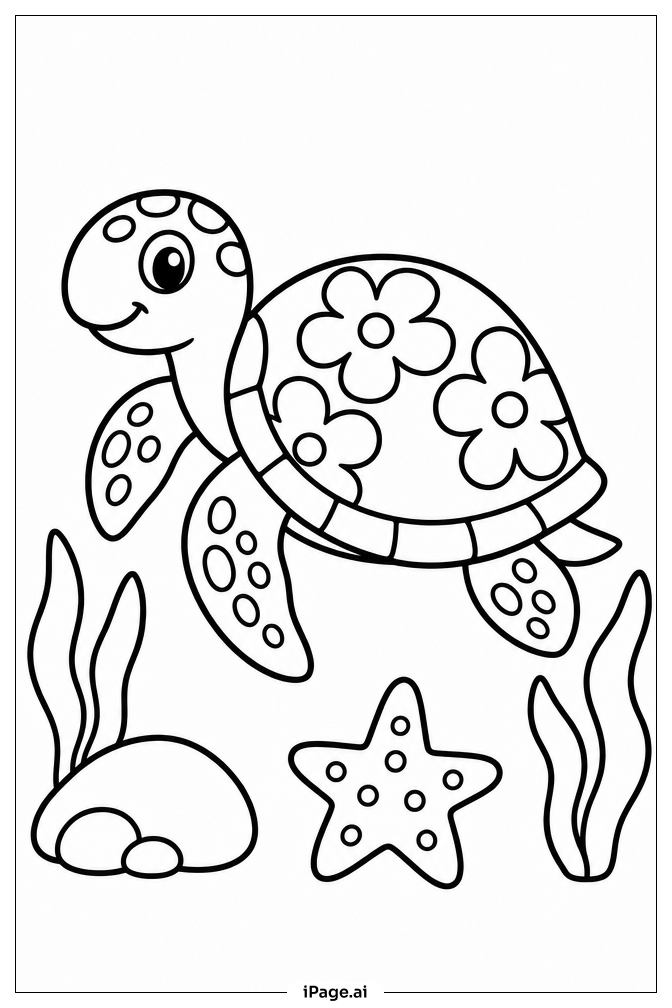
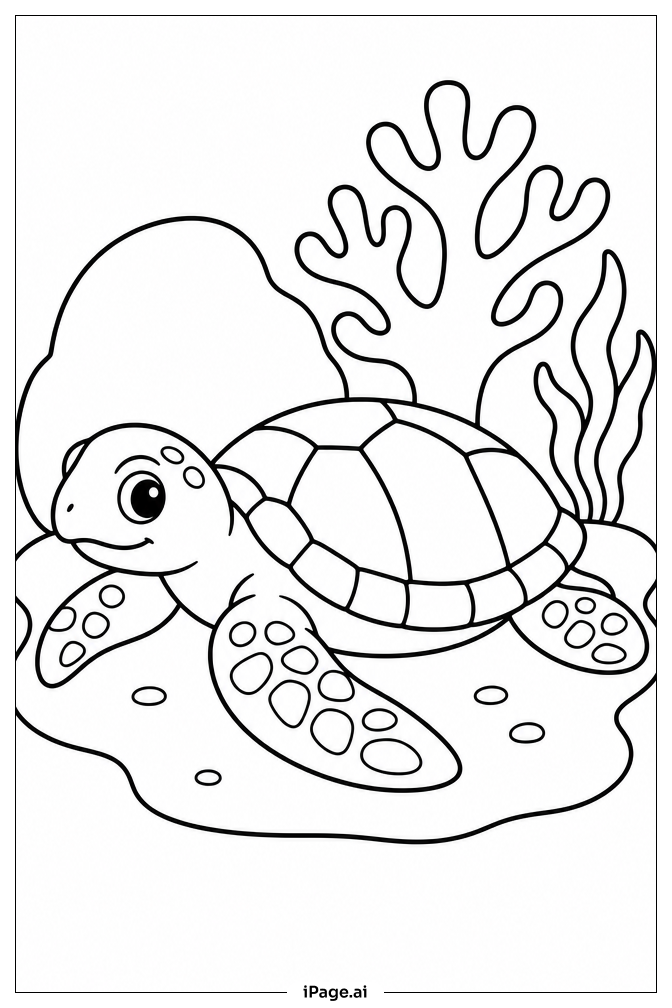
When coloring this Sea Turtle Migrating Ocean Scene, use shades of green, brown, and yellow for the Sea Turtle’s shell to make it look natural and realistic. You can add highlights with lighter colors to show the shell’s texture. Color the flippers with a mix of green and blue or turquoise to create a beautiful ocean feel. For the water and waves, use different blues and light aquas to give depth and movement. Don’t forget to color the bubbles white or light blue to make them stand out. You can add hints of coral or seaweed in soft greens and purples to enrich the ocean background and bring life to the scene.
Coloring challenges: Which parts are difficult to color and need attention for Sea Turtle Migrating Ocean Scene coloring page?
• Detailed Shell Patterns: The Sea Turtle’s shell includes many small, intricate shapes that require careful attention to color neatly and stay within the lines. This demands patience and focus. • Blending Water Colors: Creating a smooth transition between different shades of blue for the ocean can be challenging. It requires blending skills to show the waves’ flow and the underwater light effects. • Flipper Textures: The flippers have fine lines and shading spots that need precise coloring to highlight their movement and detail. It can be tricky to balance colors without making it too dark or too light. • Background Elements: The bubbles and underwater plants are small and spread out, requiring careful coloring so they look natural but don’t overpower the main Sea Turtle. • Maintaining Contrast: It can be difficult to color the Sea Turtle and ocean background with enough contrast so the turtle stands out clearly, especially in areas with overlapping shapes.
Benefits of coloring books: Advantages of drawing Sea Turtle Migrating Ocean Scene coloring page
Coloring this Sea Turtle Migrating Ocean Scene helps children improve hand-eye coordination and develop fine motor skills because of the detailed patterns and small shapes. It encourages focus and patience as they carefully fill in the intricate lines. The image also sparks creativity by allowing children to experiment with different shades of blues, greens, and other colors from the ocean palette. Additionally, coloring an image about a sea turtle’s migration teaches kids about nature and animal behavior, fostering curiosity and awareness about marine life. Overall, it’s a fun, educational activity that promotes relaxation and artistic expression.