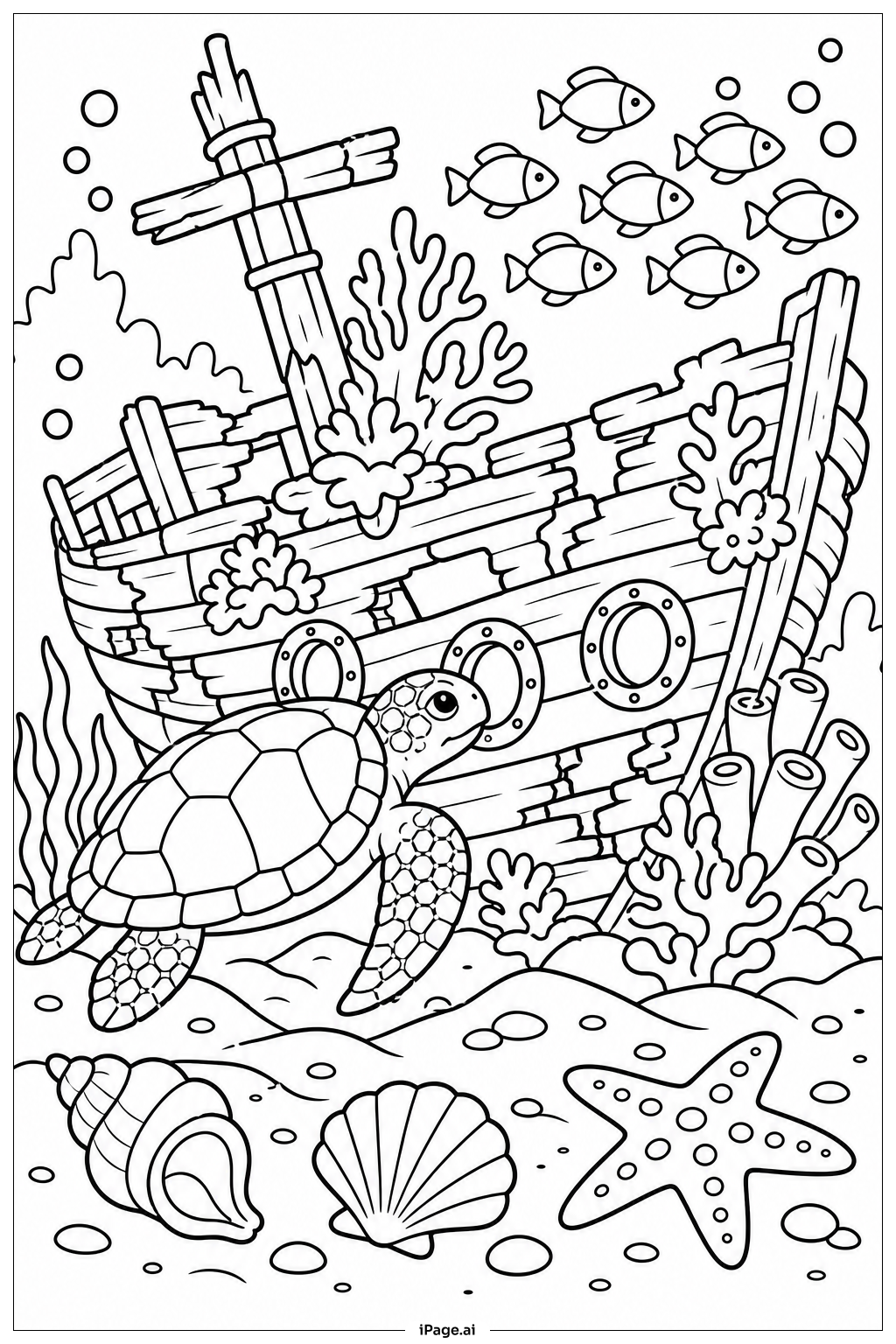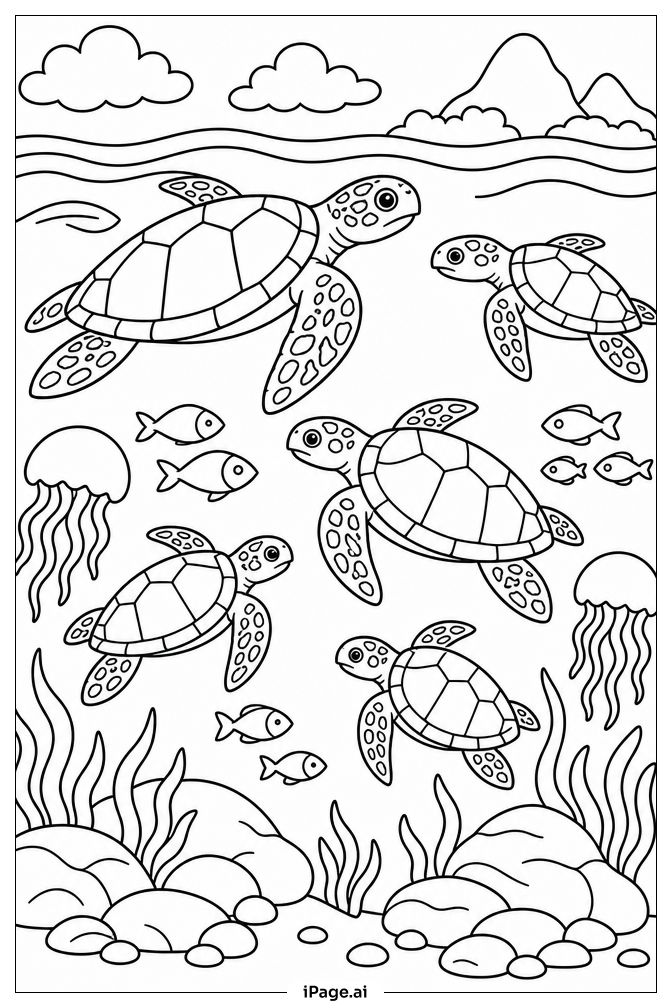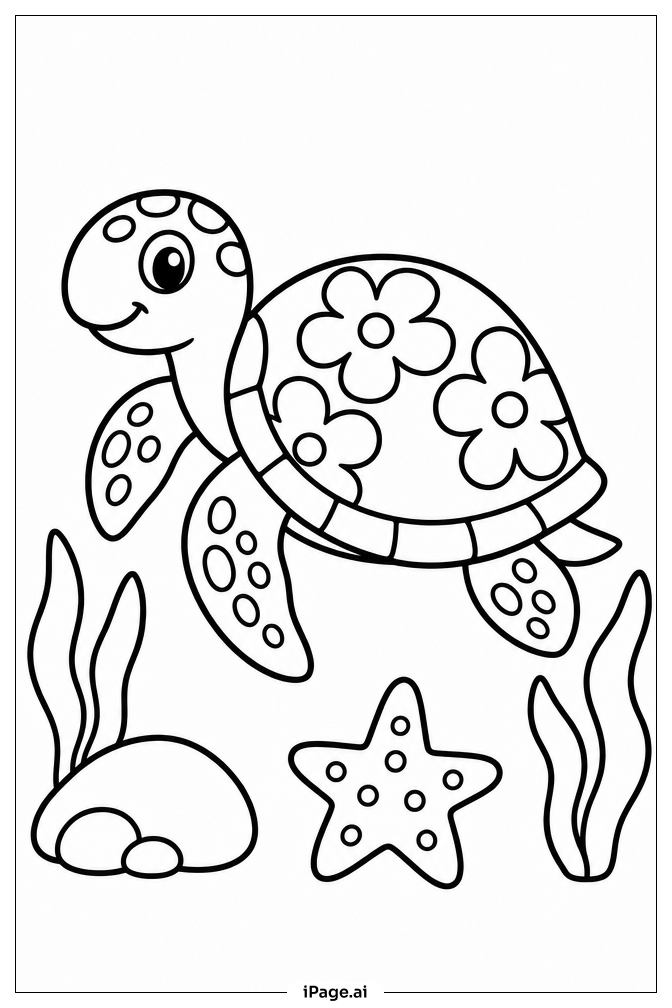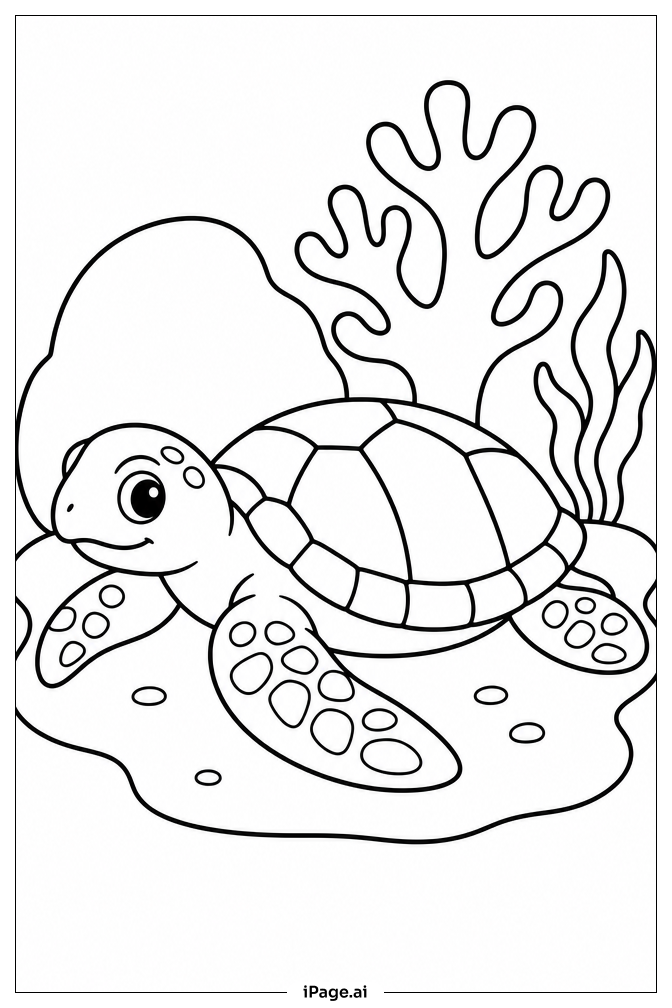
Coloring tips: How to color Sea Turtle Hatchlings To Ocean coloring page well?
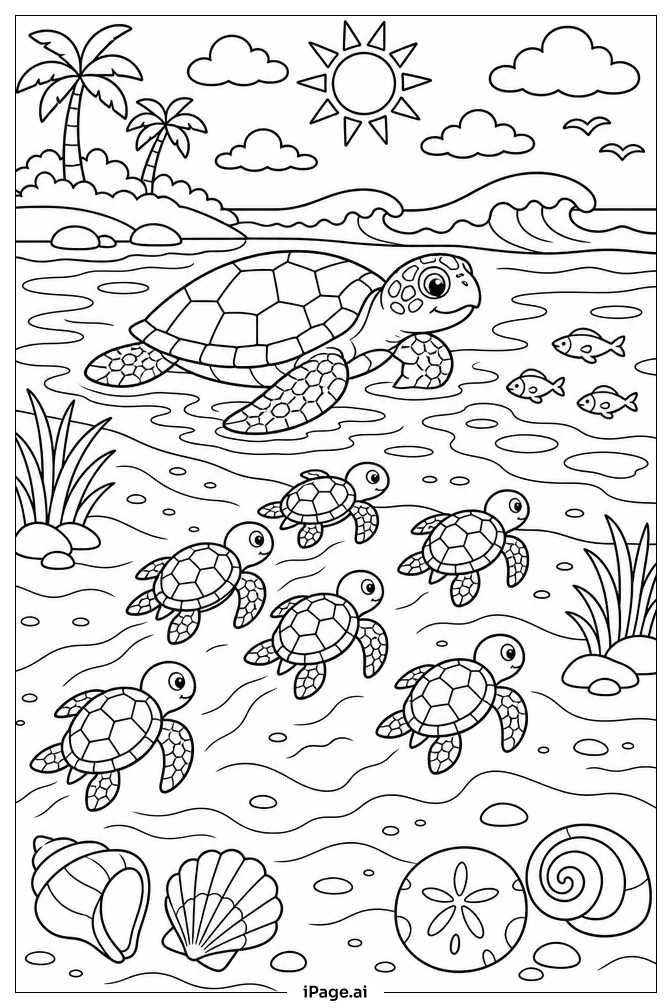
Start with the sand and give it warm tones like light tan, sandy yellow, or soft beige. For the hatchlings, use shades of olive green, dark green, or brown on their shells and flippers. Their undersides can be lighter — try pale yellow or cream. The ocean can be colored in layers of blue and teal, with white tips on the waves for a realistic water effect. Use a bright sky blue or soft gradient from yellow to orange for the sky if you imagine a sunrise or sunset. Add hints of gold or orange near the horizon to make the scene feel warm and magical. The shells and pebbles on the beach can be colored in grays, whites, and earthy tones. You can add soft shadows under each hatchling using a slightly darker shade of their body color. Don't be afraid to use your imagination — even colorful, fantasy-style hatchlings look amazing on this page!
Coloring challenges: Which parts are difficult to color and need attention for Sea Turtle Hatchlings To Ocean coloring page?
• Small Hatchling Details: Each baby turtle has a tiny shell with intricate patterns of plates and ridges. Coloring these small sections neatly requires a fine-tipped coloring tool and a steady hand. Taking your time here will make each hatchling look unique and lifelike.
• Overlapping Figures: Several hatchlings are grouped close together or overlapping on the beach. Keeping each turtle's colors distinct without blending into neighbors can be tricky. Use slightly different shades of green or brown for each hatchling to help them stand out from one another.
• Sand Texture: The beach area contains small pebbles, shells, and uneven sand texture. Filling in this area evenly while still showing variation in the surface takes patience. Try using light, short strokes and layering two or three sandy tones to create a natural look.
• Ocean Waves: The rolling waves in the background have curved, flowing lines that can be difficult to color smoothly. Blending light blue, mid blue, and white along the wave edges creates a sense of motion and depth. Leaving some areas white helps suggest foam and movement.
• Lighting and Depth: Creating a sense of sunlight coming from above and casting soft shadows on the sand is a more advanced challenge. Using slightly darker tones on one side of each hatchling and lighter tones on the top gives a three-dimensional feel to the whole scene.
Benefits of coloring books: Advantages of drawing Sea Turtle Hatchlings To Ocean coloring page
Coloring this Sea Turtle Hatchlings To Ocean page offers many wonderful benefits for kids and families. First, it builds fine motor skills as children carefully color the tiny details of each hatchling's shell and the ocean waves. Holding and guiding coloring tools strengthens the small muscles in young hands, which supports writing and coordination.
Second, this page sparks a love of nature and wildlife. Learning about sea turtles while coloring encourages curiosity and teaches children about real animals and their journey from nest to sea. It is a gentle and fun way to introduce topics like ocean life and conservation.
Third, choosing colors for the sand, sea, and hatchlings encourages creative thinking and artistic expression. There is no single right answer, so children feel free to experiment and make choices confidently.
Fourth, focusing on a detailed image like this one helps children practice patience and concentration. Completing the full page gives a strong sense of achievement and pride.
Finally, coloring together as a family or in a classroom creates a calm, joyful shared experience. It is screen-free, relaxing, and a wonderful way to bond while making something beautiful together. This page is truly a joy for Boys and Girls of all ages.