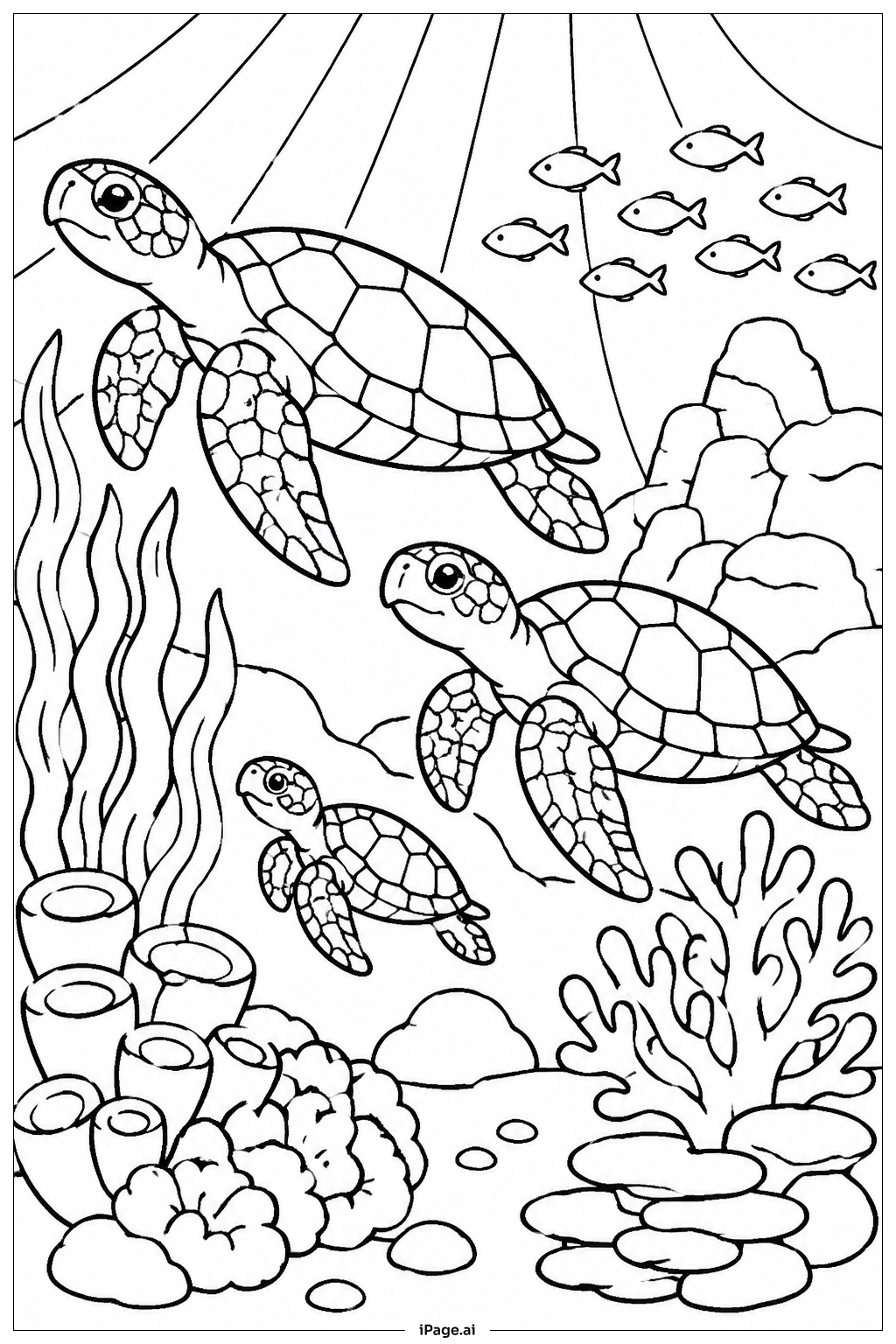
Coloring tips: How to color Sea Turtle Family Swim coloring page well?
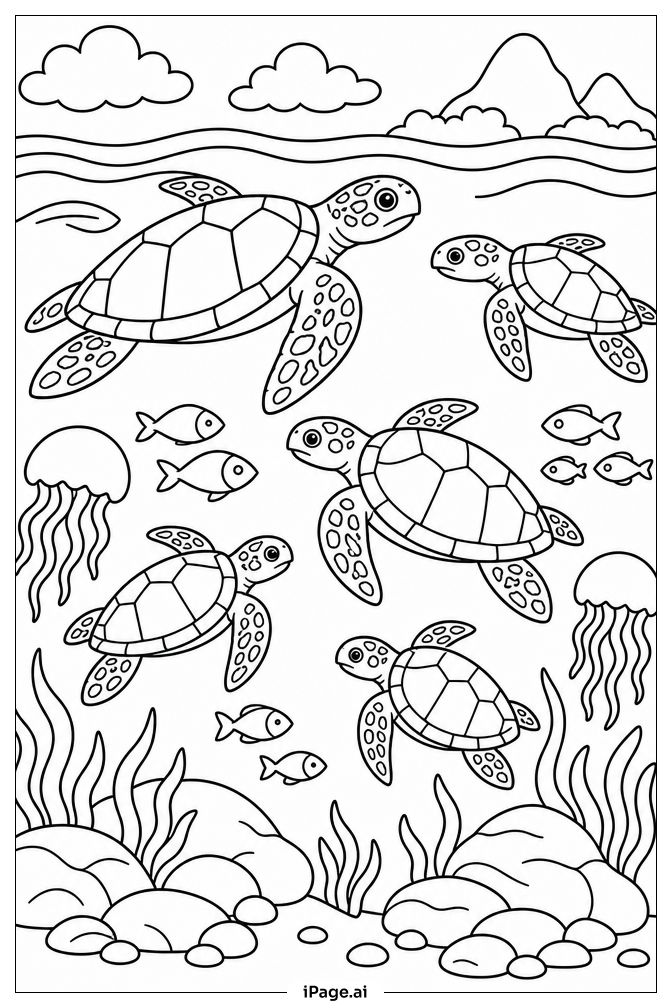
Use different shades of green and brown for the sea turtles’ shells to bring out the natural colors. You can mix light and dark greens to show shell texture. For the flippers and skin, choose lighter greens or even sandy yellow to add variety. The ocean water can be colored in blues and aquamarines, making the background feel fresh and lively. Add hints of soft white or light blue to the waves and bubbles for extra sparkle. For the plants, use greens with some touches of seaweed brown or olive. Try using brighter colors for the little turtles to show their youth and energy, while the adult turtle can be a bit darker and stronger looking.
Coloring challenges: Which parts are difficult to color and need attention for Sea Turtle Family Swim coloring page?
• Shell Patterns: The intricate hexagonal and spotted patterns on the turtles’ shells require careful coloring to keep each shape distinct and neat.
• Flipper Details: The flippers have thin lines that show texture and movement, challenging you to color within small spaces without shading over.
• Multiple Turtles: Since there are several turtles of different sizes, it can be tricky to choose unique colors for each one while keeping the family look consistent.
• Background Elements: The water waves and plants around the turtles have soft, curved shapes that may be hard to outline precisely, needing patience.
• Layering Colors: Blending different shades to show light and shadow on the sea turtle’s body and in the water can be a bit advanced but helps create depth.
Benefits of coloring books: Advantages of drawing Sea Turtle Family Swim coloring page
Coloring this image helps improve fine motor skills since it involves detailed areas like shell patterns and flipper lines. It encourages concentration and patience as children focus on small spaces and multiple subjects. The sea turtle family theme promotes creativity by letting kids pick colors to express warmth and unity in nature. Coloring the underwater scene also introduces an appreciation for ocean life and biodiversity. Overall, it’s a relaxing and fun activity that supports artistic development while teaching about animals and their environment.