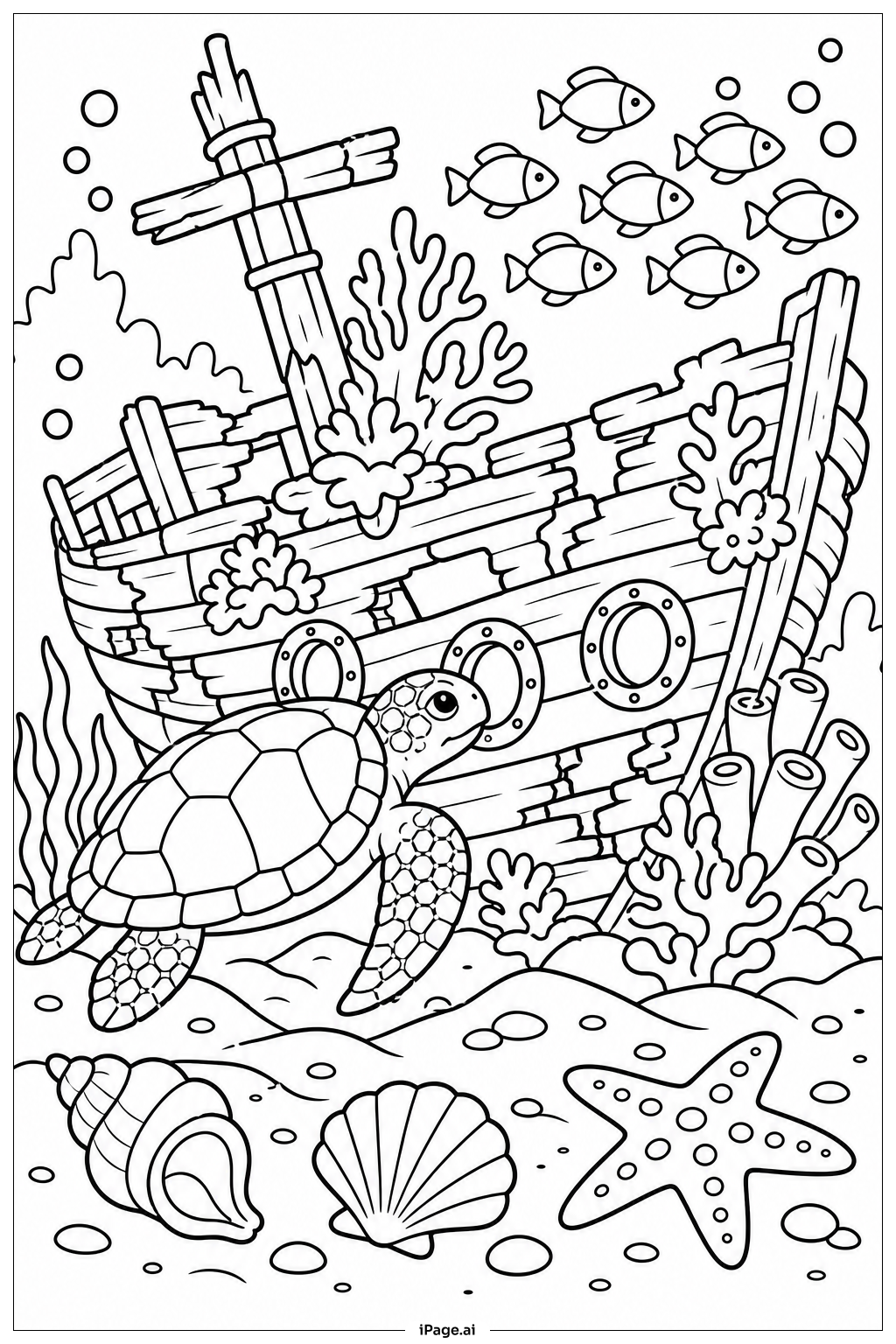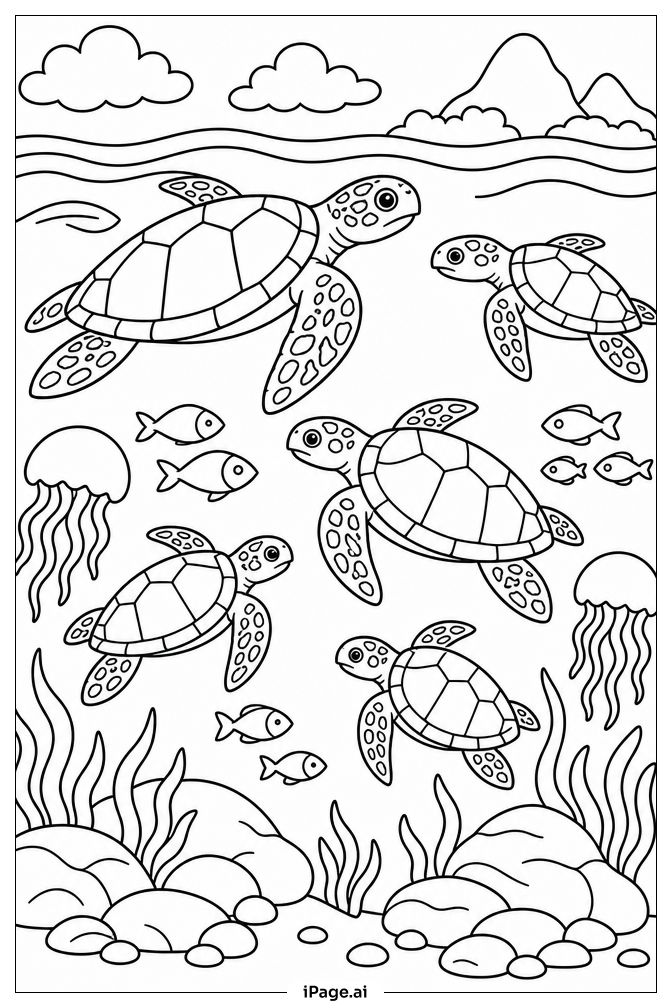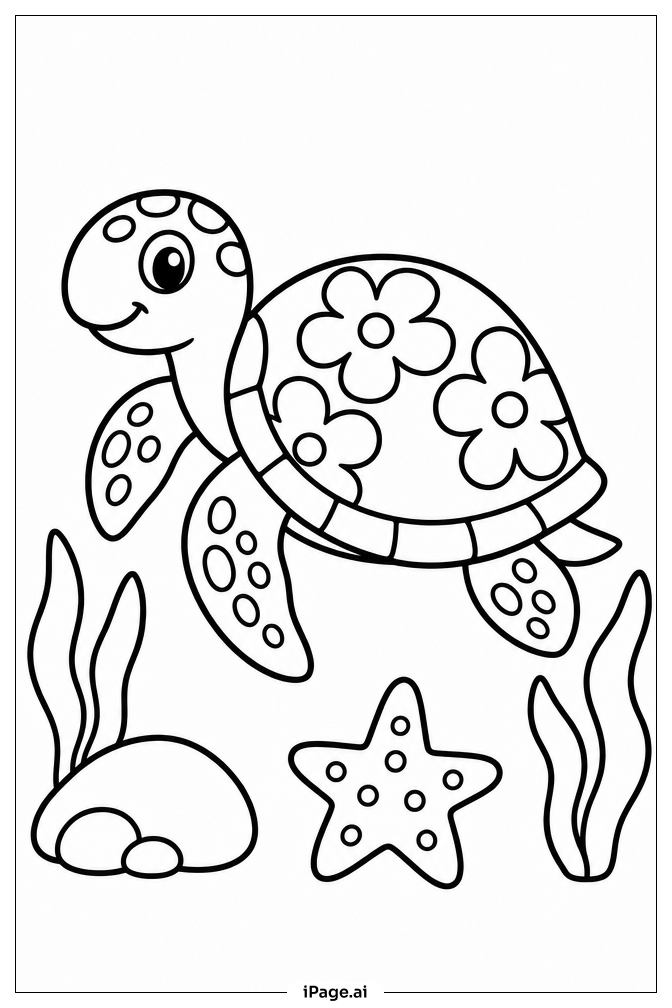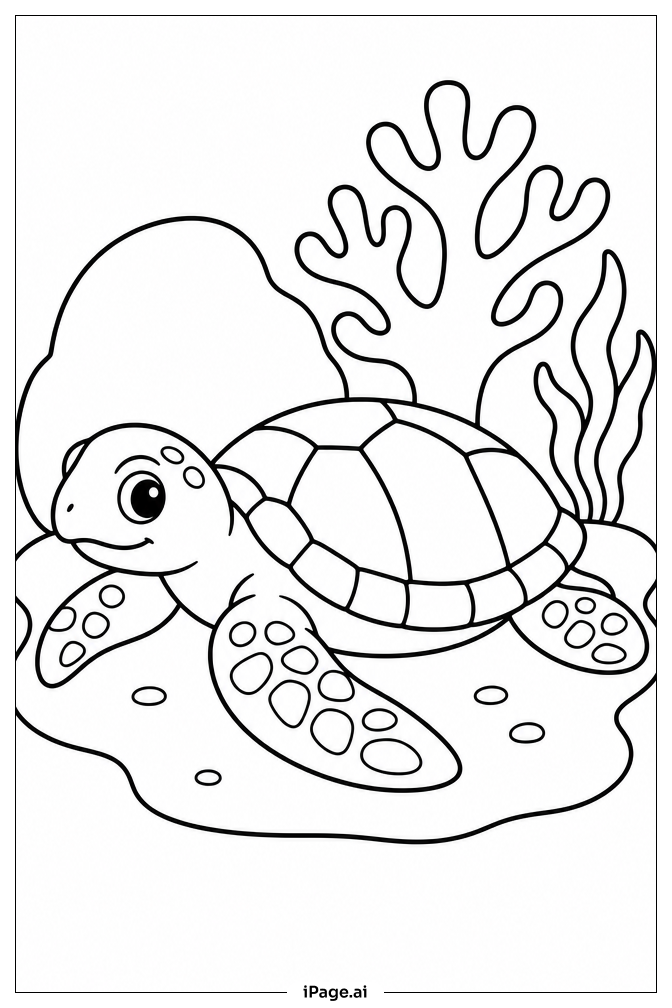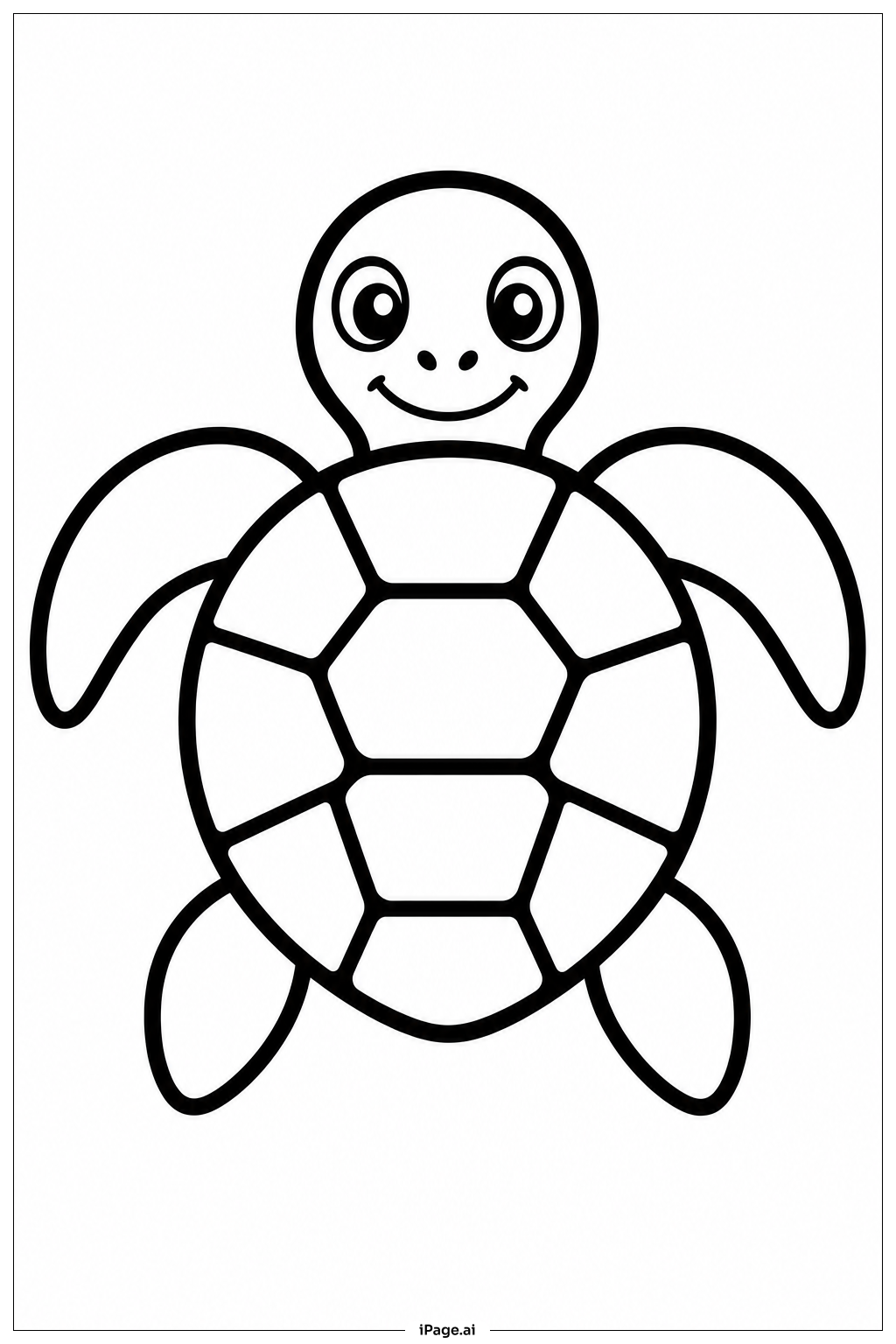
Coloring tips: How to color Sea Turtle Facing Forward coloring page well?
Start with the shell and use a mix of greens and browns. Try olive green, forest green, and tan to make each segment look different. You can make some sections darker and others lighter to add depth. For the head and flippers, use a medium green with darker edges to show shape and shadow. The belly area can be a soft cream or pale yellow. For the ocean background, use light blue and turquoise. Add white or pale blue to the swirling waves to make them look like they are moving. Feel free to use bright, fun colors if you want a more playful look. There are no wrong choices here. Let your creativity guide you and enjoy every stroke of color you add to this friendly sea turtle.
Coloring challenges: Which parts are difficult to color and need attention for Sea Turtle Facing Forward coloring page?
• Shell Segment Variety: The turtle's shell is made up of many different-sized geometric sections. Keeping each segment a slightly different shade while still making the whole shell look unified can be tricky. Take your time and plan your color choices before you begin filling in each piece.
• Flipper Shading: The wide, flat flippers spread out on both sides of the turtle. Adding shading to show their curved, three-dimensional shape takes patience. Try using a lighter color in the center and a darker tone along the edges to give them a natural, rounded look.
• Front-Facing Symmetry: Because the turtle is facing directly forward, the left and right sides of the image are nearly mirror images of each other. Keeping the colors balanced on both sides without making it look too rigid or identical is a real challenge for colorists of any skill level.
• Face and Eye Detail: The turtle's face is small compared to the rest of the body but full of character. The round eyes and smooth facial lines need careful, precise coloring. Using a very fine tip or a sharp pencil can help you stay within the small areas without smudging.
• Wave and Water Background: The swirling lines around the turtle represent flowing ocean water. Blending multiple shades of blue and teal smoothly to create a convincing water effect requires a steady hand and good color-blending technique, which can be challenging for younger colorists.
Benefits of coloring books: Advantages of drawing Sea Turtle Facing Forward coloring page
Coloring this sea turtle page brings many great benefits for kids and adults alike. First, it helps build focus and concentration. Carefully staying inside the lines of the shell segments and small facial details trains your attention in a fun and relaxing way. Second, it sparks creativity. Choosing colors for the shell, flippers, and ocean background lets you express your own artistic style. There is no single right answer, so you feel free to experiment. Third, it teaches color blending and shading skills. Trying to make the shell look three-dimensional or the water look like it is flowing helps you learn real artistic techniques. Fourth, it is a wonderful stress reliever. The peaceful image of a sea turtle gliding through calm water helps you slow down and feel relaxed. Finally, it builds knowledge about nature. As you color, you naturally learn about what sea turtles look like and where they live, making it both a creative and educational activity for all ages.