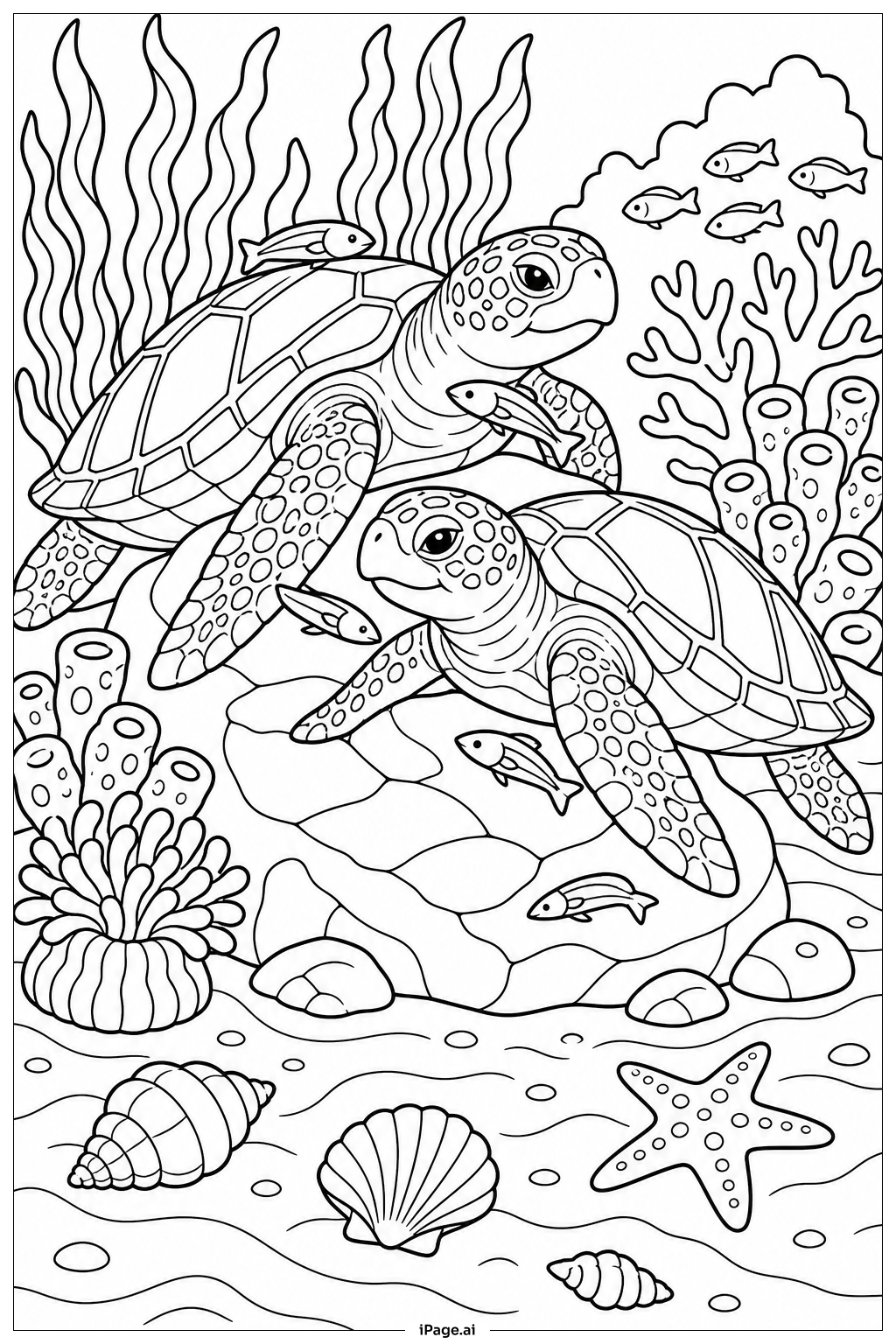
Coloring tips: How to color Sea Turtle Cleaning Station Scene coloring page well?
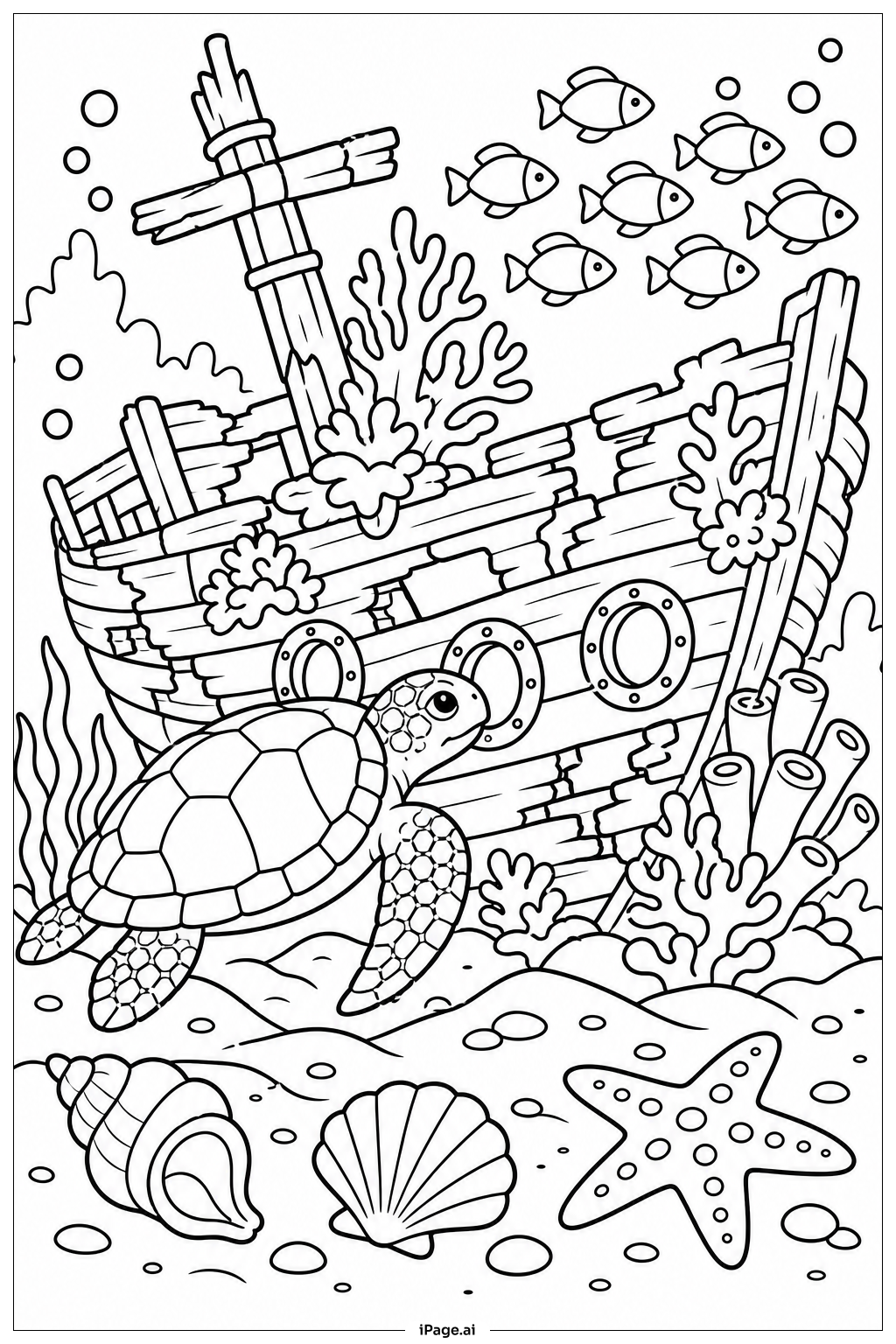
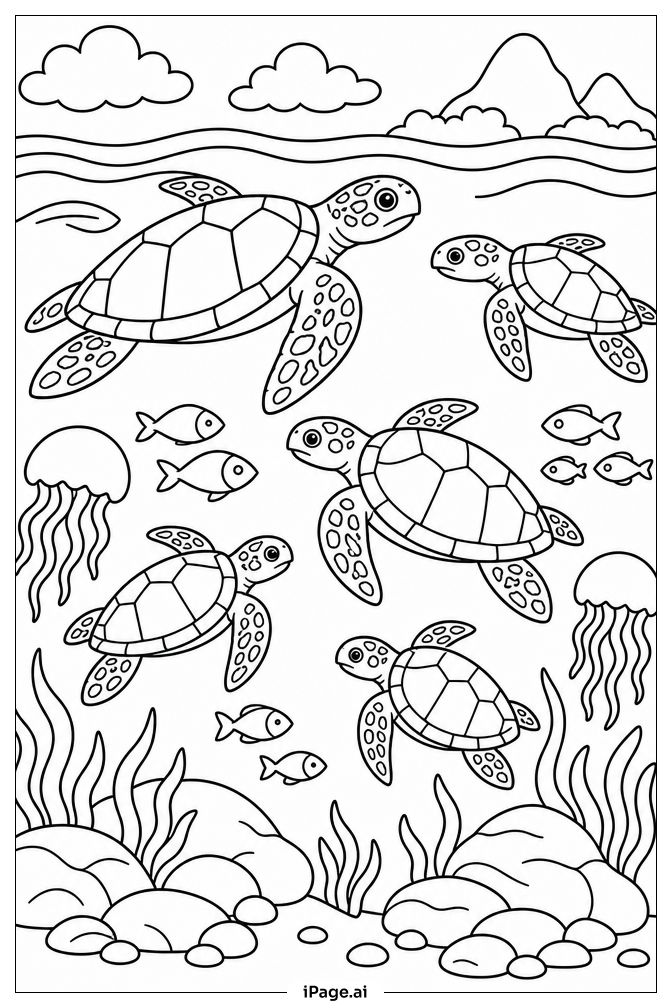
Start with the sea turtle's shell using shades of olive green, brown, and tan to give each scute depth and a natural look. Use a darker tone along the edges of each scute and a lighter shade in the center to create dimension. Color the flippers and head in medium green with hints of yellow-green. For the cleaner fish and shrimp, try bright blues, reds, and oranges to make them pop. Use purple, pink, and red for the coral and anemones in the background. The sandy ocean floor can be colored in warm beige and golden tones. Add blue and teal gradients to the water, going lighter near the surface where sunlight streams in. Bubbles can be left mostly white with a light blue outline. Use soft, blended colors throughout to give the scene a calm, dreamy underwater feel. Kids can get creative with the fish and coral — there are no wrong color choices in the ocean!
Coloring challenges: Which parts are difficult to color and need attention for Sea Turtle Cleaning Station Scene coloring page?
• Sea Turtle Shell Scutes: The turtle's shell is made up of many individual scutes arranged in a complex pattern. Coloring each one separately while keeping the overall shell looking unified is tricky. You need to vary the shading within each scute without losing the natural flow of the shell's surface.
• Small Cleaner Fish and Shrimp Details: The tiny cleaner animals around the turtle have small bodies with fine details like stripes, legs, and antennae. These require a steady hand and a fine-tipped coloring tool to fill in neatly without accidentally coloring over outlines or blending into the turtle's skin.
• Background Coral and Anemones: The coral formations and sea anemones in the background feature many overlapping shapes and thin tentacle-like lines. Keeping each element distinct while building a colorful, layered background takes patience and careful color selection so nothing looks muddy or cluttered.
• Water Depth and Light Effects: Showing the feeling of water, including the way sunlight filters down from the surface, requires smooth gradient blending from darker blues at the bottom to lighter, brighter tones near the top. This is a more advanced technique that can be challenging for younger colorists.
• Overlapping Elements: Several parts of the scene overlap — the turtle's flippers may cross over coral, and fish swim in front of background elements. Deciding which colors go on top and how to handle these overlapping edges requires careful planning to keep the image clean and visually clear.
Benefits of coloring books: Advantages of drawing Sea Turtle Cleaning Station Scene coloring page
Coloring this Sea Turtle Cleaning Station Scene offers a wonderful mix of fun and learning for kids of all ages. As children fill in the intricate shell patterns, they develop fine motor skills and improve hand-eye coordination. Working through the many details of the scene builds focus and patience, which are valuable skills both in and out of the classroom.
The underwater setting sparks natural curiosity about ocean life. Kids learn about real-world behaviors, like how cleaner fish help sea turtles stay healthy, making this activity both creative and educational. It's a gentle way to introduce concepts about marine ecosystems and animal cooperation.
Choosing colors for the coral, fish, and water encourages creative thinking and color awareness. There are no strict rules, so children feel free to express themselves and build confidence in their artistic choices.
For older children and teens, the complex shell patterns and layered background offer a satisfying challenge that rewards effort and attention to detail. The calming nature of coloring also helps reduce stress and anxiety, making it a healthy screen-free activity.
Overall, this image turns a coloring session into a mini adventure beneath the sea, nurturing creativity, curiosity, and a love for the natural world at the same time.