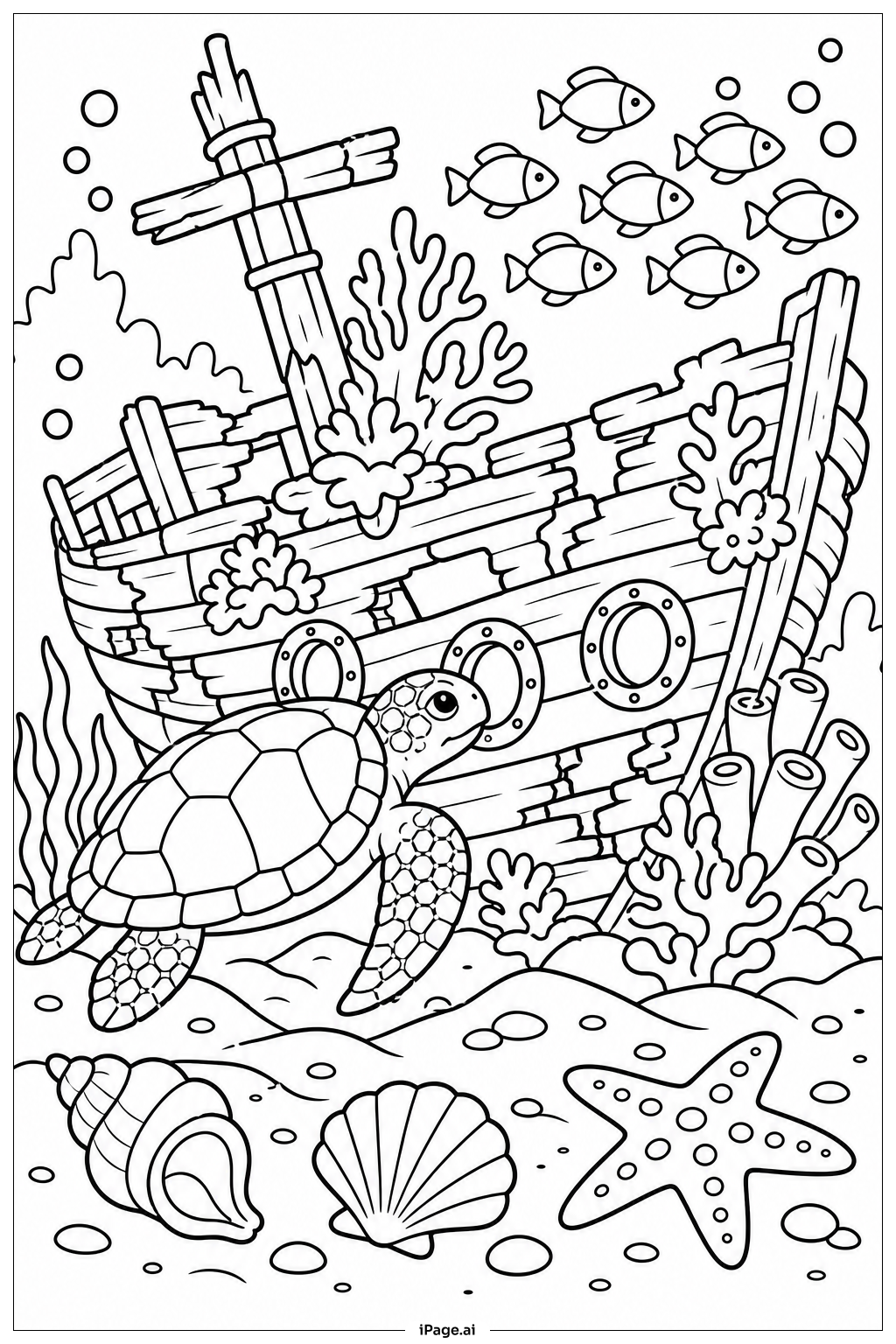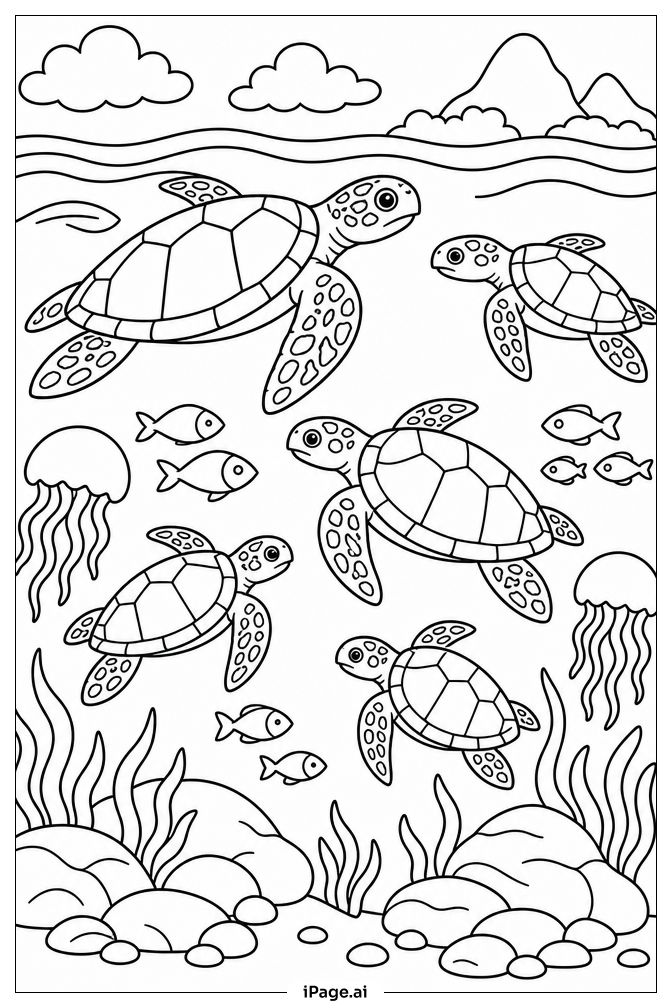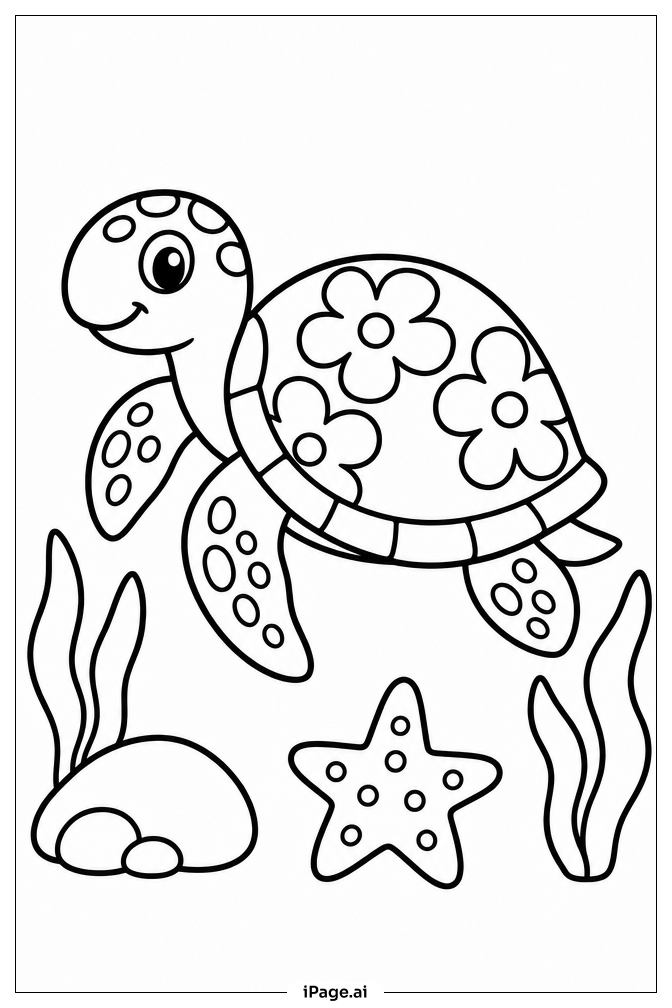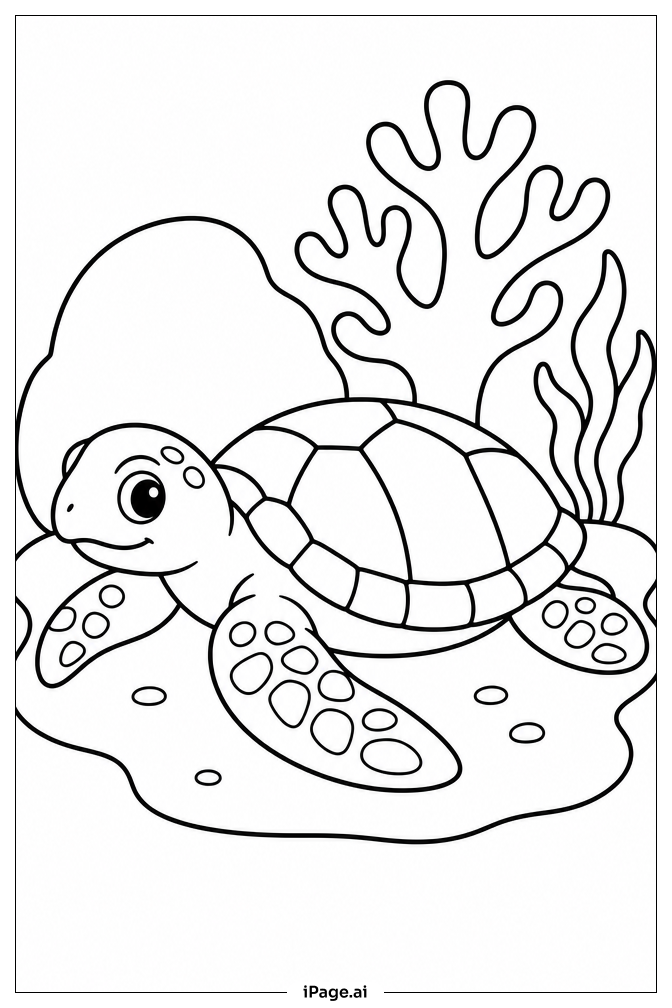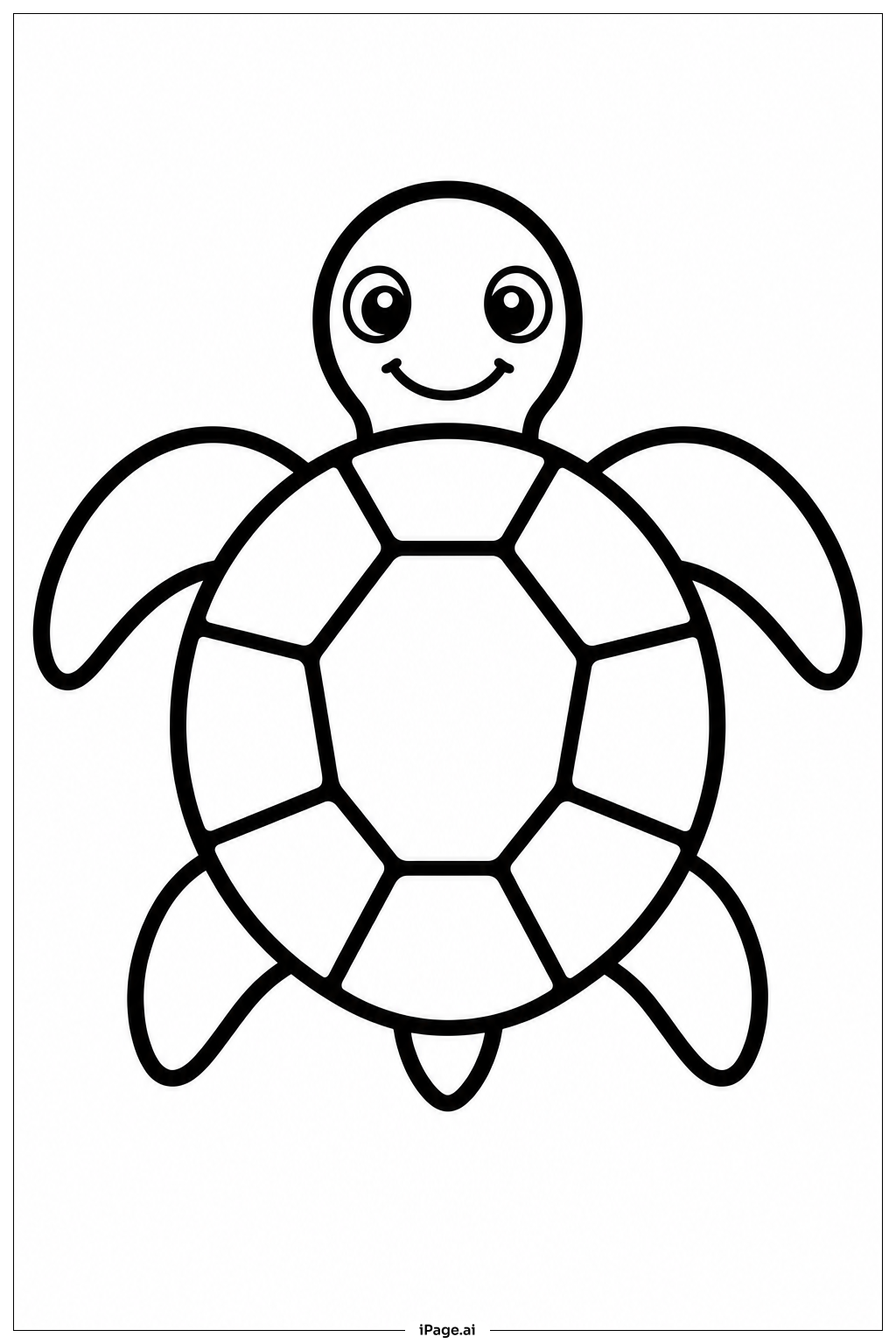
Coloring tips: How to color Sea Turtle Centered Pose coloring page well?
Start with the shell, as it is the largest and most eye-catching part of the image. Use shades of green, brown, or olive for a natural look. You can also get creative with blues, purples, or even rainbow colors to make it pop. Color each scute section a slightly different shade to add depth and variety. For the skin and flippers, use a lighter green or teal. Add small dots or streaks to show the texture of scales. The eyes can be colored dark brown or black with a small white highlight to make them look alive. Use light blue or aqua for the water swirls in the background. Try blending two colors together for a smooth, flowing ocean effect. There are no wrong color choices here, so feel free to experiment and make the turtle your own.
Coloring challenges: Which parts are difficult to color and need attention for Sea Turtle Centered Pose coloring page?
• Shell Scute Patterns: The shell is made up of many individual geometric sections called scutes. Each one has its own borders and lines. Keeping colors neatly inside each small section can be tricky, especially near the edges where sections meet. Take your time and use a fine-tipped tool for the smaller areas.
• Symmetry and Balance: Because the turtle is centered and facing forward, both sides of the image are nearly mirror images of each other. Keeping the colors balanced on the left and right flippers and shell halves requires planning ahead. It helps to color one side first and then match it on the other.
• Skin Texture Details: The skin areas on the flippers, neck, and head are filled with small overlapping scale patterns. These tiny details are closely spaced and require steady hand control. Using a sharp pencil or a fine marker will help you stay inside each individual scale without bleeding into neighboring areas.
• Blending the Background: The swirling water lines around the turtle can be challenging to blend smoothly. Achieving a gradient effect from light to dark blue without harsh lines takes practice. Layering colors gently and using a blending tool or a light touch can help create a soft, flowing ocean atmosphere.
• Eye and Face Details: The face has small, precise features including the eyes and the curve of the mouth. These areas are very small compared to the rest of the image. Using a very fine pen or a sharpened colored pencil is recommended to avoid over-coloring and losing the delicate facial expression.
Benefits of coloring books: Advantages of drawing Sea Turtle Centered Pose coloring page
Coloring this Sea Turtle Centered Pose page offers a wide range of benefits for children and adults alike. The detailed shell patterns and scale textures help develop fine motor skills and hand-eye coordination. Carefully staying within the lines and managing small sections strengthens focus and patience over time. Because the design is symmetrical, children are naturally encouraged to think about balance and planning, which supports early math and spatial reasoning skills. Choosing colors for the shell, skin, and ocean background sparks creativity and personal expression. There is no single correct way to color this page, so every child can feel proud of their unique result. The ocean theme also opens up conversations about marine life and the importance of protecting sea turtles and ocean ecosystems. For older children and adults, the repetitive motion of coloring the many scute sections and scale details can be deeply relaxing and meditative, helping to reduce stress and anxiety. Overall, this coloring page combines artistic fun with educational and emotional benefits.