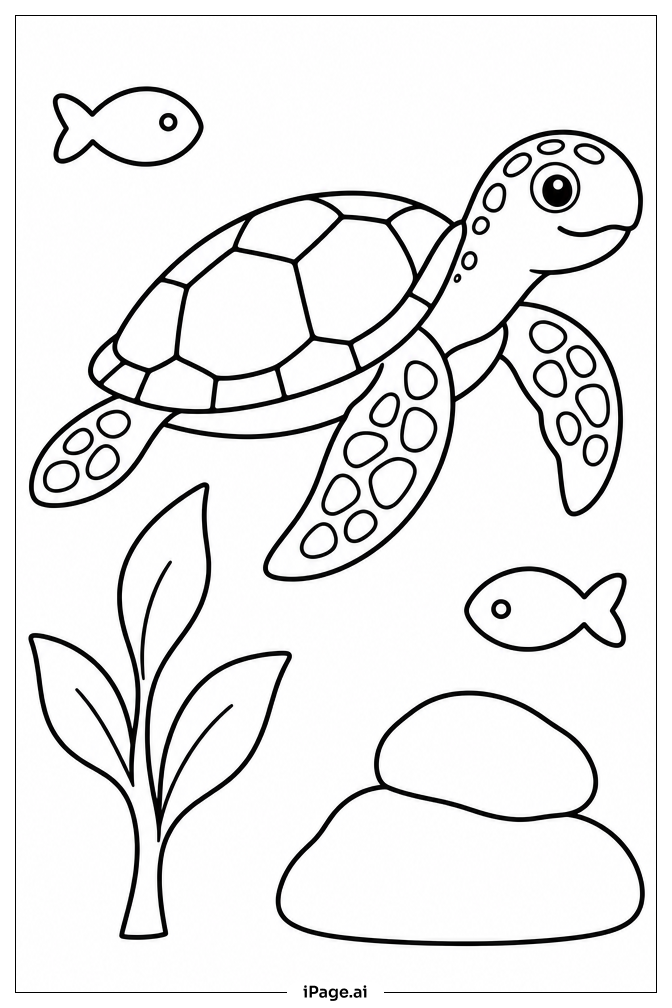
Coloring tips: How to color Sea Turtle By Seaweed coloring page well?
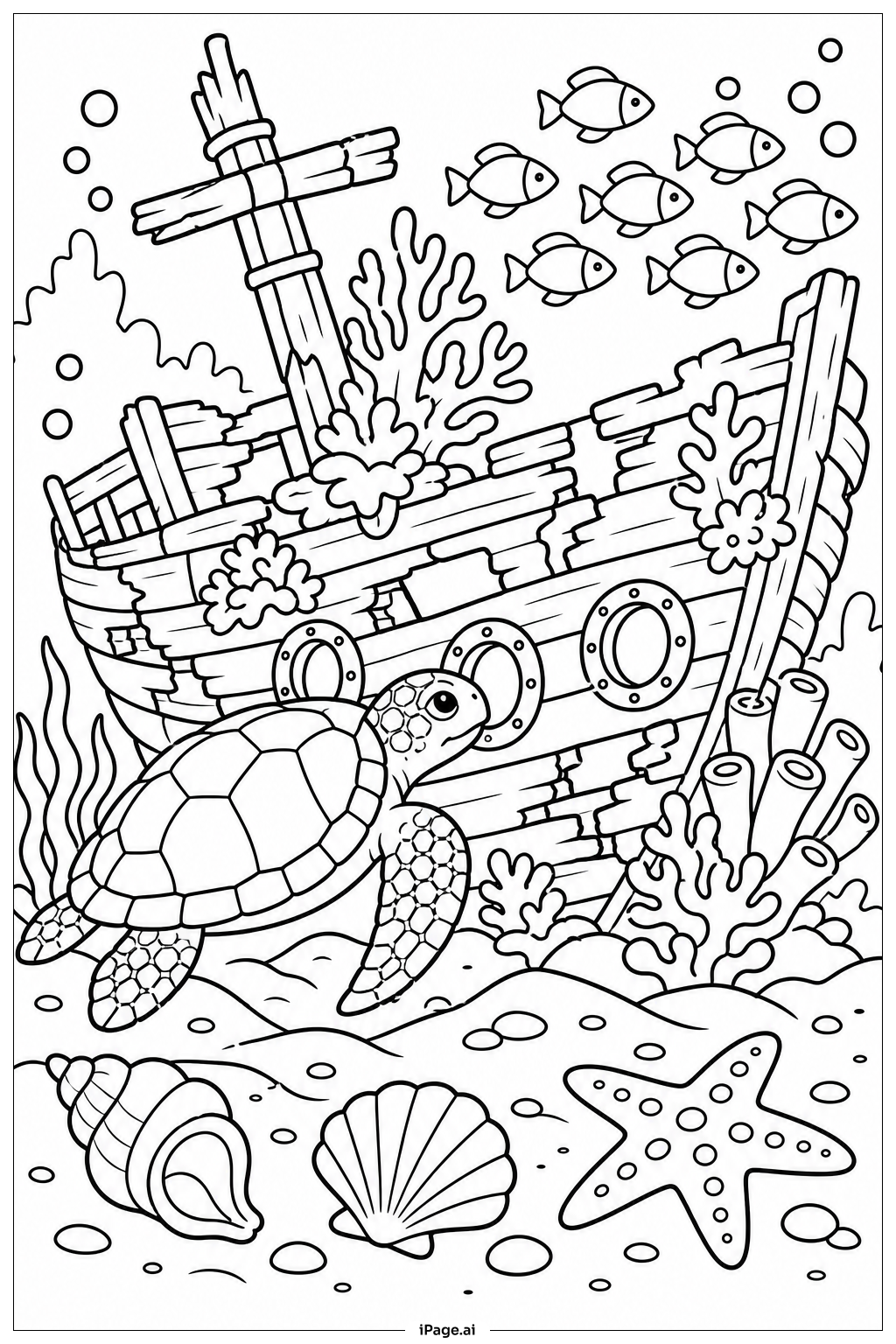
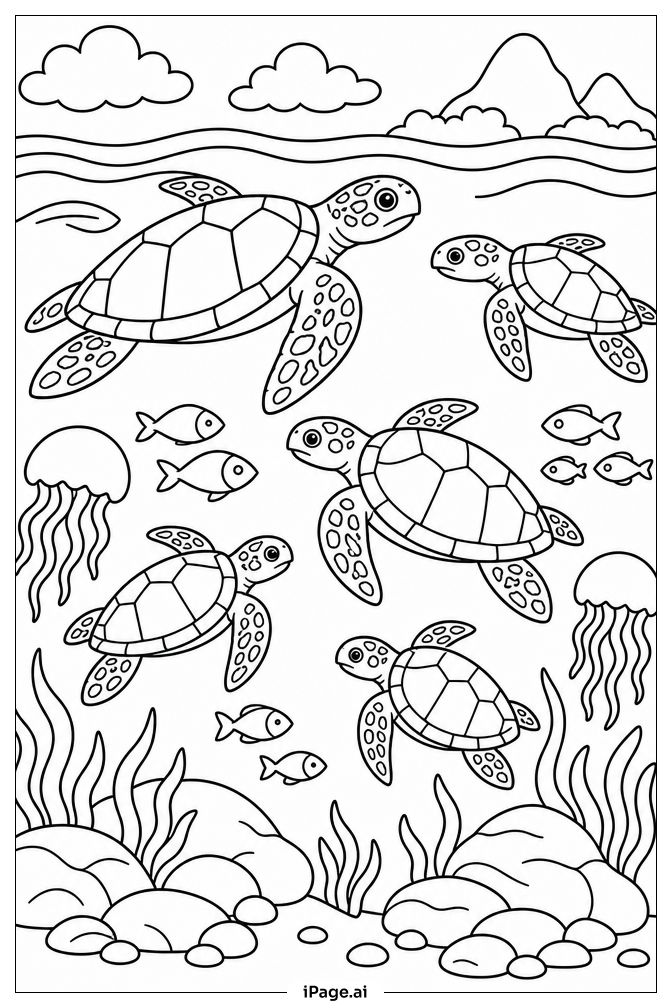
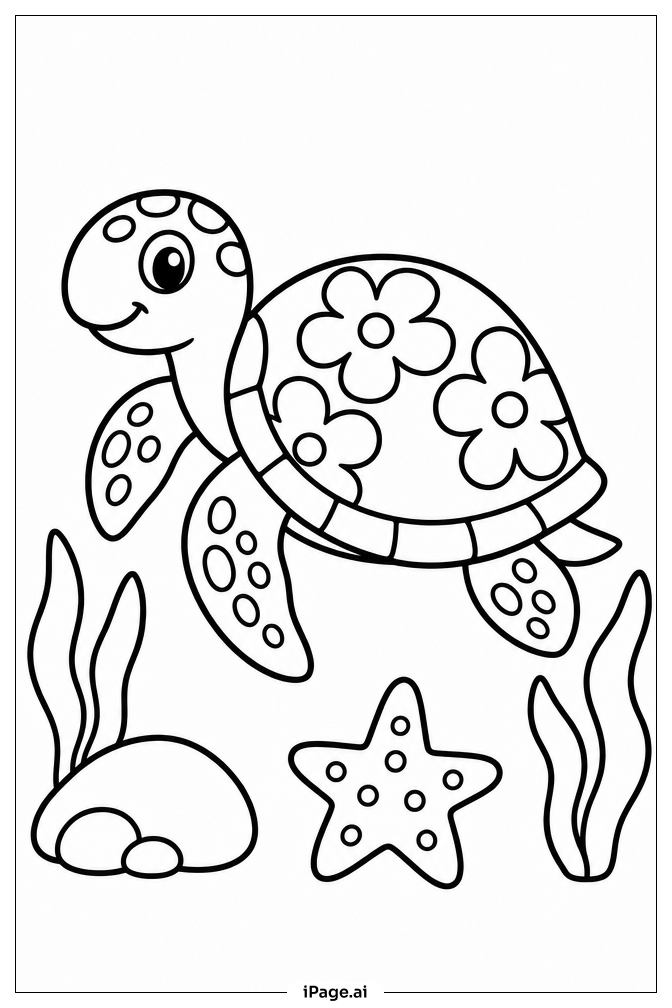
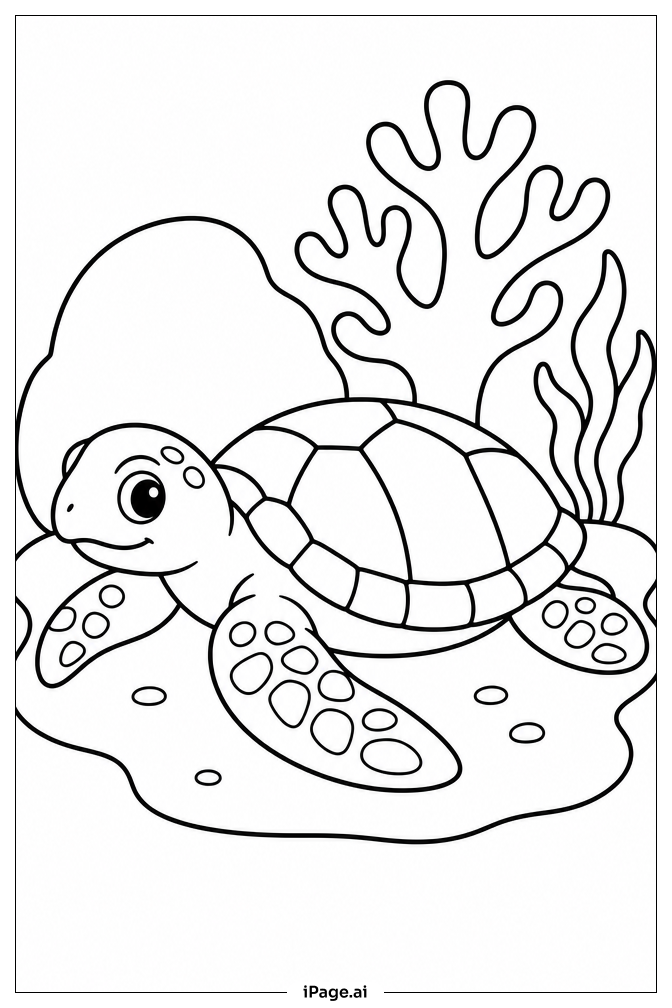
Start with the turtle's shell. Use olive green or dark green for the large shell plates. Add yellow-green highlights to give the shell depth and texture. For the smaller scales around the shell's edge, try brown or tan shades. Color the turtle's flippers and body with a medium green or teal. You can shade the underside slightly lighter to show the curve of the body. For the seaweed, use different shades of green — dark forest green for some strands and bright lime green for others. This contrast makes the scene look more alive. Add touches of blue or teal in the background to suggest open water. Keep your strokes smooth and steady in the large areas, and use a fine-tipped tool for the smaller details on the shell and seaweed edges. Have fun mixing colors to make your ocean scene truly unique.
Coloring challenges: Which parts are difficult to color and need attention for Sea Turtle By Seaweed coloring page?
Coloring this sea turtle and seaweed scene looks simple at first, but it comes with a few tricky spots that require patience and care.\n\n• Shell Pattern Complexity: The turtle's shell is divided into large geometric sections with detailed borders and surrounding small scales. Coloring each section neatly without going over the lines takes a steady hand. Keeping the colors consistent across all the plates while still adding shading and depth is a real challenge for beginners.\n\n• Layered Seaweed Strands: The seaweed around the turtle overlaps in multiple layers. It can be hard to tell which strand goes in front and which goes behind. Choosing slightly different shades of green for each overlapping layer helps separate them visually, but this requires careful color planning before you start.\n\n• Small Scale Details: Along the edges of the shell and on the turtle's flippers, there are many tiny scale shapes. These small sections are difficult to fill in cleanly, especially with thicker coloring tools. A sharp pencil or a fine-tipped marker works best here, but it takes time and concentration.\n\n• Body Shading and Dimension: The turtle's body, head, and flippers are large curved surfaces. Without shading, they can look flat. Adding light and shadow to show the rounded shape of the body is a more advanced technique that challenges older or more experienced colorists.\n\n• Background Depth: If you choose to color the water background, blending it smoothly around the detailed seaweed and turtle outline without muddying the image requires a light touch and careful layering of blue and teal tones.
Benefits of coloring books: Advantages of drawing Sea Turtle By Seaweed coloring page
Coloring this sea turtle page offers many wonderful benefits for kids and adults alike.\n\nFor younger children, carefully following the outlines of the turtle's shell and the flowing seaweed helps build fine motor skills and hand-eye coordination. Choosing colors and staying inside the lines also trains focus and patience.\n\nFor older kids and teens, the detailed shell pattern and layered seaweed are a great opportunity to practice shading, color blending, and creating a sense of depth. These are real artistic skills that carry over into drawing, painting, and other creative work.\n\nFor adults, coloring intricate nature scenes like this one is a proven way to reduce stress and quiet a busy mind. The repetitive, focused motion of coloring is calming and meditative.\n\nBeyond the art skills, this page also sparks curiosity about ocean life. Kids may want to learn more about real sea turtles — where they live, what they eat, and why they need our protection. That natural curiosity can lead to reading, research, and a deeper love of nature.\n\nFinally, finishing a coloring page gives a real sense of pride and accomplishment. For children especially, seeing their completed artwork builds confidence and encourages them to keep creating.