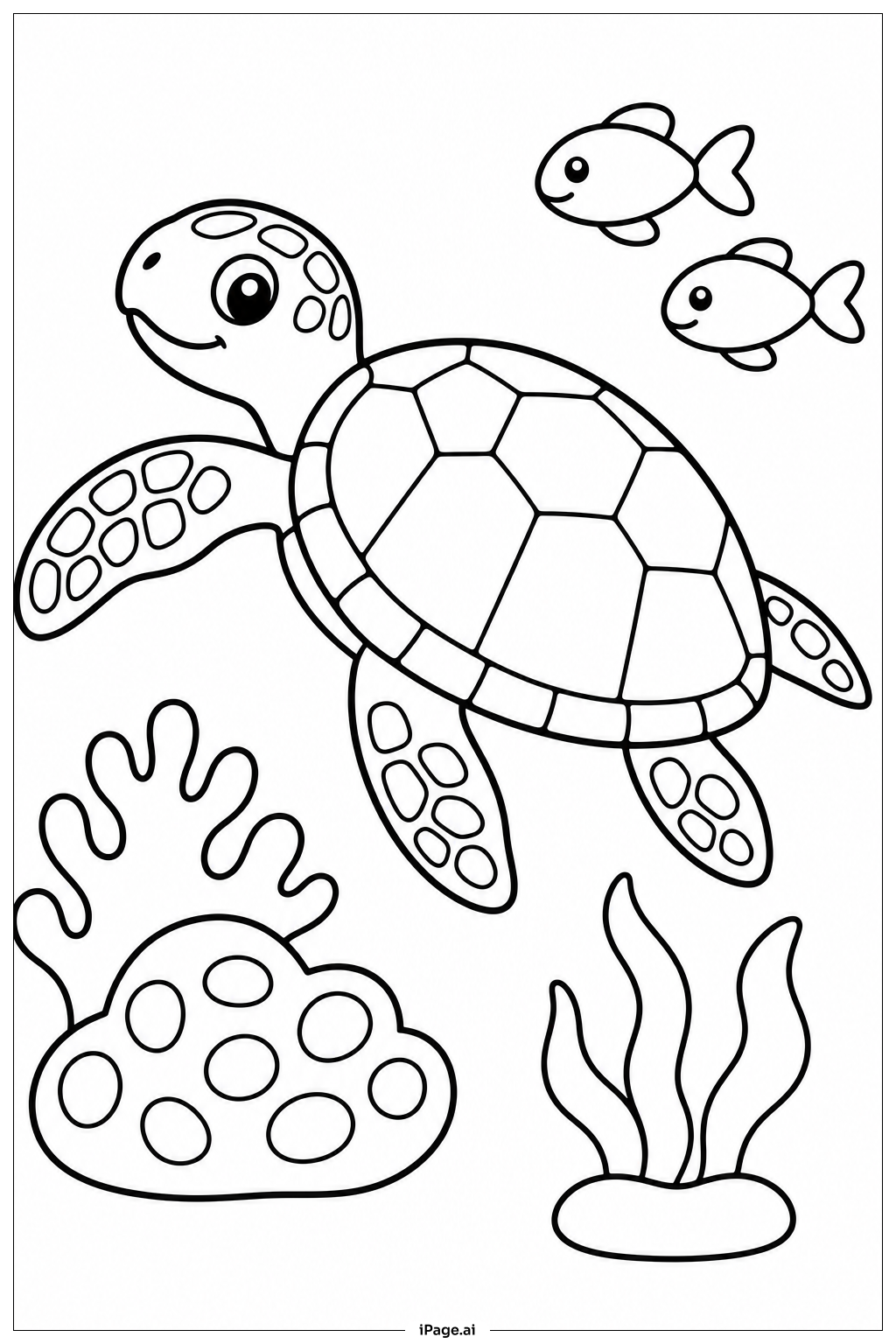
Coloring tips: How to color Sea Turtle And Coral coloring page well?
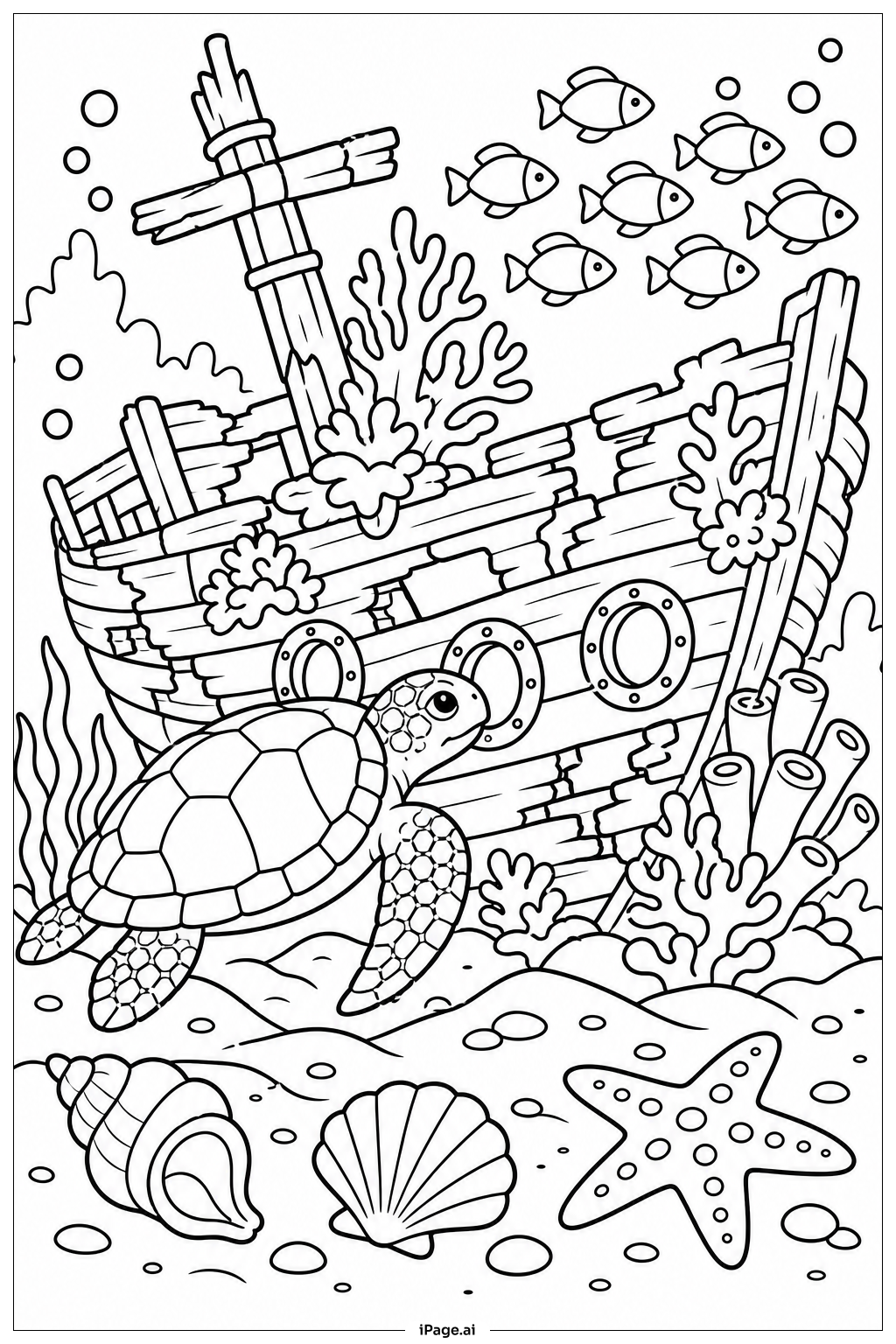
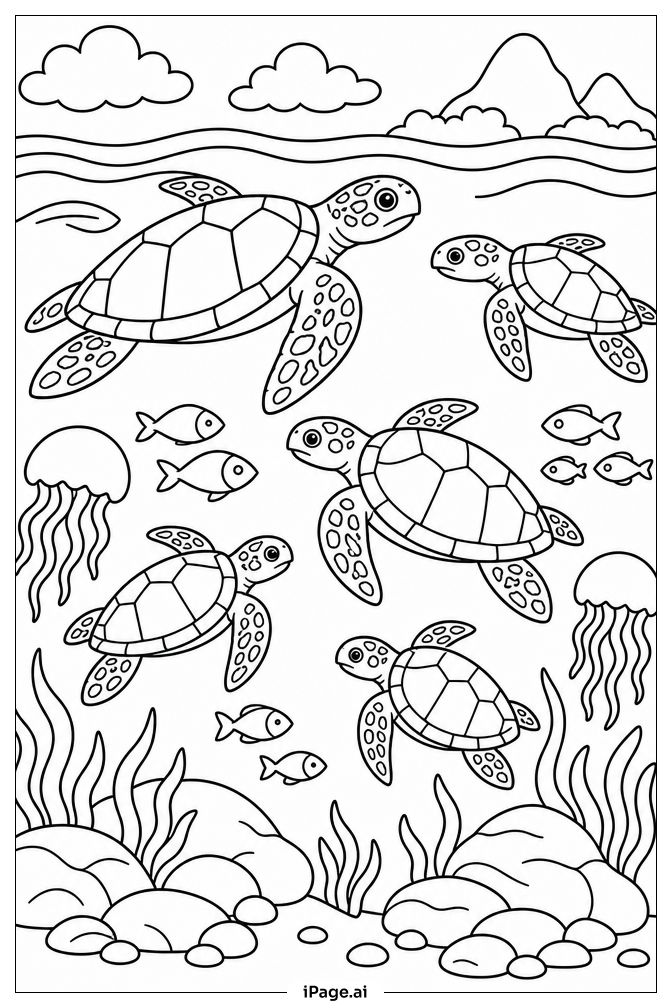
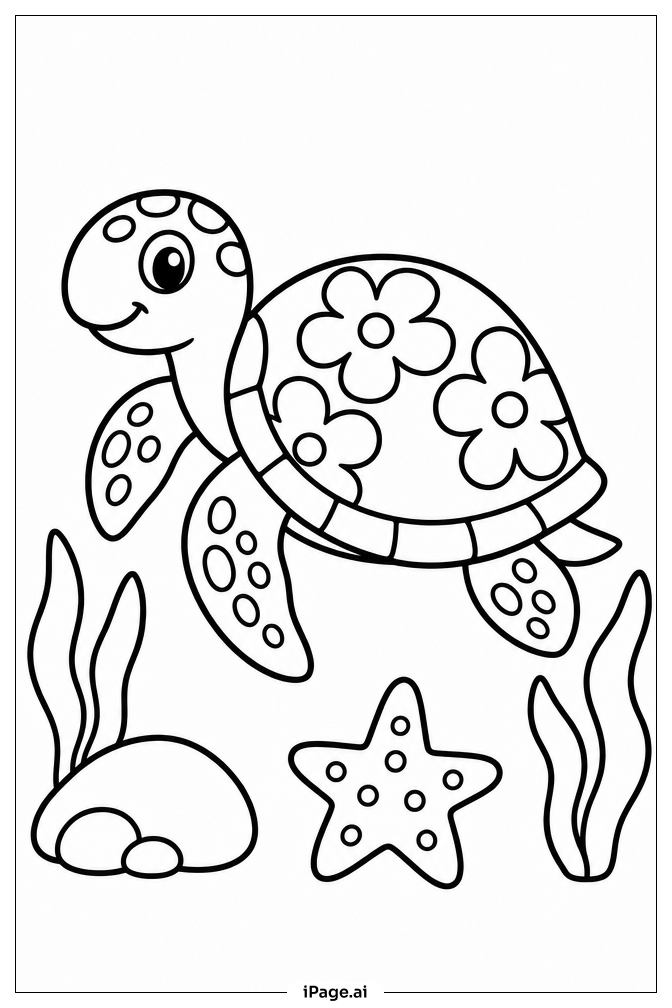
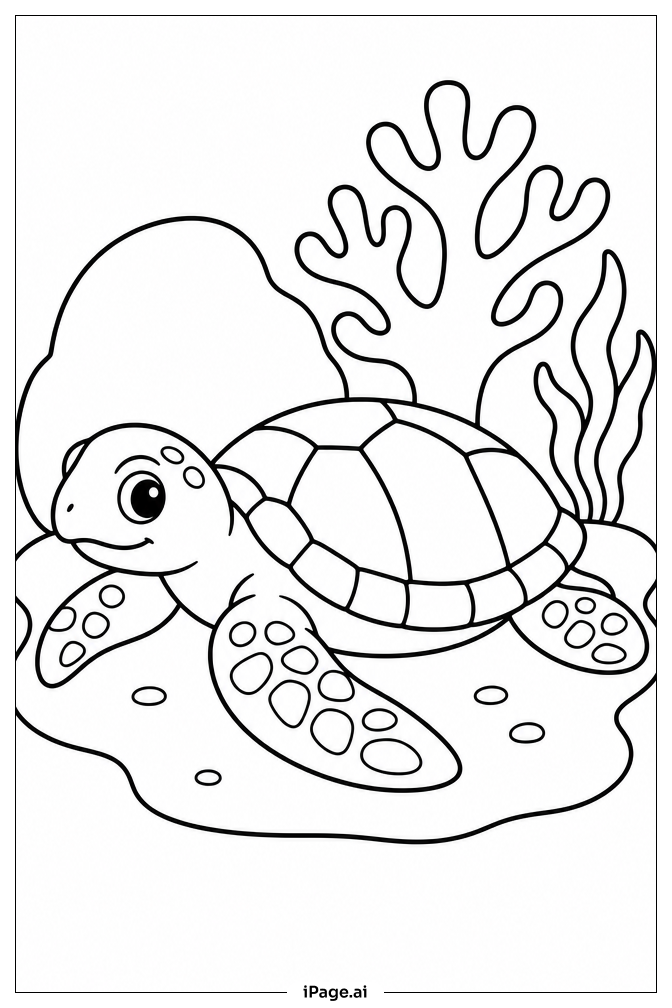
Start with the sea turtle's shell. Use earthy greens, olive, and golden browns for the shell sections. Make each panel a slightly different shade to show depth. Color the turtle's skin with dark green or teal, adding lighter tones on the belly. For the coral, go wild with color — use bright pinks, oranges, purples, and reds. Fan corals look great in deep magenta or violet. Color sea anemones in yellow and orange. Give starfish a warm sandy or bright orange tone. Use deep blues and teals for the background water, blending lighter blue near the surface. Small fish can be colored in vivid tropical shades like yellow, orange, or electric blue. Add gentle gradient shading to the water to give a sense of depth. Use light strokes for seaweed in lime green or dark emerald. Bubbles can be left white or lightly shaded in pale blue. Take your time with the coral details — they reward patience and careful color choices.
Coloring challenges: Which parts are difficult to color and need attention for Sea Turtle And Coral coloring page?
• Shell Pattern Complexity: The sea turtle's shell is divided into many geometric sections called scutes. Each section has its own shape and size. Keeping colors consistent across all sections without muddying the lines takes steady hands and careful attention. Using colored pencils rather than markers gives you more control in tight spaces.
• Coral Variety and Detail: The coral reef includes many different coral types, each with its own intricate texture — branching spikes, rounded bumps, and fan-like webs. Coloring each type distinctly while keeping the overall palette harmonious is a real challenge. It helps to plan your color scheme before you begin.
• Background Water Depth: Creating a convincing underwater atmosphere means blending multiple shades of blue and teal for the water. Getting a smooth gradient without harsh lines requires patience and a light touch, especially if using colored pencils or watercolors.
• Small and Overlapping Elements: Starfish, tiny fish, sea anemones, and bubbles are scattered throughout the scene and often overlap with larger elements. Coloring these small details without accidentally going outside the lines or blending into neighboring areas requires precision and a fine-tipped tool.
• Color Balance Across the Scene: With so many bold, colorful elements — bright coral, a richly patterned turtle, tropical fish — it is easy for the image to feel overwhelming or chaotic. Choosing a balanced palette that lets the sea turtle remain the focal point while still making the reef feel vivid and alive is one of the biggest creative challenges in this image.
Benefits of coloring books: Advantages of drawing Sea Turtle And Coral coloring page
Coloring this sea turtle and coral reef scene offers a wonderful range of benefits for kids and older colorists alike. The rich details of the underwater world spark curiosity about marine life and ocean ecosystems, making learning feel like play. Children naturally begin to ask questions about sea turtles, coral reefs, and the creatures living among them.
Working through the intricate shell patterns and tiny coral details builds fine motor skills and hand-eye coordination. It also encourages focus and patience, since some sections reward slow, careful work.
For older kids and teens, the image offers a creative challenge — planning a color scheme that feels both realistic and beautiful trains visual thinking and artistic decision-making. Experimenting with color blending and shading develops real art skills.
On an emotional level, spending quiet time coloring an ocean scene is genuinely calming. The flowing shapes of coral and the peaceful movement of the turtle create a relaxing, meditative experience that helps reduce stress and anxiety.
The scene also gently raises awareness about ocean conservation. As colorists bring the reef to life with vivid color, they naturally connect with how beautiful and worth protecting these underwater environments are. Overall, this image combines creativity, learning, calm focus, and a love of nature in one deeply satisfying coloring experience.