Coloring tips: How to color Science Volcano Model coloring page well?
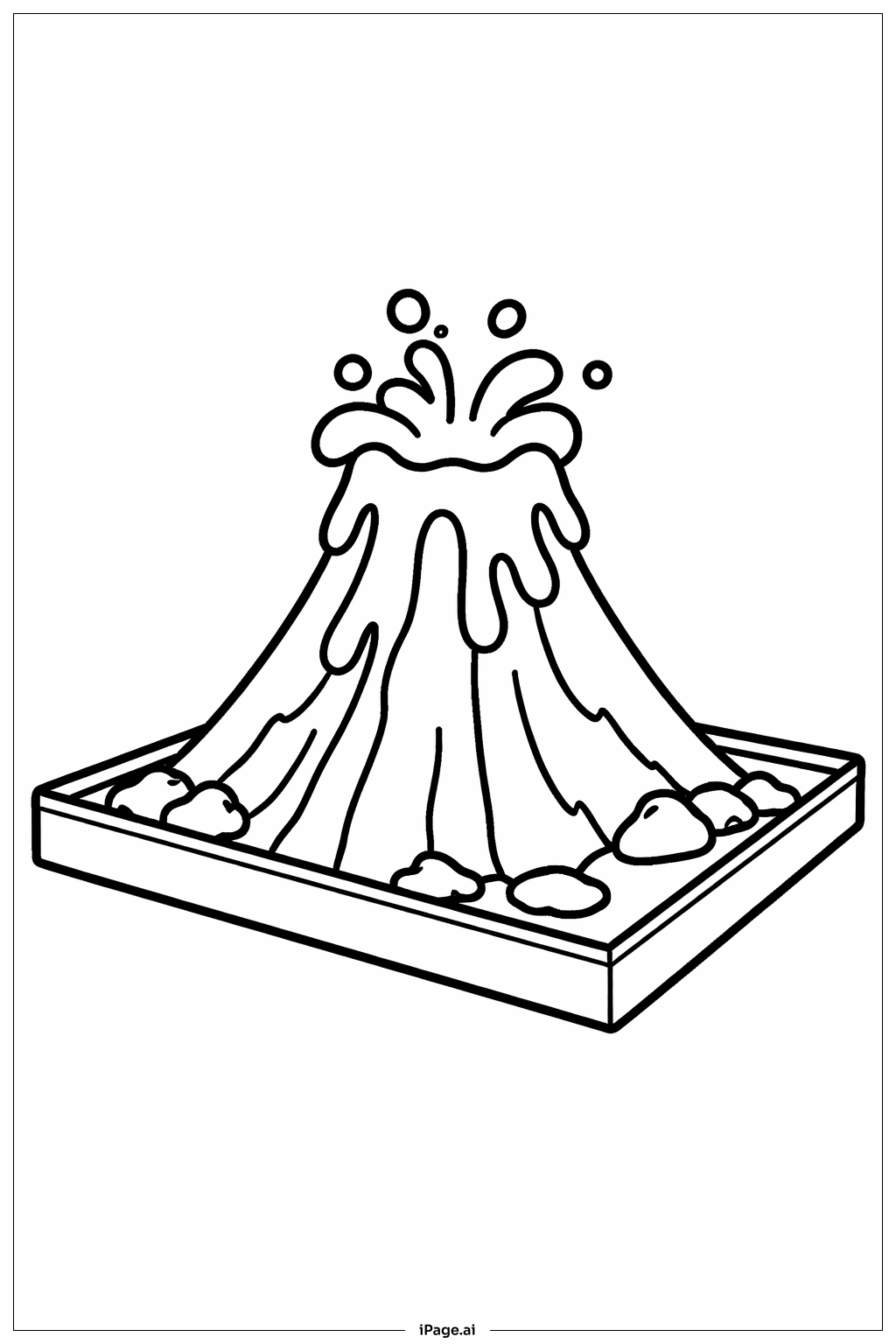
For coloring this volcano model, use bright colors to bring it to life. You can color the lava with shades of red, orange, and yellow to show heat and movement. The rocks around the base can be shaded in gray or brown. The base can be colored in a different color like green or blue to highlight the volcano itself. Try blending colors slightly to make the lava look flowing and glowing. You can also add shading to make the volcano look three-dimensional. Feel free to be creative and use colors that make the volcano look powerful and exciting!
Coloring challenges: Which parts are difficult to color and need attention for Science Volcano Model coloring page?
1. Coloring the flowing lava can be tricky because it has many curves and drops that need smooth and even coloring.
2. Adding depth to the volcano's cone requires careful shading to show roundness.
3. The small bubbles or smoke at the top are tiny and require careful coloring to avoid going outside the lines.
4. The rocks at the volcano base have different shapes and sizes; maintaining realistic colors while coloring each rock can be a challenge.
5. Creating a contrast between the volcano and the base to make the model stand out may need attention to color choice and shading.
Benefits of coloring books: Advantages of drawing Science Volcano Model coloring page
Coloring this volcano model helps children learn about the science of volcanoes in a fun way. It develops focus and hand-eye coordination through detailed coloring. Using different colors to show lava and rocks boosts creativity and understanding of natural elements. Coloring the flowing parts teaches control and precision. This activity also encourages curiosity about how volcanoes work and inspires learning about earth science.