Coloring tips: How to color Science Ecosystem Food Web coloring page well?
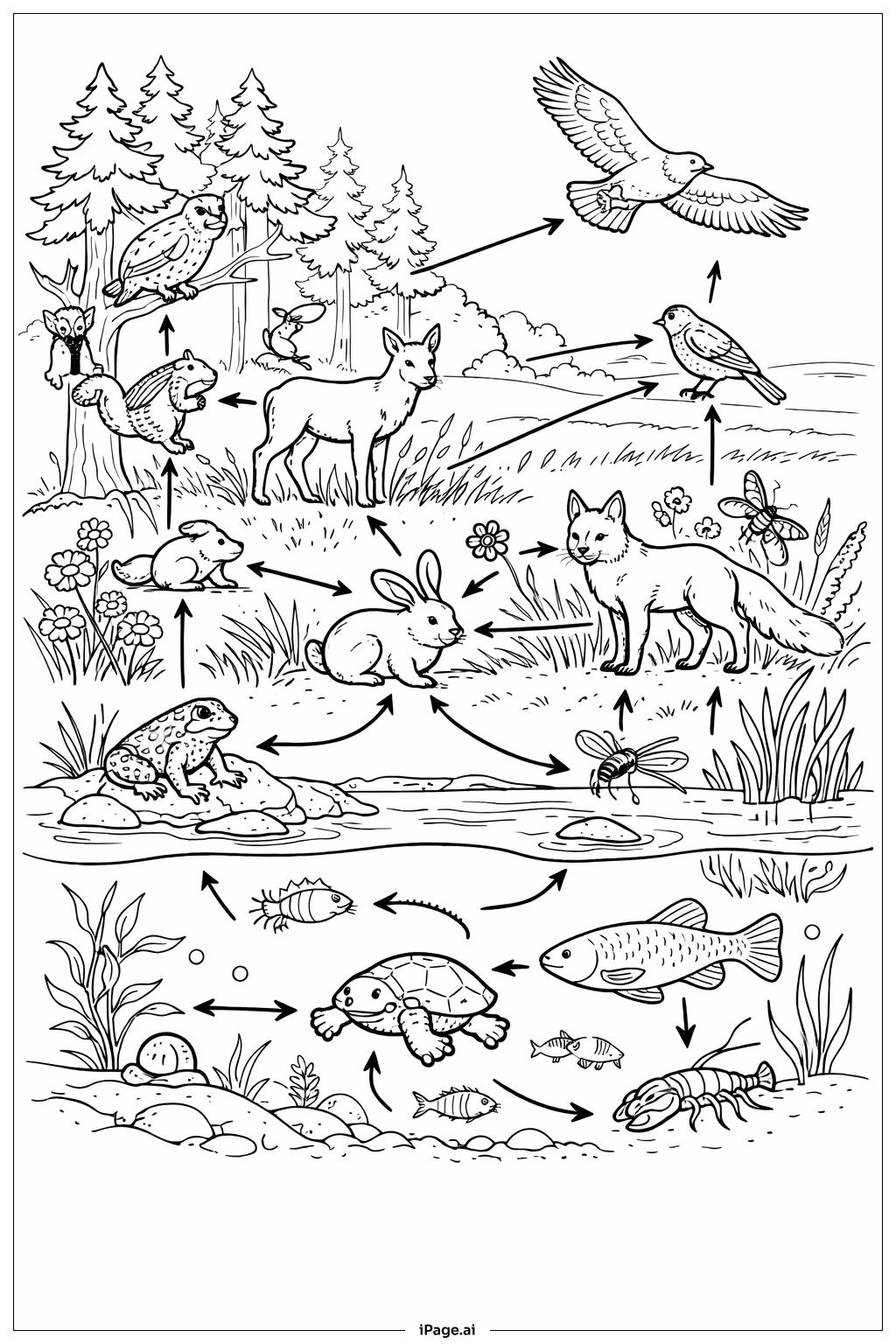
Use bright colors for animals to make them stand out. You can color the fox orange or red, the rabbit white or gray, and the deer brown. Use green shades for trees, grass, and plants. Water can be colored blue with some lighter shades. Try blending colors lightly for the animals’ fur and feathers to create a soft effect. For the small insects, use yellow, black, or other natural colors to highlight their details.
Coloring challenges: Which parts are difficult to color and need attention for Science Ecosystem Food Web coloring page?
1. Many animals are small and close together, so coloring inside the lines may be tricky. 2. The arrows connecting animals are thin and need careful coloring to keep them clear. 3. The detailed features of each animal, like feathers on the birds or scales on the fish, require patience and precision. 4. Coloring the water and grass with natural shades while keeping the animals vibrant can be challenging. 5. Some areas have overlapping parts, making it harder to decide which color to use first.
Benefits of coloring books: Advantages of drawing Science Ecosystem Food Web coloring page
Coloring this picture can help children learn about the animals in an ecosystem and their food connections. It improves fine motor skills because of the detailed parts. Coloring the different animals and plants encourages creativity and teaches about nature. It also helps kids focus and relax while having fun with colors. Overall, it’s a great way to combine education and art.