Coloring tips: How to color Science Planetary Rover Mission coloring page well?
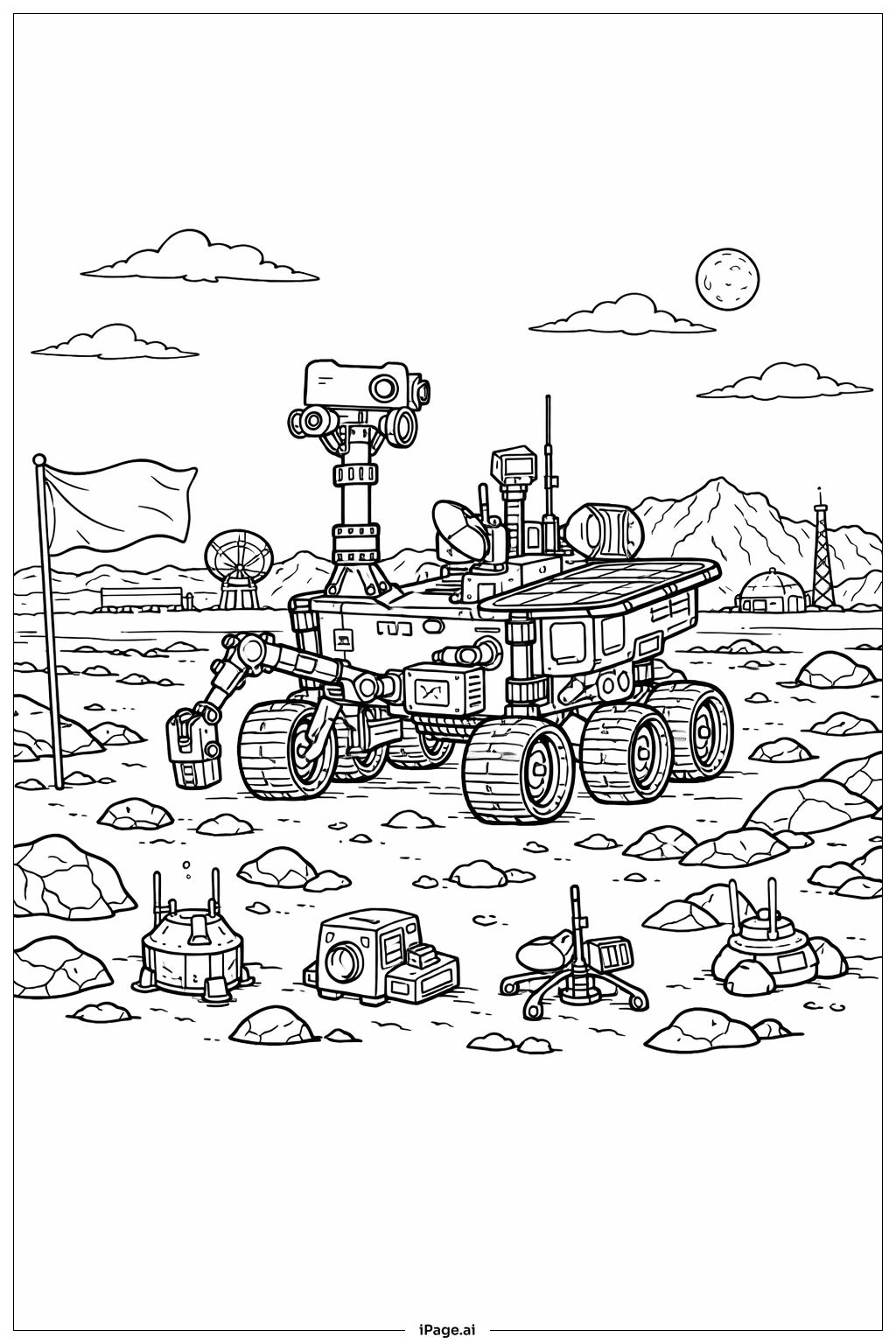
Use gray and silver colors for the rover to show its metallic parts. The rocks and the ground can be colored in different shades of brown and gray to give a rocky moon or planet look. Color the sky light blue or black with white clouds and a yellow or light gray moon. The flag can be bright red or blue to stand out. The mountains can be painted in darker browns or purples to add depth. Use different colors for the scientific tools to make them interesting and recognizable. Try to color the wheels with dark gray or black to highlight their toughness.
Coloring challenges: Which parts are difficult to color and need attention for Science Planetary Rover Mission coloring page?
1. The rover has many small and detailed parts like cameras, robotic arms, and antennas that require careful coloring within small spaces.
2. The rocky surface has many scattered stones and uneven shapes which might be tricky to shade consistently.
3. Distinguishing different scientific instruments on the ground can be confusing because of their similar shapes and sizes.
4. The background elements like clouds, mountains, and sky need to be colored softly to keep the focus on the rover.
5. Coloring the wheels realistically needs attention to detail to show their texture and round shape clearly.
Benefits of coloring books: Advantages of drawing Science Planetary Rover Mission coloring page
Coloring this planetary rover scene helps children improve their fine motor skills due to the detailed parts of the rover. It also encourages creativity by choosing colors for space objects, rover, and landscape. Learning to color the different textures—metal, rock, and sky—enhances understanding of different materials and environments. This activity supports focus and patience, as the picture invites careful coloring in small spaces.