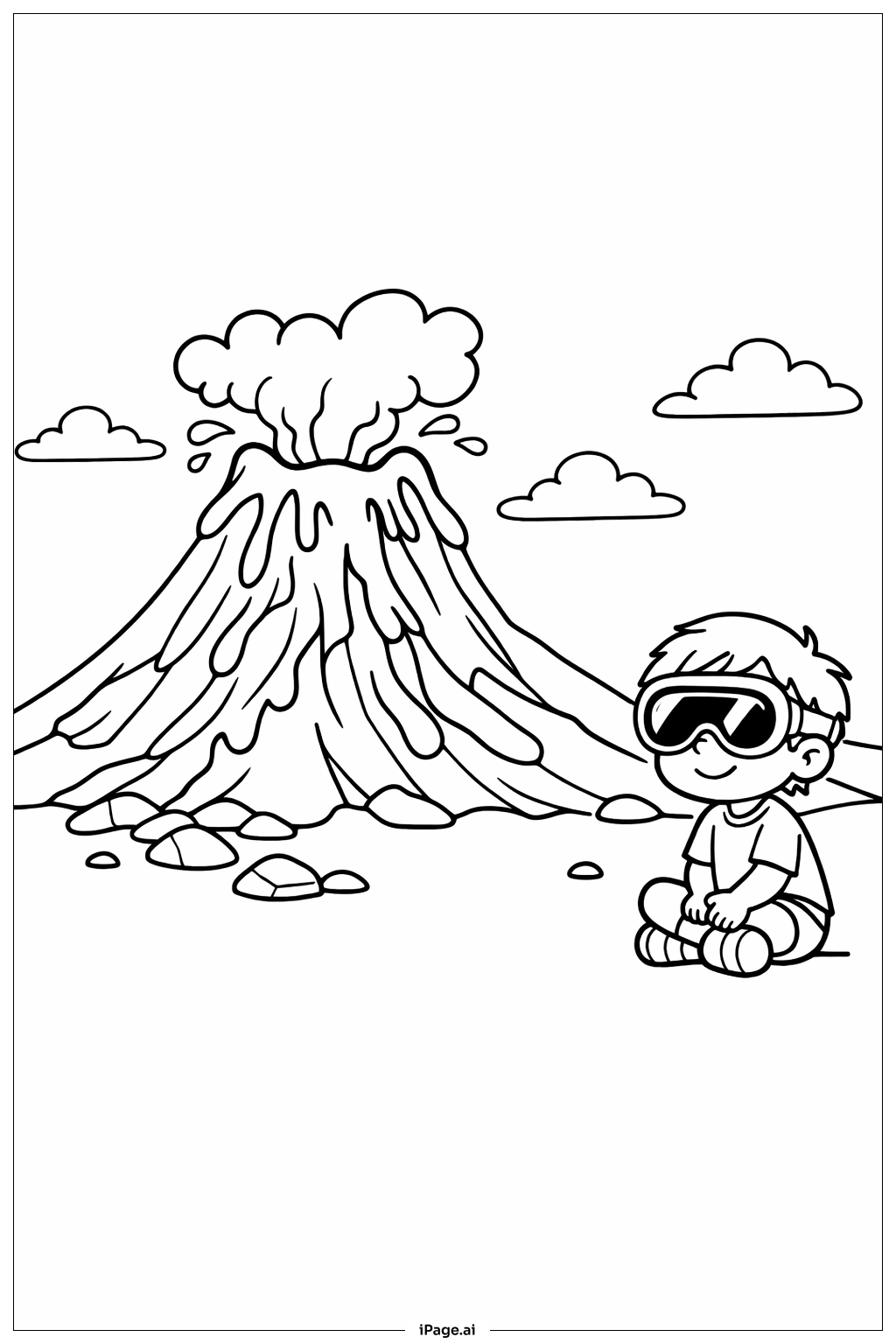
Coloring tips: How to color Science Volcano Eruption Scene coloring page well?
Start with the volcano itself using browns, grays, and dark rocky tones for the mountain structure. Color the lava flows in bright reds, oranges, and yellows to show the intense heat. Make the hottest areas near the crater bright yellow, fading to orange and then red as it cools. Use dark grays, blacks, and purples for the ash clouds and smoke, adding lighter grays for depth. The sky can be colored in dramatic sunset hues of orange and red, or keep it blue for contrast. Add gray and brown tones to the rocky ground, and use red-orange glows around lava areas to show reflected heat. Consider using colored pencils to blend the lava colors smoothly for a realistic molten effect.
Coloring challenges: Which parts are difficult to color and need attention for Science Volcano Eruption Scene coloring page?
• Lava Flow Gradients: Creating smooth color transitions in the lava streams requires careful blending. The challenge is showing how molten rock changes from bright yellow at the hottest points to orange in the middle sections and deep red as it cools. Young colorists may find it difficult to blend these colors seamlessly without harsh lines. Using light pressure and layering colors gradually helps achieve a natural molten appearance.
• Smoke and Ash Texture: The billowing clouds of volcanic smoke and ash present a unique challenge because they need to look soft and three-dimensional. Colorists must work with various shades of gray and black to create depth and volume. The trick is using lighter grays for areas where light hits the clouds and darker tones for shadows, making the smoke appear to swirl and rise realistically.
• Rock Detail and Texture: The volcanic rock formations, boulders, and terrain contain many small details and irregular shapes. Coloring these areas requires patience and attention to create a rough, rocky texture. Deciding where to place highlights and shadows on the uneven surfaces can be tricky, especially for younger children.
• Color Balance and Contrast: With so many different elements in one scene, maintaining good color balance is challenging. The bright, warm colors of the lava need to stand out against the darker volcano and smoke while keeping the overall picture visually pleasing and not overwhelming.
Benefits of coloring books: Advantages of drawing Science Volcano Eruption Scene coloring page
Coloring this volcano eruption scene offers wonderful educational benefits while developing artistic skills. Children learn about natural science concepts like volcanic activity, lava, and geological formations in a hands-on way. The image helps them visualize how volcanoes work and what happens during an eruption. Working with warm color schemes improves understanding of color theory, especially how hot and cool colors create mood and atmosphere. The various textures in the scene, from smooth flowing lava to rough rocks and soft smoke, help develop fine motor control and different coloring techniques. This complex image builds concentration and patience as children work through the detailed areas. It also encourages creativity in choosing colors and deciding how dramatic or realistic to make the eruption look.