Coloring tips: How to color Science Underwater Research Lab coloring page well?
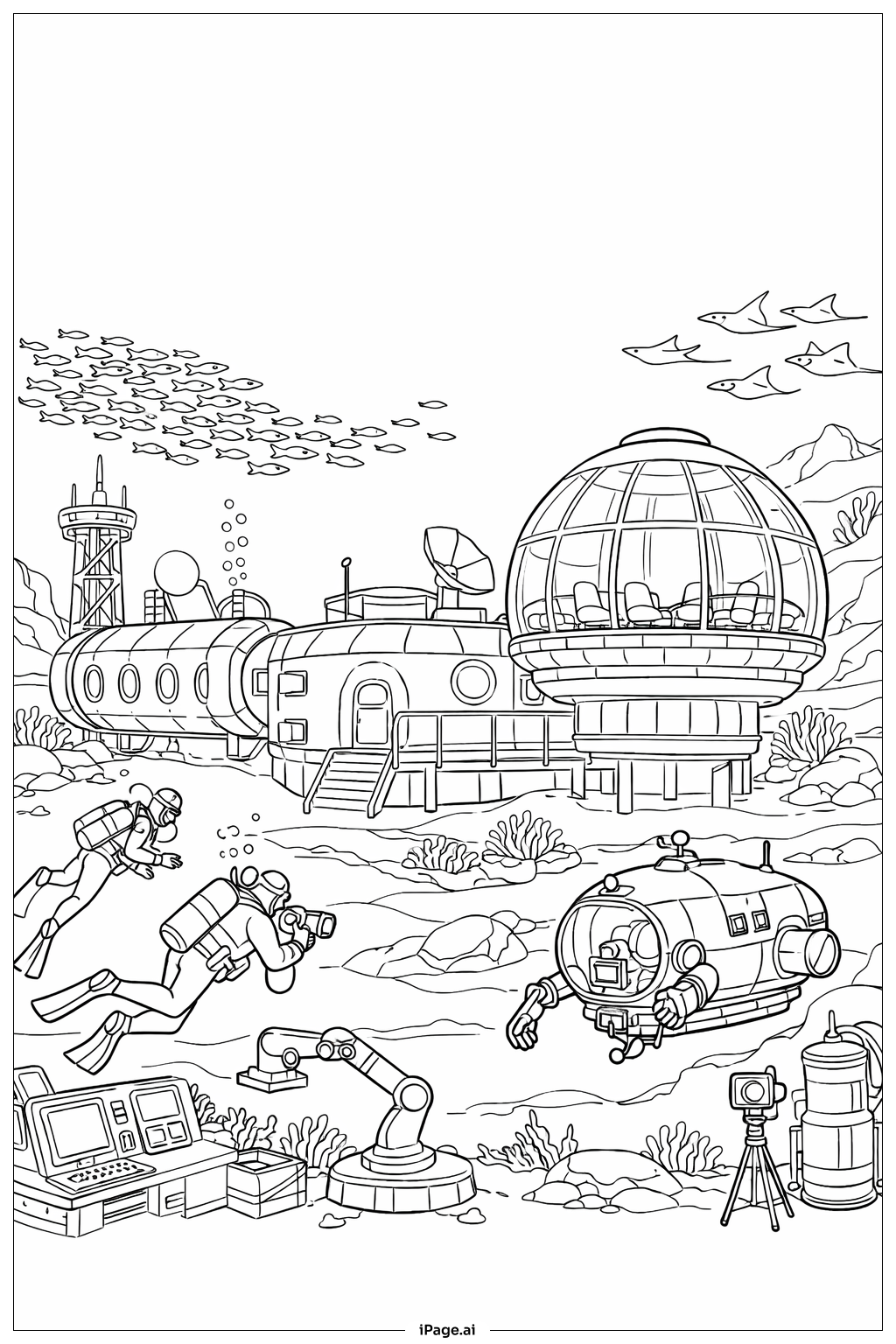
Use different shades of blue and green for the water and sea plants. Color the underwater lab with metallic tones like gray, silver, or light blue. The divers' suits can be bright colors like red, yellow, or orange to stand out. Fish can be colorful with yellows, oranges, and blues. The coral reefs are good to color in bright reds, pinks, purples, and oranges. The underwater robot can be silver or gray with some buttons in red or blue. Use light purple or blue for distant underwater mountains. Make the whole picture bright and lively to show the exciting underwater research environment.
Coloring challenges: Which parts are difficult to color and need attention for Science Underwater Research Lab coloring page?
1. Small details on the underwater robot and scuba divers' equipment can be hard to color because they have many tiny parts. 2. Coloring the fish and coral reefs with different bright colors requires attention to avoid coloring outside the lines. 3. The large dome-shaped room has many window sections needing careful coloring to keep them neat. 4. The background mountains and sea plants might blend with the water color, so it’s challenging to show depth properly. 5. Using different shades of blue for the water to make it look realistic can be difficult for young colorers.
Benefits of coloring books: Advantages of drawing Science Underwater Research Lab coloring page
Coloring this underwater lab picture helps children learn about ocean science and underwater exploration. It encourages creativity by using many colors for fish, coral, and water. The detailed areas teach patience and improve fine motor skills. It also helps kids understand how technology helps scientists explore the deep ocean. Overall, it makes learning about science fun and interesting while developing coloring skills.