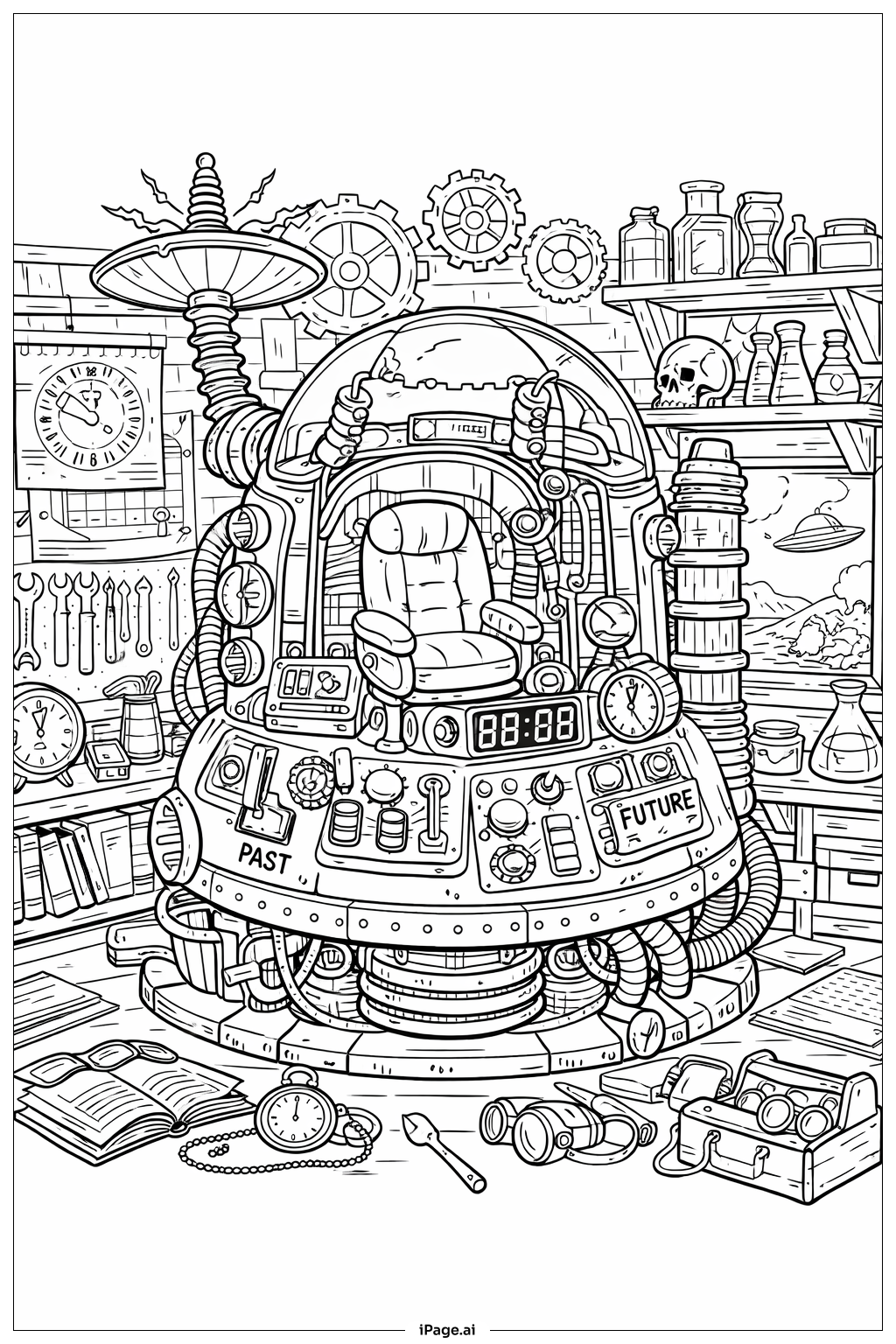
Coloring tips: How to color Science Time Machine Workshop coloring page well?
Use bright and varied colors to make the time machine stand out. Color the buttons and dials in different shades to show their function. Use metallic colors like silver and gray for the machine parts and pipes. For the shelves and tools, use earthy tones like brown and beige. The skull can be colored white or light gray. Add blues and greens for the mountains outside the window. Use soft colors for the jars and bottles to give a glassy look. The flying saucer can be painted in vibrant colors to catch the eye. Try using different tones for the background and foreground to create depth.
Coloring challenges: Which parts are difficult to color and need attention for Science Time Machine Workshop coloring page?
1. Small details: The picture has many tiny parts like buttons, dials, and tools, which require careful coloring within the lines.
2. Different textures: The machine, shelves, jars, and tools all have different surfaces, so choosing the right colors and shading can be challenging.
3. Depth and layers: Creating a clear sense of depth between the time machine, the objects around it, and the background needs careful color contrast.
4. Time labels: Balancing the colors on the words "PAST" and "FUTURE" to make them visible but still part of the machine.
5. Shiny elements: The glass dome and metal parts need shiny color effects, which can be tricky to achieve with coloring pencils or markers.
Benefits of coloring books: Advantages of drawing Science Time Machine Workshop coloring page
Coloring this picture helps improve focus and attention to detail because of its many small parts. It encourages creativity in choosing colors for different textures and materials. Children can learn about contrasts and depth by coloring the foreground and background differently. Coloring scientific tools and a time machine can spark interest in science and imagination. This activity also helps develop fine motor skills by coloring small and precise areas carefully. Overall, it is a fun and educational way to combine art and science.