Coloring tips: How to color Science Simple Microscope coloring page well?
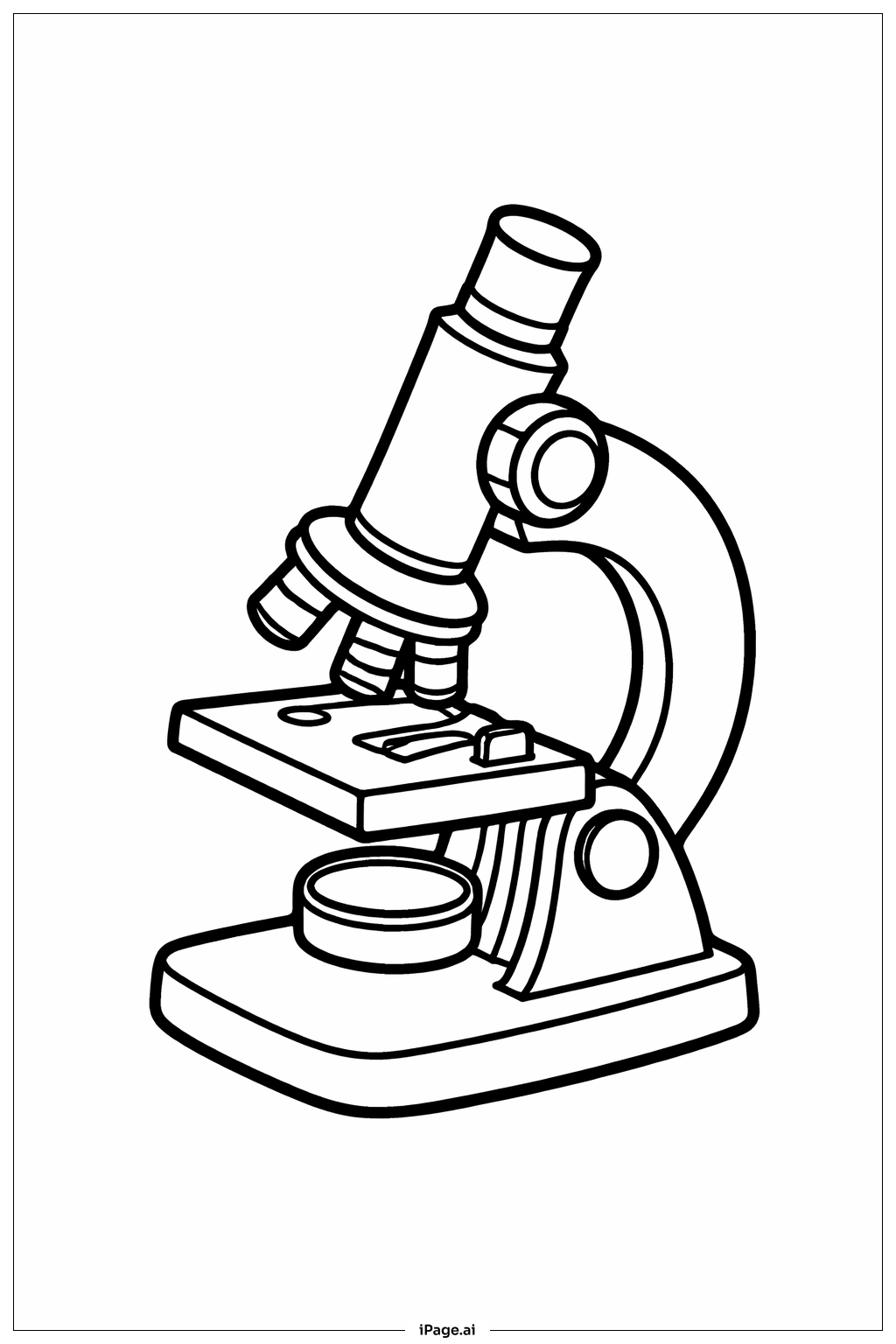
Use metallic colors like silver or gray for the main body of the microscope to make it look realistic. You can color the base a darker shade like black or dark gray. The lenses can be colored light blue or light gray to show glass. The knobs and small parts can be different shades of gray or match the body but a bit darker. For the light source, try soft yellow to show the light shining through. Add shadows with darker tones to give the microscope shape and depth. Feel free to make the background simple with light colors or leave it white to focus on the microscope.
Coloring challenges: Which parts are difficult to color and need attention for Science Simple Microscope coloring page?
1. The small details like the knobs and lenses are tight spaces to color carefully without going outside the lines.
2. The round shapes, such as the lenses and focus knobs, need smooth and even coloring to show their roundness.
3. Adding shadows and highlights within the small areas can be tricky but helps make the microscope look three-dimensional.
4. Balancing the colors for metal parts to look realistic while keeping the picture fun and colorful can be a challenge.
5. Avoiding color blending outside the lines, especially on the thin arms connecting parts, requires steady hands and patience.
Benefits of coloring books: Advantages of drawing Science Simple Microscope coloring page
Coloring this microscope helps children learn about science tools and develop fine motor skills. It encourages attention to detail, as little parts need careful coloring. Kids also practice using colors to show different materials like metal and glass. This activity can inspire curiosity about science and how microscopes help us explore the tiny world. Moreover, it supports creativity in choosing colors and shading to make the picture come alive.