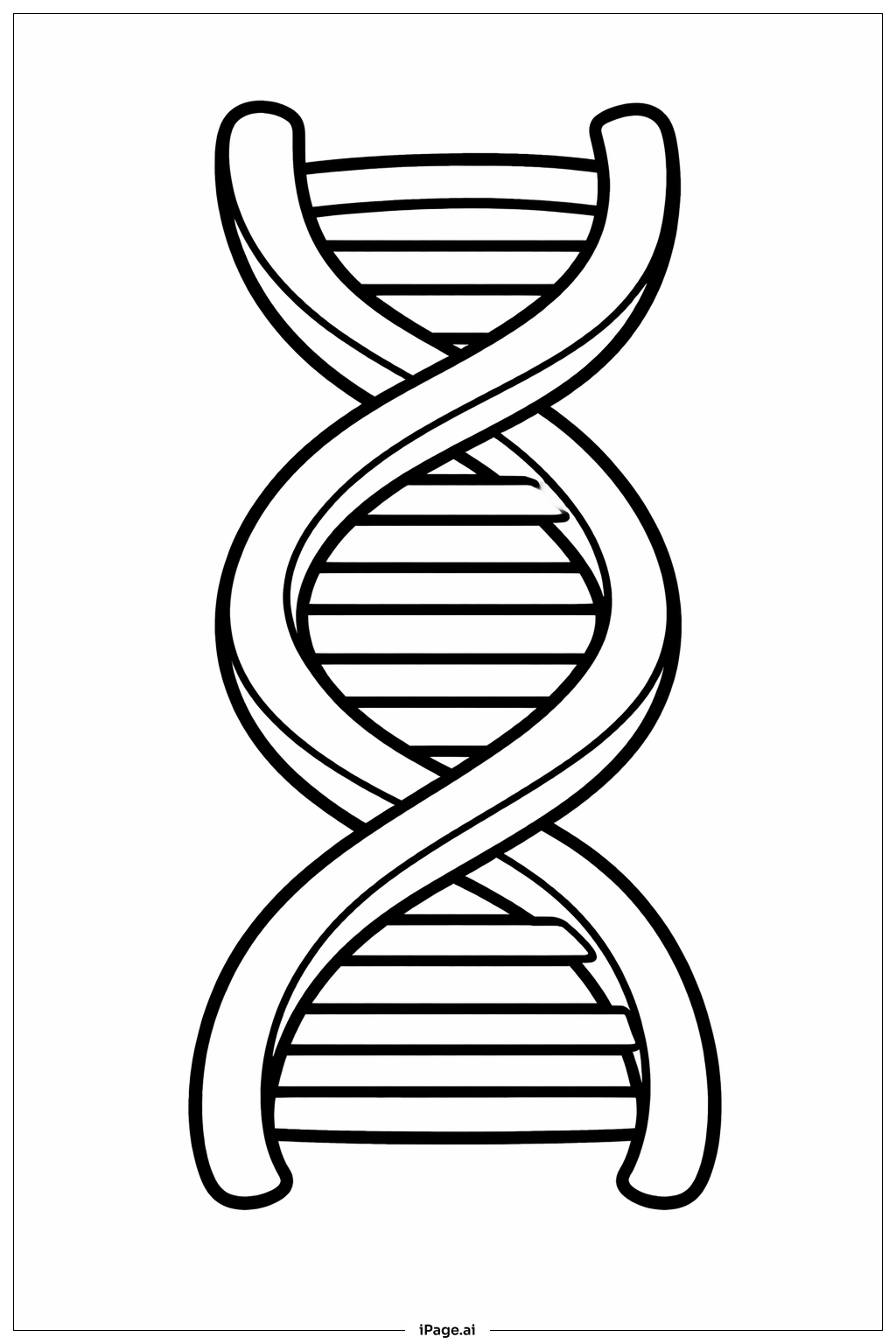
Coloring tips: How to color Science Simple DNA Helix coloring page well?
Use different colors for the two long strands to make the DNA structure stand out. You can color the base pairs in bright colors to show the connection between the strands. Try using shades of blue or green for the strands and use contrasting colors like red, yellow, or orange for the base pairs. This will make the image colorful and interesting. You can also add some light shading inside the strands to give a 3D effect.
Coloring challenges: Which parts are difficult to color and need attention for Science Simple DNA Helix coloring page?
1. The twisted shape of the DNA strands can be tricky to color neatly because it curves around. 2. The small spaces between the base pairs might be hard to color without crossing the lines. 3. Coloring the strands evenly without leaving white spaces requires careful attention. 4. Choosing colors that contrast well will help make the image clear, but it might be difficult to decide which colors to use. 5. Adding shading or gradient to create a 3D effect can be challenging for younger children.
Benefits of coloring books: Advantages of drawing Science Simple DNA Helix coloring page
Coloring this DNA helix helps children learn about science in a fun way. It encourages focus and hand control as they color inside the lines. Using different colors to highlight parts of the DNA helps kids understand its structure better. It also sparks curiosity about biology and genetics. This activity improves creativity and attention to detail, which are important skills for learning.