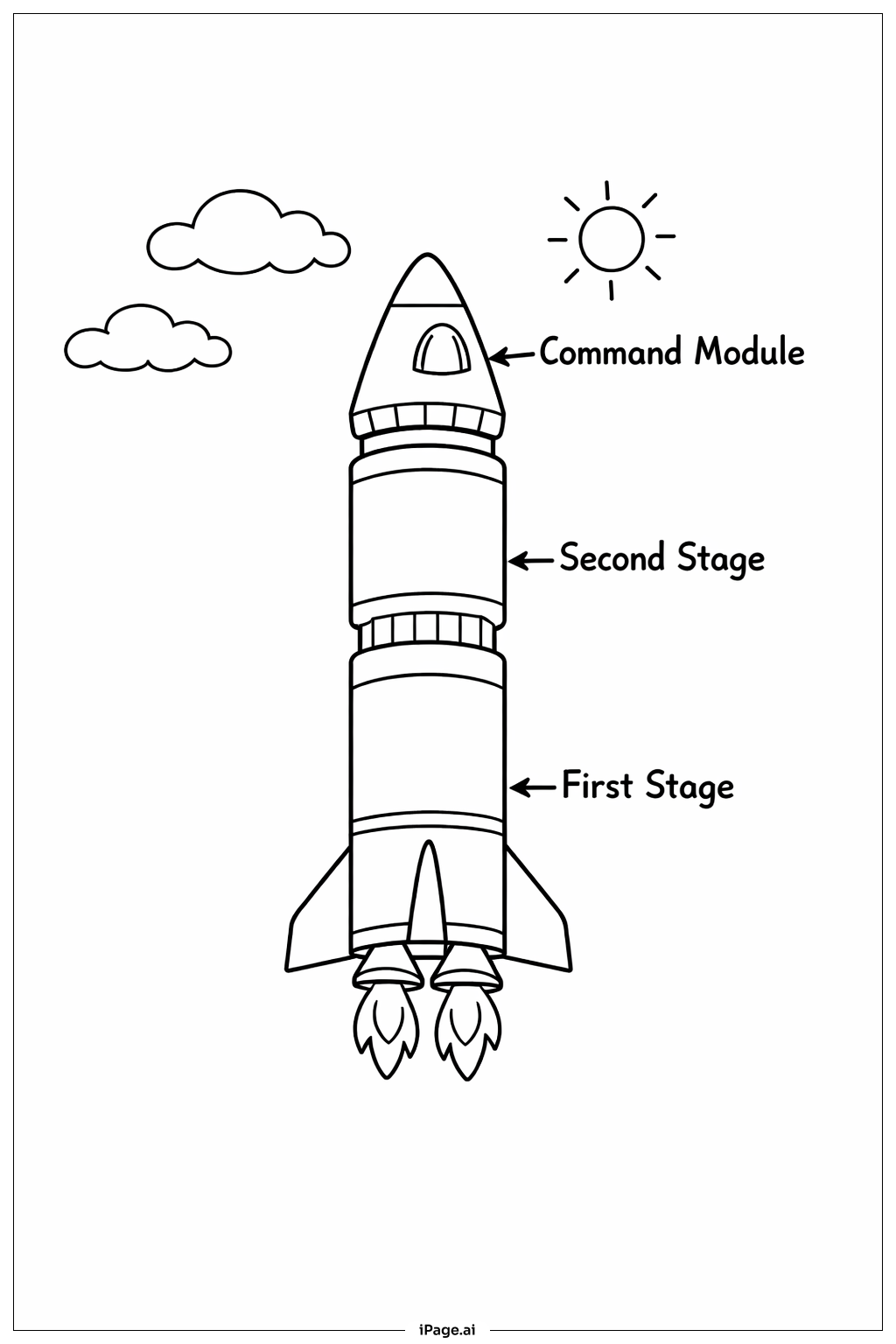
Coloring tips: How to color Science Rocket Stages Diagram coloring page well?
Start with the rocket body using bright metallic colors like silver, gray, or white to give it a realistic spacecraft appearance. Color each stage differently to show the separation between sections - try using light gray for the first stage, darker gray for the second stage, and white for the payload area. The nose cone can be colored in bright red or orange to make it stand out. Use vibrant yellow, orange, and red for the flames and exhaust coming from the rocket engines to create an exciting launch effect. Add blue or light gray to the smoke clouds for contrast. Consider using colored pencils to add shading along the edges of the rocket to give it a three-dimensional look. You can also add small details like windows or logos using bright colors.
Coloring challenges: Which parts are difficult to color and need attention for Science Rocket Stages Diagram coloring page?
• Stage Separation Lines: The diagram shows clear divisions between different rocket stages, which requires careful coloring to maintain distinct boundaries. Young colorists need to stay within the lines where stages connect and avoid bleeding colors into adjacent sections. This teaches precision and attention to technical details.
• Flame and Exhaust Effects: Creating realistic fire and smoke effects can be challenging. The flames require blending multiple warm colors like red, orange, and yellow smoothly together, while the exhaust clouds need softer, lighter strokes. Children must learn color gradation techniques to make the launch effect look dynamic and believable.
• Small Technical Details: The rocket includes fins, panels, hatches, and structural elements with narrow spaces between them. These tiny areas require fine motor control and careful coloring with sharp pencil tips or thin markers. Younger children may find it difficult to color these intricate parts without going outside the lines.
• Symmetry Maintenance: Rockets are symmetrical objects, so maintaining consistent colors and shading on both sides creates visual balance. Children need to remember which colors they used on one side and replicate them on the other, which develops planning skills and visual memory.
• Shading for Depth: To make the cylindrical rocket look three-dimensional rather than flat, colorists should add darker shades on one side and lighter tones on the other. This advanced technique requires understanding light sources and applying varying pressure with coloring tools.
Benefits of coloring books: Advantages of drawing Science Rocket Stages Diagram coloring page
Coloring this rocket stages diagram offers wonderful educational benefits alongside creative fun. Children learn about space exploration and rocket science while developing their artistic skills. The technical nature of the image encourages careful observation and attention to detail, which improves focus and concentration. Working with the different stages helps kids understand how complex machines are built in parts, fostering logical thinking. The fine details in the rocket design enhance fine motor skills and hand-eye coordination, essential for writing and other daily tasks. Choosing colors for different sections exercises decision-making abilities and color theory knowledge. The exciting subject matter sparks curiosity about STEM topics and may inspire future scientists and engineers. Completing this detailed coloring page builds patience and perseverance, while the finished product provides a sense of accomplishment. It's a perfect activity for space-loving children that combines learning with creativity.