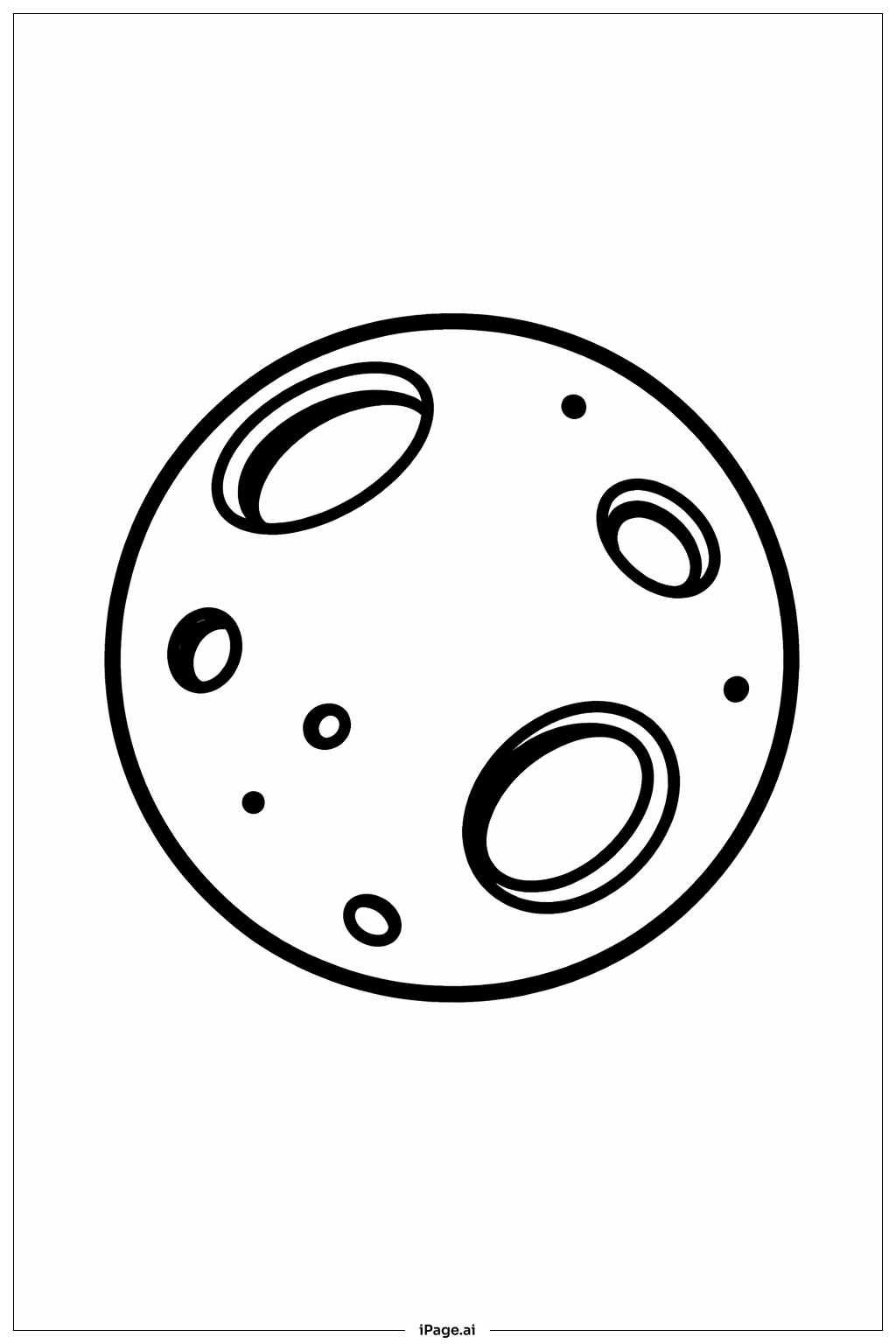
Coloring tips: How to color Science Moon with Crater coloring page well?
To color this moon image, try using shades of gray to give it a realistic look because the moon’s surface is mostly gray and rocky. You can start with a light gray base for the whole moon. Then use darker grays or even black to fill in the craters to show their depth. Adding some white or very light gray highlights around the edges of the moon and the craters can make it look more three-dimensional. You can use coloring pencils, crayons, or markers to fill the areas carefully inside the lines. Feel free to add a dark space background to make the moon stand out more.
Coloring challenges: Which parts are difficult to color and need attention for Science Moon with Crater coloring page?
1. Filling the bigger craters evenly without coloring outside the lines can be tricky because of their curve shapes.
2. Smaller craters require careful coloring to avoid smudges or mistakes due to their size.
3. Creating a shadow effect to show crater depth may be difficult for younger children who are new to shading techniques.
4. Coloring the round shape evenly so it looks smooth and not patchy can be challenging.
5. Keeping the outline lines clean while shading inside requires focus and patience.
Benefits of coloring books: Advantages of drawing Science Moon with Crater coloring page
Coloring this moon image helps improve hand-eye coordination and fine motor skills as children carefully color inside the craters and around the moon. It encourages creativity by allowing them to experiment with different shades of gray and space colors. The activity also teaches about the moon’s surface and the concept of craters, making learning fun and engaging. Additionally, working on this coloring page can boost concentration and patience as kids focus on details and shading. Overall, it’s a great way to combine science learning with art.