Coloring tips: How to color Science Microscope Slide View coloring page well?
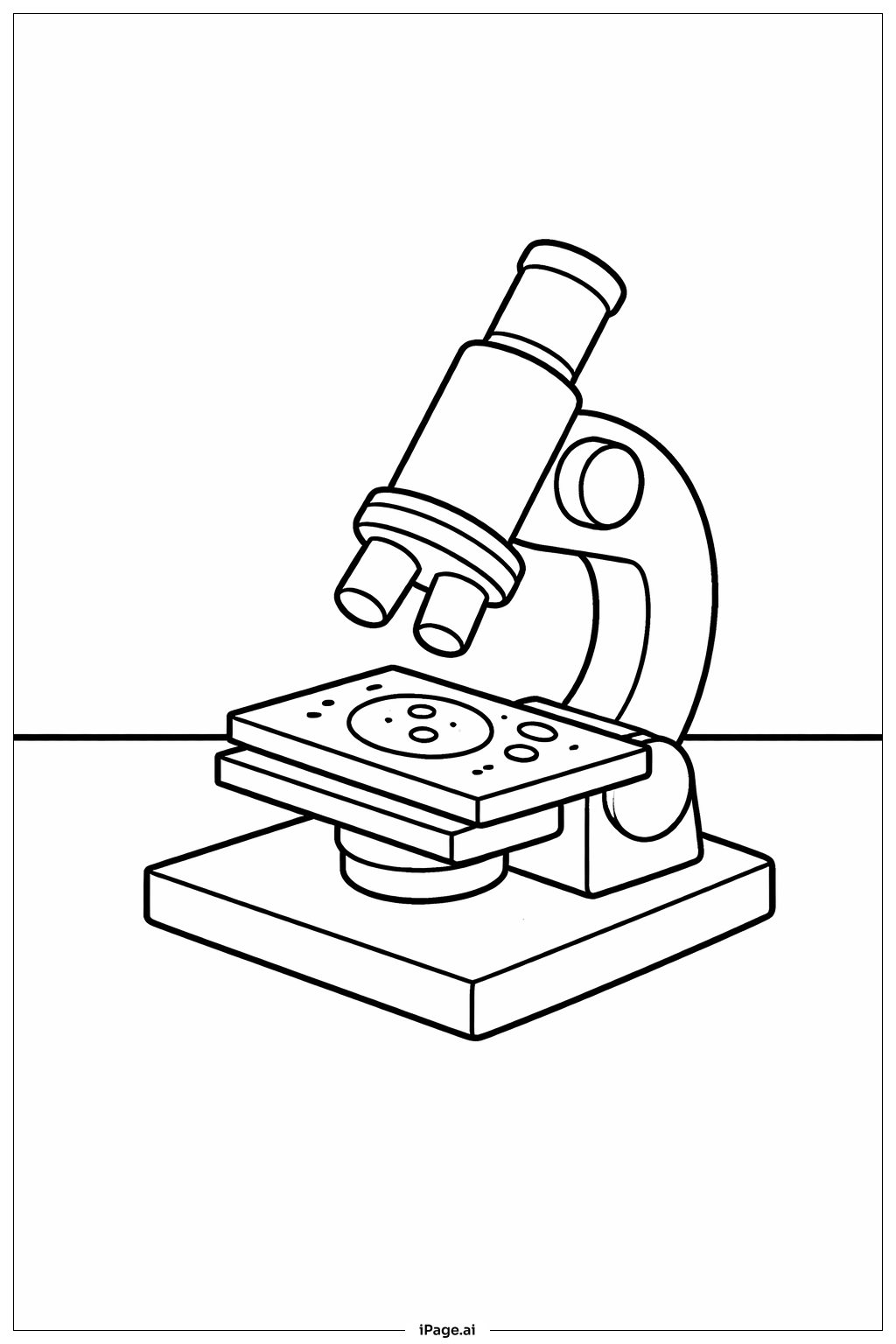
Use gray or silver colors for the metal parts of the microscope to give it a realistic look. You can color the stage and base dark colors like black or dark blue. For the eyepiece and lenses, use light blue or light gray to show glass. The circles on the slide can be colored in different bright colors like red, yellow, or green to represent tiny cells or living things. Make sure to color slowly around the small circles to stay neat. Coloring the background light colors can make the microscope stand out more on the page.
Coloring challenges: Which parts are difficult to color and need attention for Science Microscope Slide View coloring page?
1. Coloring the small circles on the slide can be tricky because they are tiny and close together, so you need to use a sharp colored pencil or a thin marker.
2. The microscope has many small parts, like the eyepiece and knobs, which require careful coloring inside the lines.
3. Adding shading or showing the glass effect on the lenses might be challenging for young colorers.
4. Keeping the colors realistic while making the image interesting might need some planning.
5. Staying within the straight lines of the base and stage can be hard because they have sharp edges that need a steady hand.
Benefits of coloring books: Advantages of drawing Science Microscope Slide View coloring page
Coloring this microscope page helps kids learn about science tools and how they work. It improves their hand-eye coordination and fine motor skills because they have to color small parts carefully. It also encourages attention to detail and patience while coloring within the lines. Coloring different parts in various colors boosts creativity and helps children understand how different parts come together to make the microscope function. Plus, it can spark curiosity about science and encourage learning about the tiny world seen through a microscope.