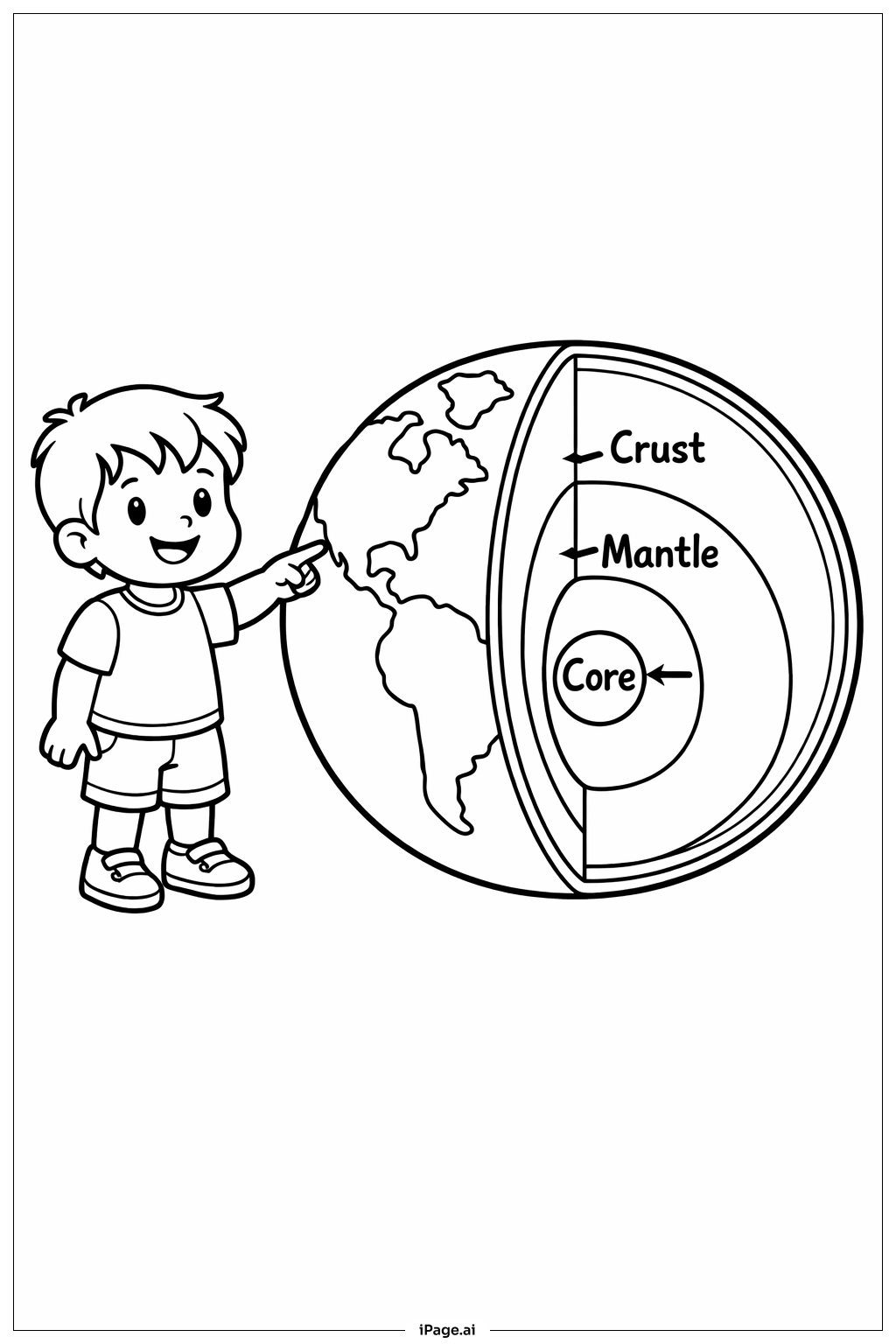
Coloring tips: How to color Science Earth Layers Crosssection coloring page well?
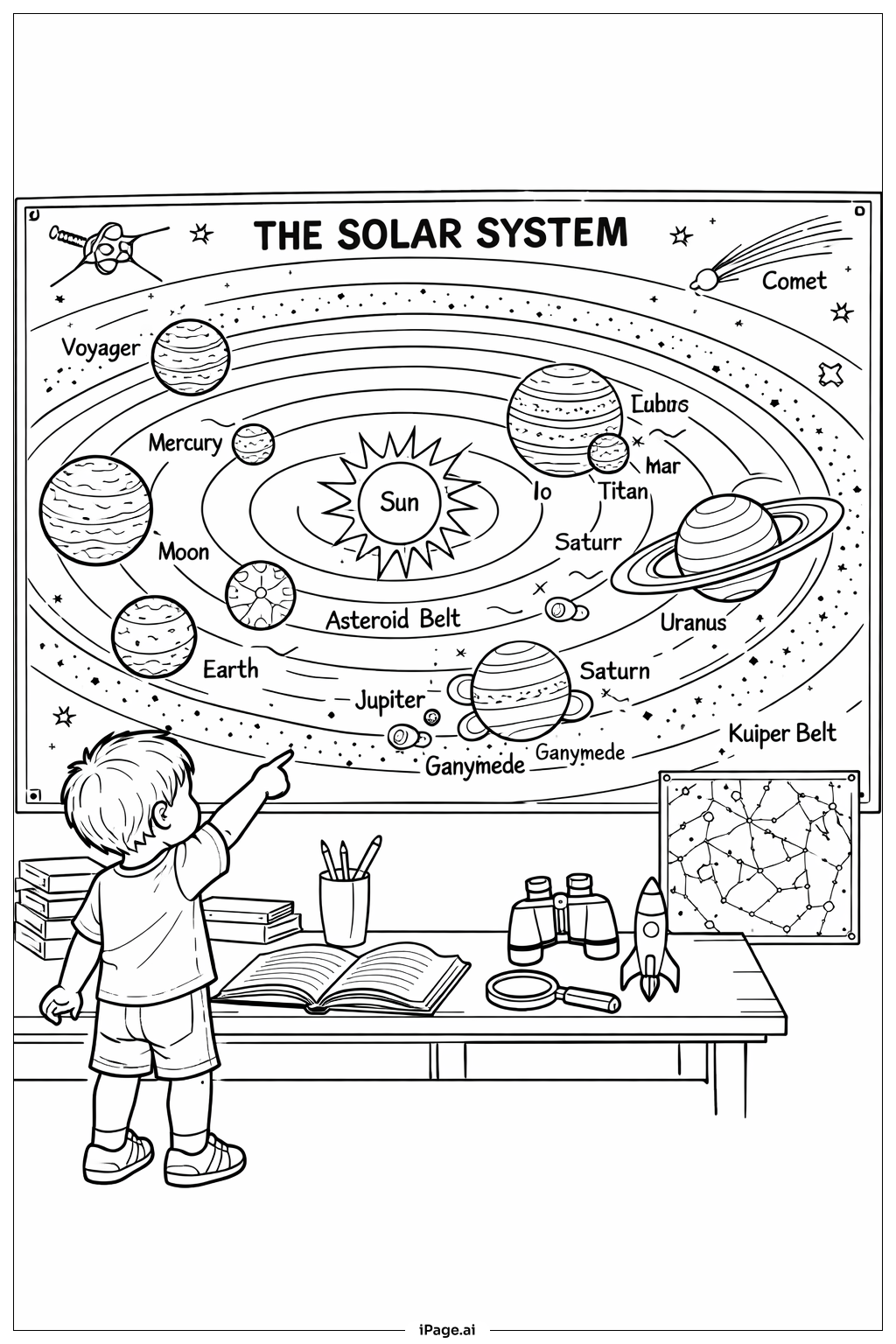
Use bright colors to make the picture engaging. Color the boy’s shirt and shorts in cheerful colors like blue, red, or yellow. The Earth’s crust can be brown or green to show land, and blue for the water parts. For the Earth layers, use different colors: maybe orange or red for the core, yellow or orange for the mantle, and green or brown for the crust. Color the names and arrows with black or dark colors so they stand out. Keep skin tone natural for the boy. Use crayons or colored pencils for smooth filling of bigger areas and finer markers for small details like letters and arrows.
Coloring challenges: Which parts are difficult to color and need attention for Science Earth Layers Crosssection coloring page?
1. Small labeled text and arrows can be tricky to color neatly.
2. The three Earth layers are close together, so coloring each layer without mixing colors is a challenge.
3. The boy’s facial features and fingers need careful coloring because of the small size.
4. Balancing bright and natural colors to make the earth layers clear but realistic.
5. Coloring the continents on the Earth’s surface may require patience to stay inside the lines since they have irregular shapes.
Benefits of coloring books: Advantages of drawing Science Earth Layers Crosssection coloring page
Coloring this page helps children learn about the Earth's layers in a fun way. They improve their fine motor skills by carefully coloring small sections and text. It also encourages focus and patience as they choose different colors and stay within the lines. By coloring the Earth’s layers, kids better understand geology and earth science concepts. Additionally, it boosts creativity as they select colors to make the image vibrant and engaging.