Coloring tips: How to color Science Bird Beak Study coloring page well?
Start by coloring each bird with realistic colors that match their real-life counterparts. The hummingbird can be vibrant with greens, blues, or ruby reds on its throat. The finch works well with warm browns, yellows, or orange tones. Give the woodpecker its distinctive black and white pattern with a red cap. The pelican can be colored in soft grays, whites, or light browns. For the food sources, use bright colors for the flower petals (pink, purple, or red), natural browns and tans for seeds, realistic bark textures in browns and grays, and silvery blue or orange for the fish. Don't forget to add shading to create depth and make the beaks stand out as the main focus of this scientific study.
Coloring challenges: Which parts are difficult to color and need attention for Science Bird Beak Study coloring page?
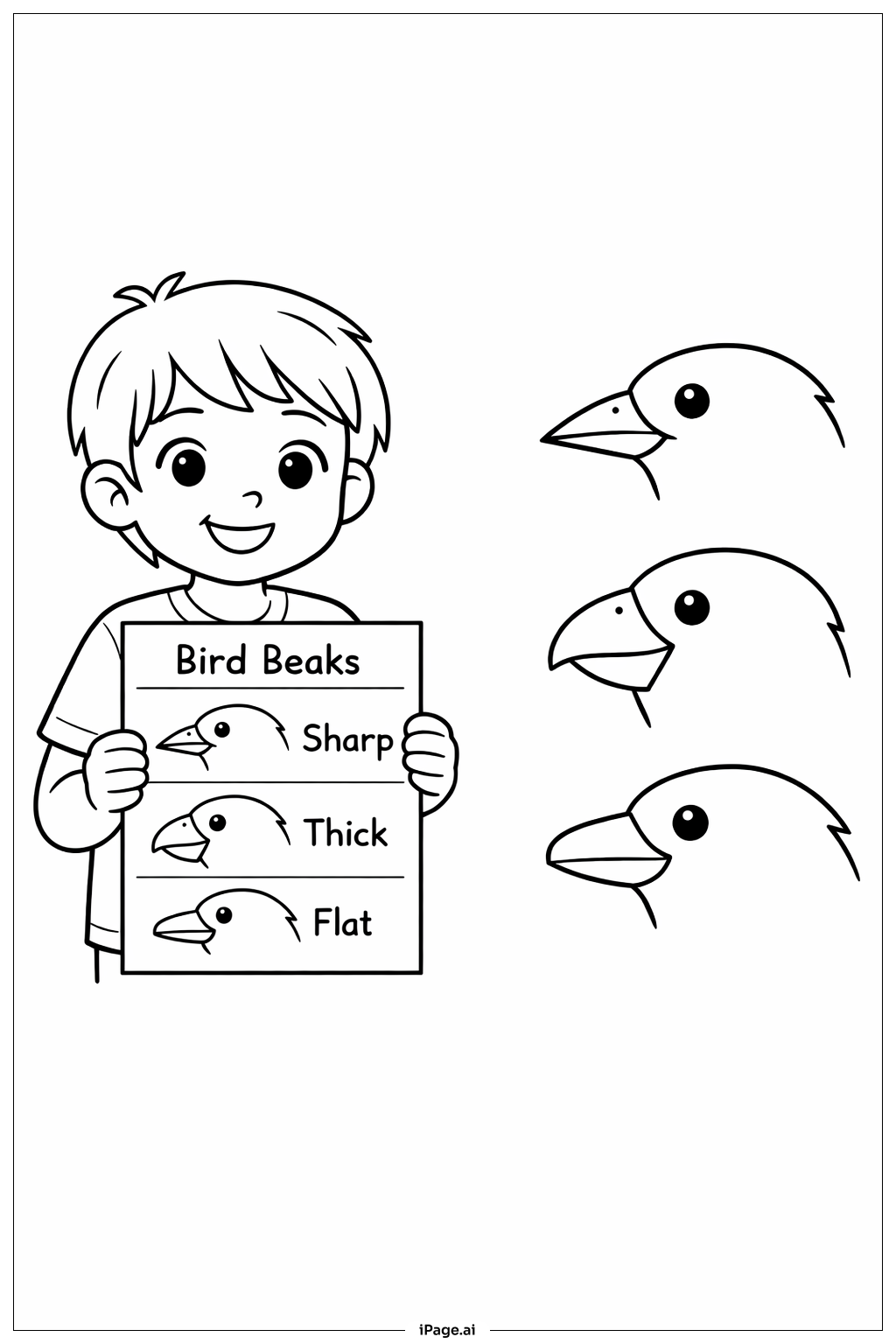
• Beak Detail Accuracy: Each bird features a distinctly shaped beak that requires careful attention to maintain its unique characteristics. The hummingbird's slender, needle-like beak needs steady hand control to color without bleeding into surrounding areas. The woodpecker's strong, pointed beak and the finch's thick, conical beak each have different geometric shapes that require understanding of shading to show their three-dimensional form and functionality.
• Multiple Subject Management: This page contains four separate bird specimens plus their associated food items, creating eight distinct elements to color. Keeping track of color schemes for each bird while maintaining scientific accuracy and visual harmony across the entire page can be challenging. Children need to plan their color choices in advance to ensure each bird stands out individually while the overall composition remains balanced and educational.
• Fine Feather and Texture Work: Birds have intricate feather patterns that require layering different shades to create realistic effects. The transition between different feather groups, wing details, and body contours needs careful color blending. Additionally, rendering textures for the food sources like tree bark grain, seed details, fish scales, and flower petals adds another layer of complexity requiring different coloring techniques for each material type.
• Scientific Accuracy vs Creativity: While coloring should be fun and creative, this educational image encourages realistic coloring to reinforce the learning objective about beak adaptations. Balancing accurate bird coloration with personal artistic expression can be challenging for children who want to use imaginative colors while still maintaining the scientific integrity of the illustration.
Benefits of coloring books: Advantages of drawing Science Bird Beak Study coloring page
Coloring this Science Bird Beak Study page offers wonderful educational benefits while developing important skills. Children learn about biological adaptation by visually connecting each bird's beak shape to its food source, reinforcing understanding of how animals evolve to survive in their environments. This hands-on activity makes scientific concepts memorable and engaging. The page enhances observation skills as children notice the differences between beak shapes and consider why each design works for specific foods. Fine motor skills improve through detailed coloring of beaks, feathers, and small food items. Color recognition and decision-making abilities develop as children choose appropriate, realistic colors for each bird species. This activity also builds concentration and patience, as completing multiple subjects requires sustained focus. The educational nature of this coloring page makes learning science fun and accessible, fostering curiosity about nature and ornithology while providing a sense of accomplishment upon completion.