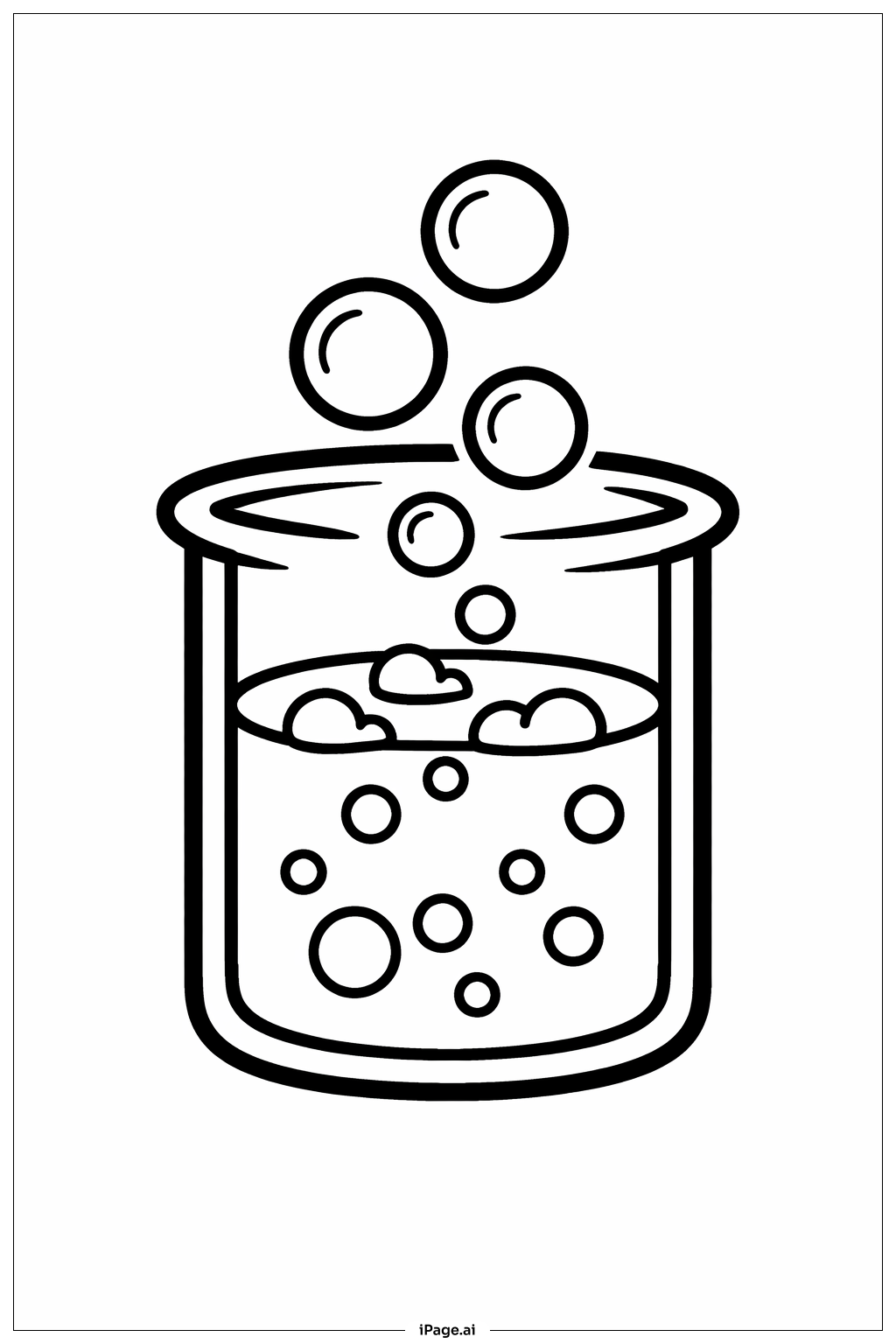
Coloring tips: How to color Science Beaker and Bubbles coloring page well?
Use bright colors to make the bubbling liquid look lively. You can color the liquid in shades of blue, green, or any color you like for a magical effect. For the bubbles, use lighter colors or white with a little shading to show they are transparent and shiny. Try to blend different shades to give the bubbles a round and 3D look. Color the beaker with gray or silver to show it is made of glass. Leave some parts white or very light to show reflections on the glass surface. Use a fine color pencil or marker to carefully color inside the lines, especially around the bubbles.
Coloring challenges: Which parts are difficult to color and need attention for Science Beaker and Bubbles coloring page?
1. Coloring the bubbles can be tricky because they are see-through and shiny. It needs careful shading to look real. 2. The small bubbles inside the liquid require precision to stay inside their outlines without crossing. 3. Coloring the glass beaker can be hard because glass is transparent, and you should show reflections and light effects. 4. Blending colors for liquid to make it look lively might be challenging for beginners. 5. Keeping clean edges around the shapes, especially the curved lines of the beaker and bubbles, needs steady hand control.
Benefits of coloring books: Advantages of drawing Science Beaker and Bubbles coloring page
Coloring this science beaker picture helps children learn about science in a fun way. It improves hand-eye coordination as they try to color within the lines and small shapes. It also encourages creativity with choosing colors and blending techniques. Focusing on the small bubbles trains fine motor skills and patience. Coloring the reflections and bubbles helps children observe details and develops their sense of light and transparency. Overall, it boosts concentration and makes learning science engaging and enjoyable.