Coloring tips: How to color Science Backyard Fossil Dig coloring page well?
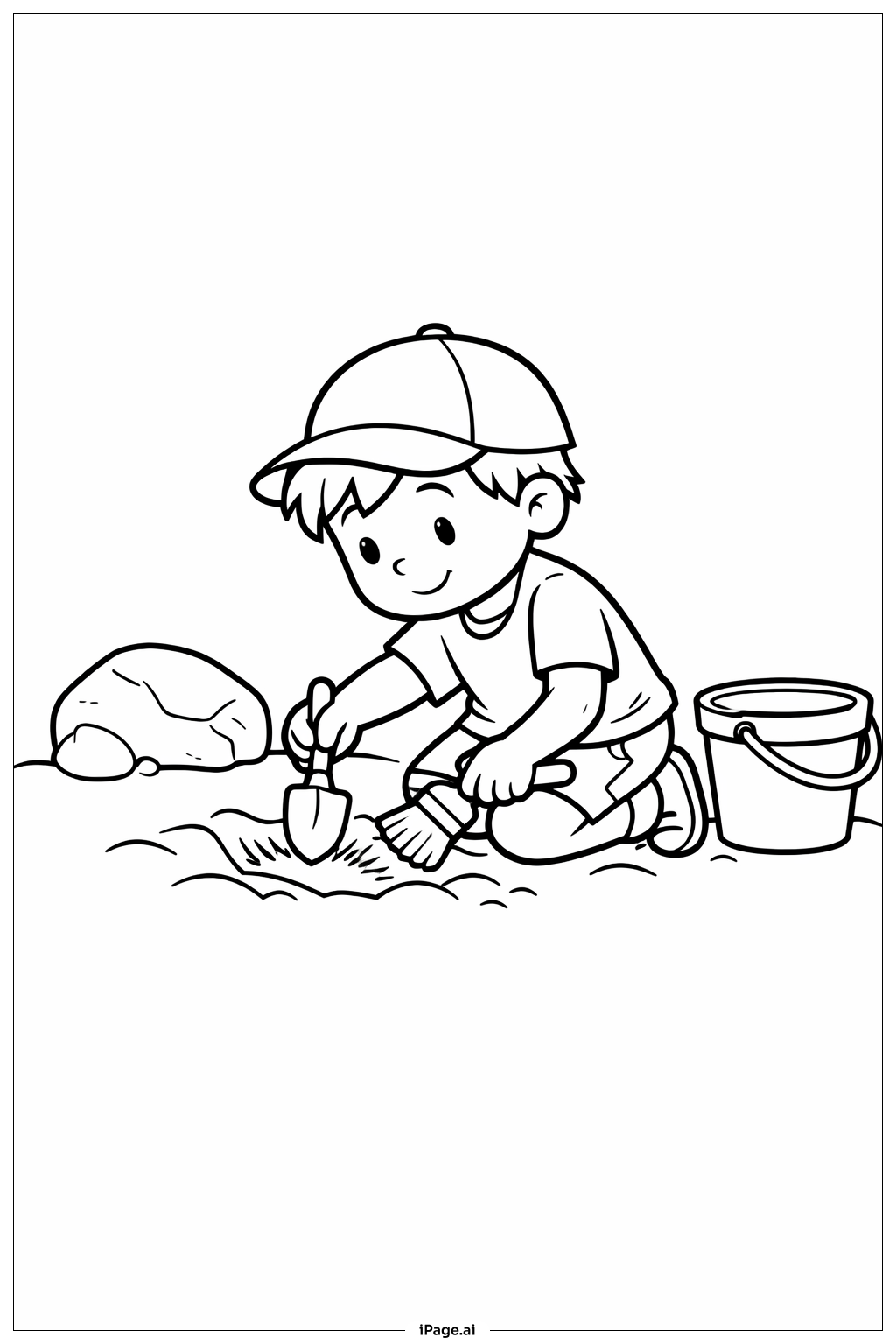
Use light and natural colors for the ground, such as shades of brown and beige, to show dirt and rocks. The boy's clothes can be bright and cheerful colors like blue, red, or green to make him stand out. Use a different color for the shovel, brush, and bucket so each item is easy to see. For the rocks, choose gray or light brown. You can add a soft blue or green background to suggest the sky or grass nearby. Try to use soft shading for the boy's skin and hair to make the image lively.
Coloring challenges: Which parts are difficult to color and need attention for Science Backyard Fossil Dig coloring page?
1. Small details like the brush and shovel need careful coloring to avoid going outside the lines. 2. The boy’s face and hands are small, requiring steady strokes for neat coloring. 3. Coloring the ground and rocks evenly may be challenging because of their irregular shapes. 4. Using multiple colors on a small area, like the boy’s clothes, asks for patience to keep colors inside the lines. 5. Creating a realistic look for the digging scene means thinking about shadows and light, which can be hard for younger children.
Benefits of coloring books: Advantages of drawing Science Backyard Fossil Dig coloring page
Coloring this page helps children practice their fine motor skills by carefully coloring small parts like the tools and parts of the boy. It encourages creativity in choosing colors for the boy’s outfit and the natural environment. Kids learn about fossils and science while having fun, sparking curiosity about nature and history. The image also promotes focus and patience as children concentrate on neat coloring. Overall, this activity combines learning and play to support child development.