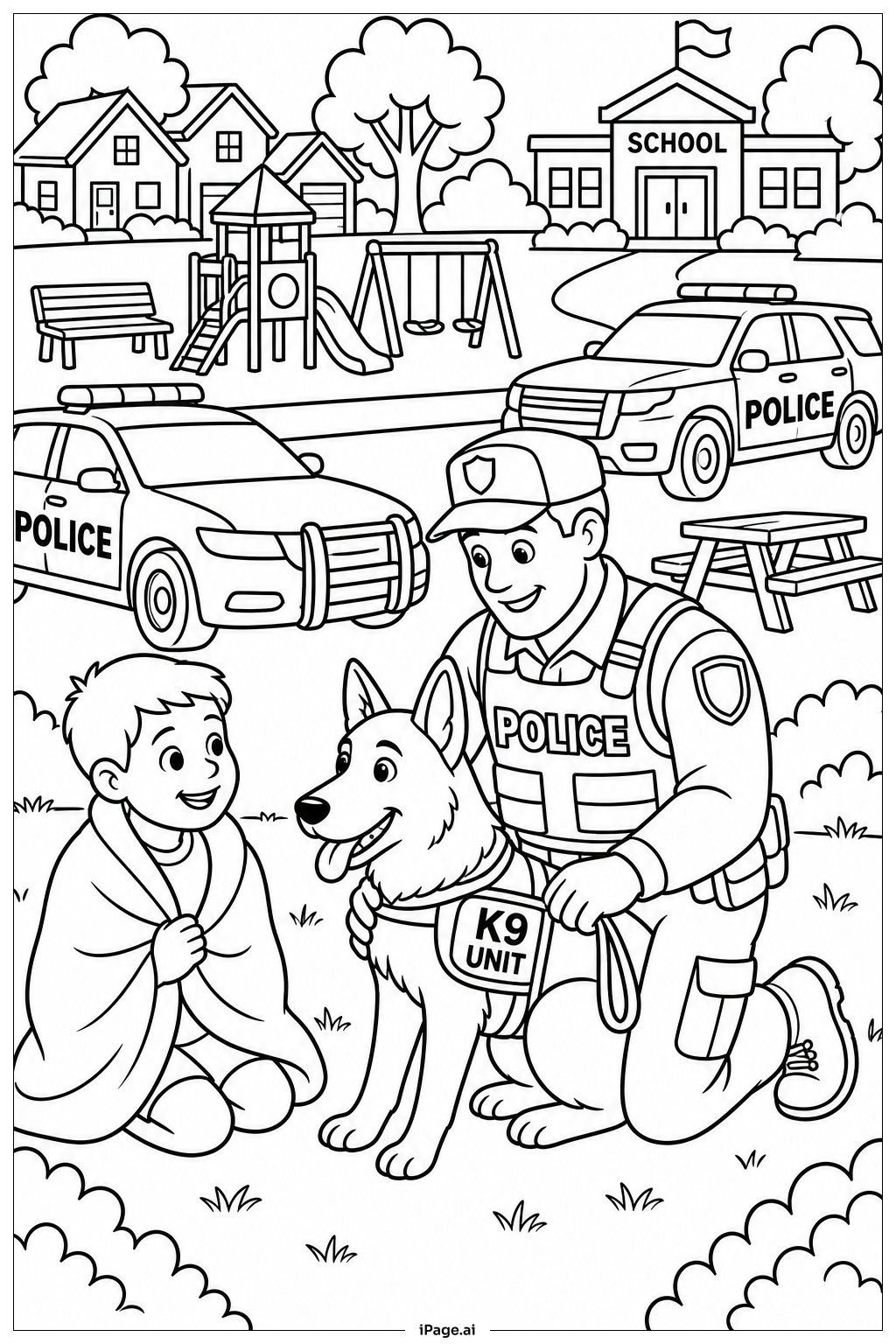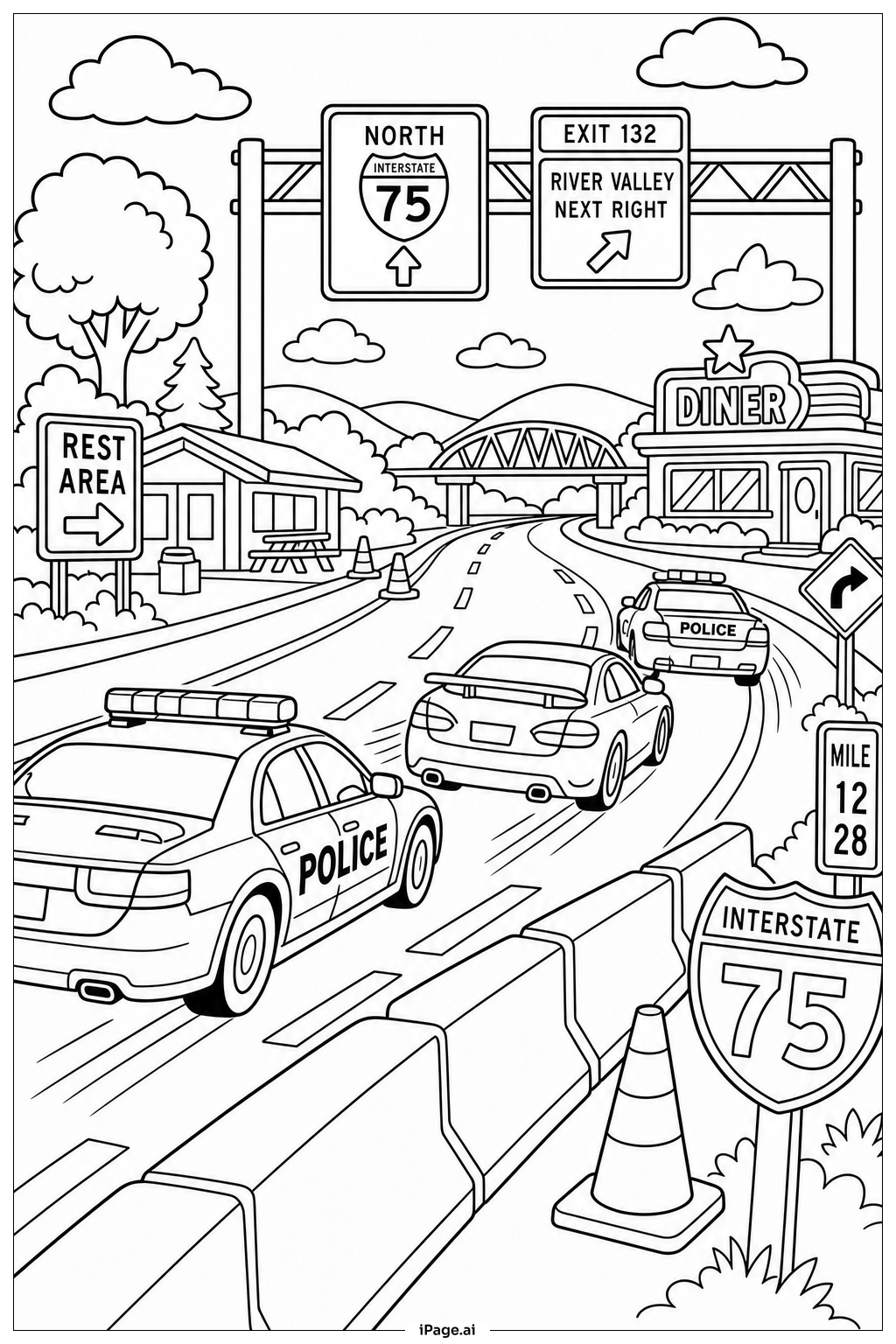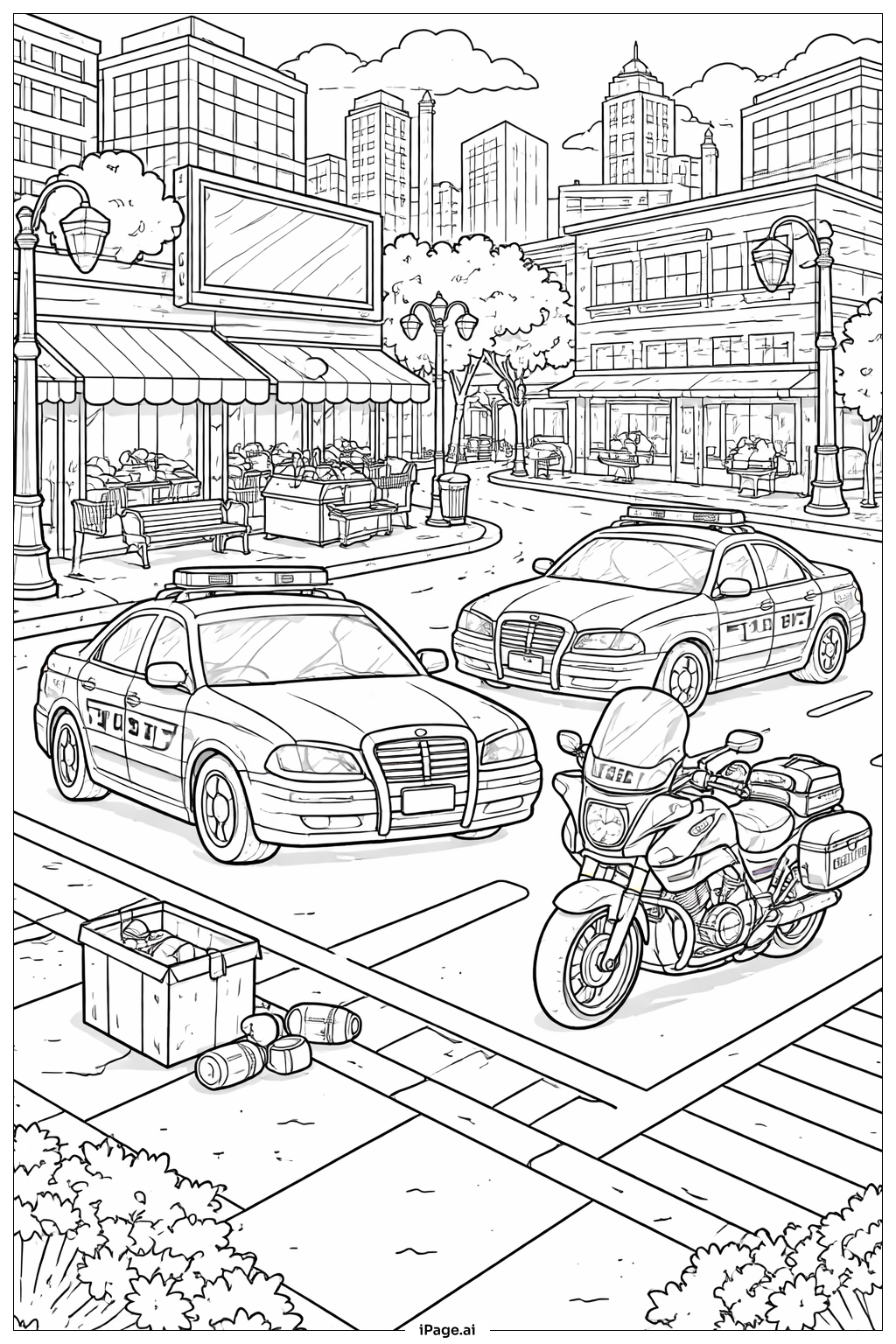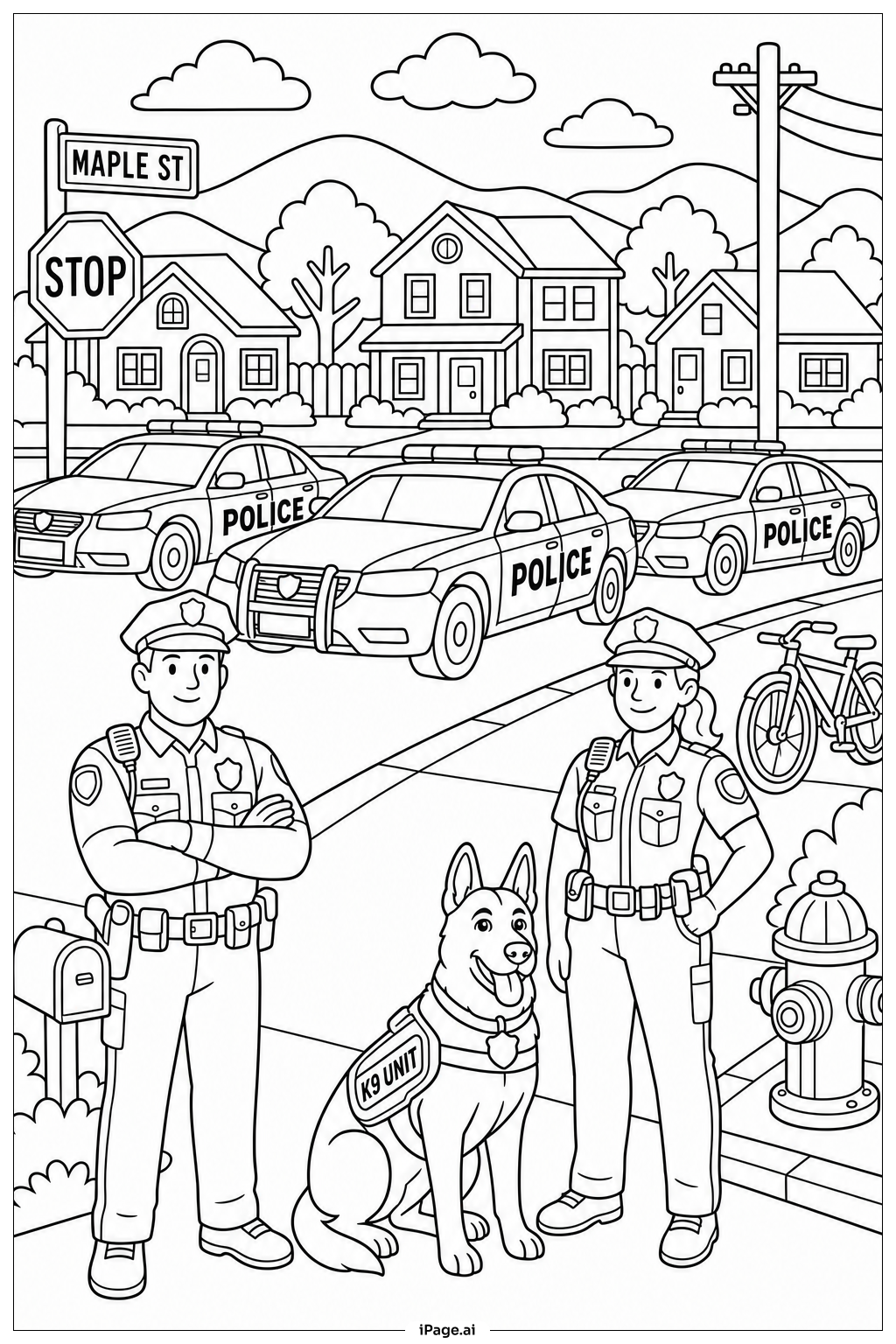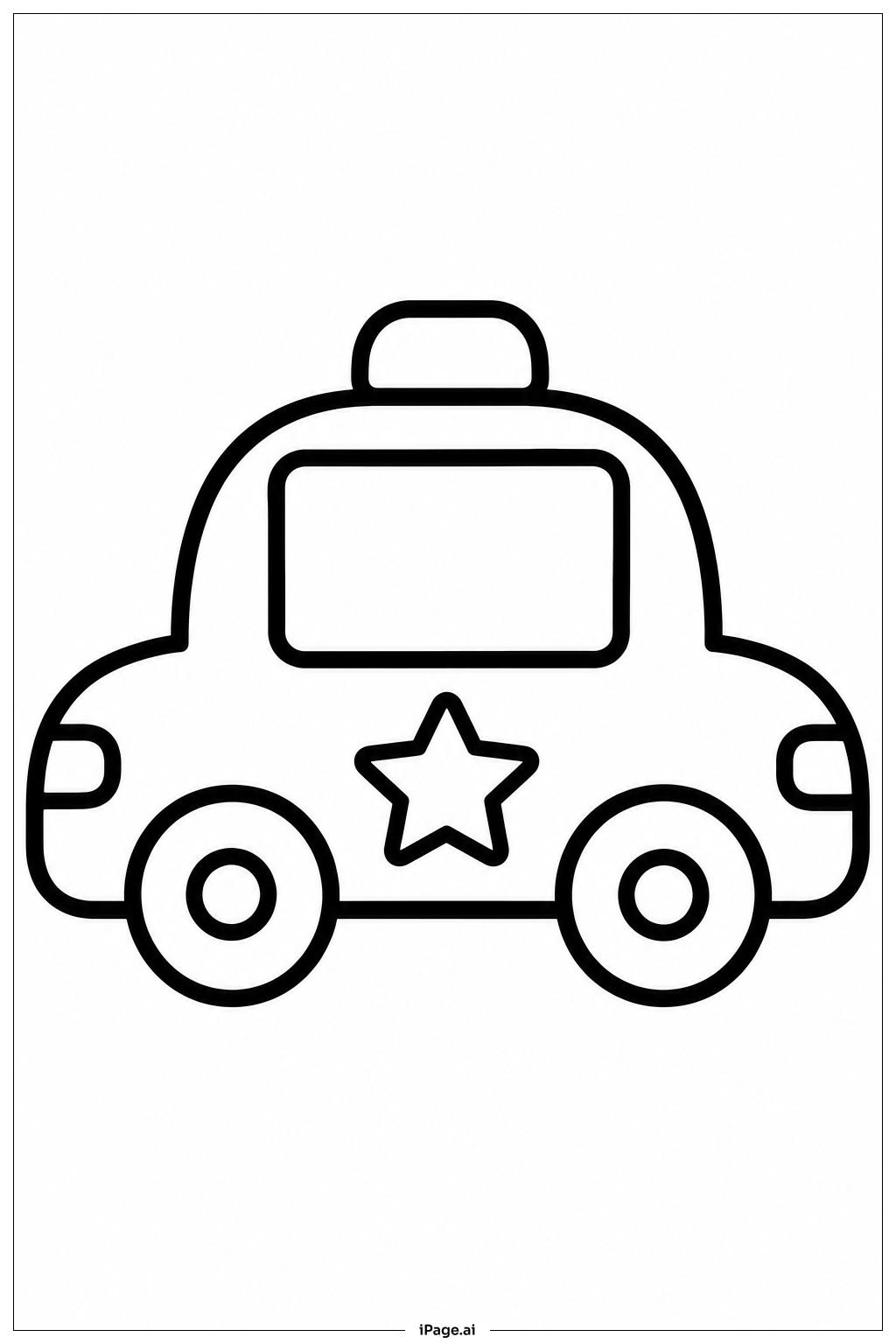
Coloring tips: How to color Police Car With Window coloring page well?
Start with the car body using a classic police blue or black and white two-tone pattern. Paint the upper half white and the lower half black for a traditional look, or go all blue for a modern style. Use yellow or gold for the badge and star details on the door. Color the roof light bar in red and blue to show it is ready to flash. The windows can be light blue or gray to give a glassy look. Use black for the tires and silver or gray for the rims. The bumper looks great in silver or chrome gray. Add a yellow or white stripe along the side to make the car pop. Use darker shades to add depth around the door edges and wheel wells. Feel free to get creative with the colors and make this police car your own.
Coloring challenges: Which parts are difficult to color and need attention for Police Car With Window coloring page?
• Window Frame Precision: The large side window is one of the trickiest parts to color. The frame has thin edges that require a sharp colored pencil or a fine-tip marker. Staying inside the frame without going over onto the car body takes a steady hand and patience. Young colorists should go slowly around the corners of the window where the lines curve.
• Two-Tone Body Coloring: Many police cars use a two-tone design with black on the bottom and white on the top. Keeping the color boundary straight and clean along the side stripe can be difficult. Using a ruler as a guide or coloring in one direction with gentle strokes can help keep the line neat.
• Roof Light Bar Details: The light bar on top of the car has small sections for red and blue lights. These are small, closely spaced areas that require careful coloring to avoid mixing colors together. Using thin markers or sharp pencil tips works best here to separate each light section clearly.
• Wheel and Rim Details: The wheels feature circular rims with small spokes or bolt details inside. Coloring the tire in solid black while keeping the rim area gray or silver is a challenge because the spaces are small and close together. Going in a circular motion with the pencil can help follow the shape more naturally.
• Panel Lines and Door Edges: The car body has subtle panel lines showing where the doors meet the body. These thin lines need to be respected when coloring to keep different sections visually distinct. Using slightly different shades of the same color on each panel can help bring out the car's structure without making it look too busy.
Benefits of coloring books: Advantages of drawing Police Car With Window coloring page
Coloring this police car page brings a range of fun and meaningful benefits for kids. First, it helps build fine motor skills. Staying inside the lines, especially around the windows and wheel details, trains small hand muscles and improves pencil control. These skills carry over into writing and other everyday tasks.
Second, it encourages creativity and self-expression. Kids get to decide the colors of the car, the lights, and the details. There is no single right answer, so every child creates something unique.
Third, it sparks curiosity about community helpers. Coloring a police car naturally leads to conversations about what police officers do, how they help people, and why emergency vehicles look the way they do. This builds early social awareness.
Fourth, the activity promotes focus and patience. Working through each section of the car one at a time helps children practice sitting still and concentrating on a task from start to finish.
Finally, completing the page gives kids a real sense of pride and accomplishment. Finishing a coloring project, no matter how simple, builds confidence and a positive attitude toward creative work. It is a great quiet-time activity for both Boys and Girls of all skill levels.