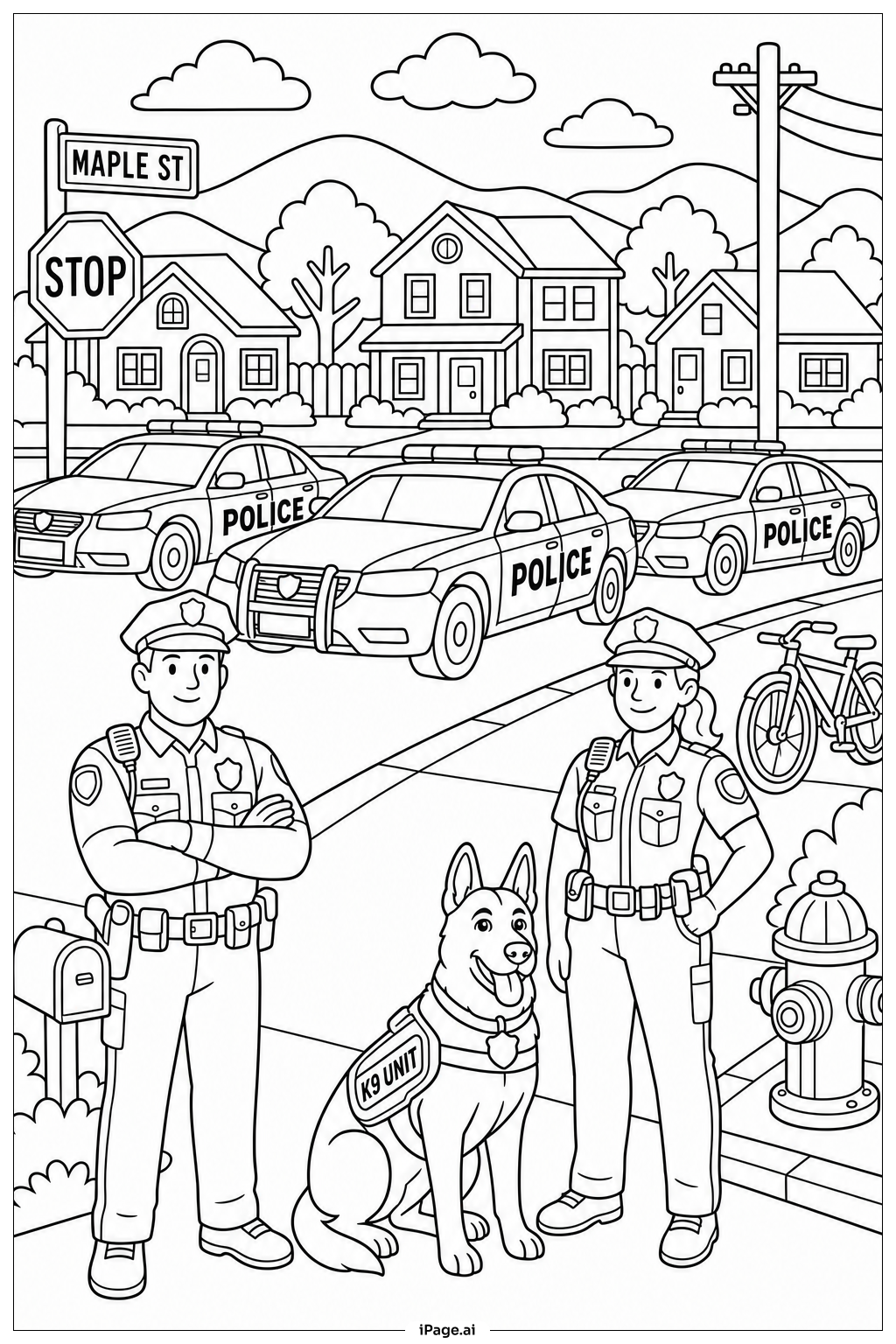
Coloring tips: How to color Police Car Team Patrol coloring page well?
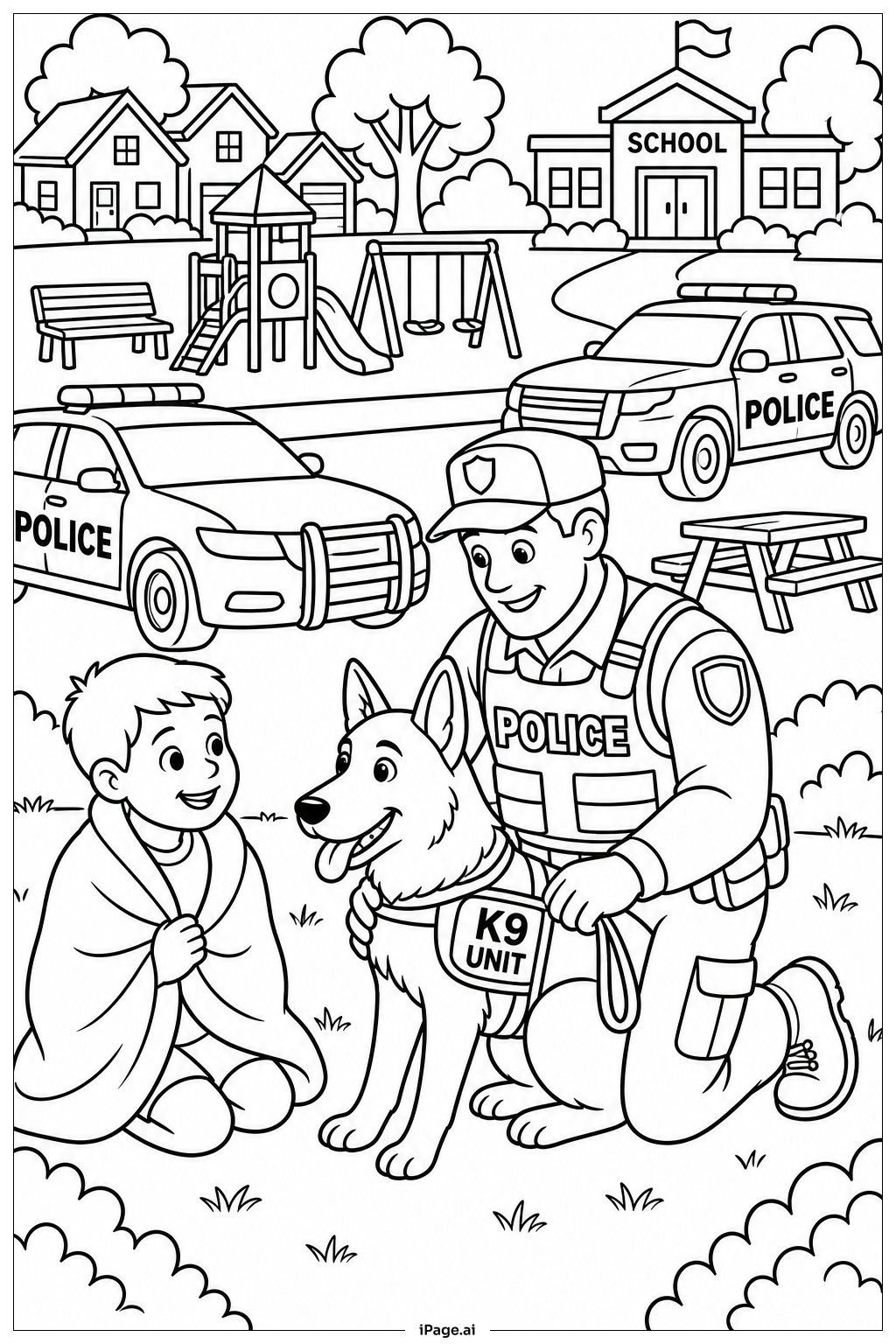
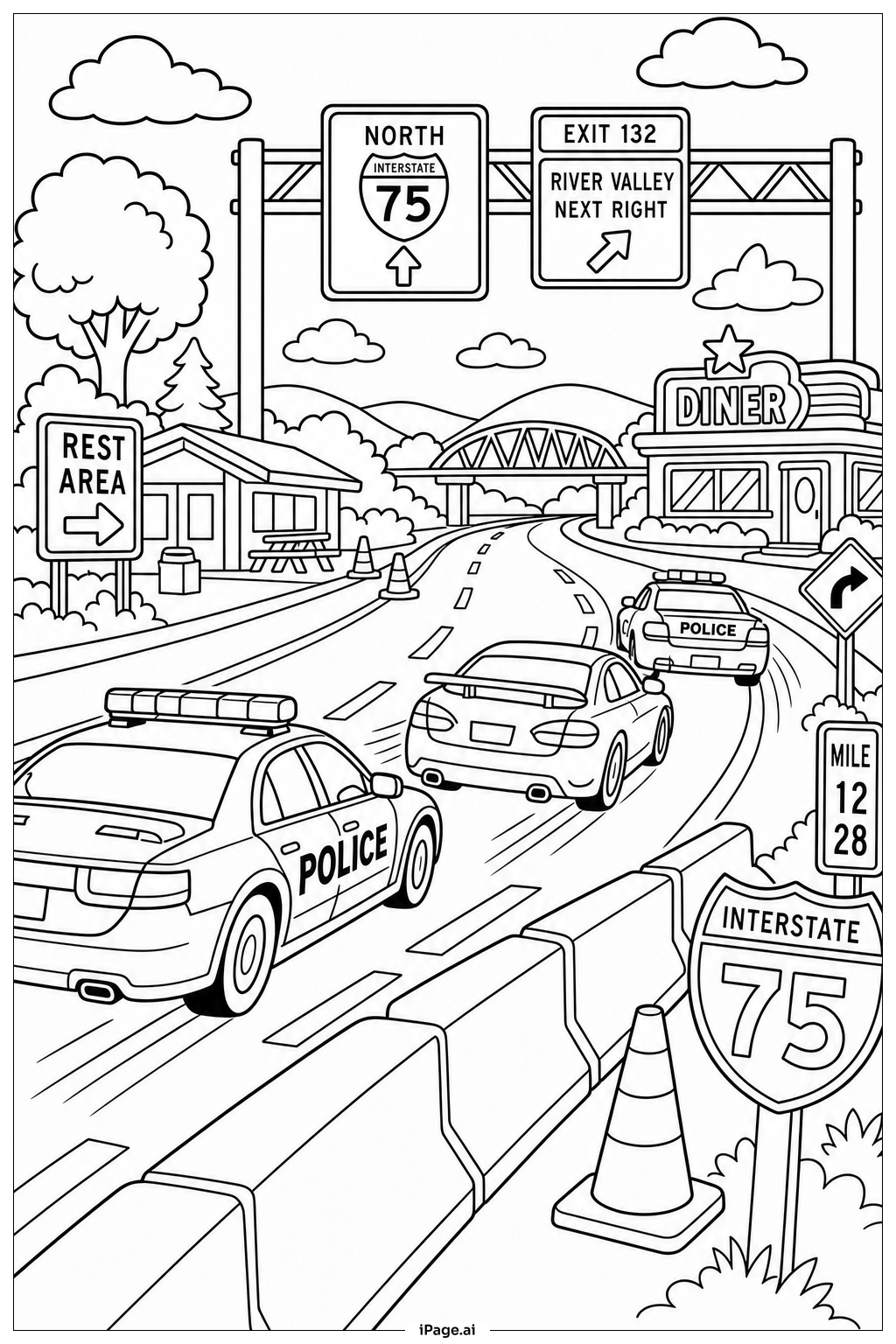
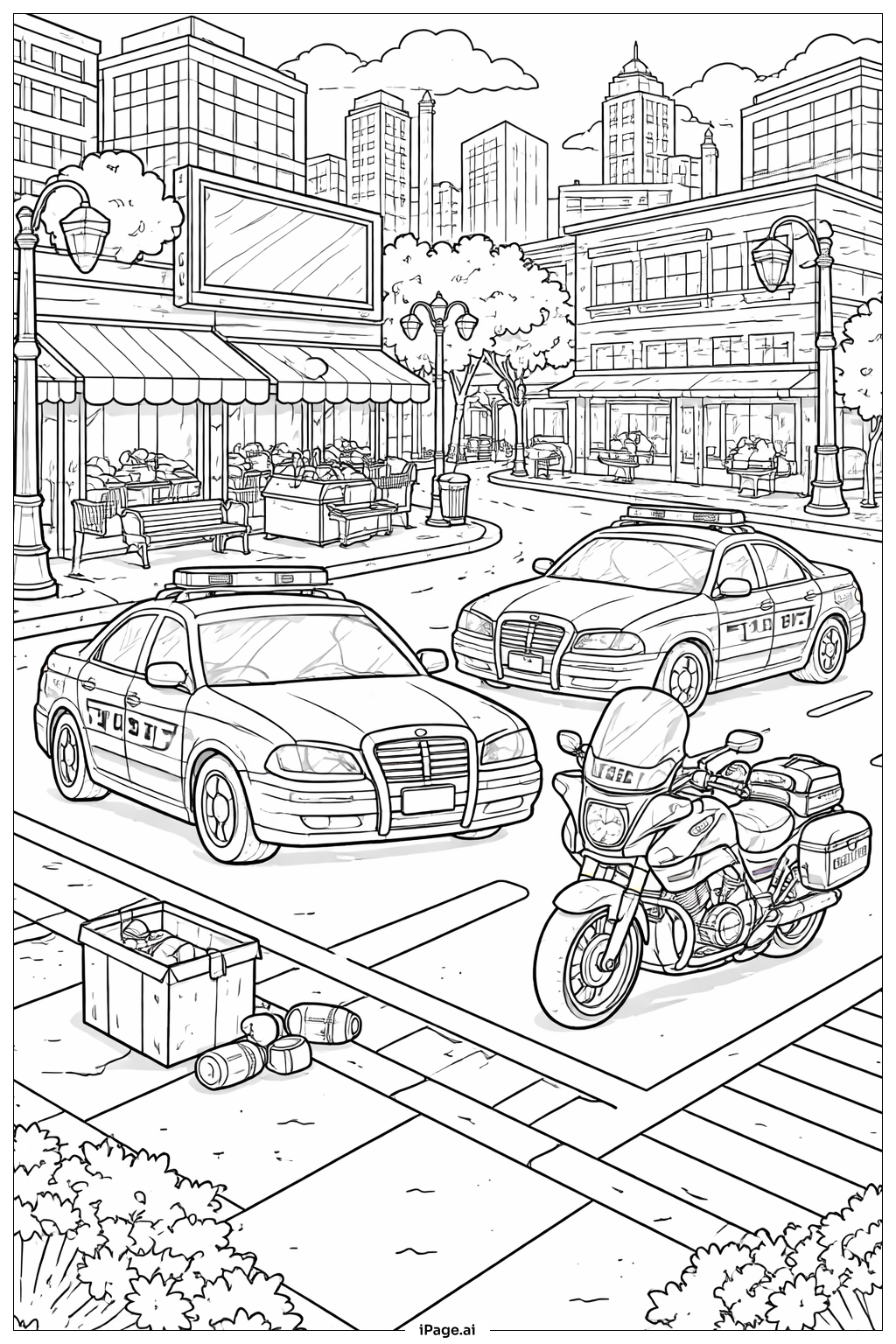
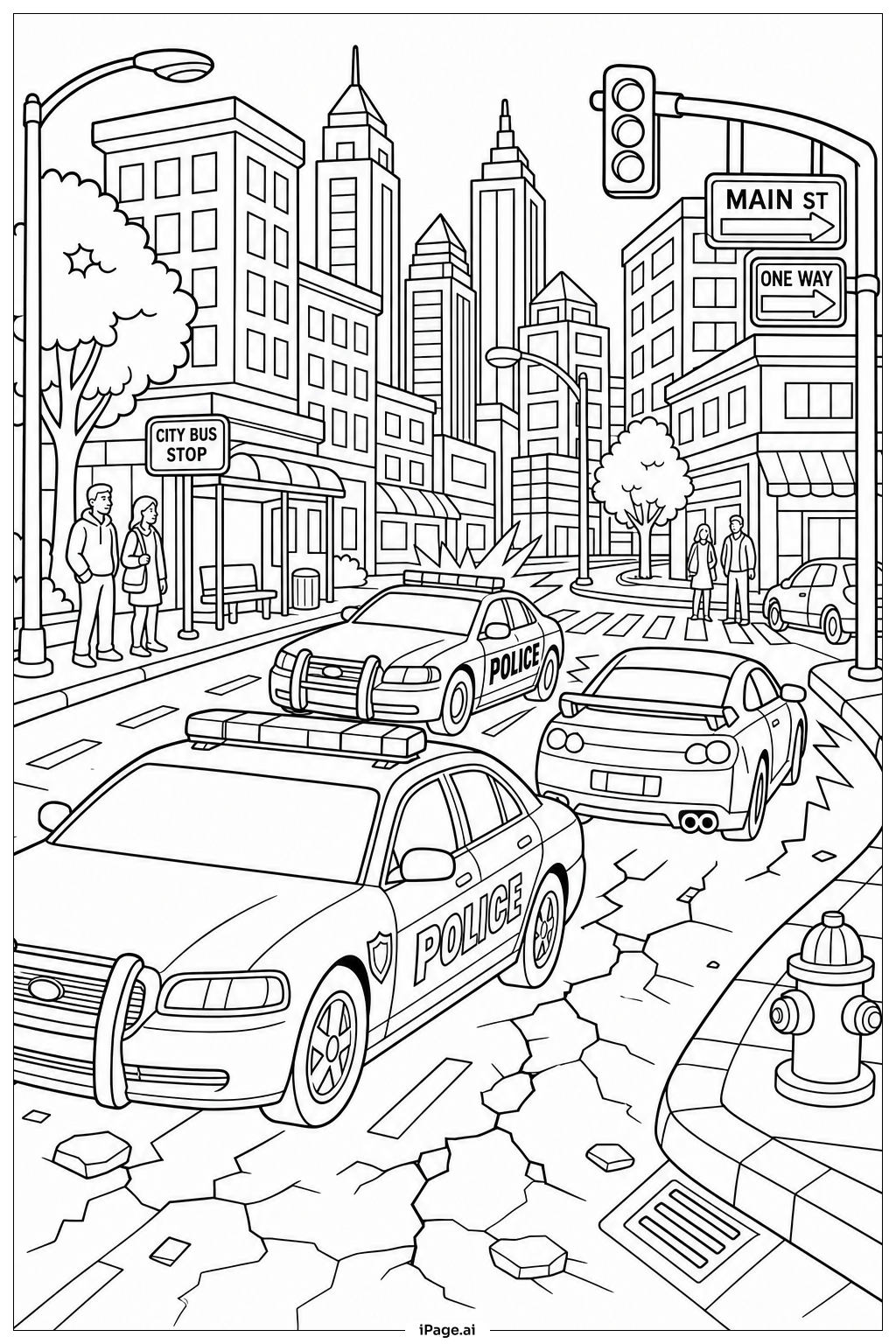
Start with the car bodies using classic police colors. Traditional black and white is always a great choice, but you can also try blue and white or all-white with bright accents. Use bright red, blue, or yellow for the light bars on the rooftops to make them pop. Color the "POLICE" lettering and star badges in bold gold or silver. Use dark gray or black for the tires and wheel rims. Add a light blue or sky color to the windows to give them a glassy look. The road or ground beneath the cars can be filled in with gray or asphalt tones. Feel free to add your own creative touches, like colored stripes along the doors or a colorful background with buildings and streets. This is your scene — make it come alive!
Coloring challenges: Which parts are difficult to color and need attention for Police Car Team Patrol coloring page?
• Light Bar Detailing: The light bars on top of each police car contain multiple small sections representing individual lights. Coloring each section neatly in red, blue, or amber without going outside the lines requires steady hand control and a fine-tipped marker or colored pencil. Young colorists may find this area especially tricky.
• Two-Tone Car Body: Classic police cars often feature a two-color split design, such as black on the bottom and white on the top. Keeping a clean, straight edge along the dividing line between the two colors can be challenging. Using a light pencil guide before applying color can help achieve a crisp result.
• Badge and Lettering Details: The star badges and "POLICE" text on the car doors are small but important features. Filling these in with gold or silver without smudging or overrunning the surrounding area takes patience and precision. A sharp pencil tip works best for these fine details.
• Wheel and Tire Sections: The wheels include rims, hubcap spokes, and rubber tires — all in close proximity. Coloring each part a different shade (dark gray for tires, silver or metallic for rims) while keeping the sections separate and clean is a common challenge for younger colorists.
• Symmetry Between Two Cars: Since the image features two patrol cars side by side, maintaining consistent coloring across both vehicles can be difficult. Trying to match the colors, shading, and detail work on one car to the other requires focus and good color memory throughout the process.
Benefits of coloring books: Advantages of drawing Police Car Team Patrol coloring page
Coloring this police car team patrol scene offers a wide range of benefits for children of all ages. First, it builds fine motor skills. Carefully staying within the lines of wheels, light bars, and door details helps strengthen hand muscles and improves pencil control — skills that directly support writing development. Second, it encourages focus and patience. Complex vehicles with many small parts require children to slow down, concentrate, and work section by section, building attention span over time. Third, it sparks creativity. While the image shows traditional patrol cars, kids are free to choose their own color schemes, turning the activity into a personal form of self-expression. Fourth, it introduces children to community helpers. As they color the police cars, young children naturally learn to recognize and appreciate the role of law enforcement in keeping neighborhoods safe. Fifth, it promotes a sense of accomplishment. Completing a detailed scene with two matching vehicles gives children a tangible result they can be proud of. This sense of achievement boosts confidence and motivates them to take on more challenging creative projects. Overall, this coloring page is both fun and enriching — a great activity for kids at home or in the classroom.