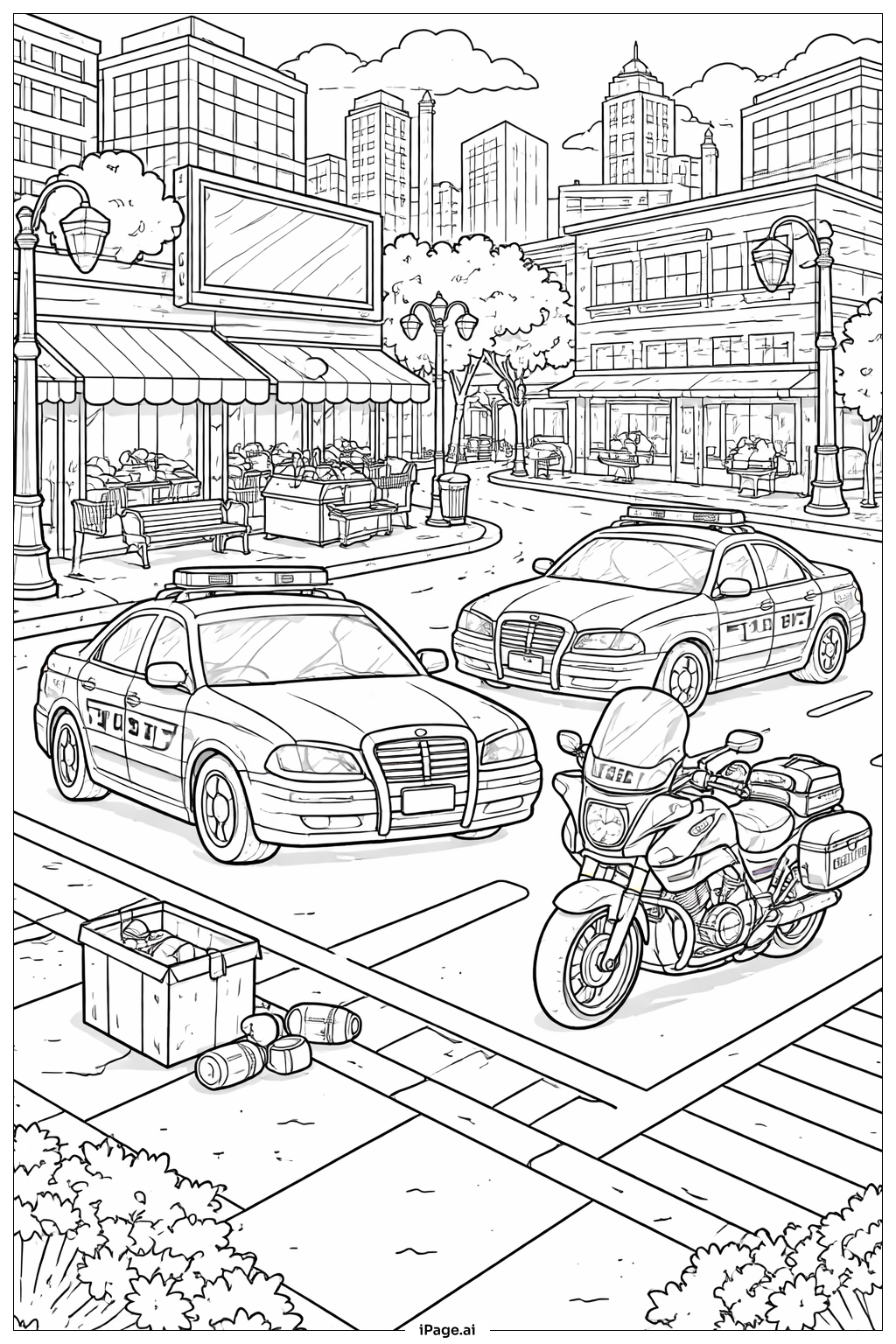
Coloring tips: How to color Police Car Urban Response coloring page well?
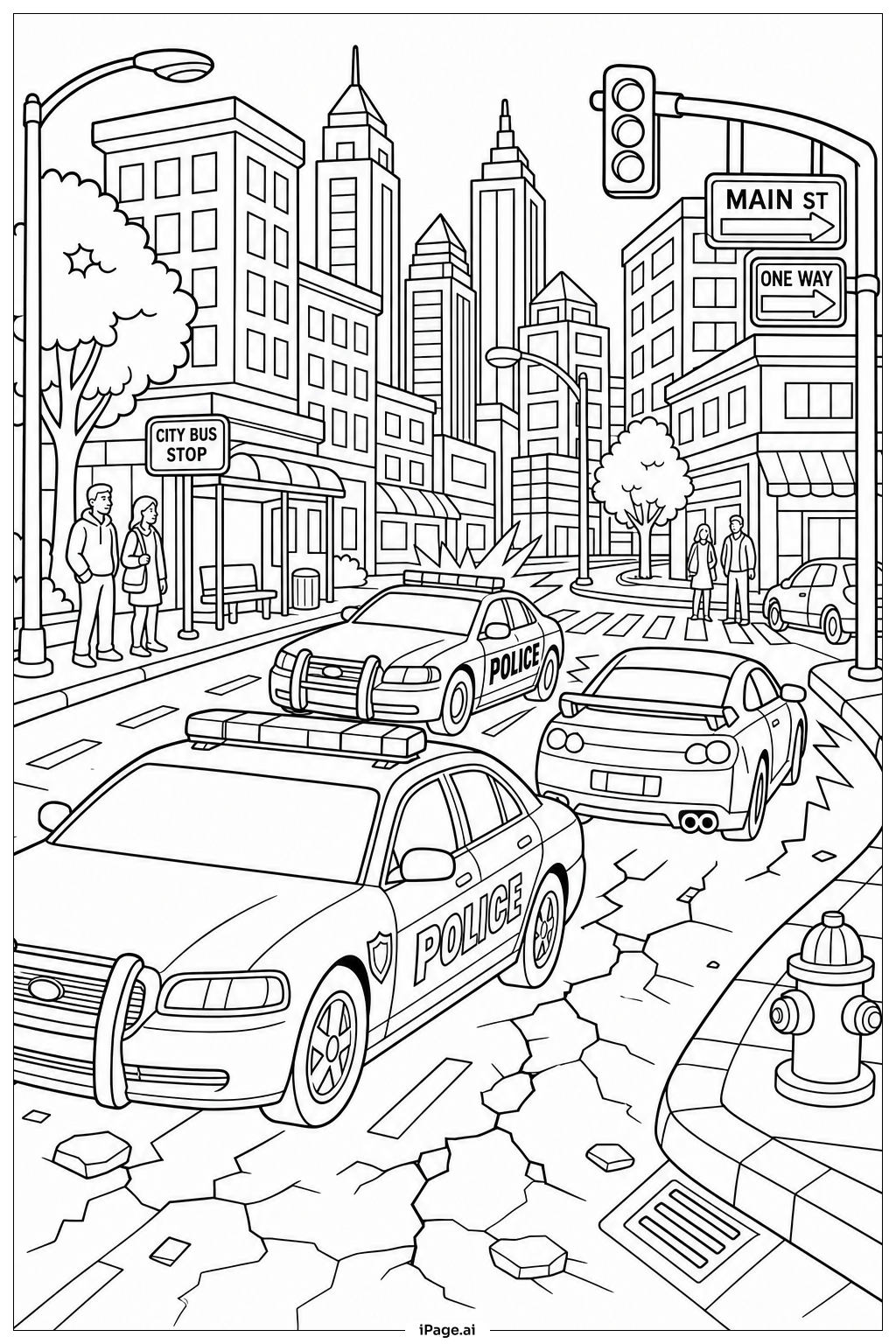
Start with the police car body. Use classic black and white, or try a deep navy blue and white for a modern look. Color the light bar on top with bright red and blue to represent flashing emergency lights. Use silver or gray for the bumpers, door handles, and wheel rims. The windows can be filled with light blue or gray to suggest glass. Add yellow for any caution stripes or badge details on the door. For the tires, dark gray or black works best. The urban background can use warm tan and gray tones for buildings, with light yellow for street lights and pale blue for the sky. Use contrast to make the police car stand out from the city scene. Younger colorists can keep colors simple and bright, while older colorists can add shading and gradients to give depth and a realistic feel to the vehicle and the street environment.
Coloring challenges: Which parts are difficult to color and need attention for Police Car Urban Response coloring page?
• Light Bar Complexity: The light bar on the roof of the police car contains multiple small compartments and light units. Coloring each section accurately with the correct red, blue, or clear lens color requires a steady hand and a fine-tipped coloring tool. Rushing this area may result in colors bleeding into neighboring sections.
• Police Markings and Badge Details: The door of the car features a police shield or badge logo along with text and stripe details. These elements are small and closely packed. Keeping each section neatly filled without overlapping into adjacent areas is a real challenge, especially for younger colorists who are still developing fine motor skills.
• Wheel and Rim Detail: The wheels include detailed rims with multiple spokes and mechanical shapes. Coloring the inner rim sections while leaving the tire area dark requires careful attention and patience. Using the wrong tool size here can make the rims look messy or undefined.
• Urban Background Depth: The city buildings and street elements in the background contain many layers of windows, walls, and shadows. Choosing the right colors to separate foreground from background without flattening the overall image takes planning. If the background is too bright, the police car may lose visual focus.
• Reflective Surfaces: The car hood, roof, and windows suggest smooth, reflective surfaces. Capturing this effect with colored pencils or markers is tricky. Creating a convincing shine requires blending lighter and darker shades, which is a more advanced coloring technique that can challenge even experienced colorists.
Benefits of coloring books: Advantages of drawing Police Car Urban Response coloring page
Coloring this Police Car Urban Response page offers a wide range of benefits for children and adults. For younger colorists aged 4 to 8, the activity helps build fine motor skills as they practice staying within the lines of the car's body, wheels, and details. It also strengthens hand-eye coordination and grip control. Children aged 9 to 16 can use the image to explore color theory, practicing shading and blending to create realistic metal and glass effects on the vehicle. The urban setting encourages creative thinking as colorists decide how to bring the city scene to life with their own color choices. Engaging with a police car theme also sparks curiosity about community helpers and public safety, making the activity both educational and fun. For adults, the detailed linework of the vehicle and city background offers a focused, meditative coloring experience that can help reduce stress and improve concentration. Completing the page gives colorists of all ages a sense of accomplishment and pride in their finished artwork.