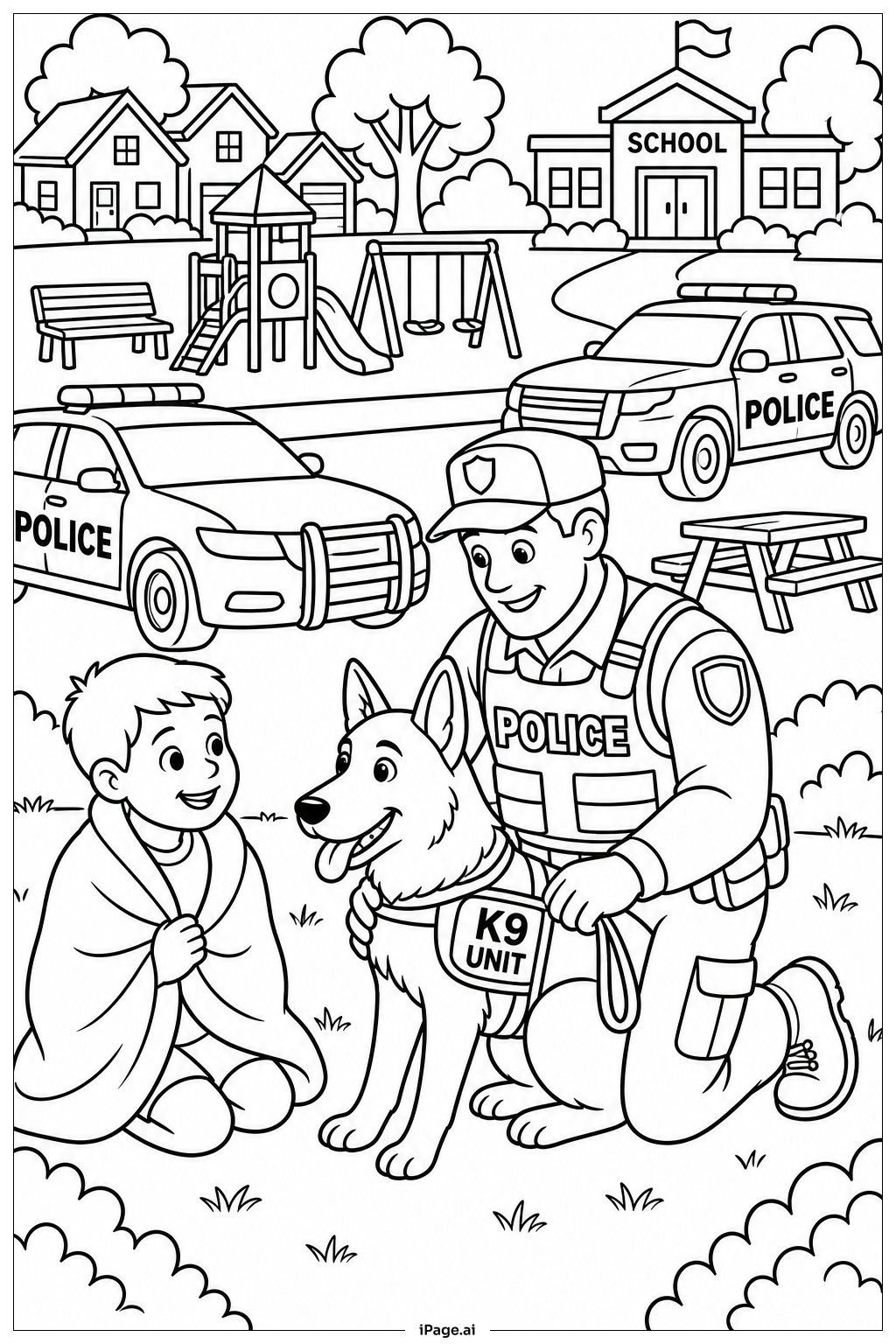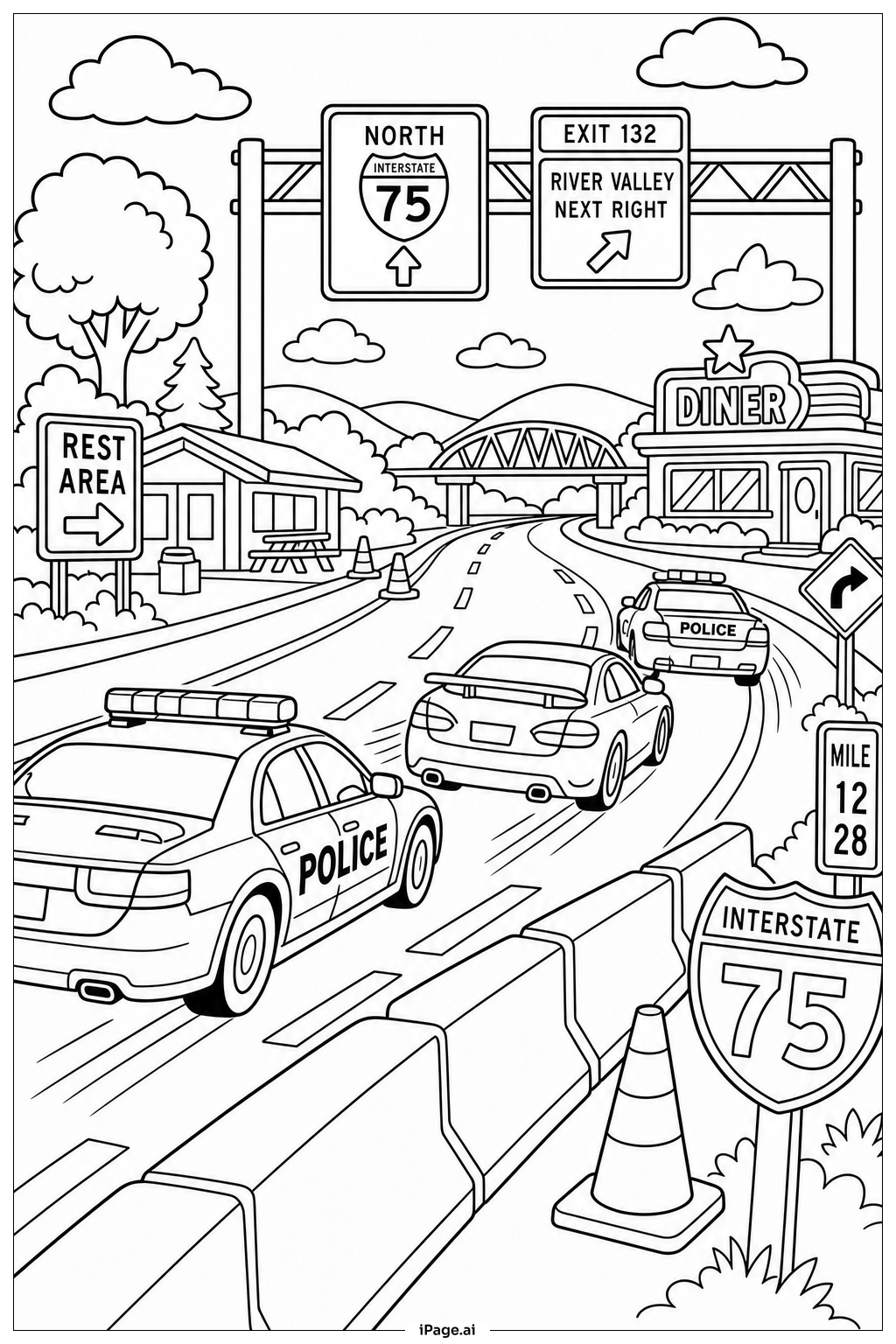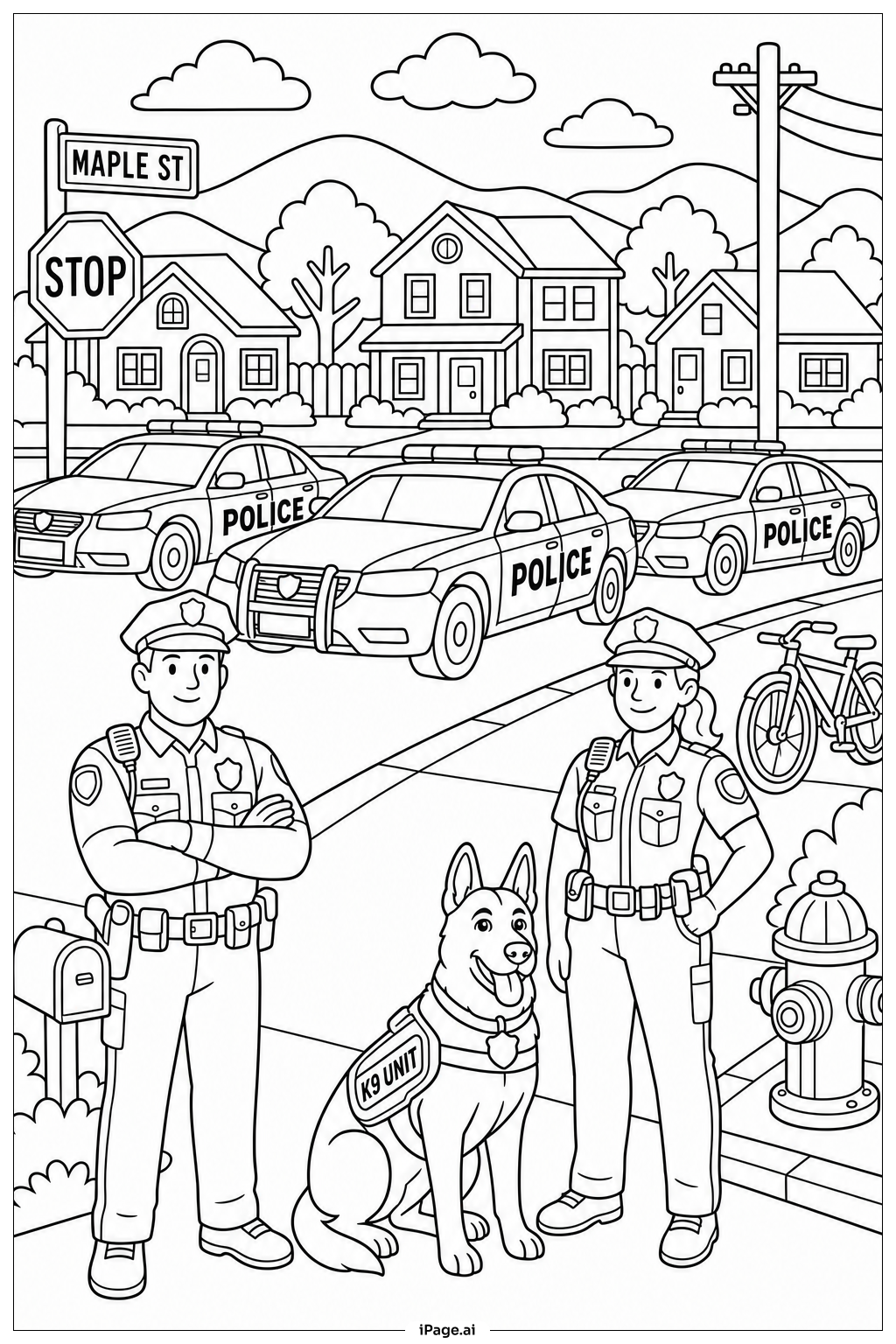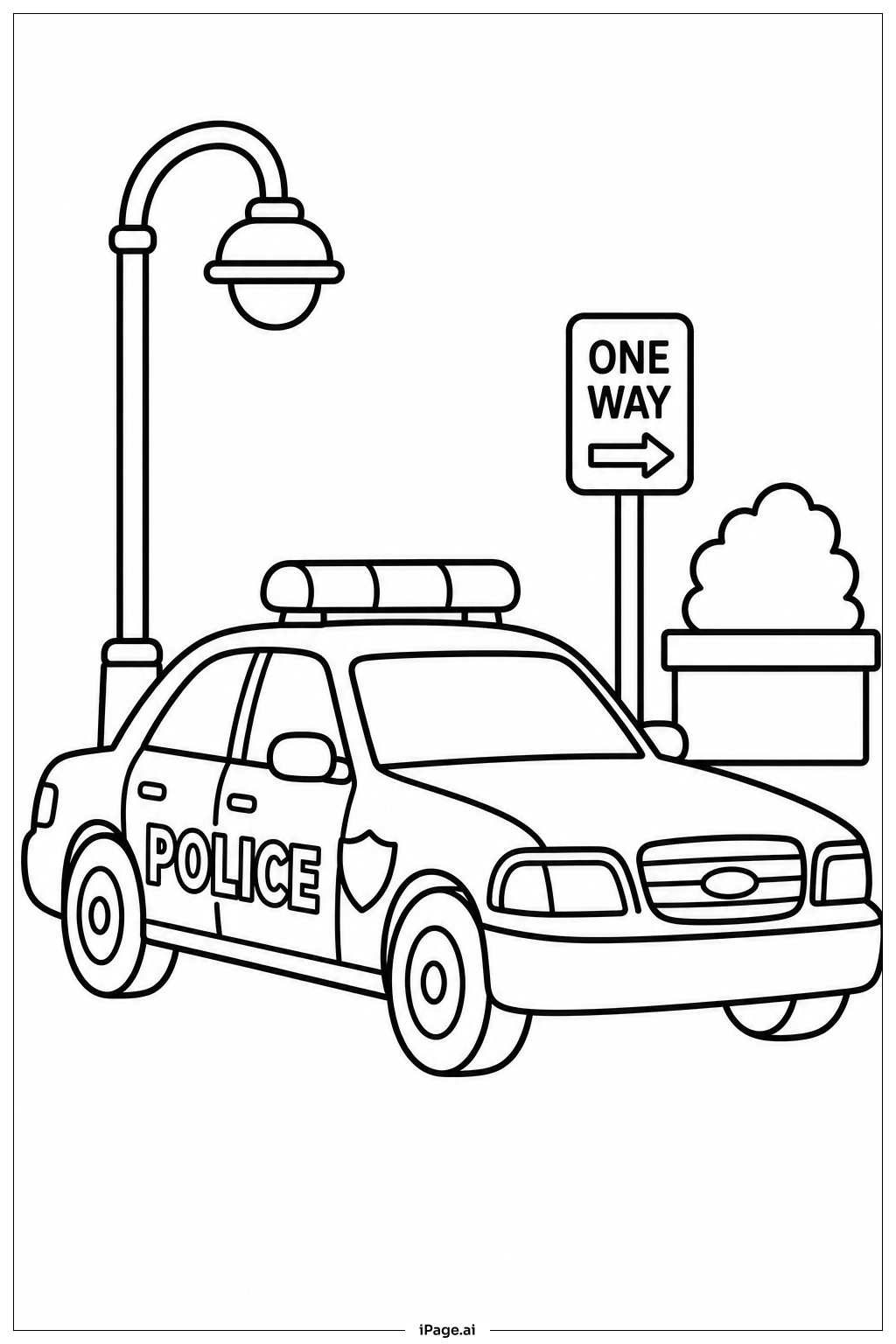
Coloring tips: How to color Police Car With Street Light coloring page well?
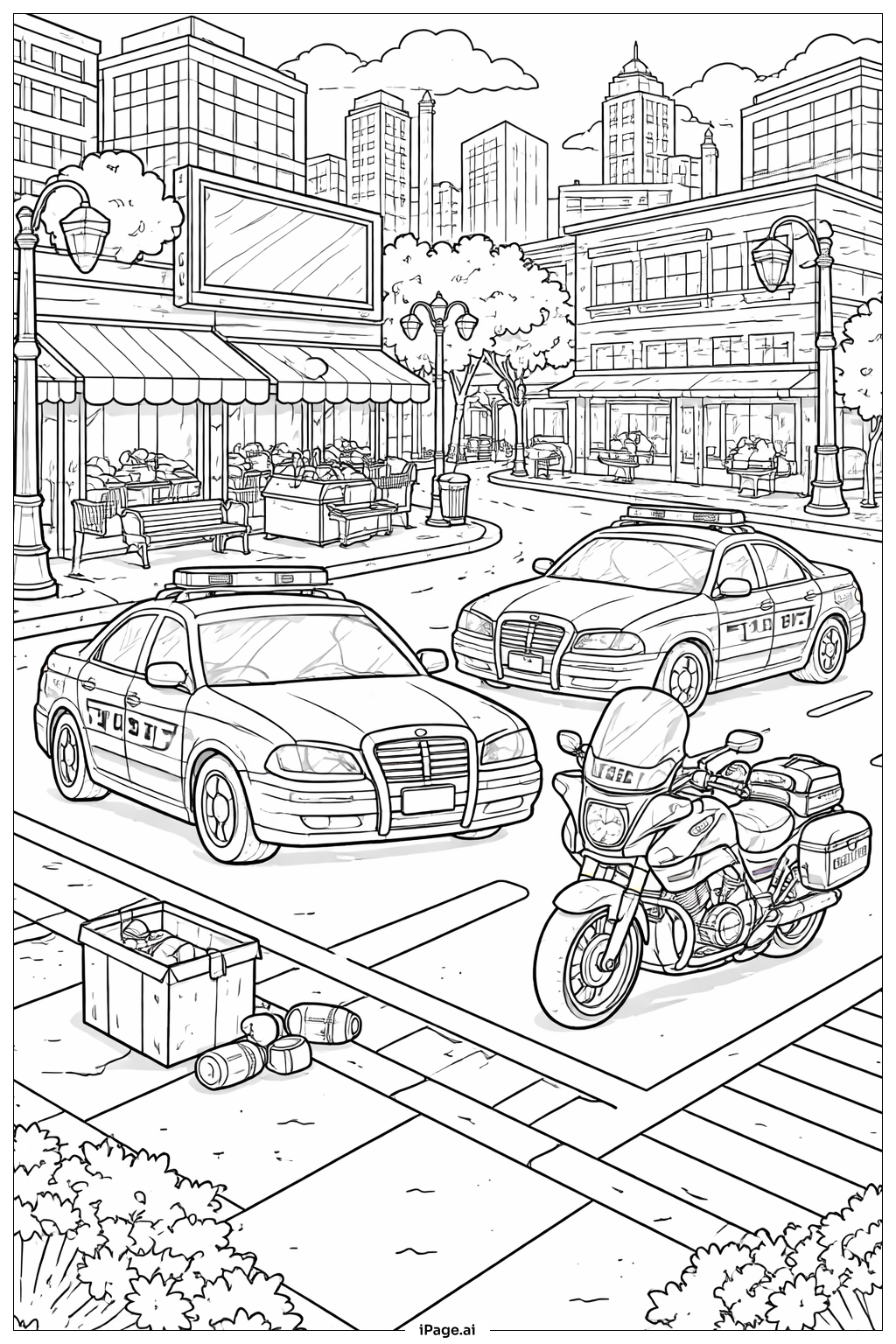
Start with the police car body. Use classic black and white, or try a bold blue and white look. Color the light bar on the roof red and blue to show the emergency lights. Use yellow or orange for the headlights and taillights. Fill in the wheels with dark gray or black, and use silver for the hubcaps. Color the star badge on the door with gold or yellow. Use dark blue or black for the window glass. For the street light, use gray or dark brown for the pole and a bright yellow or warm white for the lamp at the top to make it look like it is glowing. You can add a dark blue or purple background to make the scene feel like nighttime. Keep your strokes smooth and stay inside the lines for a neat finish.
Coloring challenges: Which parts are difficult to color and need attention for Police Car With Street Light coloring page?
• Light Bar Details: The light bar on the roof of the police car has small, divided sections for red and blue lights. Coloring each section separately without bleeding into the next requires a fine-tipped colored pencil or marker and a very steady hand. Rushing this area can make the lights look blurry or mixed together.
• Lettering and Badge: The word "POLICE" and the star badge on the car door are small and surrounded by tight spaces. Staying inside the letter shapes and badge outline is tricky, especially for younger colorists. Using a thin marker or a sharpened pencil tip works best here to keep the details clean and readable.
• Wheel and Hubcap Sections: The wheels contain circular hubcap designs with multiple small shapes inside. Switching between dark tire colors and lighter metallic hubcap colors in such a small area can be challenging. It helps to color the hubcap details first before filling in the darker tire around them.
• Street Light Glow Effect: Making the street light look like it is actually glowing is one of the harder creative challenges. A single flat yellow may not look convincing. Layering a pale yellow center with a deeper orange around the edges creates a more realistic light effect, but blending colors smoothly takes patience and practice.
• Consistent Shading: Keeping the shading consistent across the large, flat surfaces of the car body — such as the hood, doors, and roof — can be difficult. Uneven pressure while coloring leaves visible streaks. Using long, even strokes and the same pressure throughout each section helps create a smooth, professional finish.
Benefits of coloring books: Advantages of drawing Police Car With Street Light coloring page
Coloring this police car and street light scene offers many great benefits for kids and beginners alike. First, it helps build fine motor skills. Staying inside the outlines and coloring small details like the badge and light bar trains hand control and coordination. Second, it encourages focus and patience. A detailed scene like this one asks colorists to slow down, plan their colors, and work carefully through each section. This kind of focused activity is great for building concentration habits. Third, it sparks creativity. Choosing colors for the police car — whether realistic or totally imaginative — lets kids express themselves freely without any rules. Fourth, it introduces kids to real-world subjects. Coloring a police car helps young children recognize emergency vehicles and learn about community helpers in a fun, hands-on way. Fifth, finishing the page gives a strong sense of accomplishment. Completing a detailed coloring page builds confidence and pride, encouraging kids to take on more creative challenges. Overall, this page is a fun and rewarding activity for Boys, Girls, and Adults of all skill levels.