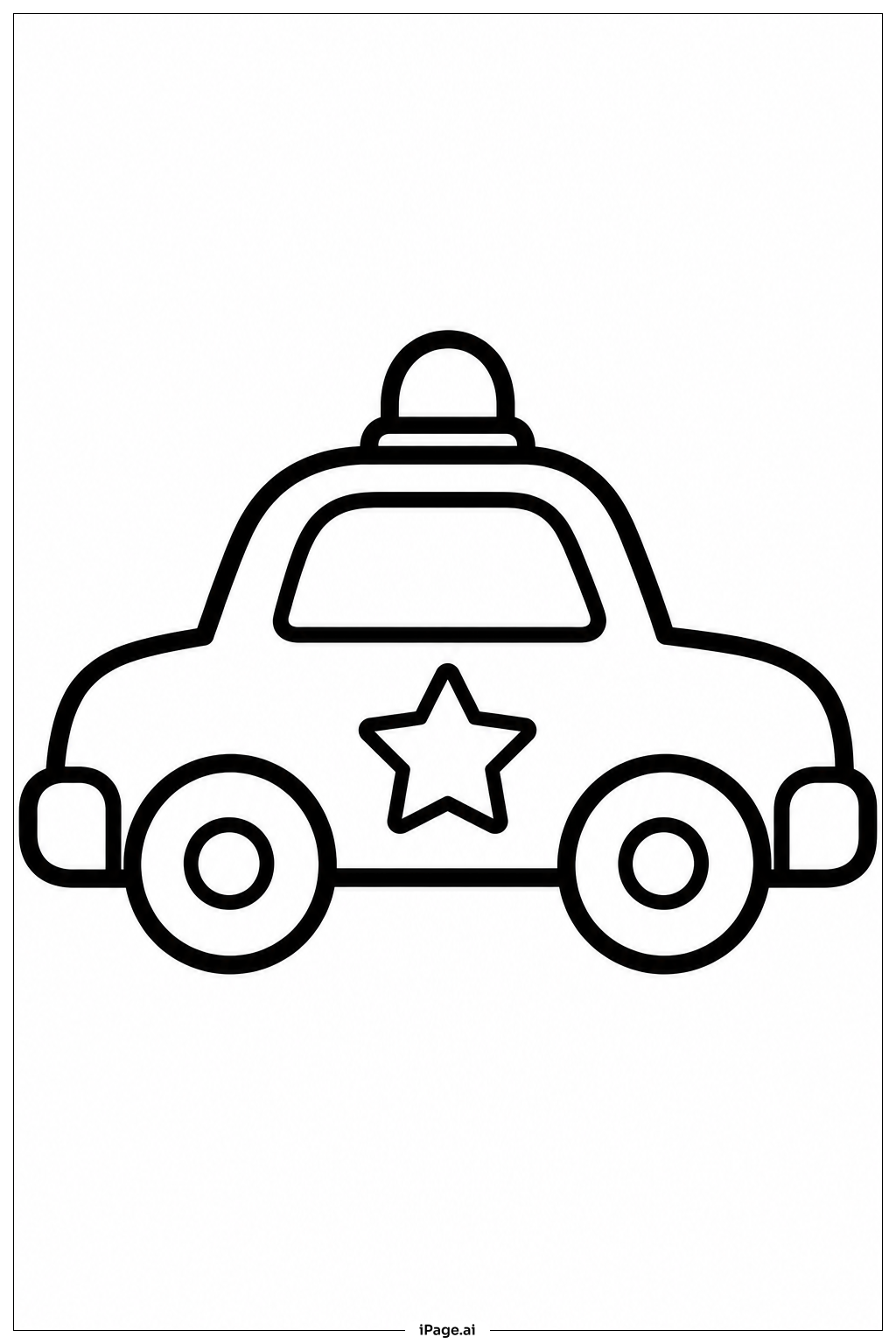
Coloring tips: How to color Police Car With Star coloring page well?
Start with the main body of the police car. Traditional police cars are blue, black and white, or all white depending on the city. You can go classic with a black and white two-tone look, or make it your own with bold colors like dark blue or bright red. Color the star badge on the door yellow or gold to make it stand out. Use gray or silver for the bumper, grille, and wheel rims. The windows look great in light blue to show glass. The light bar on the roof can be colored red and blue for a realistic flashing effect. Use black for the tires. Add small details like a yellow headlight and a red taillight to bring the car to life. Feel free to add a background with roads, buildings, or even a night sky to complete the scene.
Coloring challenges: Which parts are difficult to color and need attention for Police Car With Star coloring page?
• Star Badge Precision: The star shape on the side of the car has pointed edges and a small center area. Staying inside the lines of the star without bleeding onto the car door can be tricky, especially for younger artists. Using a sharpened colored pencil or a fine-tip marker will help keep the gold or yellow color neatly inside the badge outline.
• Two-Tone Body Coloring: Many police cars use a two-tone color split, such as black on top and white on the bottom. Keeping a clean, straight dividing line between the two color zones is one of the harder parts of this page. Lightly sketching a guide line with a pencil before coloring can help maintain a consistent boundary.
• Light Bar Details: The roof-mounted light bar contains multiple small sections meant to represent individual lights. Alternating red and blue colors in these tiny compartments requires a steady hand and small coloring tools. Rushing this area often leads to colors overlapping, so take it slowly and work section by section.
• Wheel and Rim Separation: The tires and rims are drawn close together with only a thin line separating them. Coloring the rims in silver or gray while keeping the tires solid black demands careful attention to avoid muddy or blended results. Starting with the lighter rim color first before filling in the dark tire area is a helpful strategy.
• Window Glass Effect: Giving the windows a transparent or glassy appearance using light blue while leaving slight white highlights takes some color-layering skill. Applying the color lightly and building up in layers creates a more realistic glass look without making the windows appear too dark or flat.
Benefits of coloring books: Advantages of drawing Police Car With Star coloring page
Coloring this Police Car With Star page offers a wide range of benefits for children and young artists. First, it helps build fine motor skills as kids carefully fill in small areas like the star badge, light bar, and wheel rims. The repeated movements of coloring strengthen hand muscles and improve pencil control, which directly supports handwriting development.
Second, this page encourages creativity and self-expression. Choosing colors for the car body, badge, and background lets kids make their own artistic decisions, building confidence in their creative choices.
Third, focusing on staying within the lines of a detailed image like this helps develop concentration and patience. These are important skills that carry over into school and everyday life.
Fourth, police-themed coloring pages like this one spark curiosity about community helpers and public safety. It can open up conversations between kids and parents or teachers about the role of police officers in keeping communities safe.
Finally, completing the full coloring page gives children a satisfying sense of accomplishment. Displaying their finished work builds pride and motivates them to keep practicing their art skills. It is a simple, screen-free activity that supports both mental focus and joyful creative play.