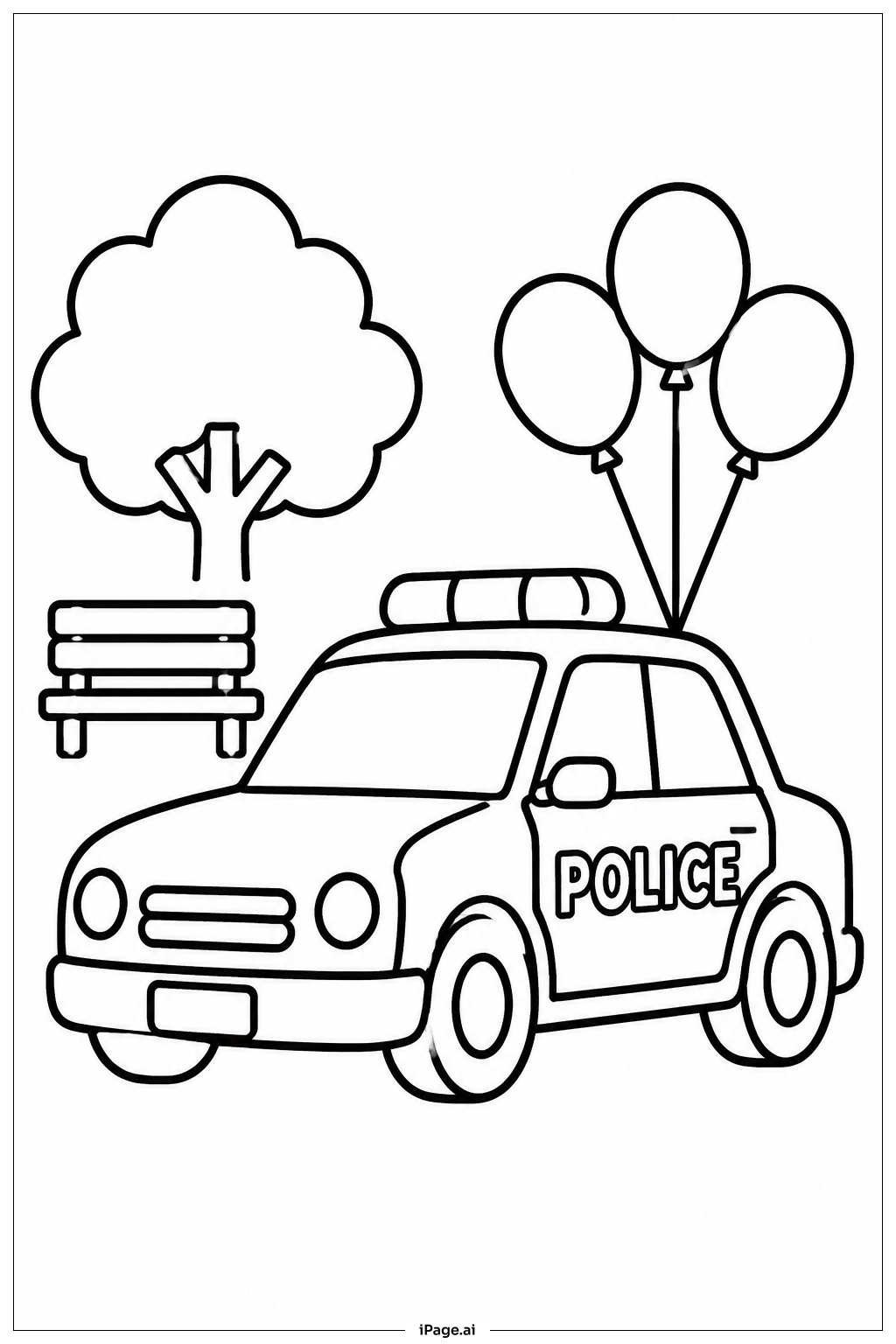
Coloring tips: How to color Police Car With Balloon coloring page well?
Start with the police car's body. Traditional police cars are dark blue, black and white, or all white — pick whichever you like best! Use a bright yellow or gold color for the star badge on the door to make it stand out. Color the light bar on the roof red and blue to give it that classic flashing-light look. The wheels and tires look great in dark gray or black. For the windshield and windows, try a light sky blue to show the glass effect. Now for the balloon — this is your chance to go bold! Choose a bright color like red, yellow, pink, or orange. The ribbon can be a lighter shade of the same color or a fun contrasting color. You can even add a gradient by blending two shades together on the balloon for a shiny, round effect. Don't forget small details like the headlights in pale yellow and the bumper in silver or gray. Have fun mixing colors to make your police car truly one of a kind!
Coloring challenges: Which parts are difficult to color and need attention for Police Car With Balloon coloring page?
• Light Bar Details: The light bar on top of the police car has multiple small sections for red and blue lights. Staying inside each tiny segment without letting the colors bleed into each other can be tricky. Use a fine-tipped colored pencil or marker to carefully fill each compartment with the right color.
• Star Badge on the Door: The badge is a small but important detail. It often has a multi-pointed star shape with tiny inner sections. Coloring it neatly with gold or yellow while keeping the outline clean requires a steady hand and a sharp pencil tip.
• Balloon Shading: A round balloon looks most realistic when it has highlights and shadows. Adding a small white or very light spot near the top to suggest reflected light, while gradually darkening the color toward the edges, can be challenging for younger colorists. Blending colored pencils or crayons smoothly takes patience and practice.
• Ribbon and Knot: The curling ribbon that connects the balloon to the car is thin and twisty. Coloring a narrow, winding shape without going outside the lines is one of the trickiest parts of this image. Try using a single, confident stroke along the ribbon's length.
• Wheels and Tire Texture: The large round tires may have tread patterns or hubcap details. Keeping the dark tire color separate from the lighter hubcap area while maintaining smooth, even coverage inside circular shapes is a common challenge, especially near the curved edges.
Benefits of coloring books: Advantages of drawing Police Car With Balloon coloring page
Coloring this Police Car With Balloon page offers a wonderful mix of fun and learning for kids. Working with the car's many small details — the badge, light bar, wheels, and ribbon — helps children develop fine motor skills and hand-eye coordination. Carefully guiding a crayon or pencil inside tight outlines builds the kind of precise muscle control that supports handwriting and other everyday tasks.
Choosing colors for the balloon and the police car encourages creative thinking and color awareness. Kids get to experiment with bold, bright combinations and learn how different colors create different moods and feelings.
The festive theme of a police car with a balloon also sparks imagination. Children might imagine a community celebration, a friendly officer at a fair, or a special parade — storytelling that supports language development and emotional creativity.
For younger children, the large, simple shapes like the car body and balloon are easy and satisfying to fill in, building confidence. For older kids, the smaller details offer a genuine challenge that sharpens focus and patience.
Coloring is also a calm, screen-free activity that helps children relax and unwind. It encourages mindfulness by keeping attention on one task at a time. Whether coloring solo or with friends and family, this page is a joyful, rewarding experience for Boys and Girls of all ages.