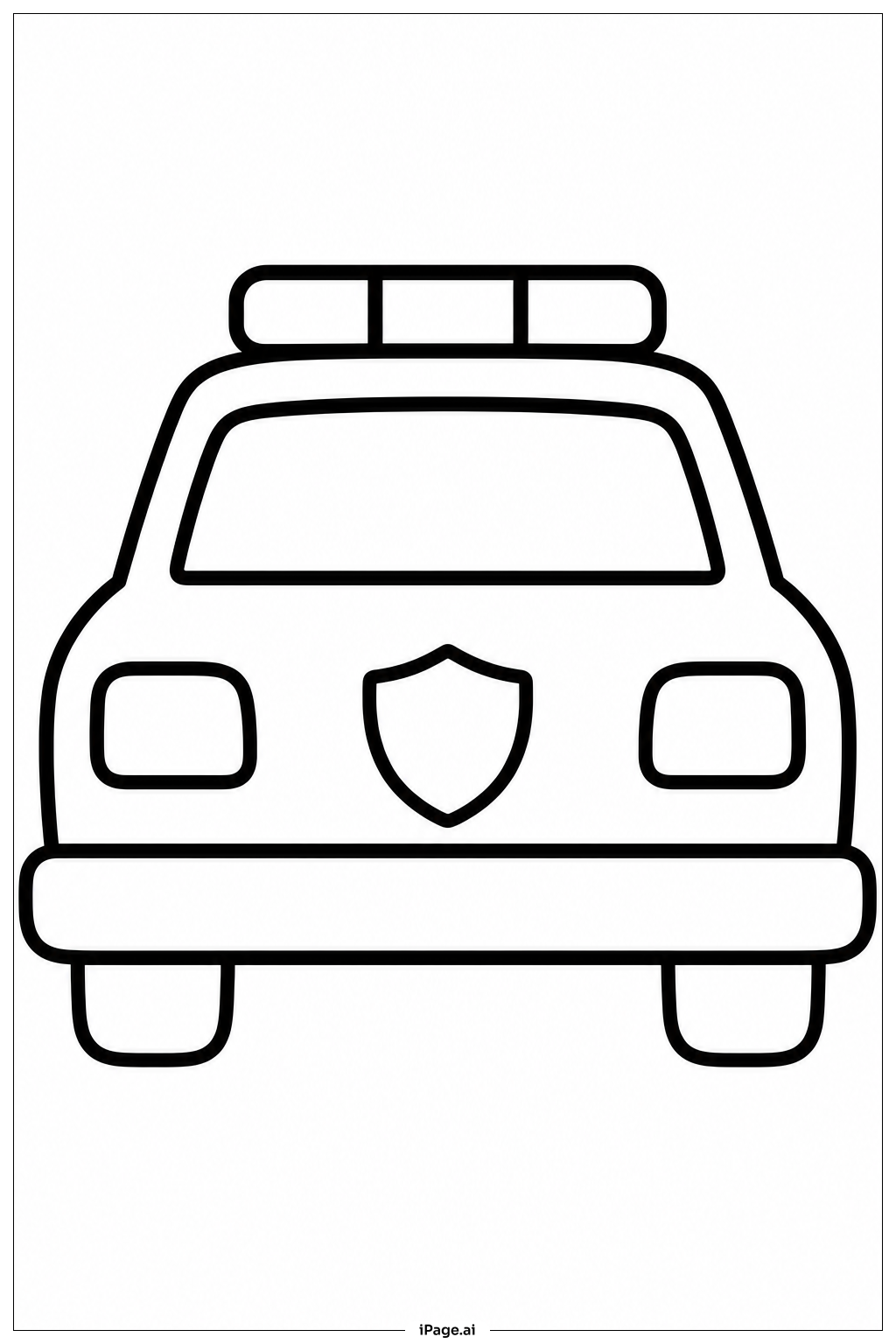
Coloring tips: How to color Police Car Rear View coloring page well?
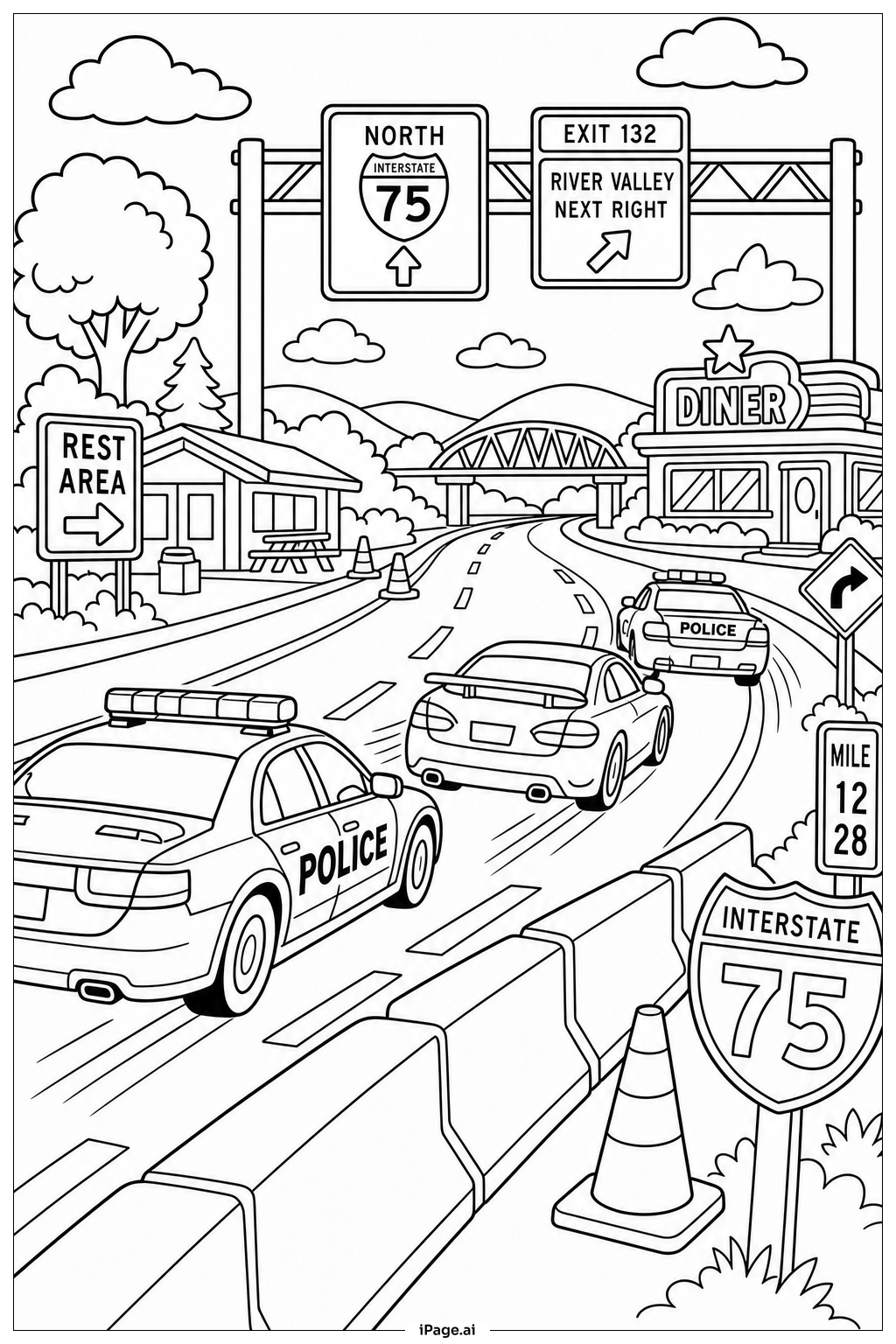
Start with the main body of the police car using traditional law enforcement colors like white, black, or dark blue. The emergency light bar on top can be colored with alternating red and blue to represent working sirens. Use silver or gray for metallic parts like the bumper, door handles, and exhaust pipe. The windows can be shaded with light blue or gray to show glass reflection. Tail lights should be bright red, while reverse lights can be white or yellow. Color the wheels black with silver or chrome rims. If there are department markings or badges visible, use gold or yellow for official emblems. Consider adding a stripe along the side in a contrasting color. The license plate can be white with blue or black lettering. Don't forget to add shadows underneath the car using darker shades to create depth and make the vehicle look grounded.
Coloring challenges: Which parts are difficult to color and need attention for Police Car Rear View coloring page?
• Light Bar Details: The emergency lights on top of the police car contain multiple small sections and lenses that require careful color selection. Children need to alternate between red and blue while staying within the tiny boundaries of each light compartment, which demands good hand-eye coordination and precision with coloring tools.
• Window Reflections and Transparency: Creating the appearance of glass windows from the rear view presents a unique challenge. Young artists must understand how to use lighter pressure or diluted colors to suggest transparency while still making the windows visible. Adding subtle reflections without making the glass look solid requires advanced shading techniques.
• Symmetrical Design Elements: Police cars feature matching components on both left and right sides, including tail lights, reflectors, and body panels. Maintaining color consistency and equal intensity on both sides tests a child's attention to detail and patience. Any variation becomes immediately noticeable due to the symmetrical nature of the rear view.
• Metallic Surfaces and Chrome: The bumper, exhaust pipes, license plate frame, and wheel rims require special coloring techniques to convey their metallic appearance. Creating the illusion of shiny chrome or brushed metal using standard coloring materials challenges children to blend grays, silvers, and whites with strategic highlighting.
• Tire and Rim Complexity: The wheels visible in the rear view often contain intricate spoke patterns or hub designs with multiple small spaces. Coloring the black tires while preserving the detailed rim pattern requires steady hands and the ability to work in confined spaces without crossing lines.
Benefits of coloring books: Advantages of drawing Police Car Rear View coloring page
Coloring this police car rear view helps children develop respect and recognition for community helpers and law enforcement vehicles. It enhances fine motor skills through the detailed work required for light bars, wheels, and small components. The symmetrical design naturally teaches children about balance and matching, as they work to keep both sides of the vehicle consistent. This activity builds focus and concentration as young artists carefully navigate the various sections and details. Understanding vehicle perspective improves spatial awareness and helps children visualize three-dimensional objects on a two-dimensional page. The familiar subject matter creates confidence, especially for children interested in emergency vehicles and community safety. Color decision-making for realistic vehicle elements encourages observation skills as children recall what real police cars look like. The combination of large areas and intricate details accommodates different skill levels, making it suitable for both younger children and older ones seeking more challenging sections to complete.