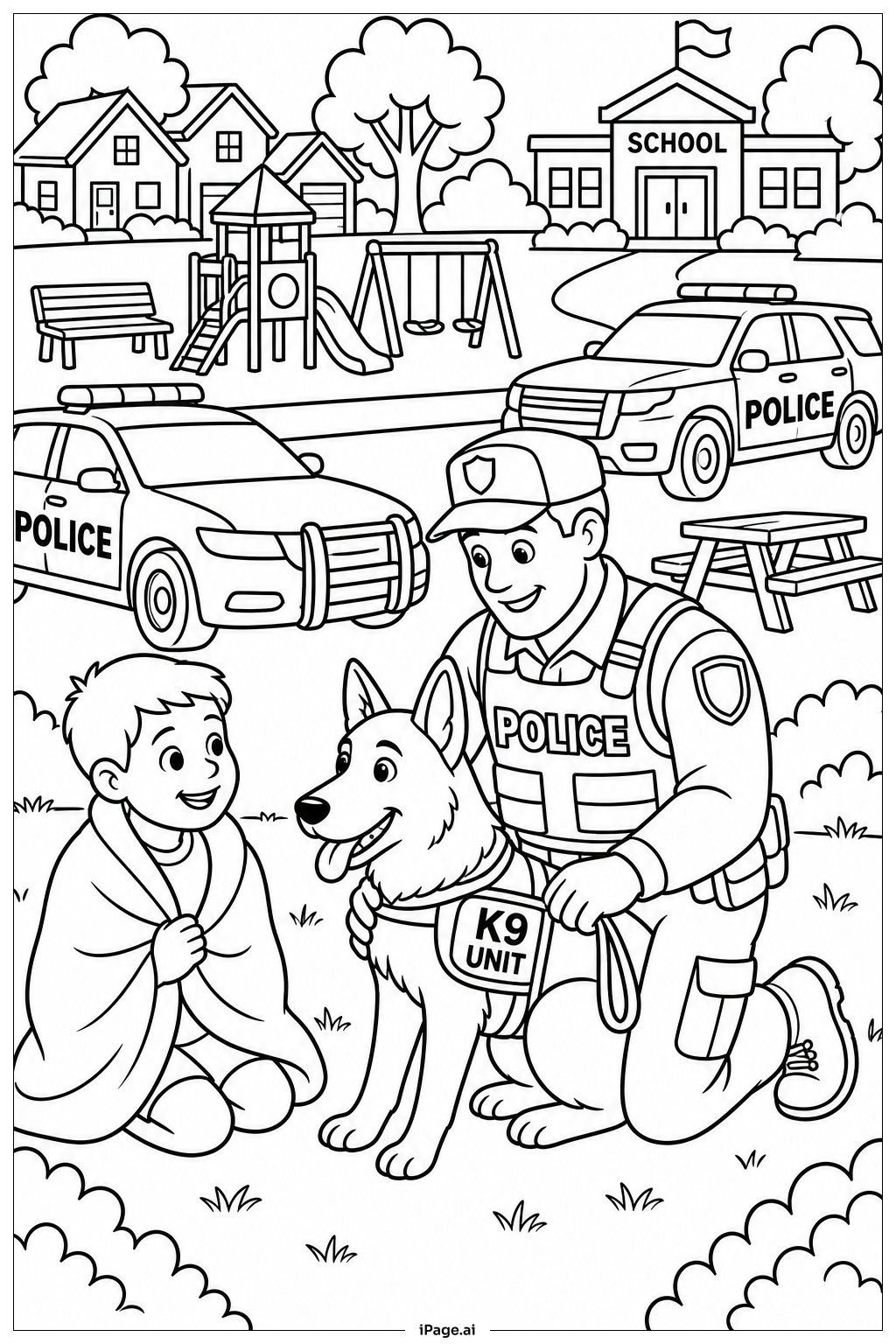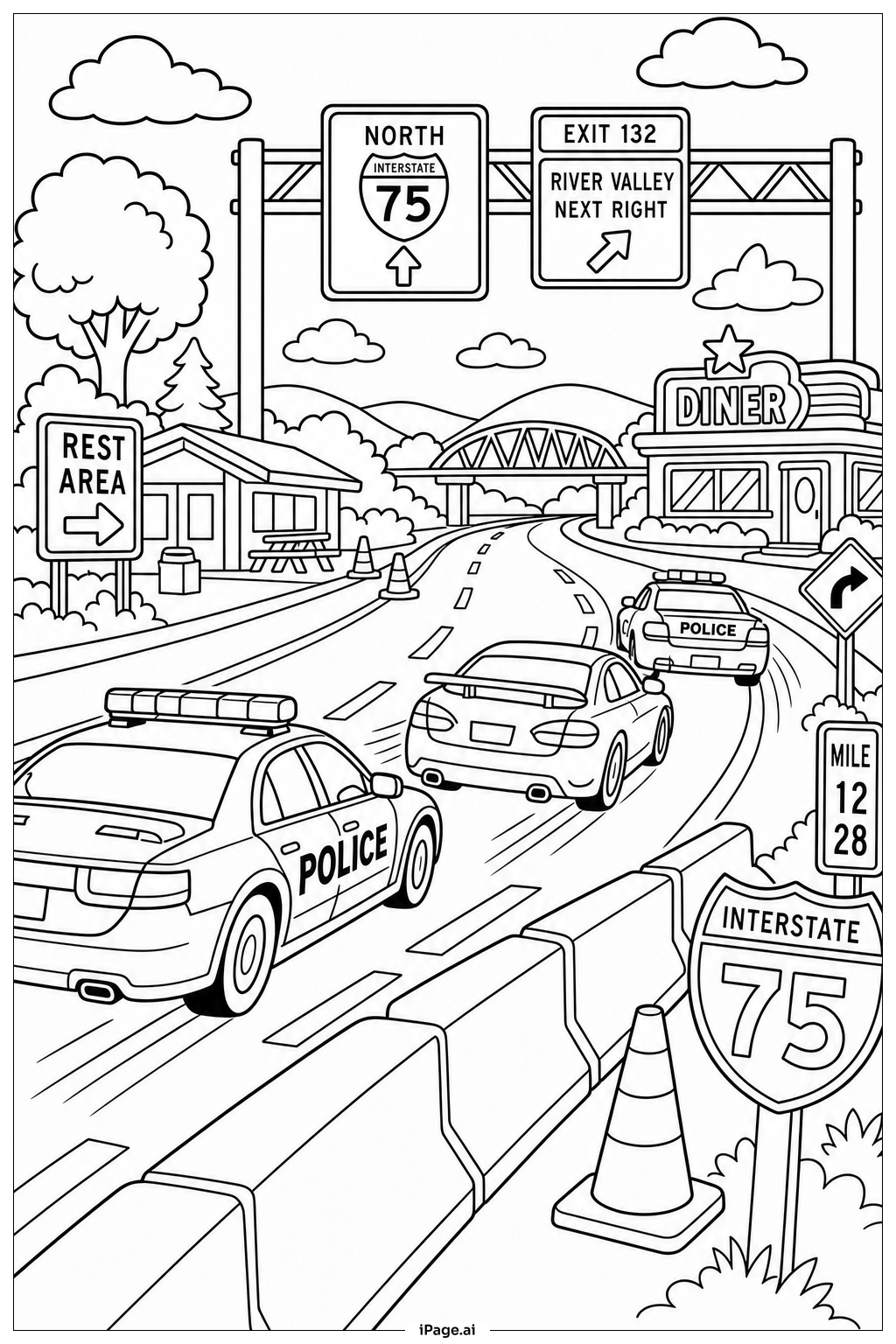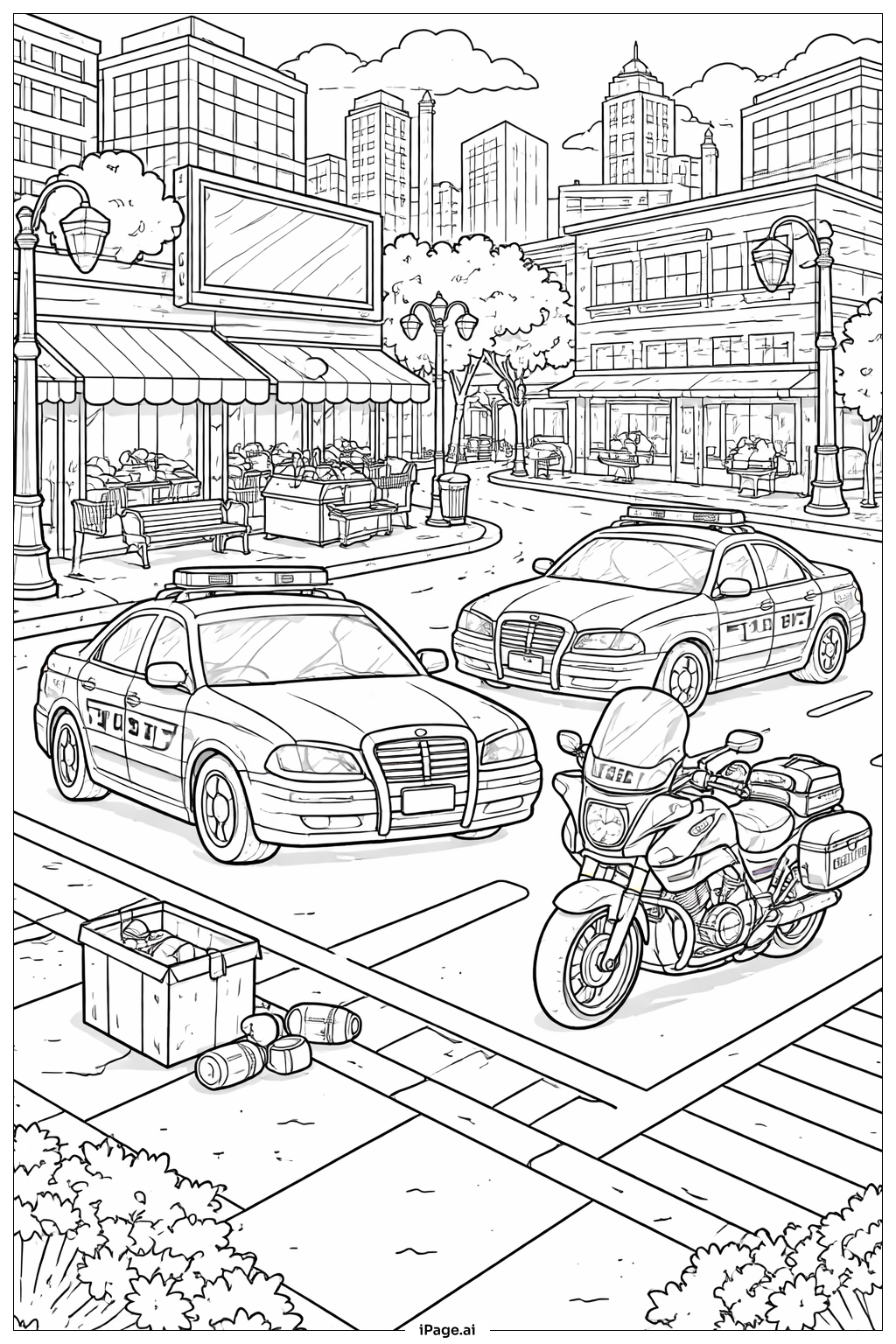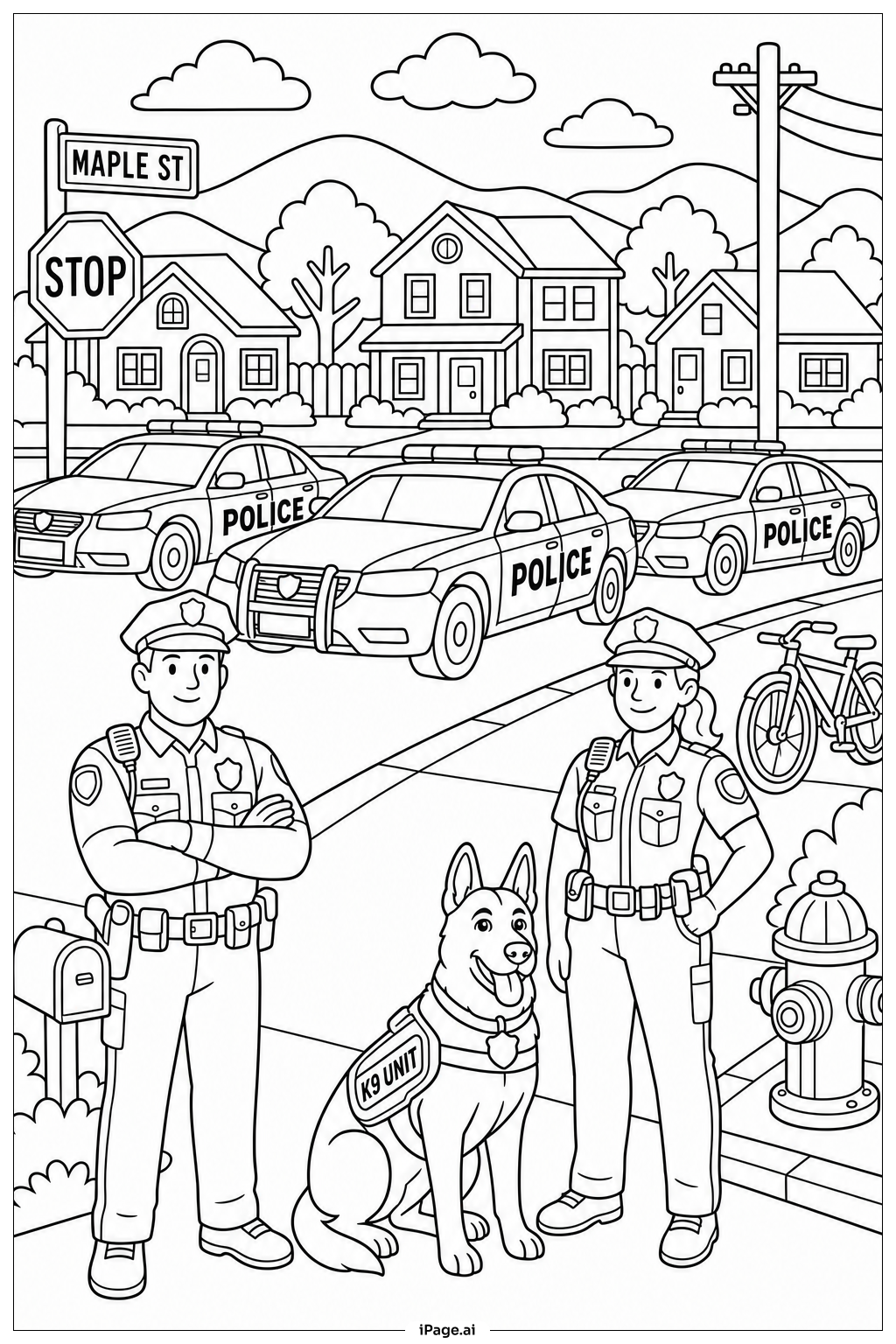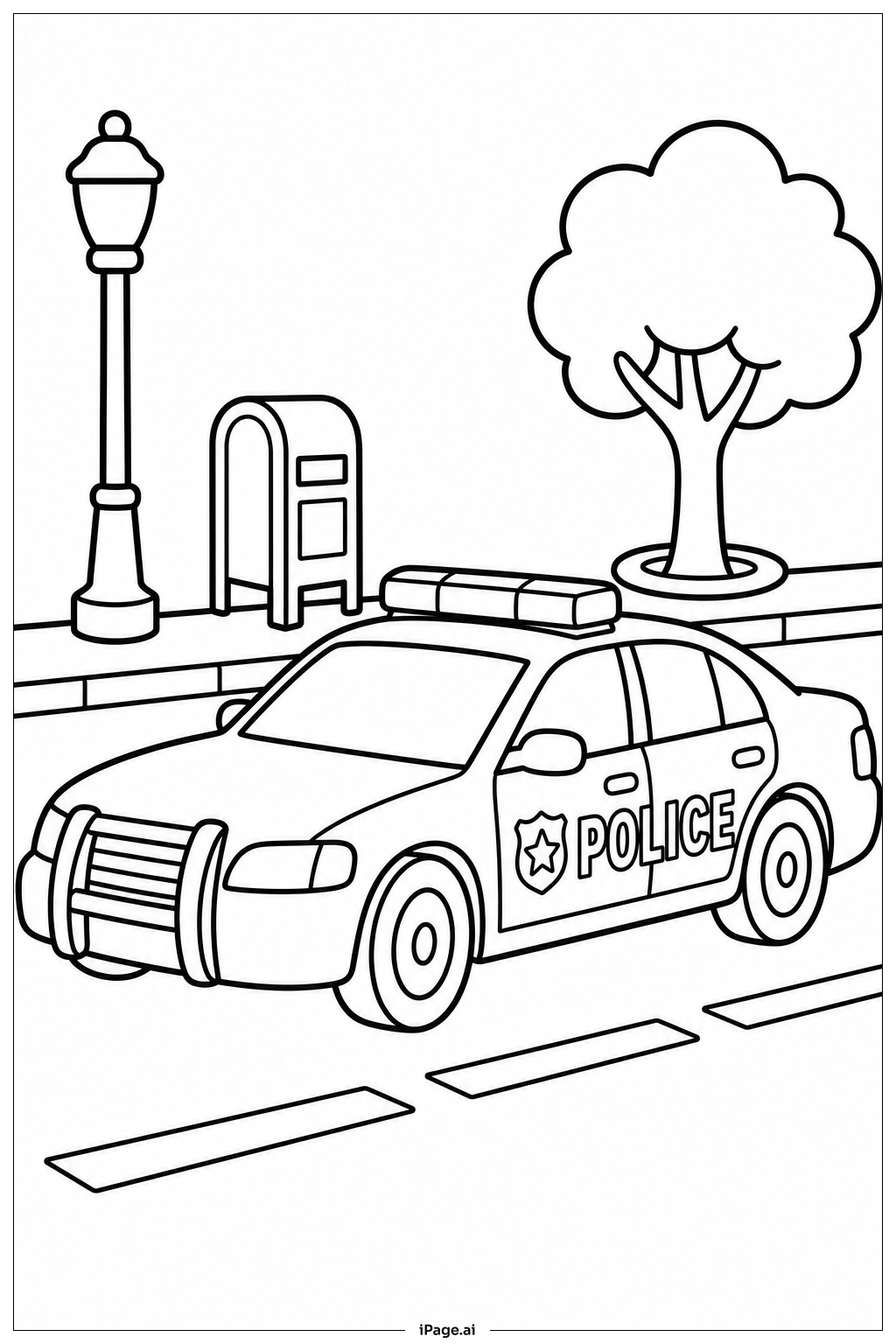
Coloring tips: How to color Police Car On Street coloring page well?
Start with the main body of the police car. Most police cars are black and white, so use bright white for the upper half and solid black for the lower half. You can also make it all blue or all dark navy for a different look. Color the light bar on the roof with red and blue to show the emergency lights. Use silver or gray for the bumpers, door handles, and side mirrors. The wheels and rims look great in dark gray or black with silver accents. For the windows, try light blue or gray to give a glass effect. Color the "POLICE" lettering in bold black or dark blue. The road beneath the car can be gray or dark brown. Feel free to add your own creative colors to make this police car truly unique and exciting.
Coloring challenges: Which parts are difficult to color and need attention for Police Car On Street coloring page?
• Light Bar Details: The light bar on the roof of the police car contains many small individual light sections. Each section should ideally be colored separately in red or blue. Staying within these tiny spaces without going over the lines requires a sharp pencil or a fine-tipped marker, which can be tricky for younger colorists.
• Two-Tone Body Coloring: The classic police car design splits the car body into two separate color zones. Keeping a clean, straight border between the black lower half and the white upper half is a real challenge. Even a slight slip of the hand can blur the boundary and make the car look messy.
• Wheel and Rim Sections: The tires and rims involve multiple curved and circular shapes layered on top of each other. Coloring the outer rubber tire in black, the inner rim in silver, and any decorative spoke details in a different tone all requires careful attention and patience to avoid mixing colors together.
• Reflective and Metallic Surfaces: Parts like the bumper, door handles, side mirrors, and window trim are meant to look shiny or metallic. Capturing that look using colored pencils or crayons is not easy. Young colorists may need to learn simple shading techniques, like pressing lightly for highlights and harder for shadows, to create a convincing metallic appearance.
• Window Shading: The car windows are large, flat surfaces that can look flat and dull if colored with a single solid tone. Adding depth by blending two shades of blue or gray to simulate a glass reflection is a more advanced technique that may challenge beginners.
Benefits of coloring books: Advantages of drawing Police Car On Street coloring page
Coloring this police car scene offers a wide range of benefits for children and young learners. First, it helps build fine motor skills. Carefully coloring within the lines of wheels, windows, and small light details trains the hand muscles and improves pencil control, which also supports better handwriting. Second, it encourages focus and patience. Completing a detailed image like this teaches children to slow down, concentrate, and work through a task step by step. Third, it sparks creativity. While police cars follow a recognizable design, kids are free to choose their own color combinations, giving them a safe space to express themselves. Fourth, it introduces real-world knowledge. Children learn to recognize what a police car looks like, what it does, and why it is an important part of community safety. Fifth, it provides a calming, screen-free activity. Coloring is a relaxing pastime that reduces stress and gives children a productive way to spend their free time. Whether at home or in the classroom, this Police Car On Street coloring page is a fun and rewarding experience for colorists of all skill levels.