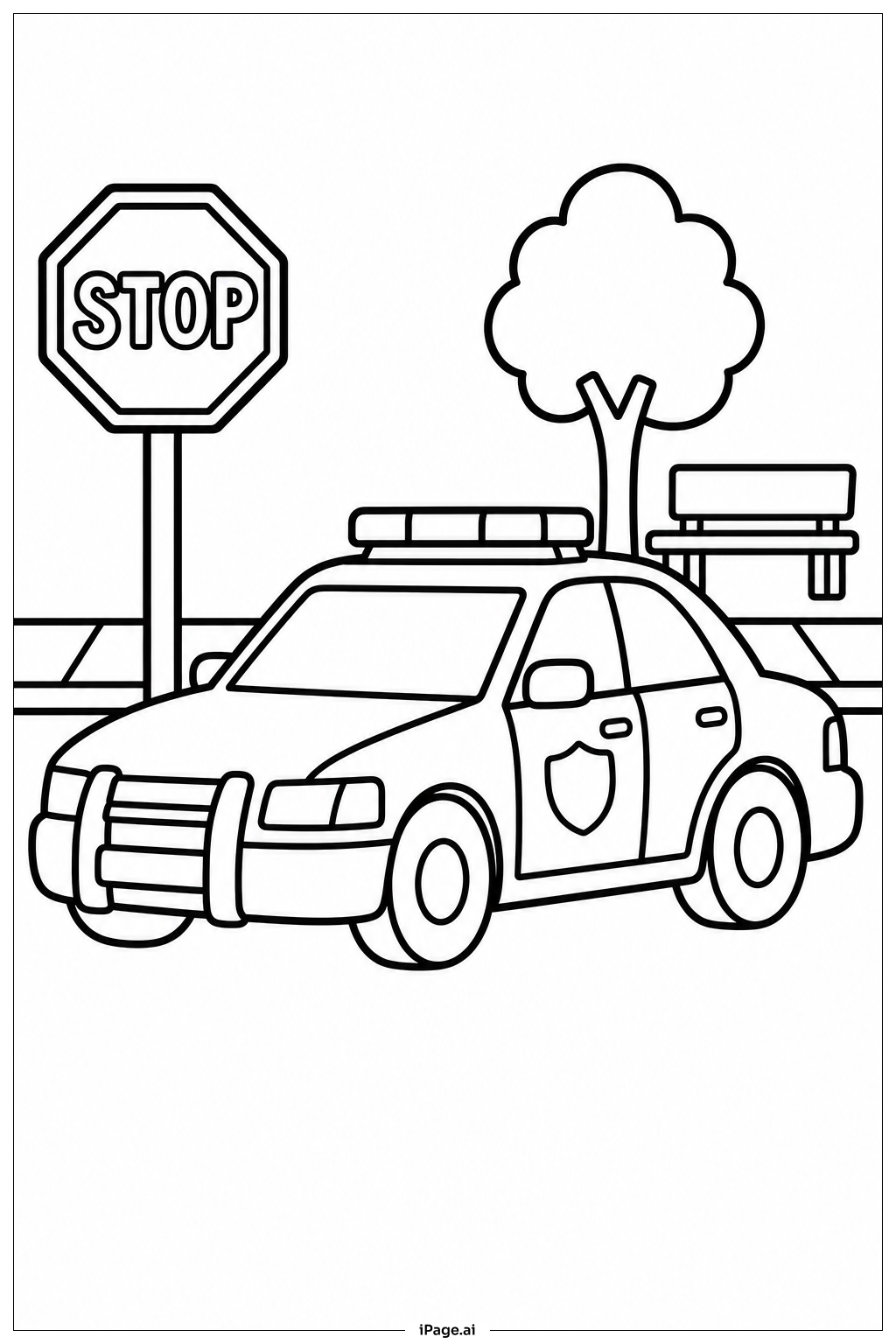
Coloring tips: How to color Police Car Near Stop Sign coloring page well?
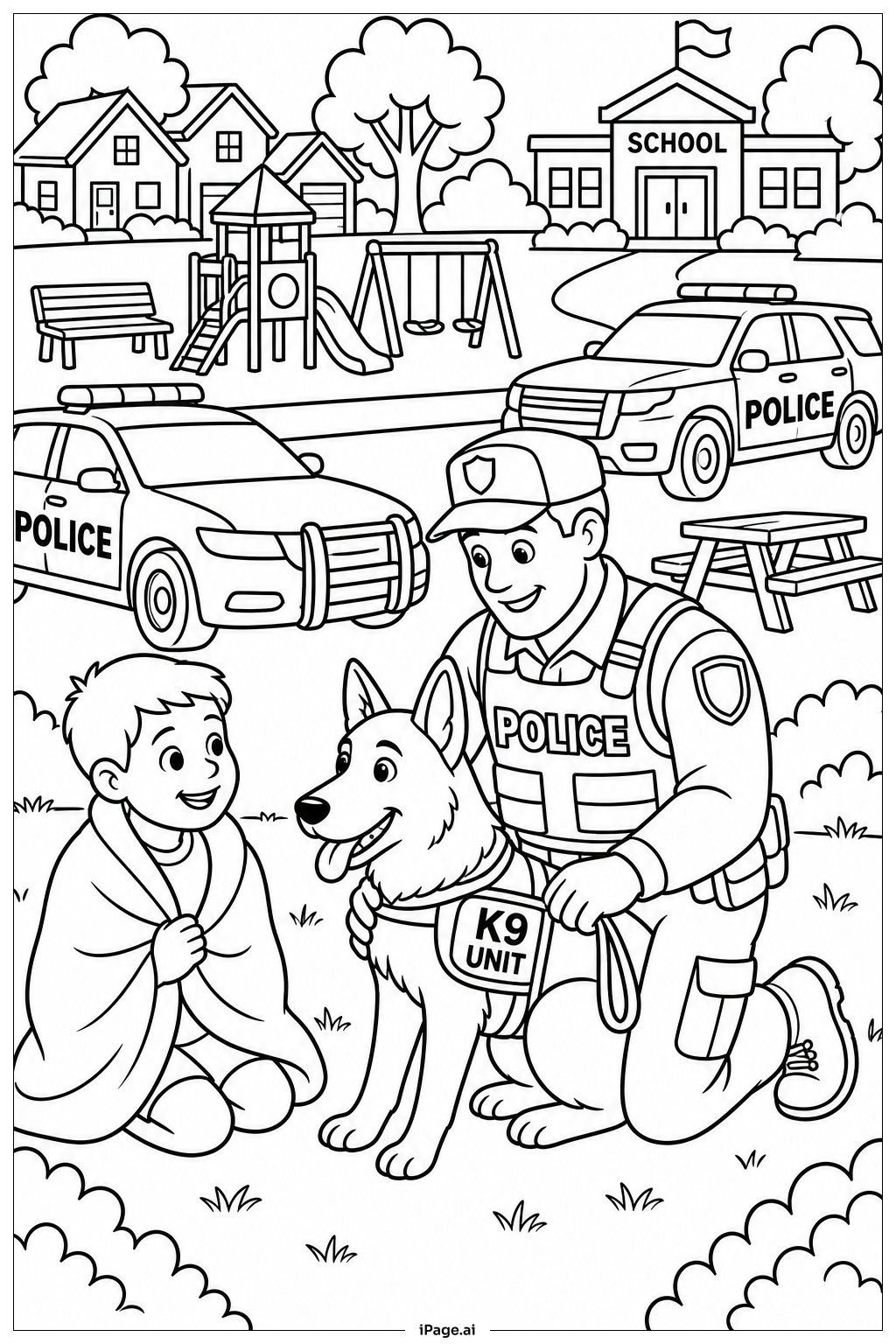
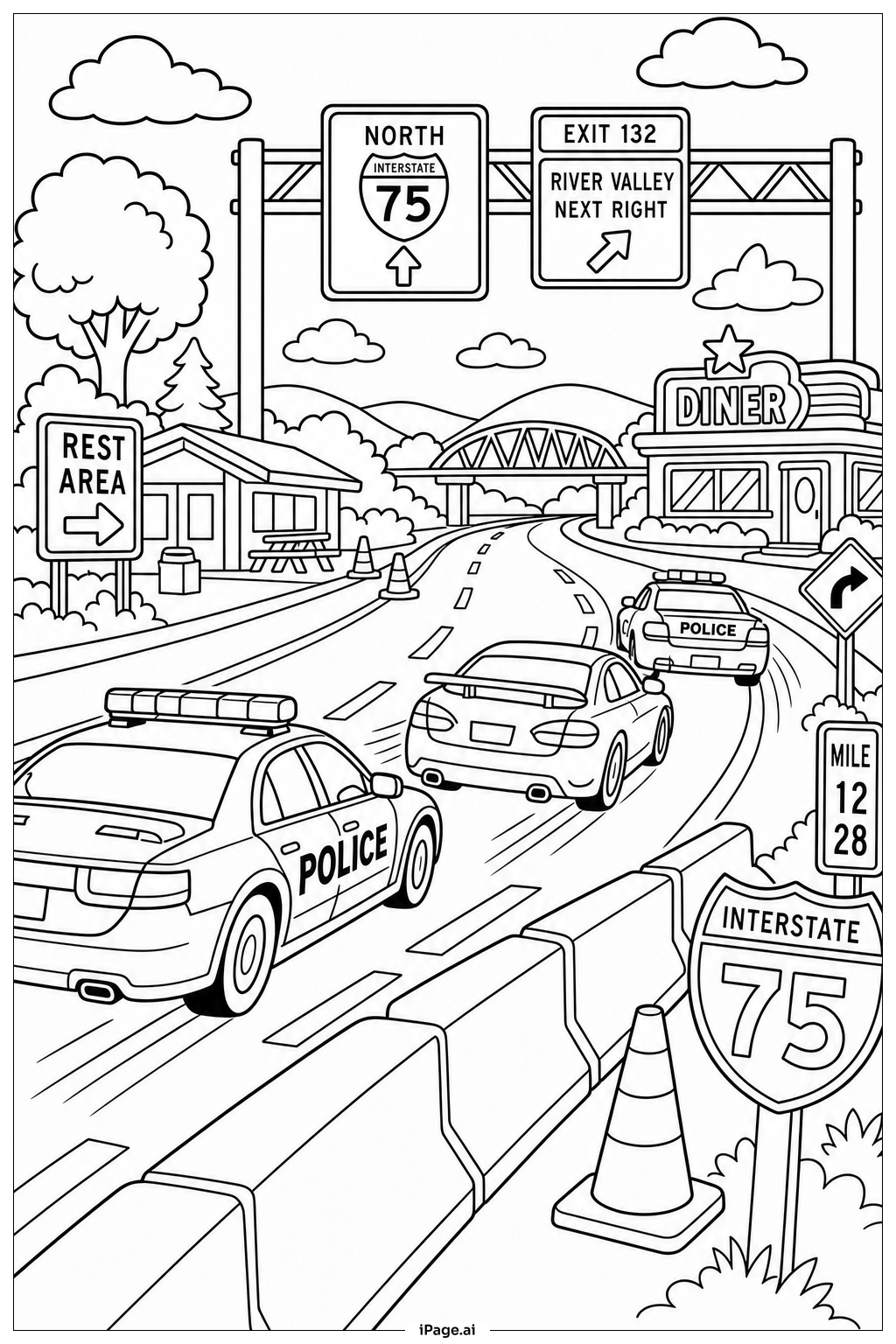
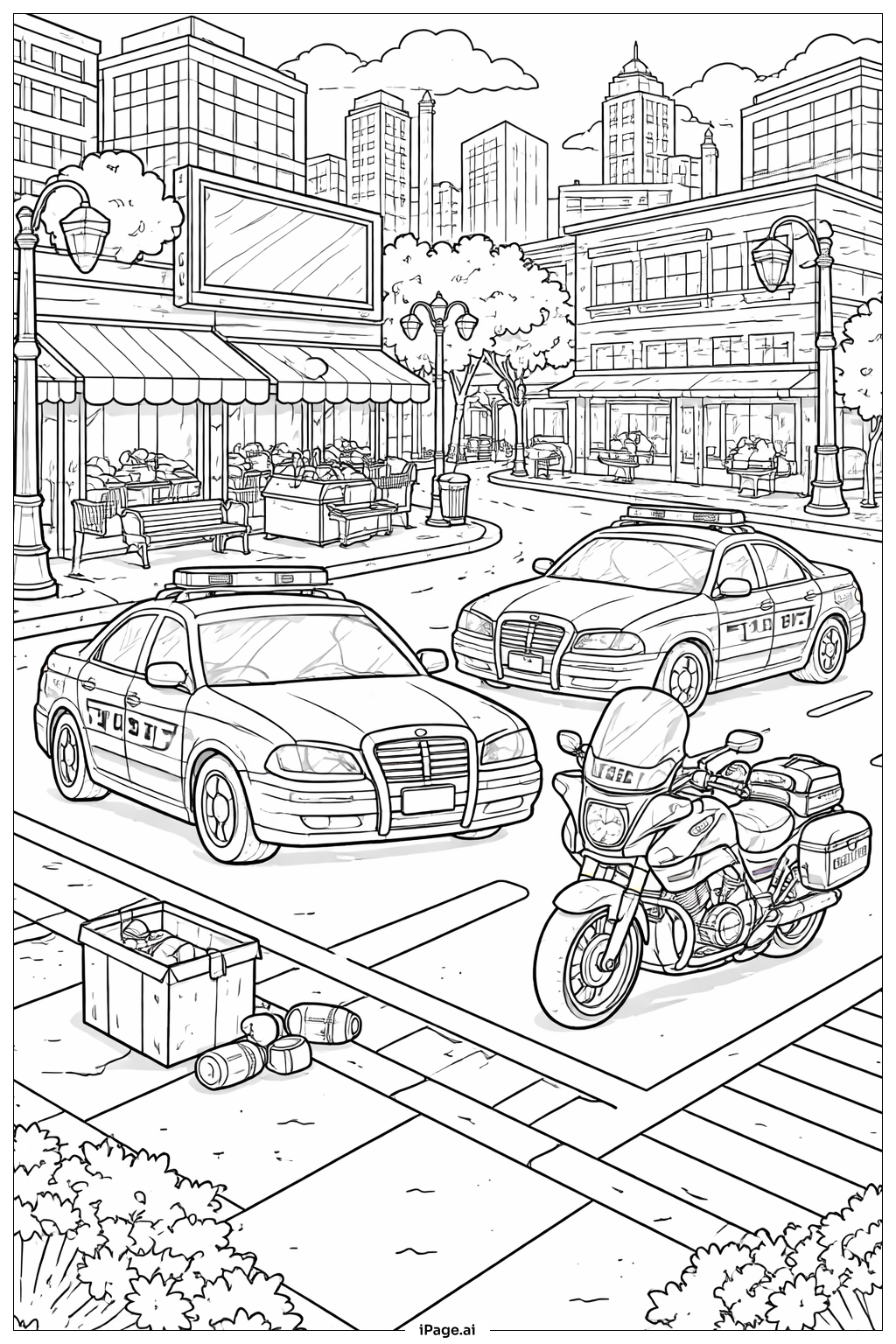
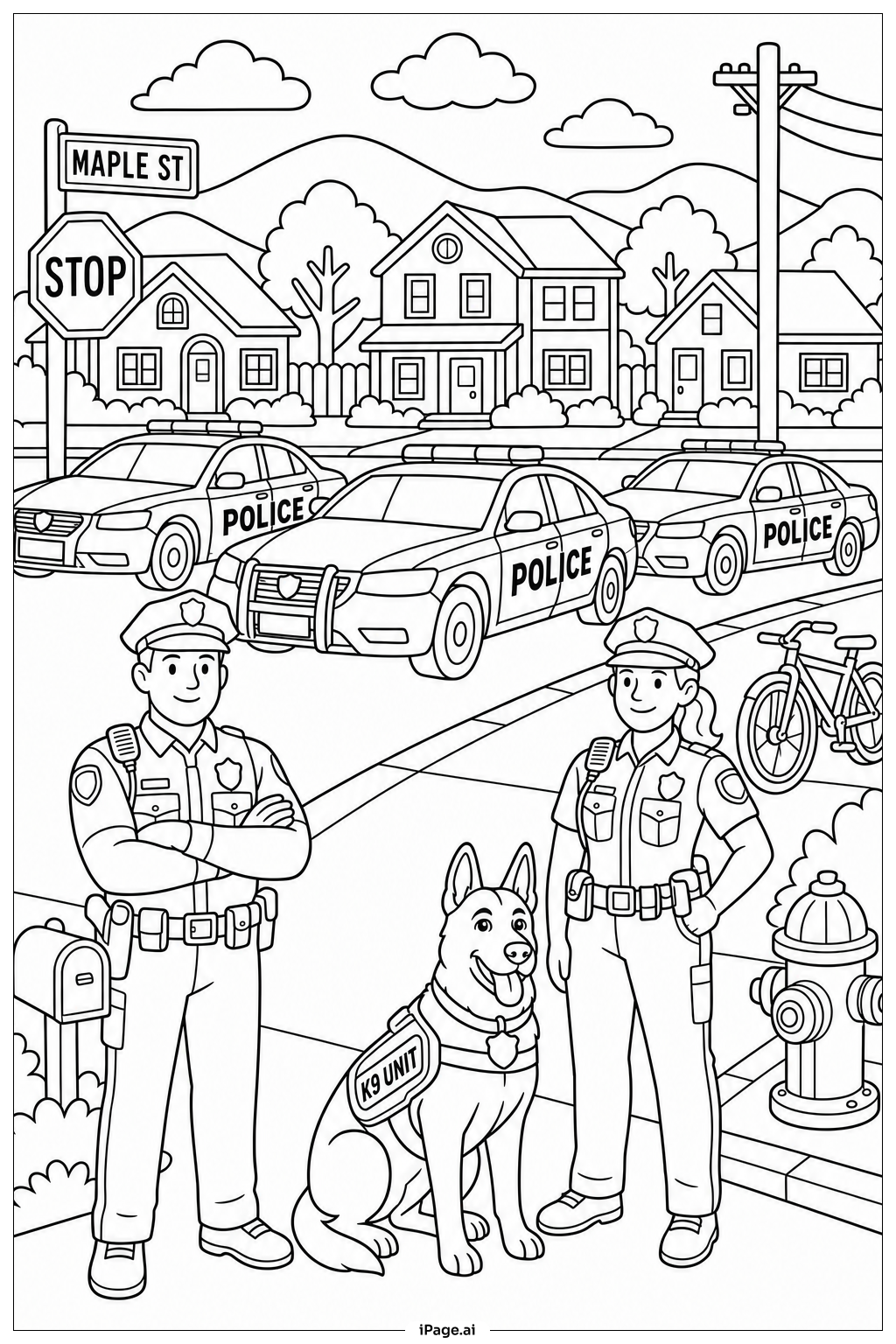
Start with the police car's main body. Use dark blue or black for the car body, which is the most common police car color. You can also use white with black or blue sections for a classic two-tone look. Color the light bar on the roof red and blue to show the flashing emergency lights. Use yellow or silver for the badge and door markings. Color the tires black and the wheel rims silver or gray. For the windows, use a light blue or gray to give a glass effect. The stop sign should be bright red with white letters and a white border. Color the sign pole gray or silver. Use tan, gray, or light brown for the road surface. You can add a sky blue background and green grass on the sides to bring the whole scene to life. Take your time with small details like headlights and door handles.
Coloring challenges: Which parts are difficult to color and need attention for Police Car Near Stop Sign coloring page?
• Police Car Body Sections: The police car has many separate panels, including the hood, doors, roof, and trunk. Keeping each section neatly colored without going over the lines takes steady hands and careful attention. Young colorists may find it tricky to stay within the smaller curved areas near the front grille and bumper.
• Light Bar Details: The light bar on top of the police car has multiple small compartments for red and blue lights. These tiny sections are close together and require a fine-tipped coloring tool to fill in accurately. Mixing up the red and blue pattern without bleeding into each other is a real challenge.
• Badge and Text Markings: Police cars often display text, numbers, or a badge logo on the doors. These lettering details are very small and demand precise coloring. Using a thin marker or colored pencil works best here, but it still requires patience and a slow, careful approach.
• Stop Sign Shape and Text: The stop sign is an octagon with the word STOP written inside. Coloring the bright red background while keeping the white letters clean and visible is difficult, especially for younger children. The white border around the edge of the sign also needs to be left uncolored or lightly shaded to stand out properly.
• Street and Background Elements: The road surface, sidewalk, and any background details like sky or grass involve blending and shading larger areas evenly. Getting a smooth, consistent color across wide spaces without streaks or patchiness can be challenging, particularly when using crayons or markers.
Benefits of coloring books: Advantages of drawing Police Car Near Stop Sign coloring page
Coloring this Police Car Near Stop Sign scene offers many great benefits for children. First, it builds fine motor skills. Carefully coloring within the lines of a detailed police car and stop sign helps strengthen the small muscles in fingers and hands, which is important for writing and other daily tasks. Second, it teaches color recognition and real-world knowledge. Children learn that police cars are blue and white, that stop signs are red, and that traffic rules exist to keep everyone safe. This makes the activity both creative and educational. Third, it encourages focus and patience. Completing a detailed scene with many parts, from the light bar to the sign pole, teaches kids to slow down, concentrate, and finish a task step by step. Fourth, it sparks imagination and storytelling. Kids may invent stories about the police officer inside the car or why the car stopped near the sign, boosting creativity and language skills. Finally, finishing the coloring page gives children a strong sense of pride and accomplishment, building self-confidence. It is a fun, screen-free activity that keeps young minds engaged.