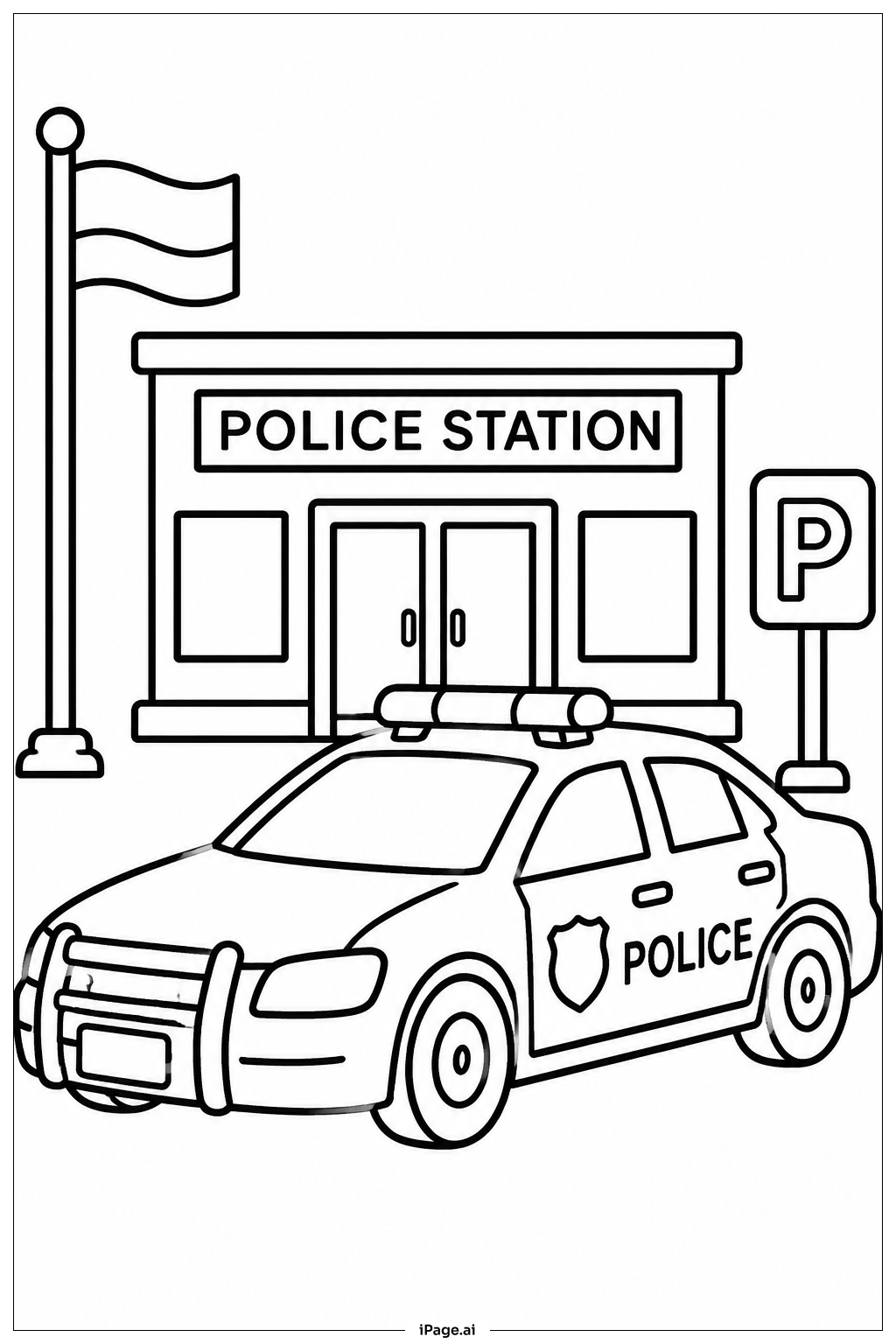
Coloring tips: How to color Police Car Near Station coloring page well?
Start with the police car itself. Use a crisp white for the main body of the car. Add bold black sections on the lower doors and hood. Color the light bar on the roof with red and blue — these are the classic emergency light colors. Use a bright yellow or gold for the badge or emblem on the door. Paint the tires solid black with gray rims. For the station building, try a warm gray or light brown for the walls. Use dark blue or green for the roof. Color the windows with light blue to show reflections. The front door can be a deep red or dark brown. Add a light tan to the steps and sidewalk. Use a medium gray for the streetlight pole with a bright yellow top. Fill the sky with a soft light blue. You can add a few white clouds to make the scene feel lively. Keep your colors neat and stay within the lines for a polished finish. This scene is perfect for using both bold and soft shades together.
Coloring challenges: Which parts are difficult to color and need attention for Police Car Near Station coloring page?
• Police Car Body Panels: The car has multiple sections that need careful color separation. The white body, black trim, and door emblems sit very close together. It can be tricky to keep each area clean without colors bleeding into one another. Using a fine-tipped coloring tool for the edges will help keep things sharp.
• Light Bar Details: The light bar on top of the car is small and contains multiple sections — typically red, blue, and sometimes white or clear covers. Coloring each tiny compartment a different color without mixing them is a real challenge, especially for younger colorists. Take it slow and use the tip of your marker or pencil.
• Police Badge or Emblem: The badge on the car door usually has a detailed circular or star shape with inner patterns. Filling in the small spaces inside the badge neatly requires patience and a steady hand. Using a gold or yellow pencil works well here.
• Station Building Architecture: The building has windows, steps, a doorway, and structural lines all layered together. Choosing slightly different shades of the same color family — like light gray for walls and medium gray for shadows — helps show depth without making the image look flat.
• Background and Foreground Contrast: Balancing the colors of the sky, sidewalk, and streetlight against the main subjects takes planning. If the background is too bright, it can overpower the car and station. Using lighter, softer tones for the background will naturally draw the eye to the main scene in the foreground.
Benefits of coloring books: Advantages of drawing Police Car Near Station coloring page
Coloring this Police Car Near Station page offers many wonderful benefits for children and beginners alike. Working through the different sections of the car and building helps develop fine motor skills as colorists practice staying within lines and controlling their tools. Choosing colors for the light bar, badge, and building encourages creative thinking and decision-making in a fun, low-pressure way. This scene also helps children learn about real-world community helpers and public safety, making it both an educational and artistic activity. Focusing on the small details — like the emblem on the door or the windows of the station — builds patience and concentration, which are skills that carry over into school and daily life. The variety of shapes and surfaces in this image, from smooth curved car panels to the straight lines of the building, introduces young colorists to different coloring techniques like shading and blending. For older kids or adults, the scene offers a satisfying challenge that rewards careful work. Completing the finished page gives a strong sense of accomplishment and pride. Overall, this coloring page is a great way to combine creativity, learning, and relaxation in one enjoyable activity.