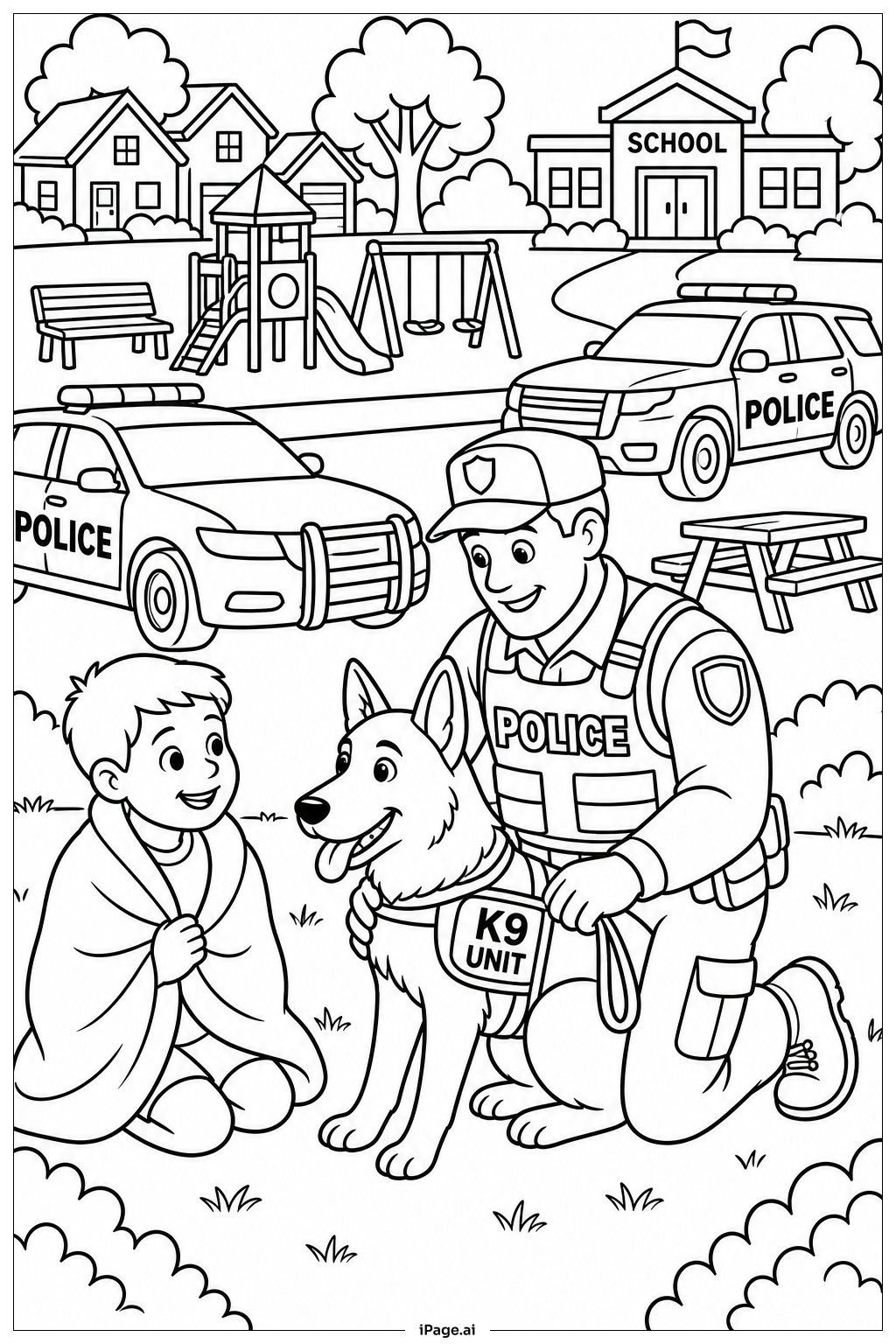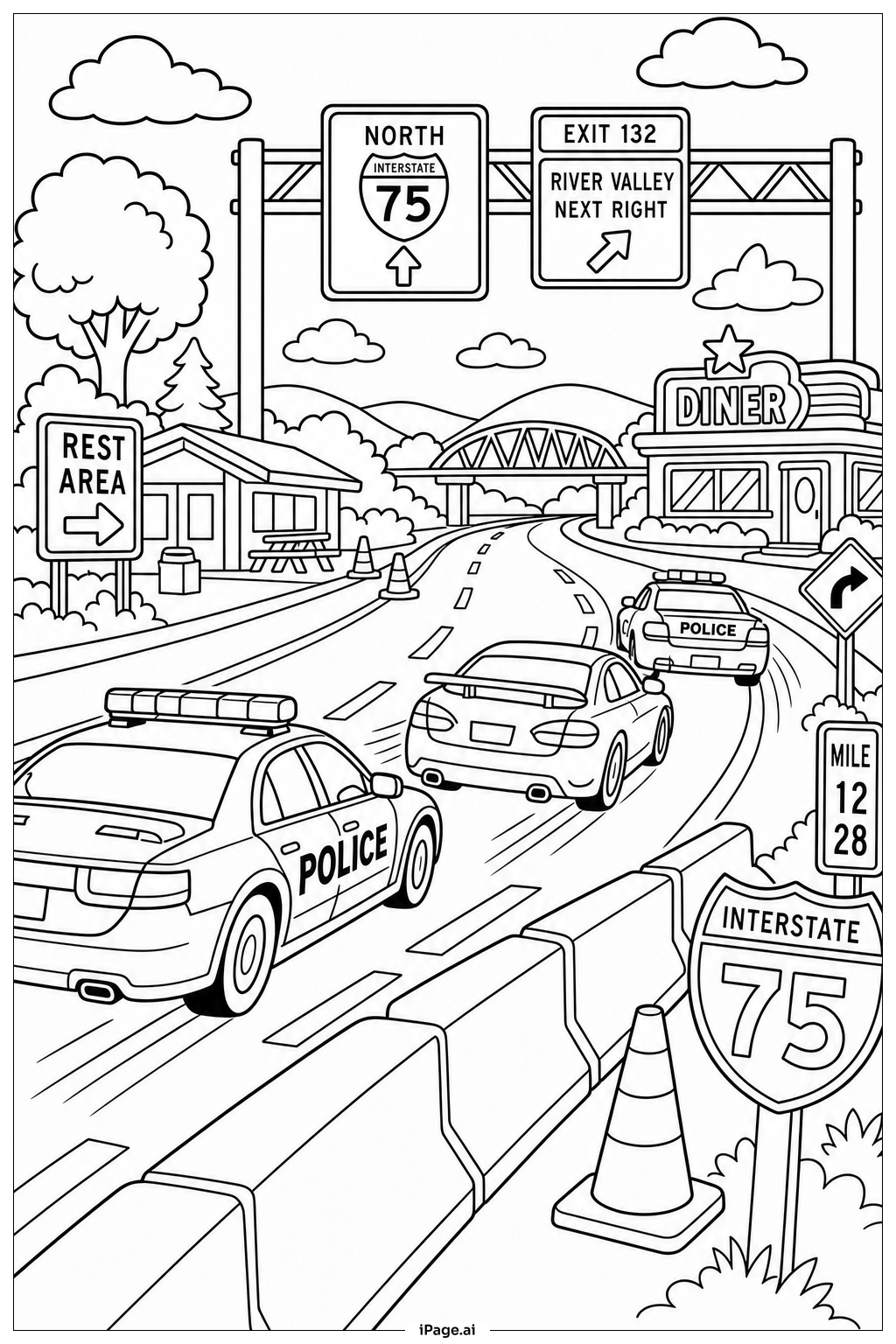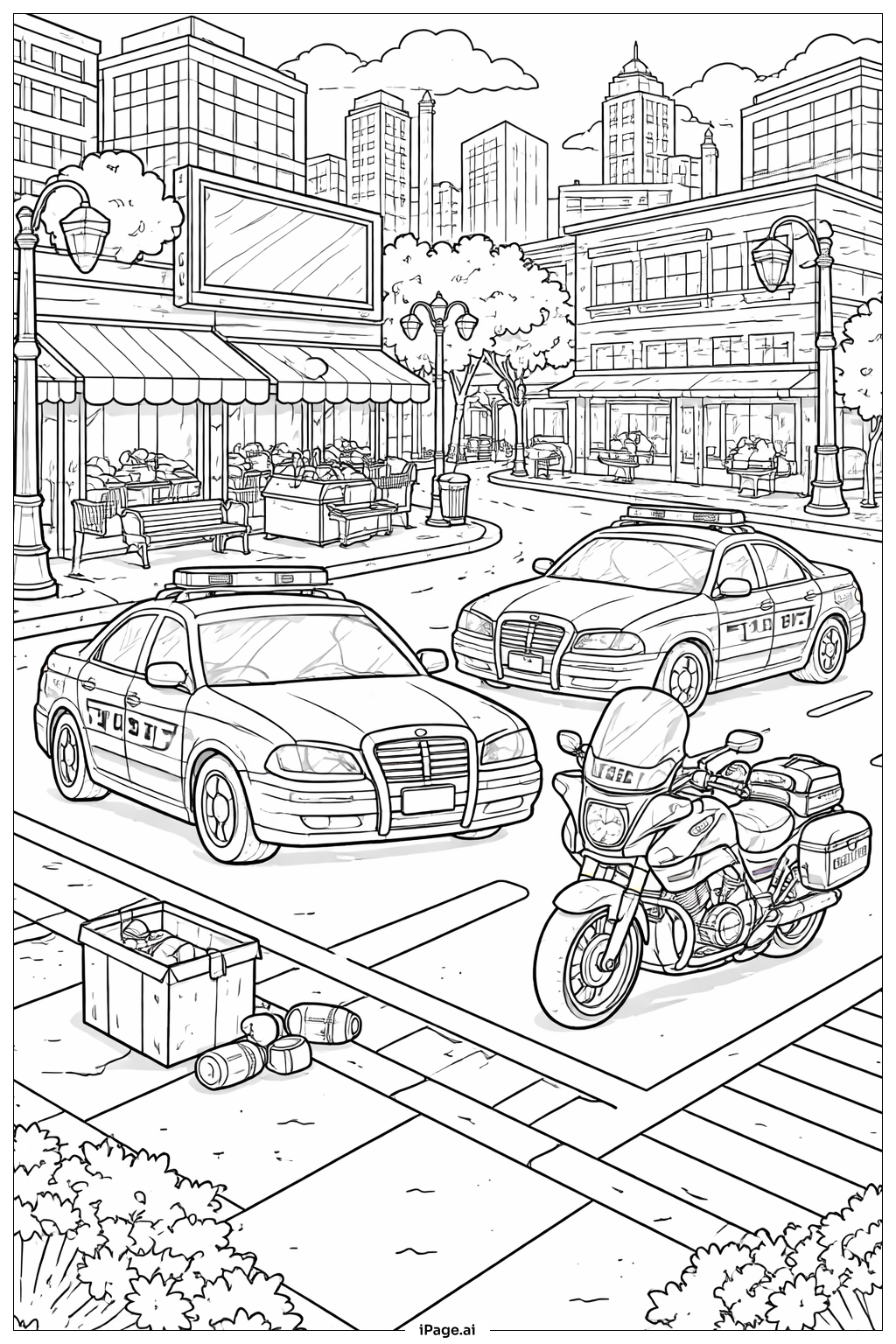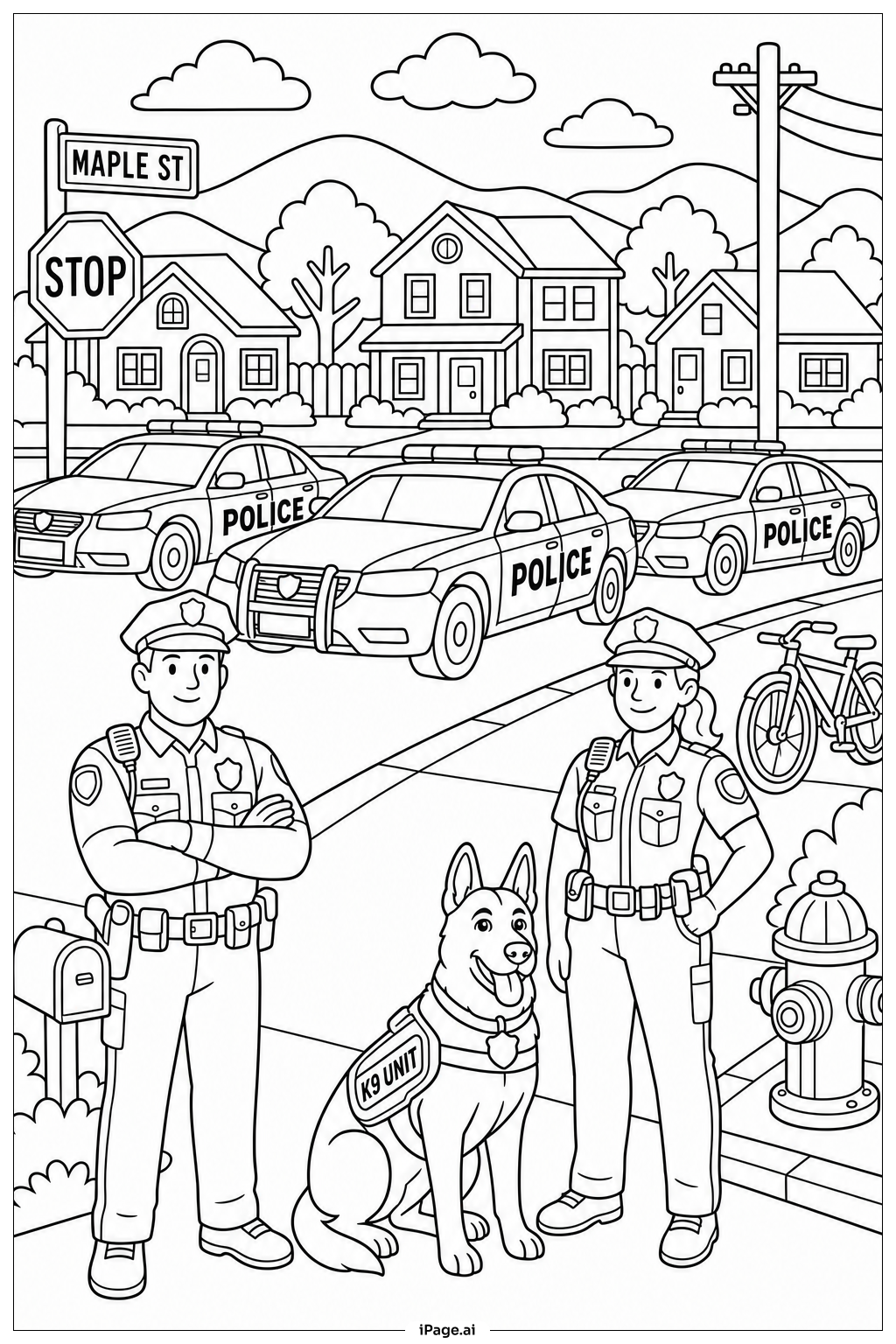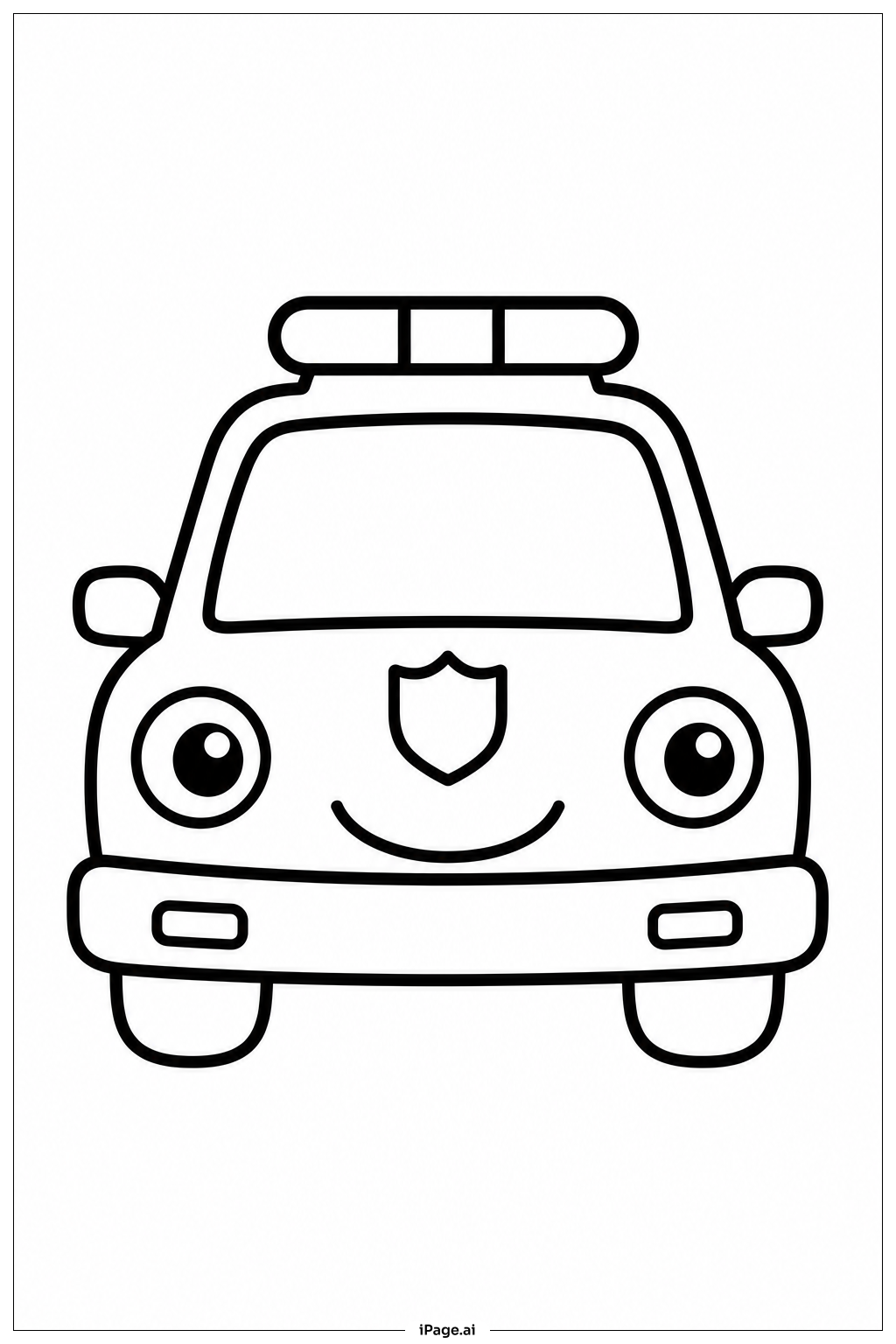
Coloring tips: How to color Police Car Front View coloring page well?
Start with the car body. Police cars are usually black and white, but you can use any colors you like. Try painting the top half white and the bottom half black for a classic look. Use bright red and blue for the emergency lights on the light bar. Color the headlights pale yellow or white. The grille and bumper look great in silver or dark gray. Use black for the tires and wheel arches. Add a little yellow to the badge or emblem on the hood. You can also try a modern look by coloring the whole car in dark navy blue. Use a light gray or silver for the chrome parts and trim. Do not forget to color small details like door handles and mirror housings. Take your time with each section and have fun choosing your colors.
Coloring challenges: Which parts are difficult to color and need attention for Police Car Front View coloring page?
• Light Bar Complexity: The light bar across the roof contains many small sections, individual light housings, and narrow gaps between them. Coloring each light unit separately in red, blue, or clear white requires a fine-tipped tool and a very steady hand. Rushing this area can cause colors to bleed into each other and lose the detail.
• Grille and Bumper Details: The front grille is made up of a mesh or grid pattern with many small openings. Each section needs careful shading to look realistic. The bumper has ridges and contours that require different shades of gray or silver to show depth. Using a single flat color here will make the front look flat and dull.
• Headlight Shading: The headlights are large and rounded, but they need more than one color to look three-dimensional. A good approach is to layer white, pale yellow, and light gray to show the glass surface, the reflector inside, and the outer housing. This layering technique can be tricky for younger colorists.
• Two-Tone Body Division: Classic police cars split into two colors, usually black and white. Getting a clean, straight line where the two colors meet along the hood and doors is one of the hardest parts. Any wobble in that dividing line will stand out clearly on such a large flat surface.
• Badge and Emblem Detail: A small police shield or emblem on the hood or grille has very fine inner lines and lettering. Coloring inside such a tiny space without going outside the lines takes patience and a very sharp pencil or fine marker.
Benefits of coloring books: Advantages of drawing Police Car Front View coloring page
Coloring this police car front view offers many great benefits for kids and beginners alike. First, it builds fine motor skills. Staying inside detailed lines on the grille, light bar, and headlights trains your hand to move with control and precision. Over time, this improves handwriting and drawing ability too.
Second, it teaches color planning. Deciding where to place black, white, silver, red, and blue helps young colorists think ahead and make decisions, which builds creative confidence.
Third, it encourages learning about community helpers. As children color the police car, they naturally think about the role of police officers and how they keep neighborhoods safe. This sparks conversations and curiosity about the world around them.
Fourth, it is calming and focused. Working on a detailed image like this requires concentration, which helps children practice sitting still and paying attention. This kind of mindful activity can reduce stress and improve patience.
Finally, finishing the page gives a strong sense of achievement. Seeing a fully colored, detailed police car is rewarding and motivates kids to try more Coloring Pages. It is a fun, screen-free activity that builds both skills and confidence.