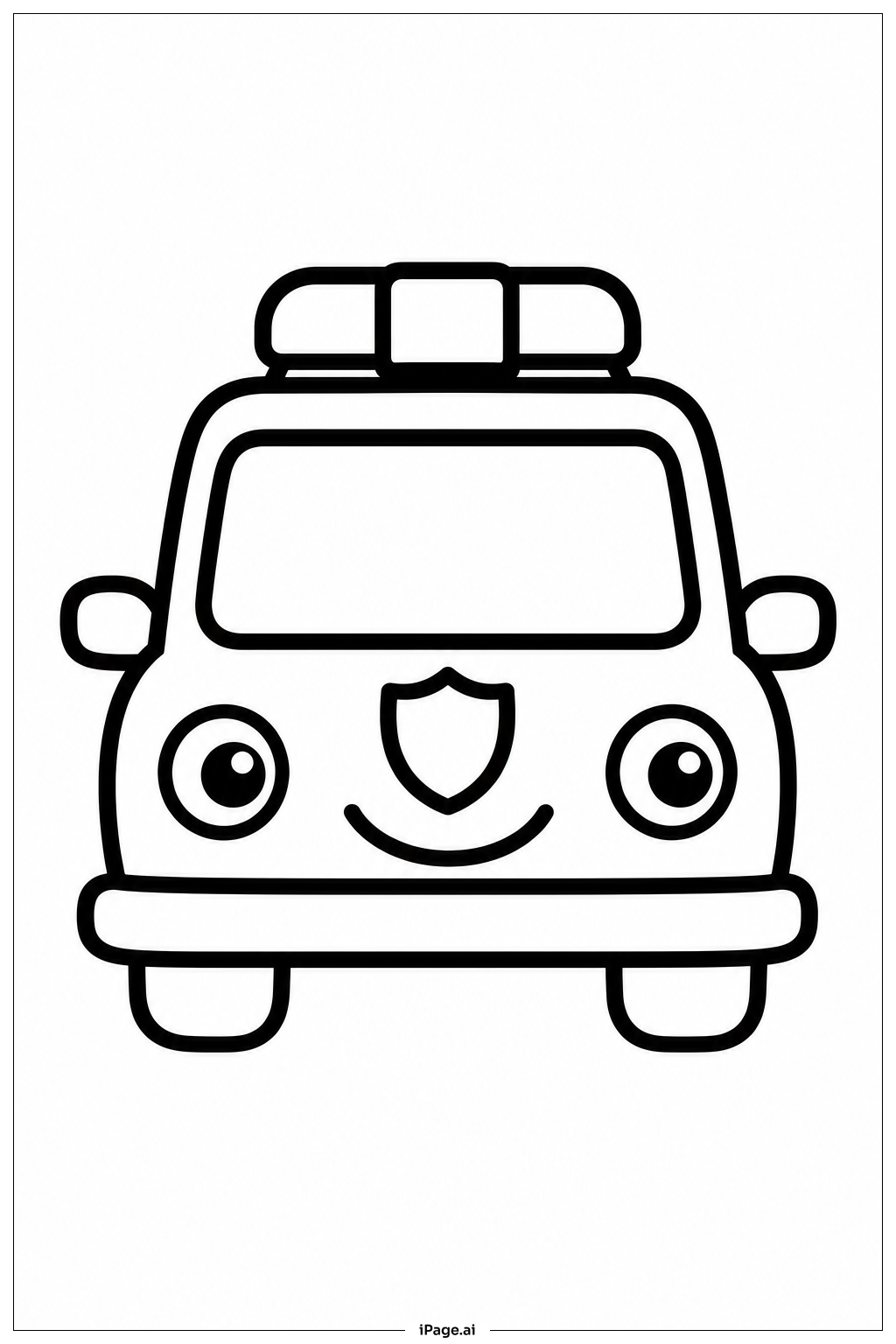
Coloring tips: How to color Police Car Face Front coloring page well?
Start with the main body of the police car. Traditional police cars are white or black, but feel free to use your favorite colors to make it unique. Use dark blue or black for the lower body panels and white for the upper section to give it a classic look. Color the light bar on the roof red and blue to match real emergency lights. Use bright yellow or orange for the headlights and siren lenses. The eyes and windshield area can be filled with light blue or sky blue to suggest glass. Add a light gray or silver tone to the grille and bumper. Use darker shades to add shadow under the bumper and along panel edges. This gives the car a more three-dimensional feel. Do not forget the small details like bolts, vents, or badges. You can even add a police star or badge design on the door area. Have fun mixing colors to bring this cheerful police car to life!
Coloring challenges: Which parts are difficult to color and need attention for Police Car Face Front coloring page?
• Facial Expression Details: The eyes and grille smile are small and closely packed together. Staying inside the lines around these features takes careful control, especially for younger children. Use a thin-tipped marker or a sharp colored pencil to fill these areas neatly without bleeding into surrounding sections.\n\n• Light Bar and Siren Lenses: The roof light bar contains multiple small compartments for the siren lights. Each lens section may need a different color, such as red, blue, or clear white. Switching colors frequently in a small space can be tricky and requires patience to avoid mixing colors accidentally.\n\n• Body Panel Shading: The police car has several flat surfaces across the hood, doors, and bumper. Creating a sense of depth and dimension by adding shadows or gradients on these panels is challenging. Blending two shades of the same color smoothly across a large flat area requires practice and a light hand.\n\n• Windshield and Eye Area: The windshield doubles as the character's eye region. Coloring this area with a smooth, even tone of light blue while keeping a clear boundary between the glass and the car body can be difficult. Any color bleed here will make the face look messy.\n\n• Bumper and Grille Line Work: The front bumper and grille have tight geometric lines and small rectangular or circular shapes. Coloring within each individual section without overlapping into the outline or neighboring areas demands steady hands and close attention to detail, especially for beginners.
Benefits of coloring books: Advantages of drawing Police Car Face Front coloring page
Coloring this Police Car Face Front page offers a wide range of benefits for children. First, it helps build fine motor skills. Carefully filling in the small sections of the light bar, grille, and facial features strengthens hand muscles and improves pencil control, which supports handwriting development. Second, it encourages color recognition and creative thinking. Children learn to associate colors with real-world objects like red and blue emergency lights, and they also feel empowered to experiment with their own color choices. Third, the friendly face on the car sparks imaginative play. Kids can create stories about where the police car is going or who it is helping, which nurtures language skills and storytelling ability. Fourth, completing a coloring page gives children a sense of accomplishment. Finishing the page builds confidence and teaches them to follow a task from start to finish. Finally, coloring is a calming activity. It helps children focus, reduce restlessness, and practice patience, all of which are valuable life skills. This page is a fun and educational activity for Boys and Girls alike.