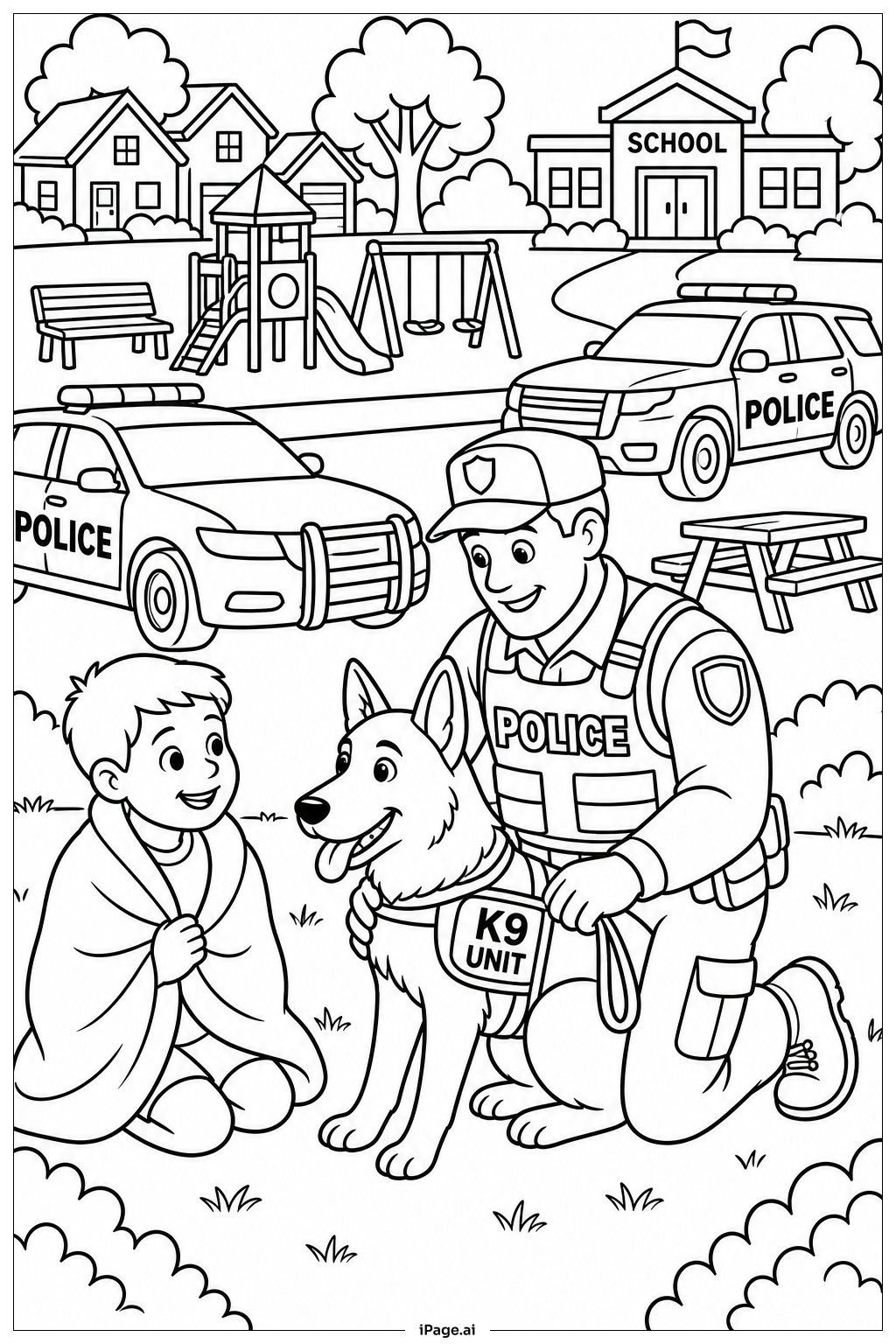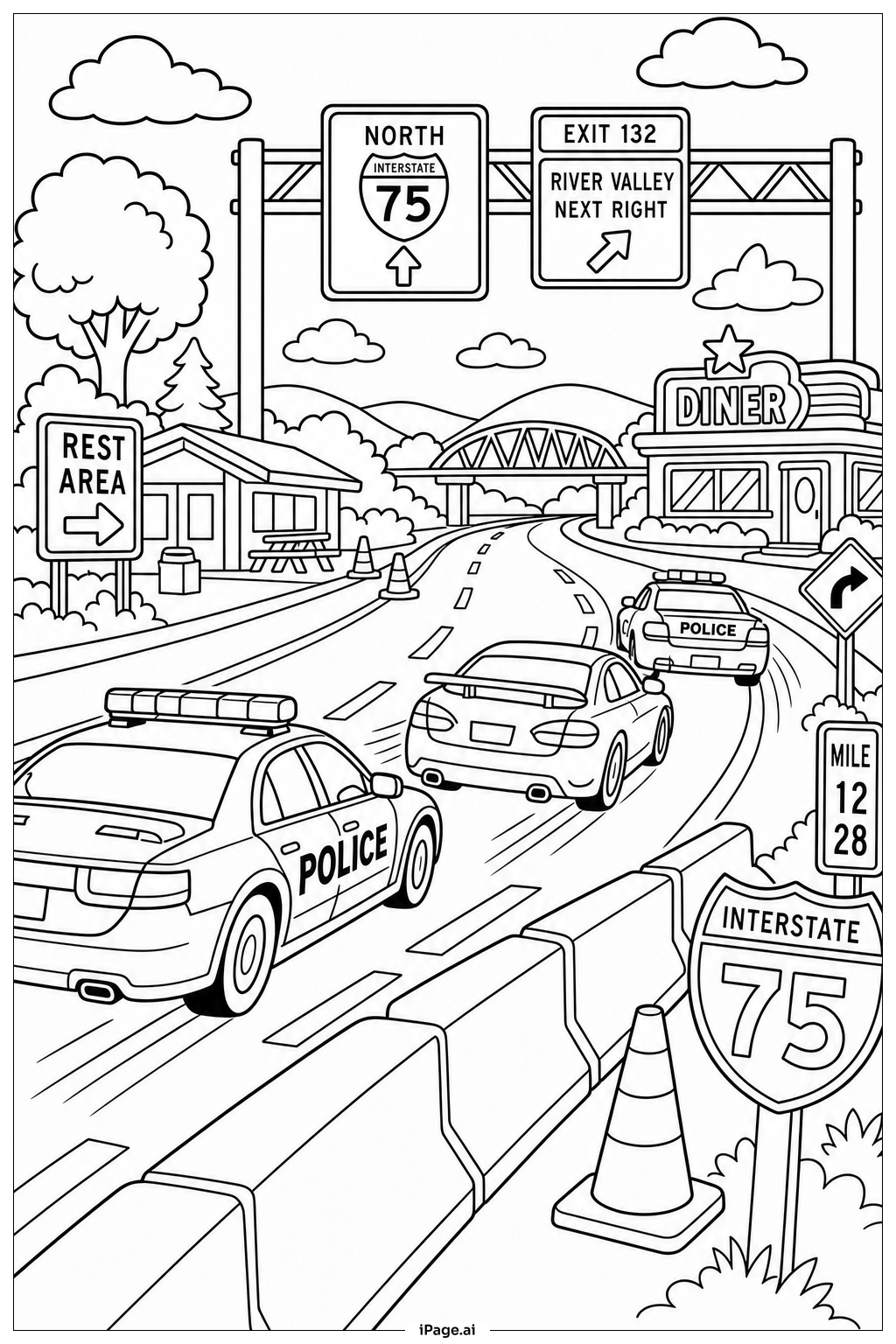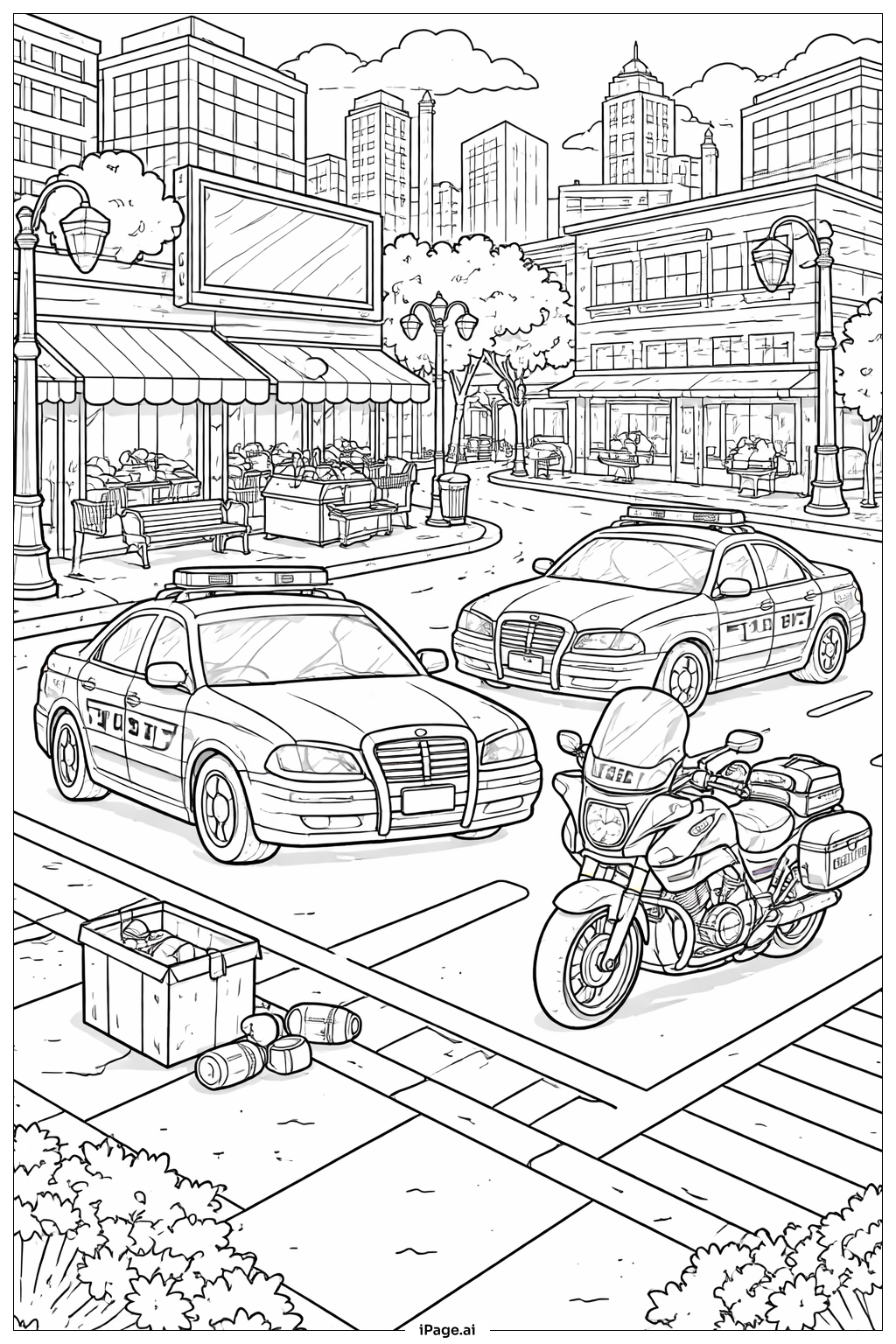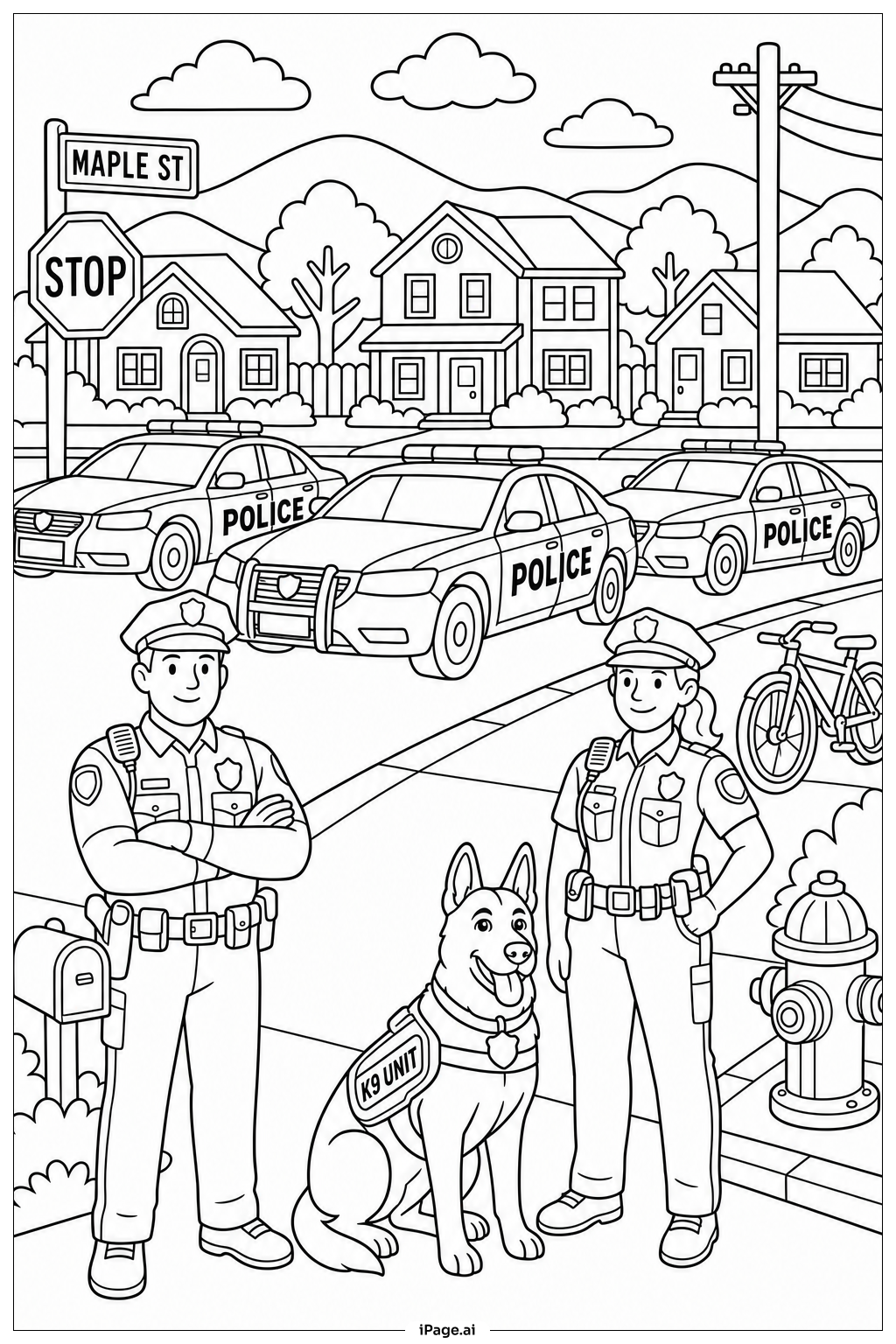
Coloring tips: How to color Police Car At Roundabout coloring page well?
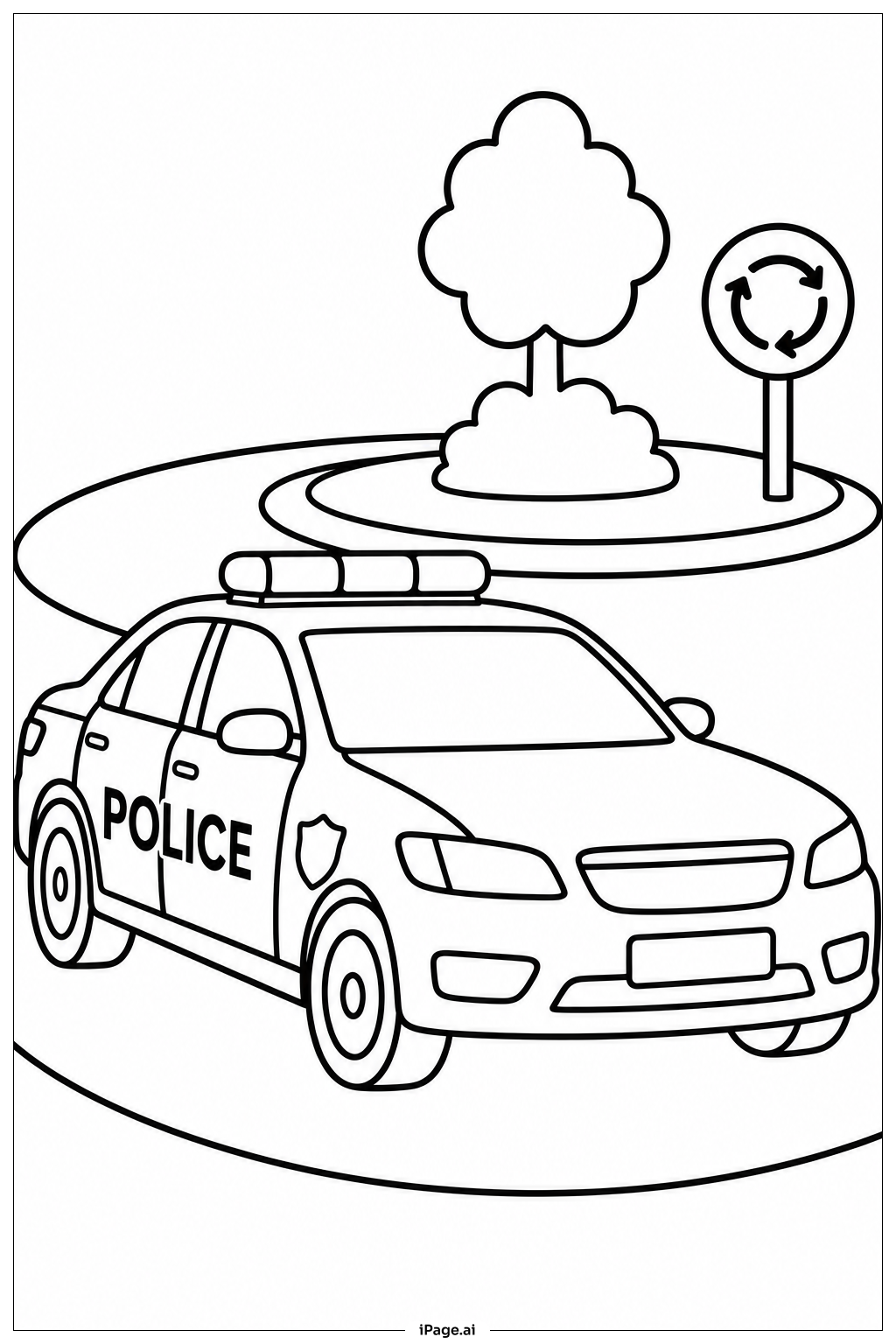
Start with the police car body. Use a bright white or classic black-and-white two-tone pattern. Add bold blue or dark navy for any striping along the side. Color the light bar on the roof in red and blue to show emergency lights. Use silver or gray for the wheels, bumpers, and door handles. The windows can be filled with a light sky blue. For the roundabout, use gray or dark charcoal for the road surface. Add yellow for lane markings and white for directional arrows. Color the curbs in light gray or tan. Trees and shrubs around the roundabout look great in various shades of green. Street signs can be yellow, green, or white depending on their type. Adding shadows under the car in light gray gives the scene a nice sense of depth. Feel free to use bright colors to make the scene lively and fun.
Coloring challenges: Which parts are difficult to color and need attention for Police Car At Roundabout coloring page?
• Police Car Body Details: The police car has many small sections, including door panels, window frames, bumpers, and side markings. Keeping each section neat and using the right colors without overlapping the lines can be tricky, especially around the detailed door insignia and stripe patterns along the body.
• Light Bar Complexity: The roof-mounted light bar contains multiple small compartments for red and blue lights. Coloring each tiny section accurately with different colors requires a fine-tipped tool and a steady hand. Blending the colors too much can make the bar look muddy instead of bright and realistic.
• Roundabout Road Markings: The circular road features curved lane lines, directional arrows, and crosswalk markings. Following these curved lines smoothly with colored pencils or markers takes patience. Staying within the lines on curved surfaces is more challenging than on straight sections.
• Surrounding Environment Details: Trees, bushes, curbs, and street signs surround the roundabout and add layers of detail to the scene. Each element requires a different color family, and managing color transitions between the road, greenery, and signage without creating a cluttered look demands careful planning.
• Perspective and Depth: The scene is drawn from a slight angle, meaning the car and road elements have perspective foreshortening. Applying shading and tonal variation to reflect this depth, such as darker tones underneath the car and lighter tones on top-facing surfaces, adds realism but requires some understanding of light and shadow techniques.
Benefits of coloring books: Advantages of drawing Police Car At Roundabout coloring page
Coloring this Police Car At Roundabout scene offers a wide range of benefits for children and young learners. It helps develop fine motor skills as kids carefully color within the detailed lines of the car body, road markings, and surrounding environment. The variety of shapes and sizes in the image encourages hand-eye coordination and pencil control.
The scene also supports early learning about road safety and traffic rules. Children get a fun introduction to roundabouts, lane markings, and the role of police vehicles in keeping communities safe. This makes the activity both creative and educational.
Choosing colors for different parts of the image, like the light bar, road surface, and greenery, builds color recognition and decision-making skills. Kids learn to think about what colors make sense in real life while also feeling free to use their imagination.
The focus required to complete the image encourages patience and concentration, helping children practice staying on task. Finishing the page gives a real sense of accomplishment, which boosts confidence and self-esteem. Overall, this coloring page turns a simple creative activity into a meaningful learning experience that is engaging and enjoyable for Boys and Girls alike.