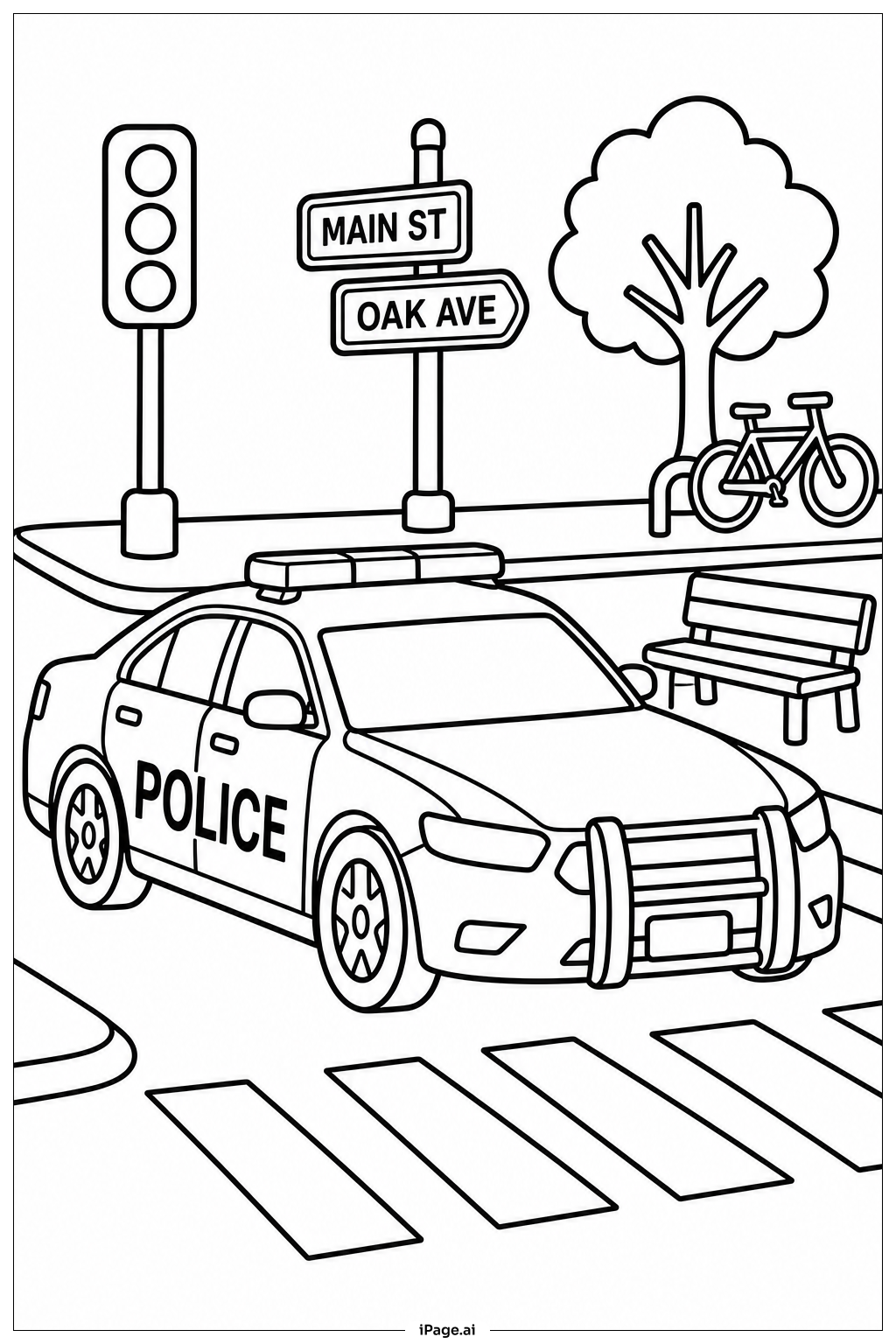
Coloring tips: How to color Police Car At Intersection coloring page well?
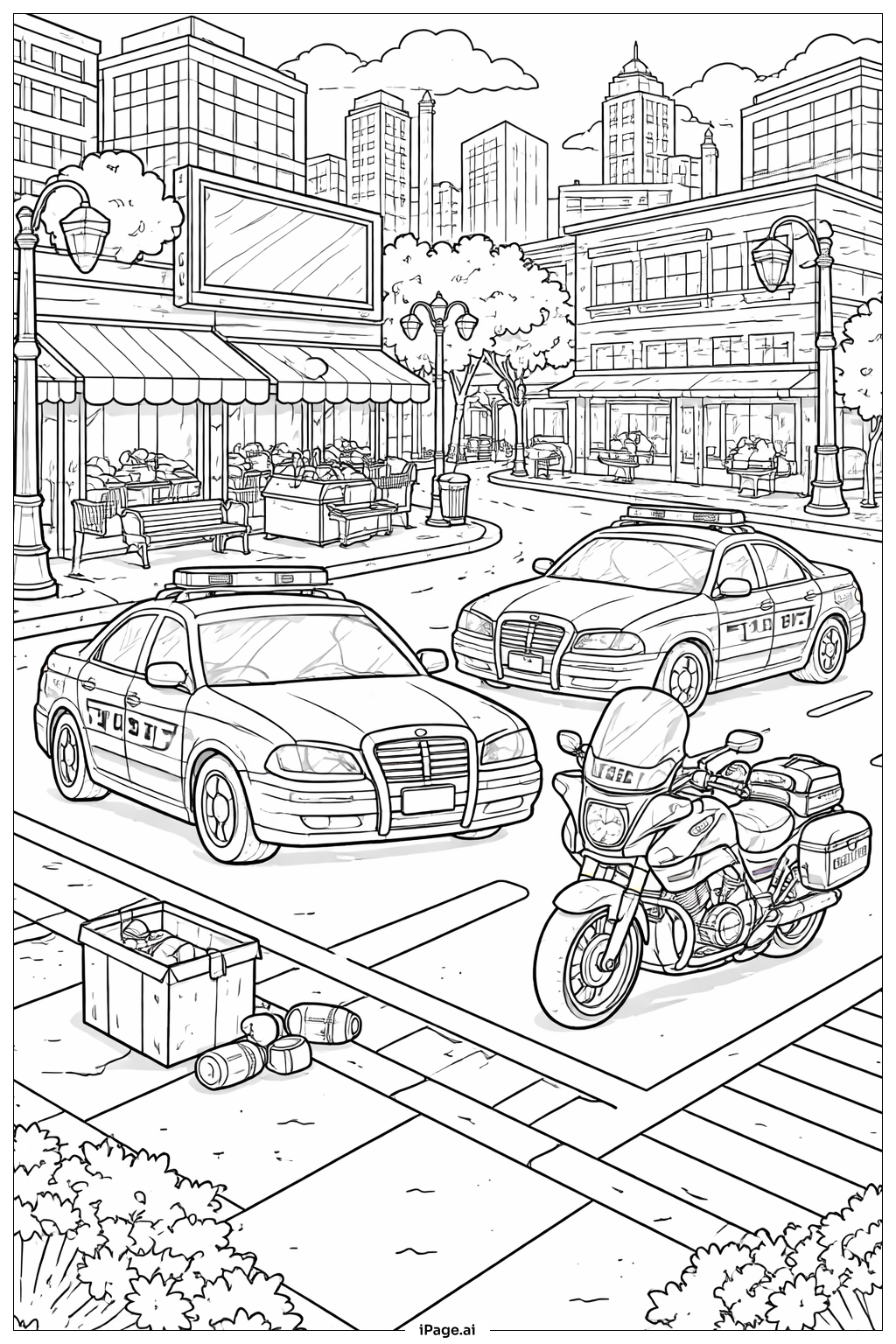
For the police car, use classic blue and white colors, which are traditional for many police departments. The emergency lights can be colored bright red and blue to make them stand out. The car body works well in deep navy blue or black, with crisp white doors and hood sections. Color the road in gray tones, and make the crosswalk stripes bold white against the darker pavement. Traffic lights should show their standard red, yellow, and green signals. Buildings in the background can use various shades of brown, gray, or tan for a realistic cityscape. Add yellow or white for road markings and lane dividers. The sky can be light blue with white clouds, or try an evening sunset with orange and purple hues for a different mood.
Coloring challenges: Which parts are difficult to color and need attention for Police Car At Intersection coloring page?
• Fine Line Details: The police car contains many small details such as door handles, side mirrors, window frames, and official badges or emblems on the doors. These narrow spaces require careful coloring with fine-tipped markers or sharp colored pencils to avoid going outside the lines. Young children may find these intricate areas challenging and might need help staying within boundaries.
• Crosswalk Patterns: The striped crosswalk pattern requires alternating colors or leaving white spaces between dark stripes. Maintaining consistent spacing and straight lines while coloring can be difficult. Children must pay attention to which stripes to color and which to leave blank, requiring good focus and pattern recognition skills.
• Multiple Background Elements: The intersection scene includes traffic lights, poles, buildings, windows, and various street furniture. Coordinating different colors for each element while maintaining visual harmony can be overwhelming. Deciding which areas to color first and managing color choices across many objects requires planning and decision-making skills.
• Emergency Light Details: The roof-mounted emergency lights have small, detailed sections that need precise coloring. Creating the effect of alternating red and blue lights in tiny spaces demands steady hand control and patience. These small circular or rectangular shapes can be frustrating for younger colorists with developing fine motor skills.
• Perspective and Depth: The intersection setting includes elements at different distances, from the foreground police car to background buildings. Understanding which areas should be darker or lighter to show depth adds complexity. Children may struggle with choosing appropriate color intensities to create a realistic three-dimensional effect.
Benefits of coloring books: Advantages of drawing Police Car At Intersection coloring page
Coloring this police car intersection scene helps children develop respect and understanding for community helpers and law enforcement. It provides an opportunity to discuss traffic safety, road rules, and how police officers help keep neighborhoods safe. The detailed vehicle features improve fine motor skills and hand-eye coordination as children carefully color small spaces. Working with the geometric patterns of crosswalks and road markings reinforces shape recognition and pattern completion abilities. The urban setting encourages creativity in choosing building colors and creating a personalized cityscape. This scene also teaches spatial awareness as children learn about intersections and how vehicles navigate through city streets. Completing this detailed image builds patience, concentration, and a sense of accomplishment. It can spark conversations about careers in public service and the important role police officers play in communities.