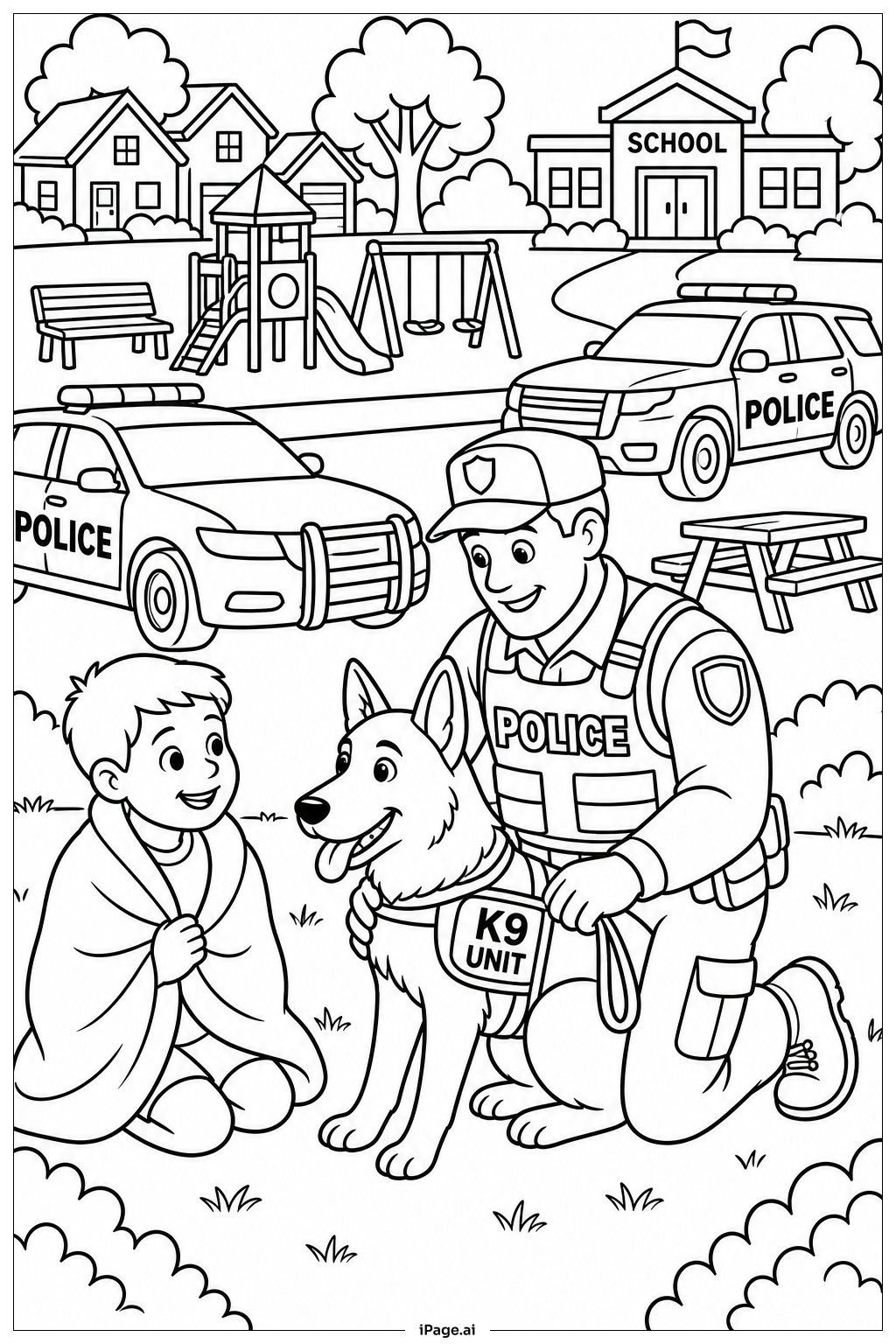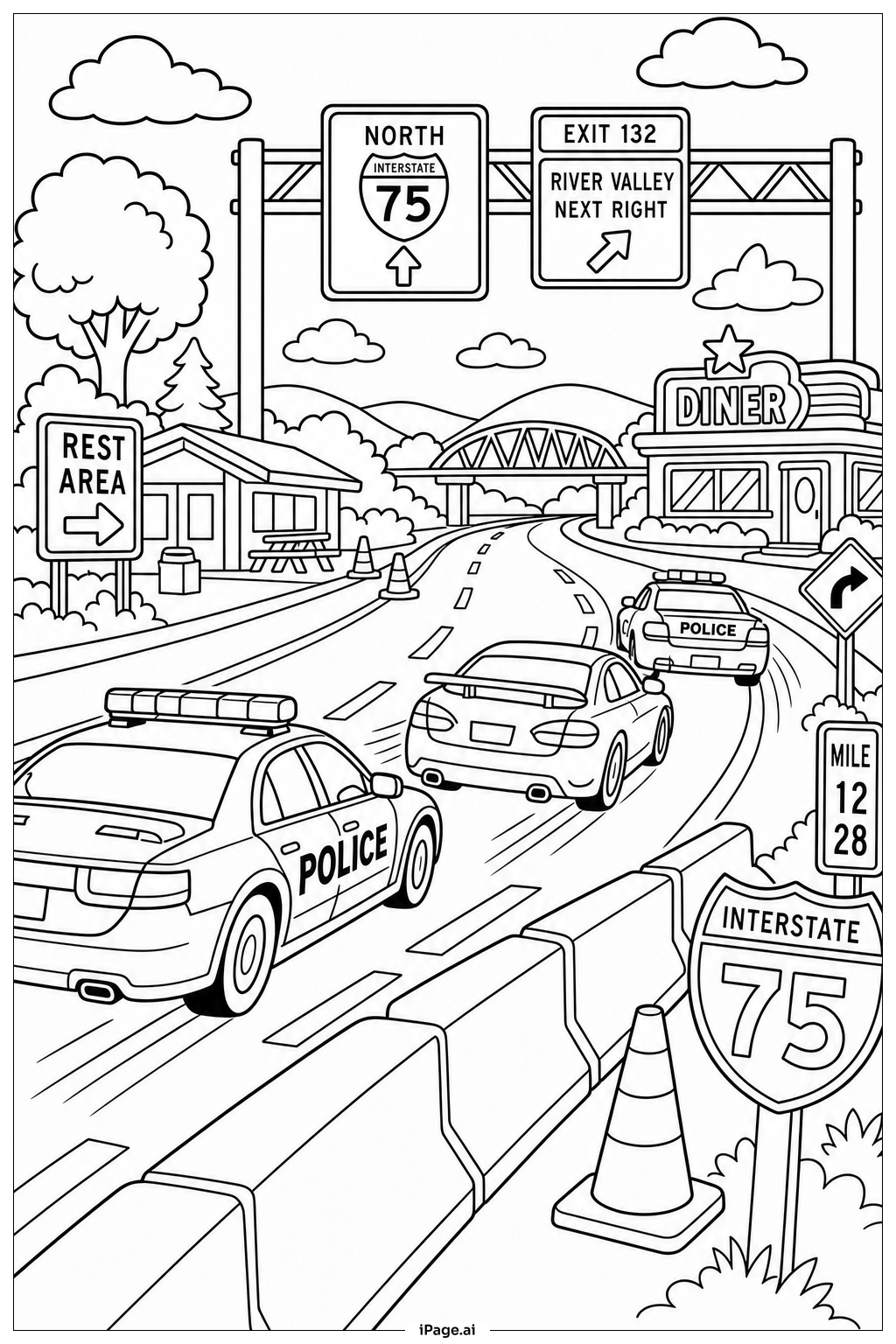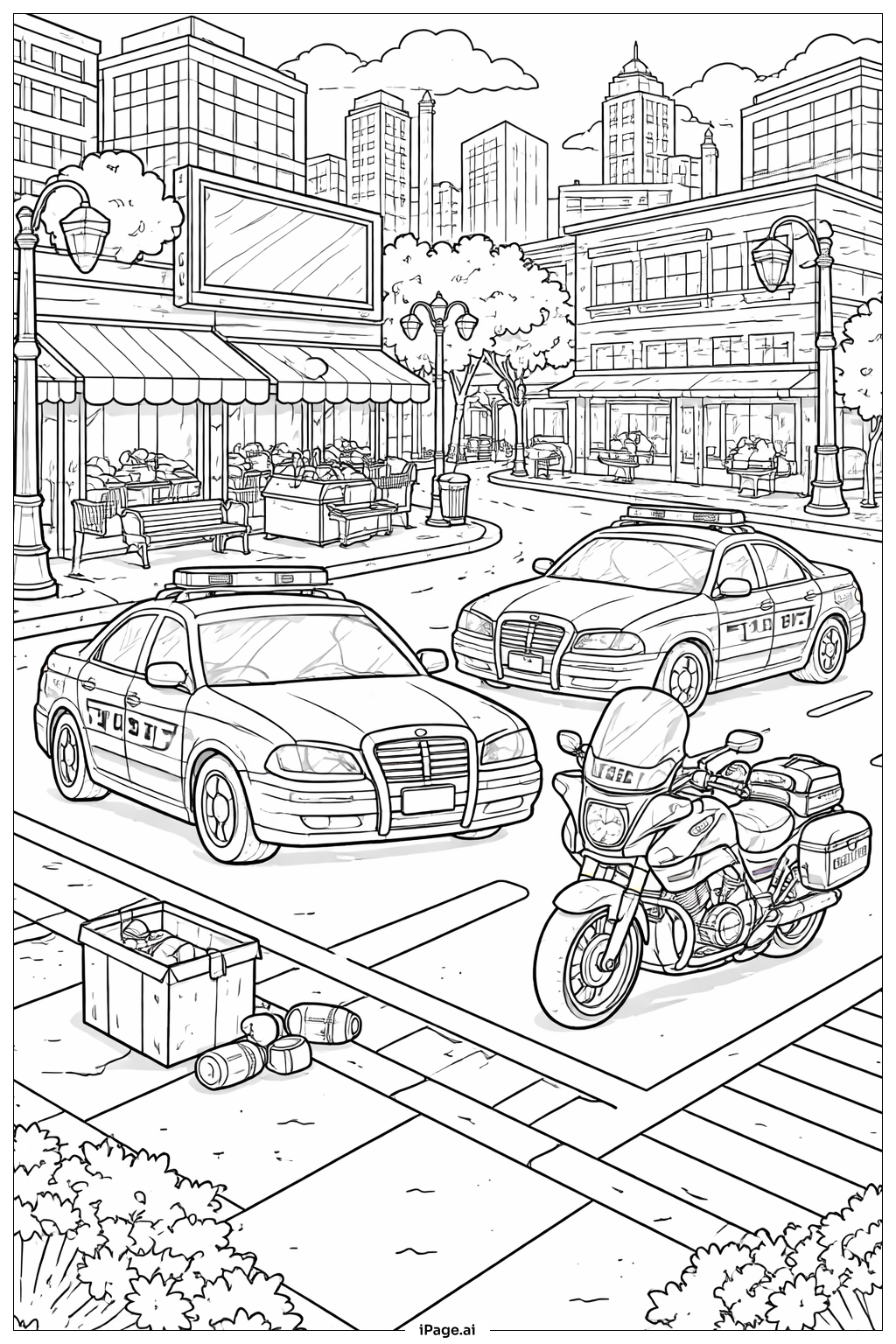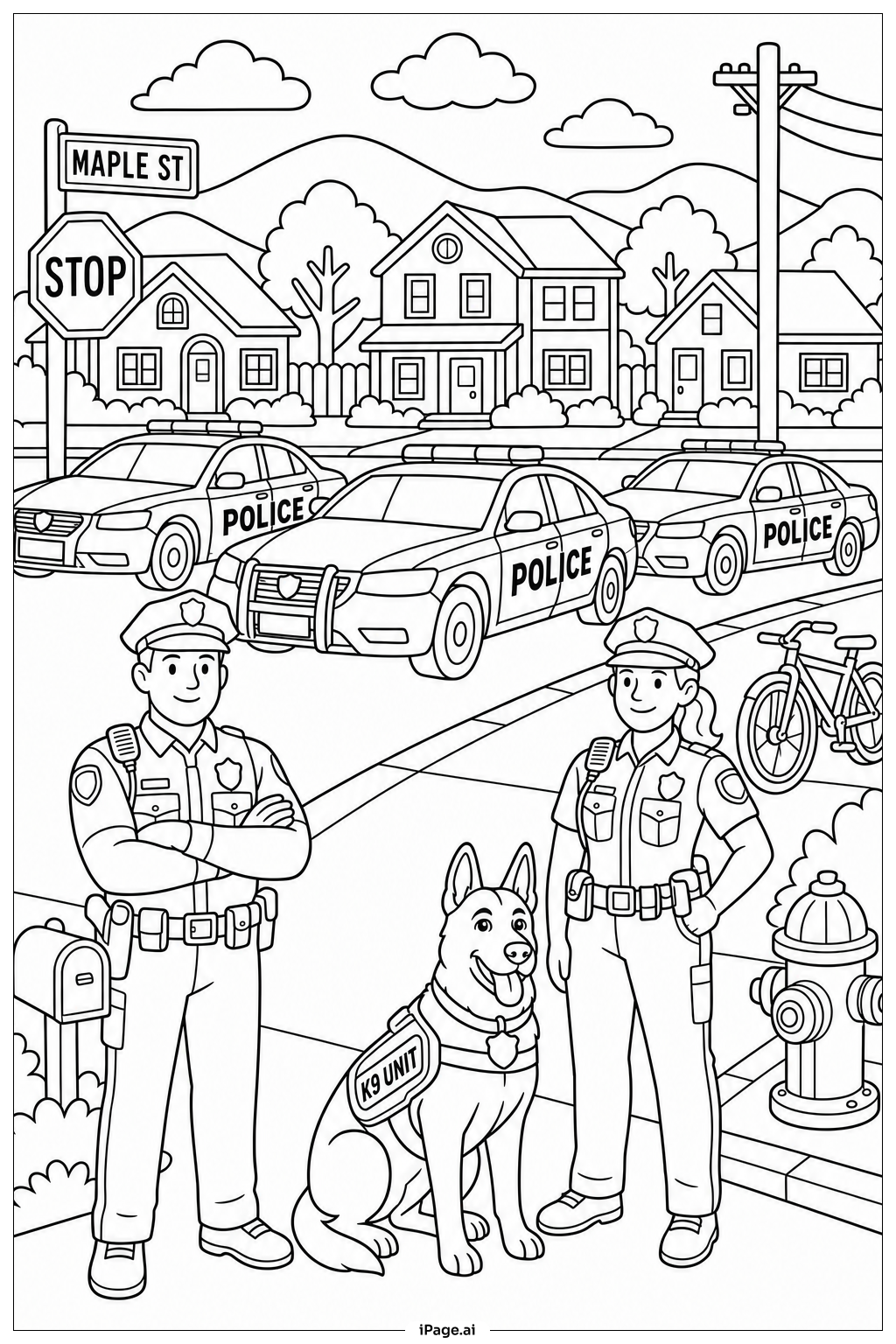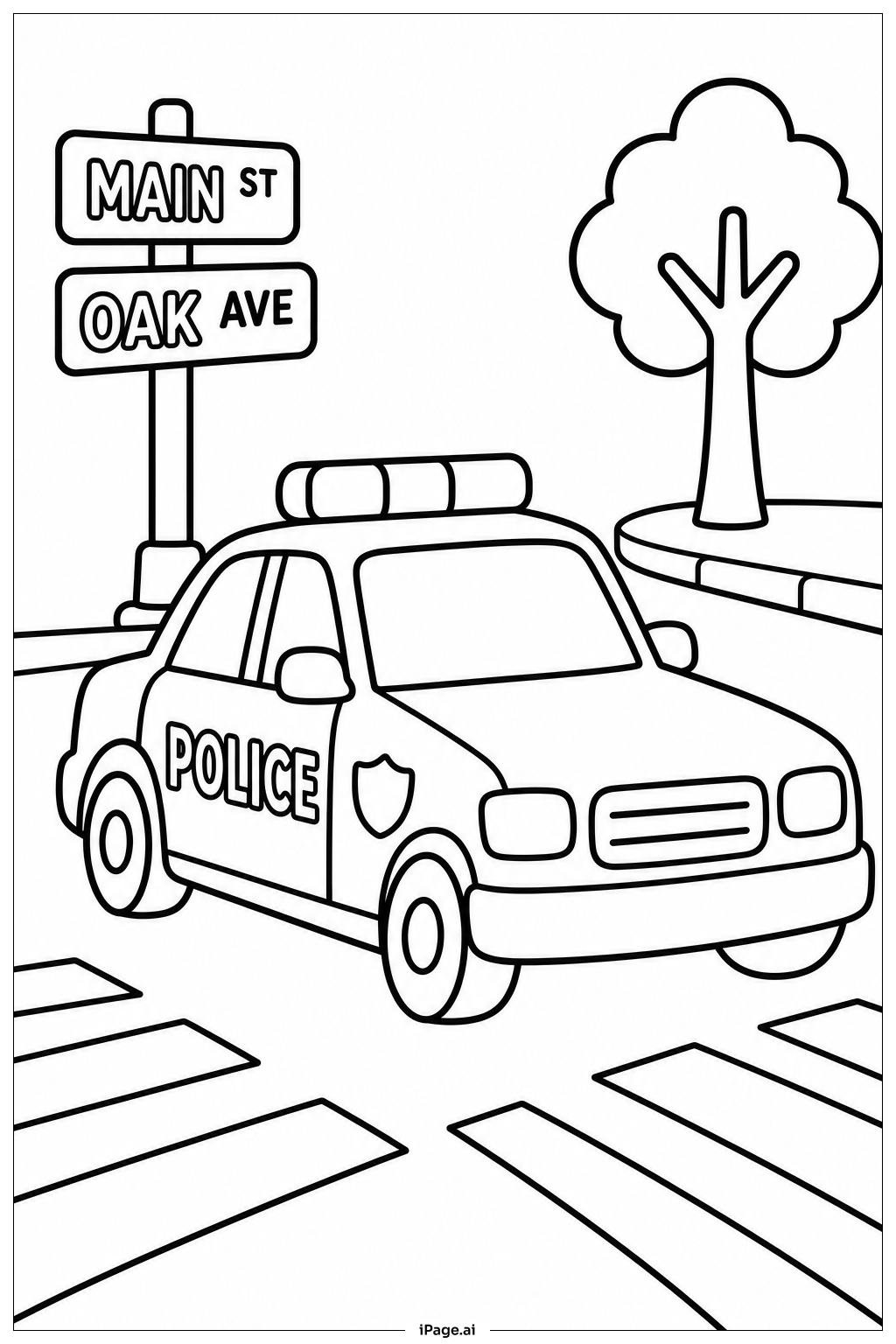
Coloring tips: How to color Police Car At Crossroad coloring page well?
Start with the police car body. Use classic black and white, or try a bold blue and white for a modern look. Color the light bar on top with red and blue to show the flashing emergency lights. Use yellow or orange for the reflective door stripes. Paint the wheels dark gray or black with silver hubcaps. For the road, use light gray or asphalt dark gray. Color the crosswalk stripes bright white. The traffic lights can be green, yellow, and red to show all three signals. Add a light blue sky in the background and use darker shades for shadows under the car. Feel free to add your own creative touches to make the scene pop!
Coloring challenges: Which parts are difficult to color and need attention for Police Car At Crossroad coloring page?
• Police Car Body Details: The police car has many small parts, including door panels, window frames, door handles, and side mirrors. Staying inside these fine lines takes patience and a sharp colored pencil or thin marker. Young colorists may find it tricky to keep each section neat and separate from the next.
• Light Bar and Emergency Lights: The light bar on the roof has small individual light units packed closely together. Coloring each light a different color, such as red, blue, or clear white, without mixing them together is a real challenge. Using fine-tipped tools will help keep the colors clean and distinct.
• Road Markings and Crosswalk Stripes: The crossroad features multiple road lines, lane dividers, and crosswalk stripes. These parallel lines must be colored evenly and consistently. Keeping white stripes white while coloring the surrounding asphalt gray requires careful planning and a steady hand.
• Traffic Lights and Street Signs: The traffic light has three small colored circles stacked close together. Fitting red, yellow, and green into each tiny circle without overlapping is a careful task. Street signs nearby also have small text areas and borders that require precise coloring to look realistic.
• Shading and Depth: Adding shadows under the car, around the wheels, and along the edges of the road gives the scene a three-dimensional feel. Blending light and dark shades smoothly is an advanced skill. Beginners can skip shading, but older kids and Adults who want a realistic look will find this step both challenging and rewarding.
Benefits of coloring books: Advantages of drawing Police Car At Crossroad coloring page
Coloring this Police Car At Crossroad page offers wonderful benefits for children and Adults alike. For younger kids, tracing the outlines of the car, road, and traffic lights helps develop fine motor skills and hand-eye coordination. Choosing colors and filling each section builds focus and patience.
For older children, the detailed elements of the police car, the crosswalk, and the traffic signals encourage careful attention to detail. Thinking about which colors to use for each part, such as red and blue for the lights or gray for the road, supports creative decision-making and color theory learning.
Coloring also has calming effects. It helps kids slow down, breathe, and concentrate on one task at a time. This makes it a great activity after a busy school day.
Beyond relaxation, this scene sparks curiosity about community helpers. As children color the police car, they may become interested in how traffic rules work, what police officers do, and how city streets are organized. This turns a fun art activity into a gentle learning moment about civic life and road safety. It is a screen-free way to keep young minds engaged, creative, and calm.