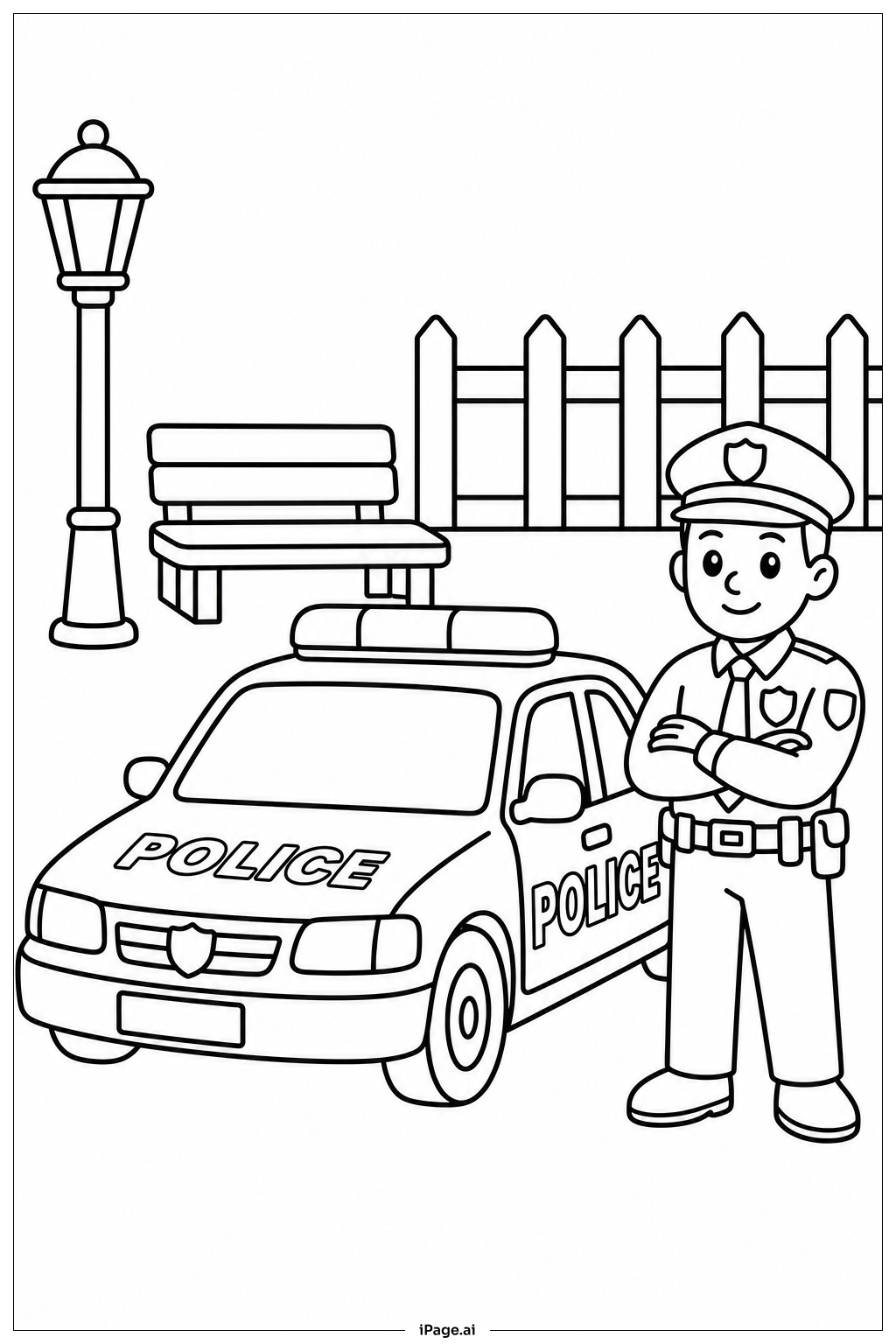
Coloring tips: How to color Police Car And Officer coloring page well?
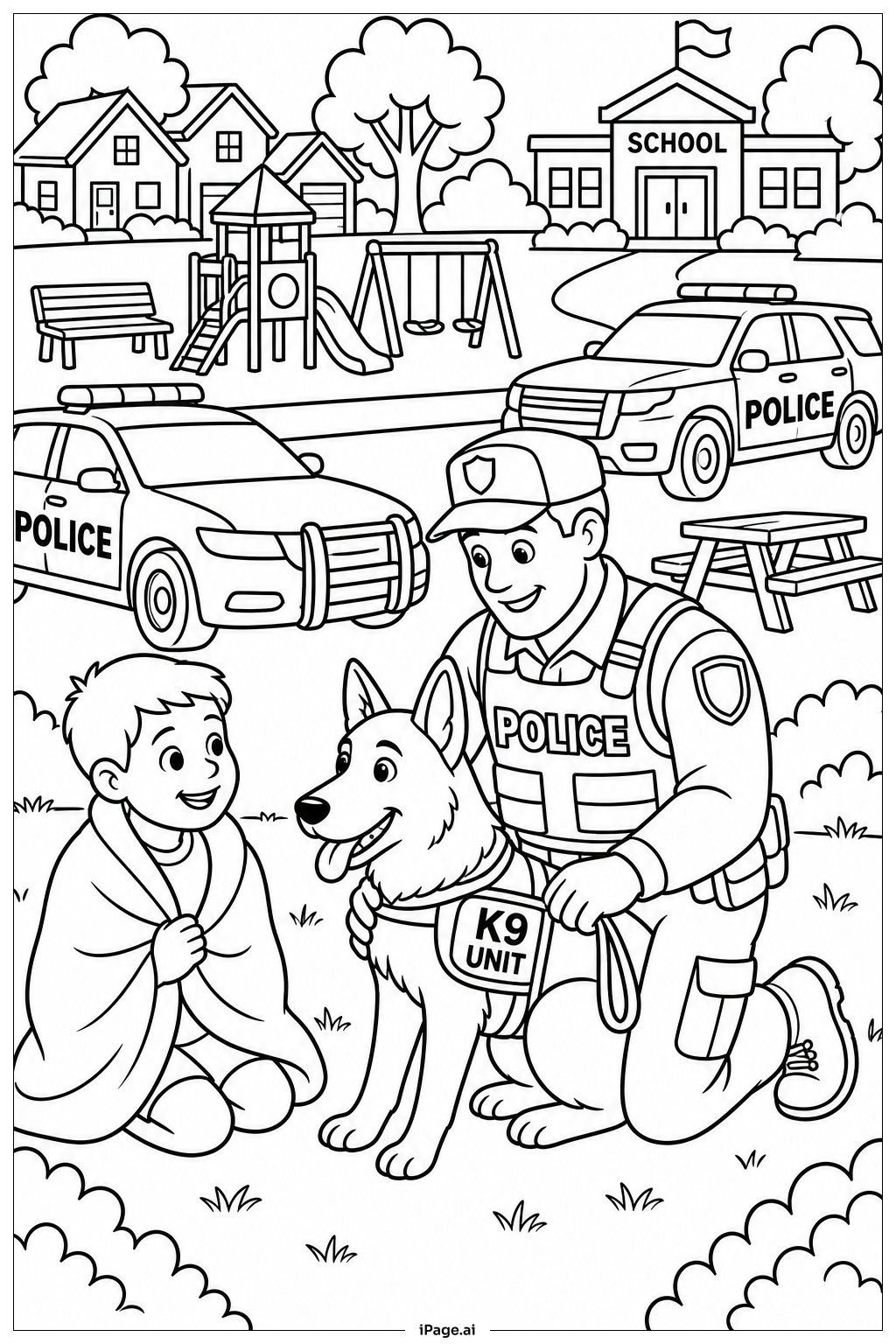
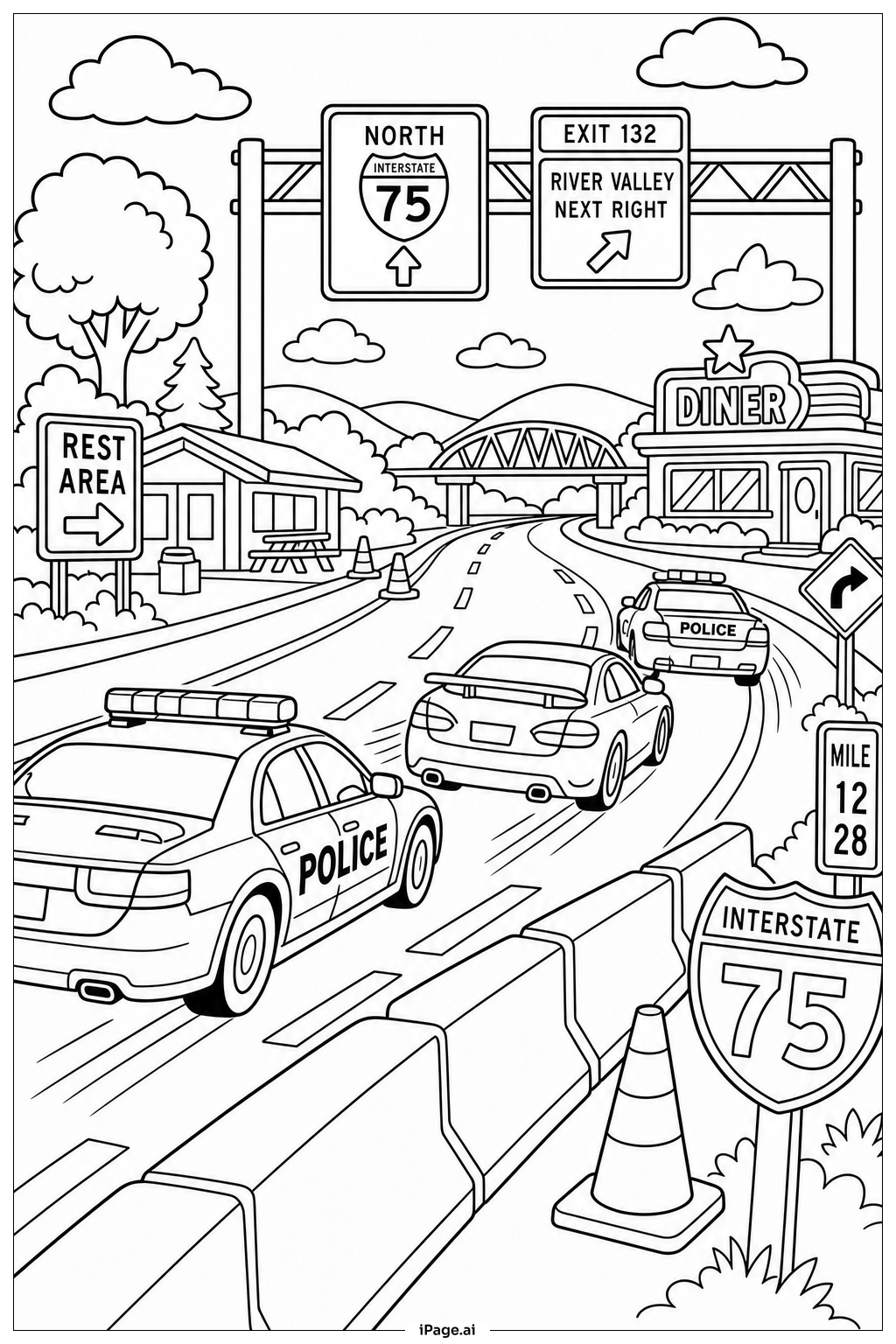
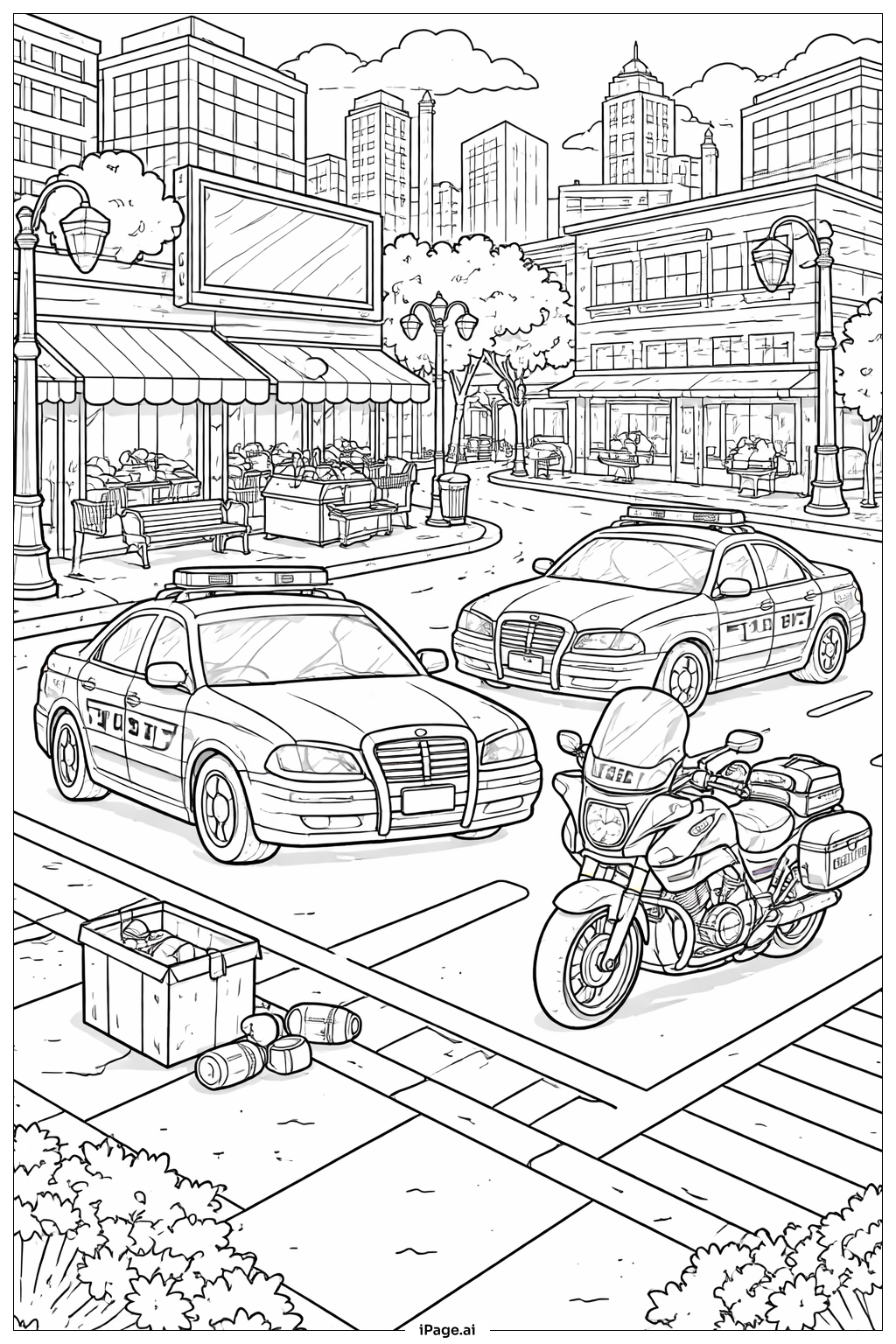
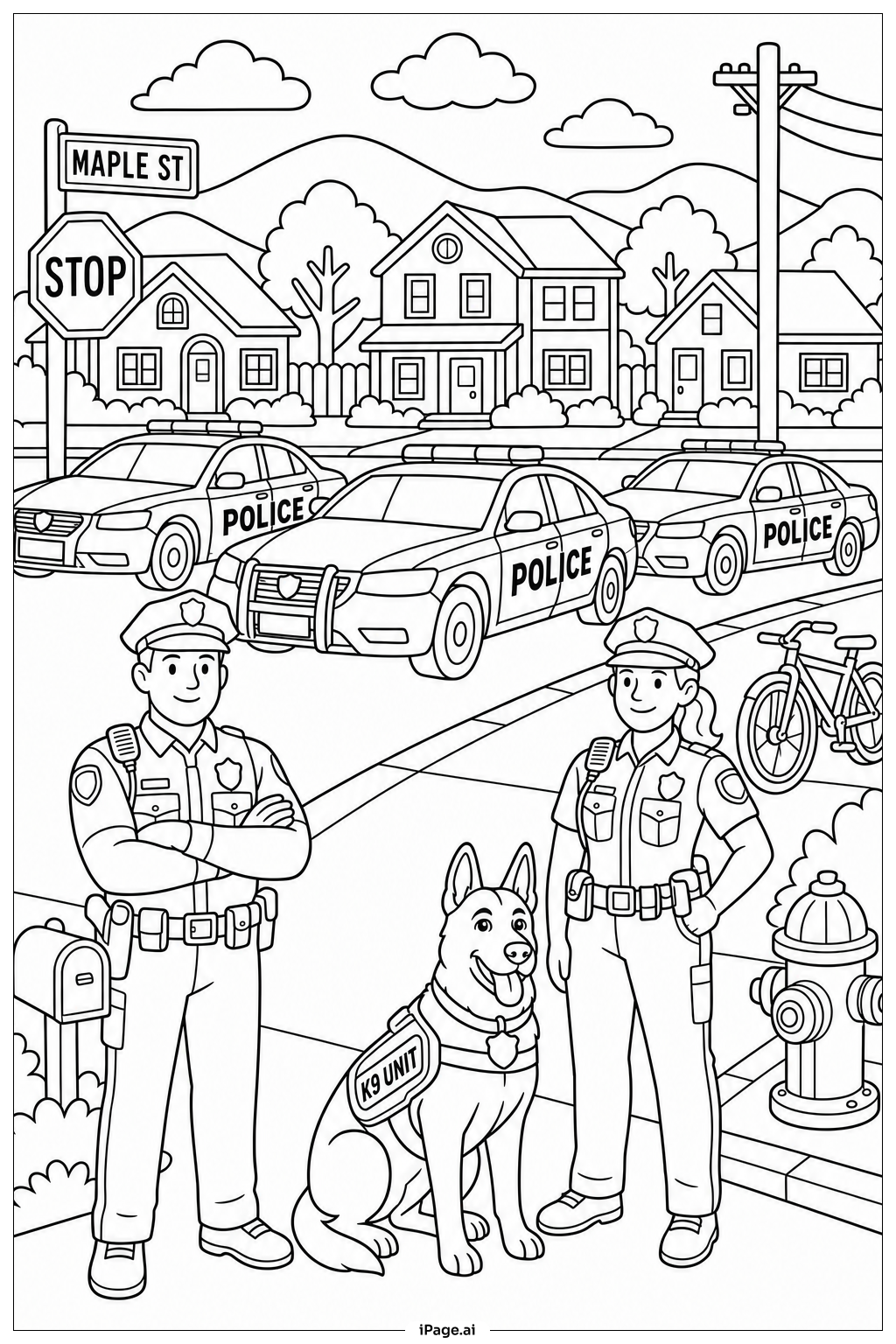
Start with the police car body. Most patrol cars are black and white, but you can also try blue and white for a fun twist. Use dark blue or navy for the officer's uniform. Color the badge and buttons gold or yellow to make them pop. The light bar on top of the car can be red and blue to show it is active. Use skin tones for the officer's face and hands. Color the wheels dark gray or black with silver rims. Add yellow for road markings on the ground. Use light gray for the road surface. Feel free to add background details like a blue sky or green trees to bring the whole scene to life. Keep your strokes smooth and steady inside the lines for a clean, professional look.
Coloring challenges: Which parts are difficult to color and need attention for Police Car And Officer coloring page?
• Light Bar Details: The light bar on top of the police car has small sections for red and blue lights. These sections are tiny and close together, making it tricky to color each one separately without going outside the lines. Use a fine-tipped marker or a sharpened colored pencil for the best results.
• Uniform and Badge Precision: The officer's uniform includes small details like buttons, a badge, shoulder patches, and a utility belt with gear. Each element is close to the others, so coloring neatly without mixing colors takes patience. Work slowly and use the tip of your coloring tool for tight areas.
• Car Body Two-Tone Design: A traditional police car uses two colors, usually black and white, split across the body. Getting a clean, straight dividing line between the two colors is one of the hardest parts. Lightly sketch the boundary with pencil first if you are unsure, then fill in each section carefully.
• Wheel and Rim Detail: The wheels have layered details including tire treads and spoke patterns on the rims. Coloring the dark tire separate from the silver or gray rim requires a steady hand. Try outlining each section before filling it in to keep colors separated.
• Background and Foreground Balance: Adding background color like sky, road, or buildings can be rewarding but also challenging. You need to make sure the background colors do not overpower the main subject. Use lighter, softer shades for the background and save bold, saturated colors for the police car and officer in the foreground.
Benefits of coloring books: Advantages of drawing Police Car And Officer coloring page
Coloring this Police Car And Officer page offers a wonderful mix of fun and learning for children. It helps develop fine motor skills as kids practice staying inside the lines and controlling their coloring tools. Working through the detailed sections of the uniform and car builds hand-eye coordination and concentration. Children also learn about color planning as they decide which shades to use for the car, uniform, and background. This scene sparks curiosity about community helpers and the role police officers play in keeping neighborhoods safe. It can open up great conversations between kids and parents or teachers about safety rules and civic responsibility. For older children, the challenge of blending colors or shading adds a creative dimension that encourages artistic growth. Completing the page gives kids a sense of accomplishment and pride in their work. Overall, this coloring page is an engaging, educational, and creative activity that supports both cognitive and emotional development in a relaxed and enjoyable way.