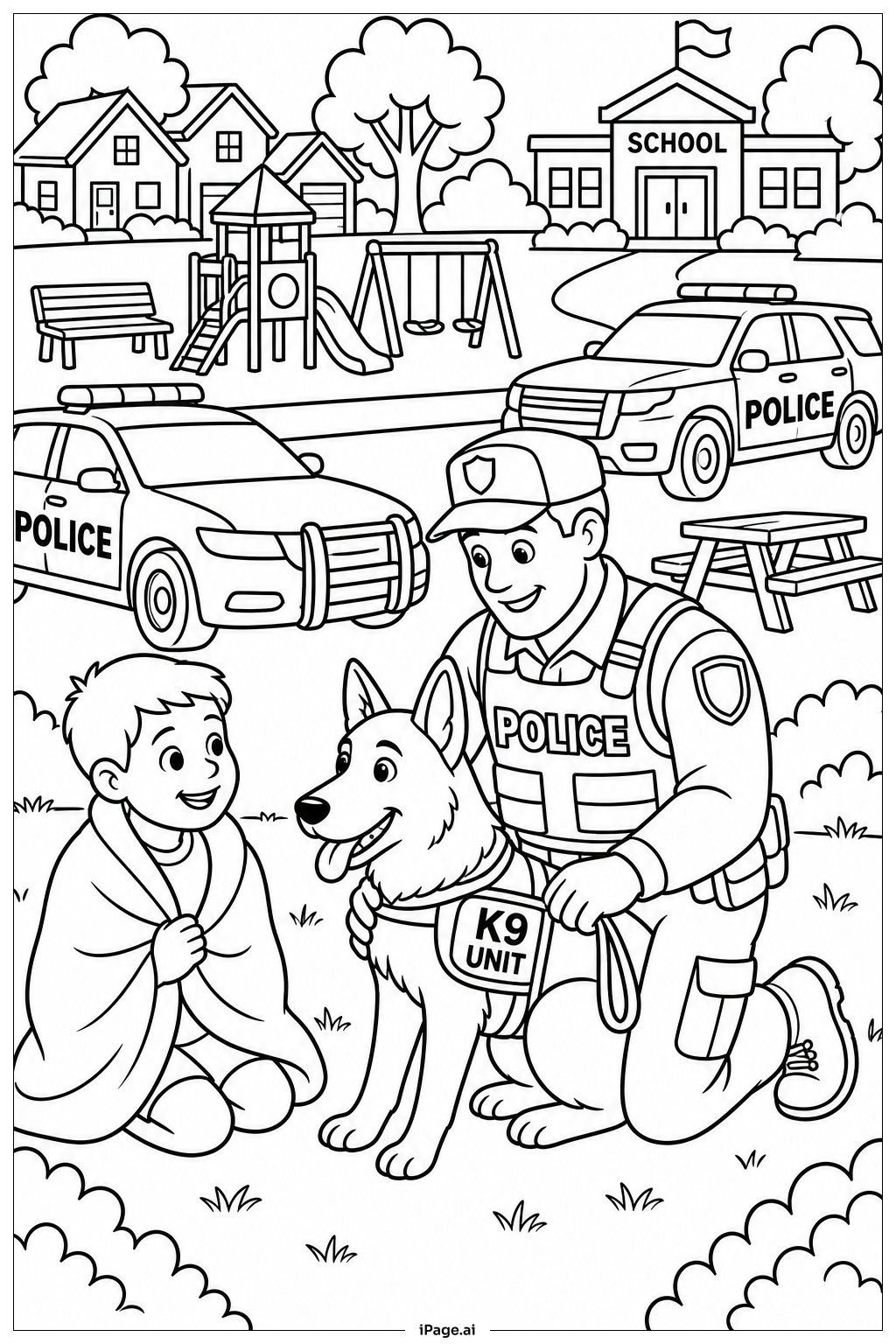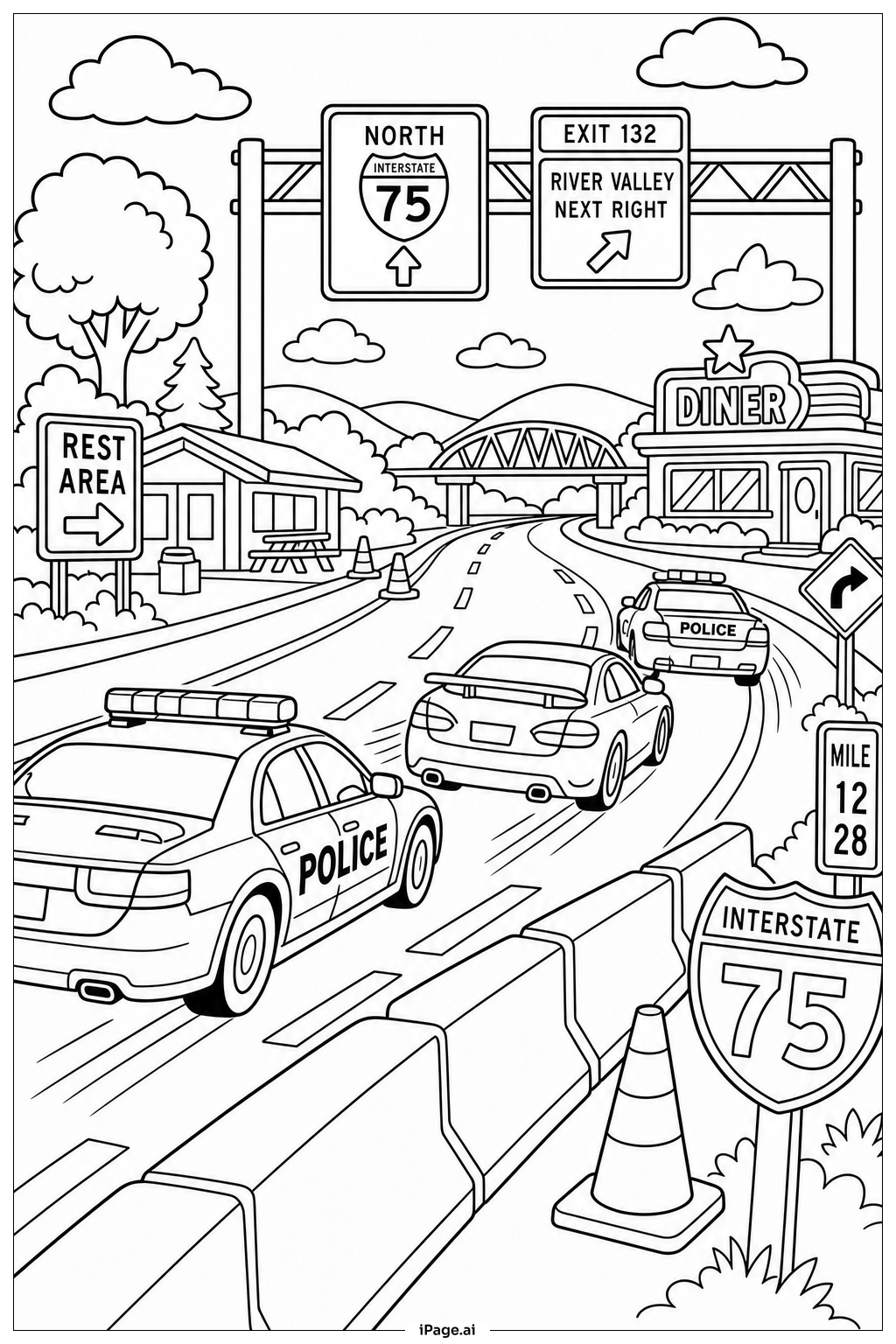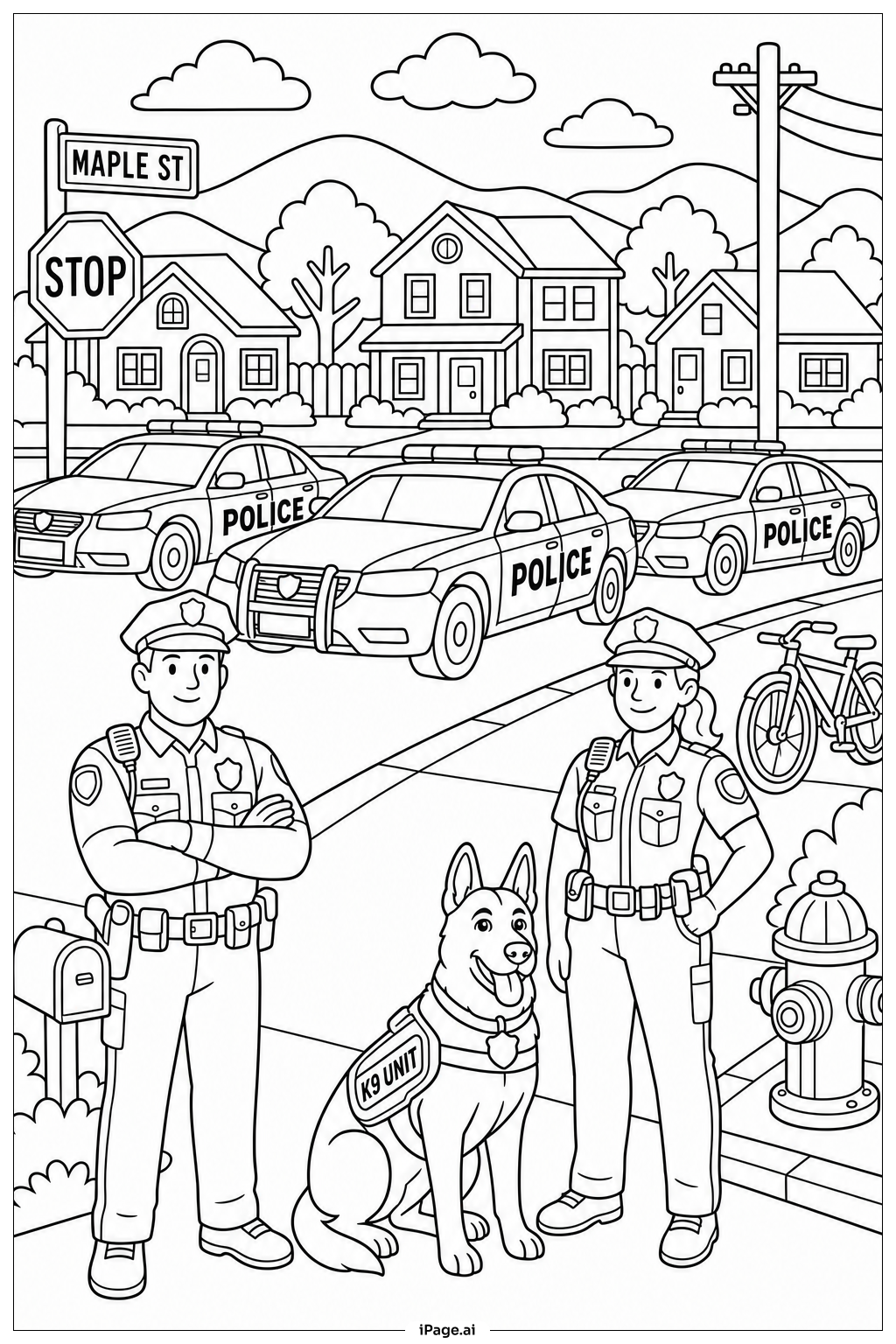
Coloring tips: How to color Police Car And Motorcycle coloring page well?
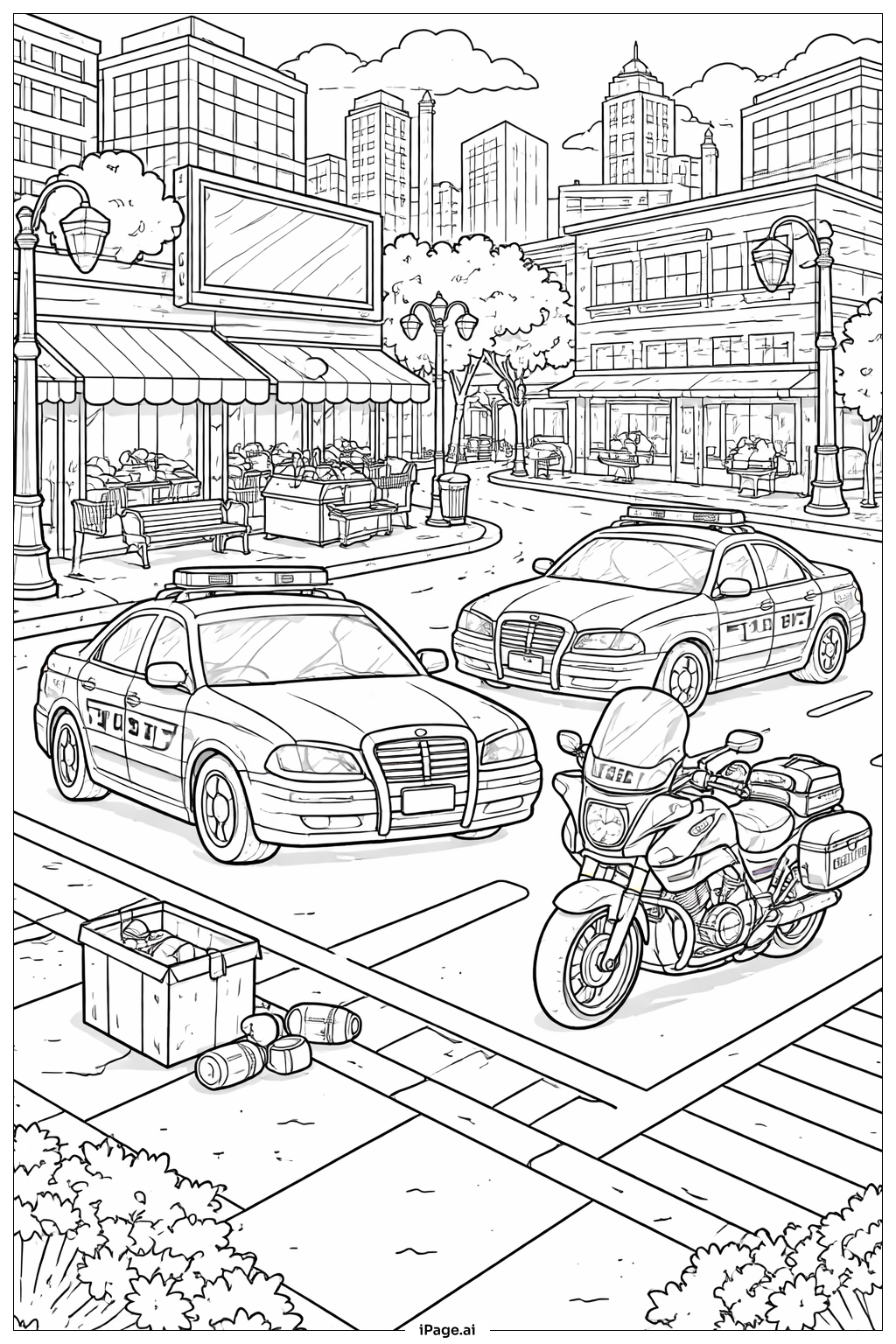
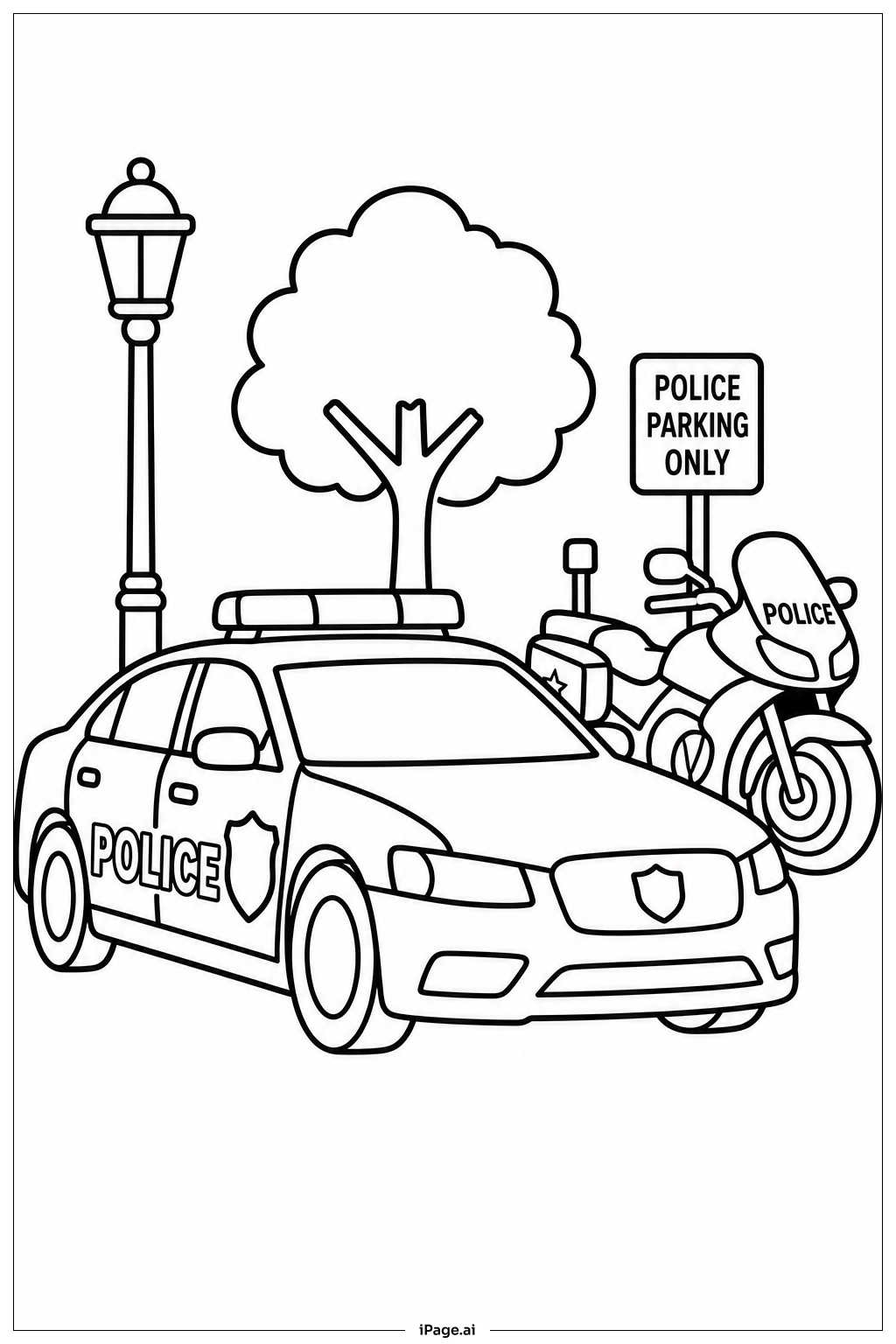
For the police car, use classic police colors like dark blue, black, or white for the body. Color the light bar on top with bright red and blue to show the emergency lights. Make the headlights yellow or white, and use silver or gray for the grille and bumpers. The wheels can be black with silver hubcaps. For the police motorcycle, choose matching police colors to create unity between the vehicles. Use chrome silver for metallic parts like the handlebars, mirrors, and exhaust pipes. The windscreen can be light blue or clear gray. Add yellow or orange for turn signals. Don't forget to carefully color the "POLICE" lettering in a contrasting color to make it stand out clearly on both vehicles.
Coloring challenges: Which parts are difficult to color and need attention for Police Car And Motorcycle coloring page?
• Vehicle Lettering: The word POLICE appears on both vehicles and requires careful coloring to stay within the letter boundaries. Young artists may find it challenging to color these letters neatly without going over the edges, especially if they want to use a contrasting color to make them stand out clearly.
• Light Bar Details: The police car's roof-mounted light bar contains multiple small sections that represent different colored lights. Coloring each section in alternating red and blue while maintaining clean borders between them requires precision and a steady hand, particularly for younger children.
• Motorcycle Components: The motorcycle features many intricate mechanical parts including handlebars, mirrors, storage compartments, and the engine area. These overlapping elements create small spaces that can be difficult to reach with crayons or markers, and distinguishing which parts belong to which component requires careful observation.
• Wheel and Hubcap Details: Both vehicles have wheels with detailed hubcaps featuring circular patterns and spokes. Coloring these symmetrical designs while keeping the pattern consistent and neat can be challenging, especially when trying to create a metallic or chrome effect with limited coloring tools.
• Maintaining Consistent Colors: Since this scene features two separate vehicles, young artists may find it challenging to maintain color consistency across both vehicles to show they belong to the same police department, while also differentiating between the various parts and components of each vehicle.
Benefits of coloring books: Advantages of drawing Police Car And Motorcycle coloring page
Coloring this police vehicle scene helps children develop fine motor skills through detailed work on small components like lights, letters, and mechanical parts. It encourages hand-eye coordination as they carefully navigate between different vehicle elements. This image teaches children about community helpers and law enforcement, fostering respect and appreciation for police officers who keep us safe. The symmetrical elements in both vehicles help develop pattern recognition and attention to detail. Working with the mechanical details of the motorcycle and car introduces basic concepts about how vehicles work. The scene promotes color decision-making skills as children choose appropriate colors for emergency vehicles. Completing this detailed coloring page builds patience, concentration, and a sense of accomplishment, especially for children interested in vehicles and community service careers.