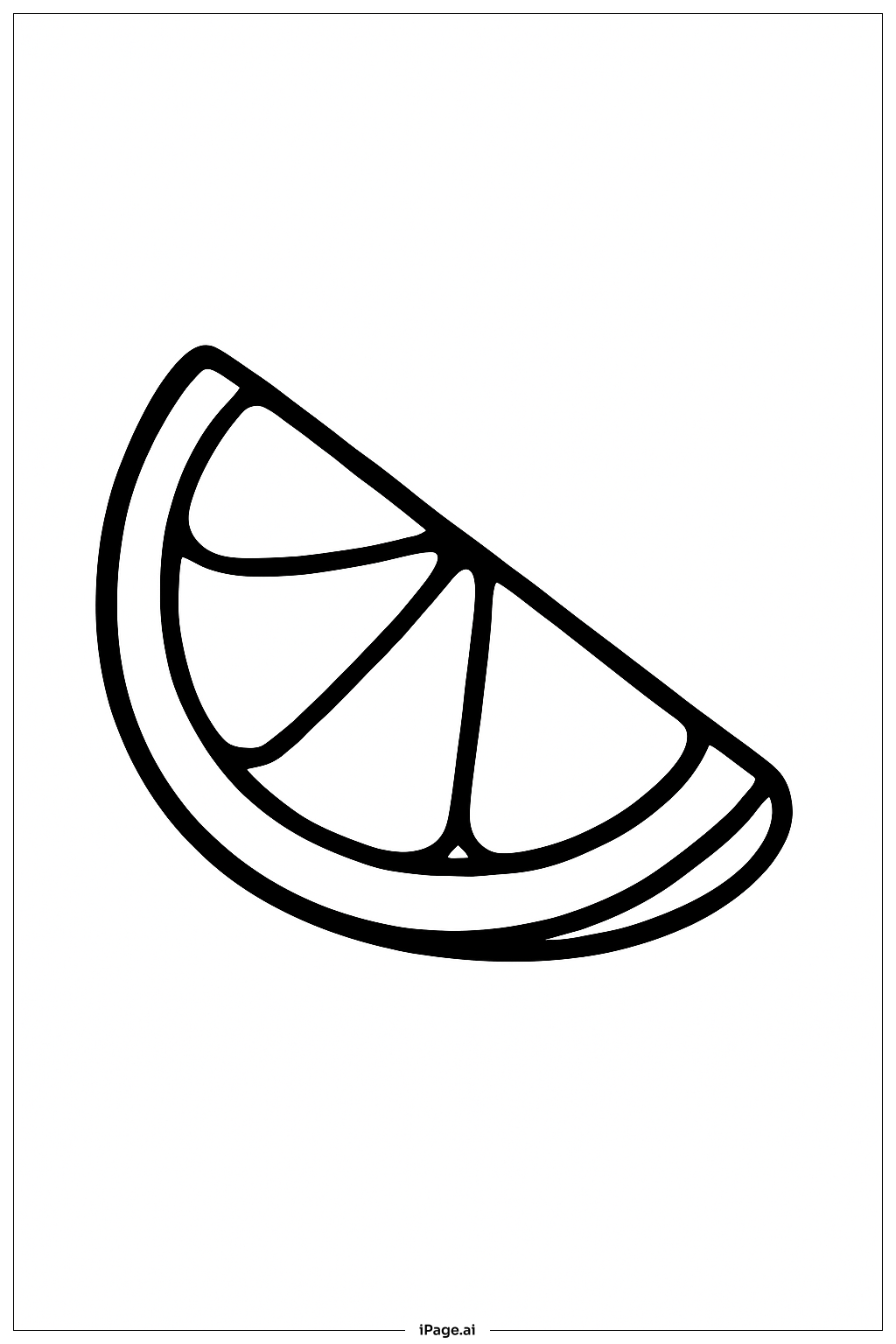
Coloring tips: How to color Orange Wedge coloring page well?
Use warm colors like different shades of orange and yellow to give the orange wedge a natural look. You can color the rind a slightly darker and deeper orange to show the thick skin on the outside, while the inner sections can be lighter orange or even yellowish to show juiciness. Try to blend the colors gently to give a juicy effect. You may also add a little white or light cream in some sections to show reflection or shine. Avoid coloring outside the lines to keep the wedge neat and clear. Feel free to use colored pencils or crayons for softer color transitions. Adding light green at the edges can add freshness to the rind. Take your time to fill each section one by one for neat results.
Coloring challenges: Which parts are difficult to color and need attention for Orange Wedge coloring page?
1. The thin dividing lines between segments can be tricky to color around without going over. It needs careful coloring to keep the lines clear.
2. Creating a natural gradient from dark to light orange to show depth may be a bit advanced for younger children.
3. Coloring the curved rind cleanly without mixing with inner sections can be difficult.
4. Adding highlights or shine to make the wedge look juicy requires a steady hand.
5. Filling the small inner triangle shape at the bottom carefully can be challenging due to its size.
Benefits of coloring books: Advantages of drawing Orange Wedge coloring page
Coloring this orange wedge helps improve fine motor skills, especially with small detailed areas. It encourages children to practice staying inside lines and learn about color blending through shading effects. This activity promotes creativity as kids choose different shades of orange and yellow. It also introduces basic concepts of fruit anatomy, helping children understand natural shapes and textures. Coloring fruit themes supports healthy eating awareness. Overall, it can be calming and fun, building focus and patience.