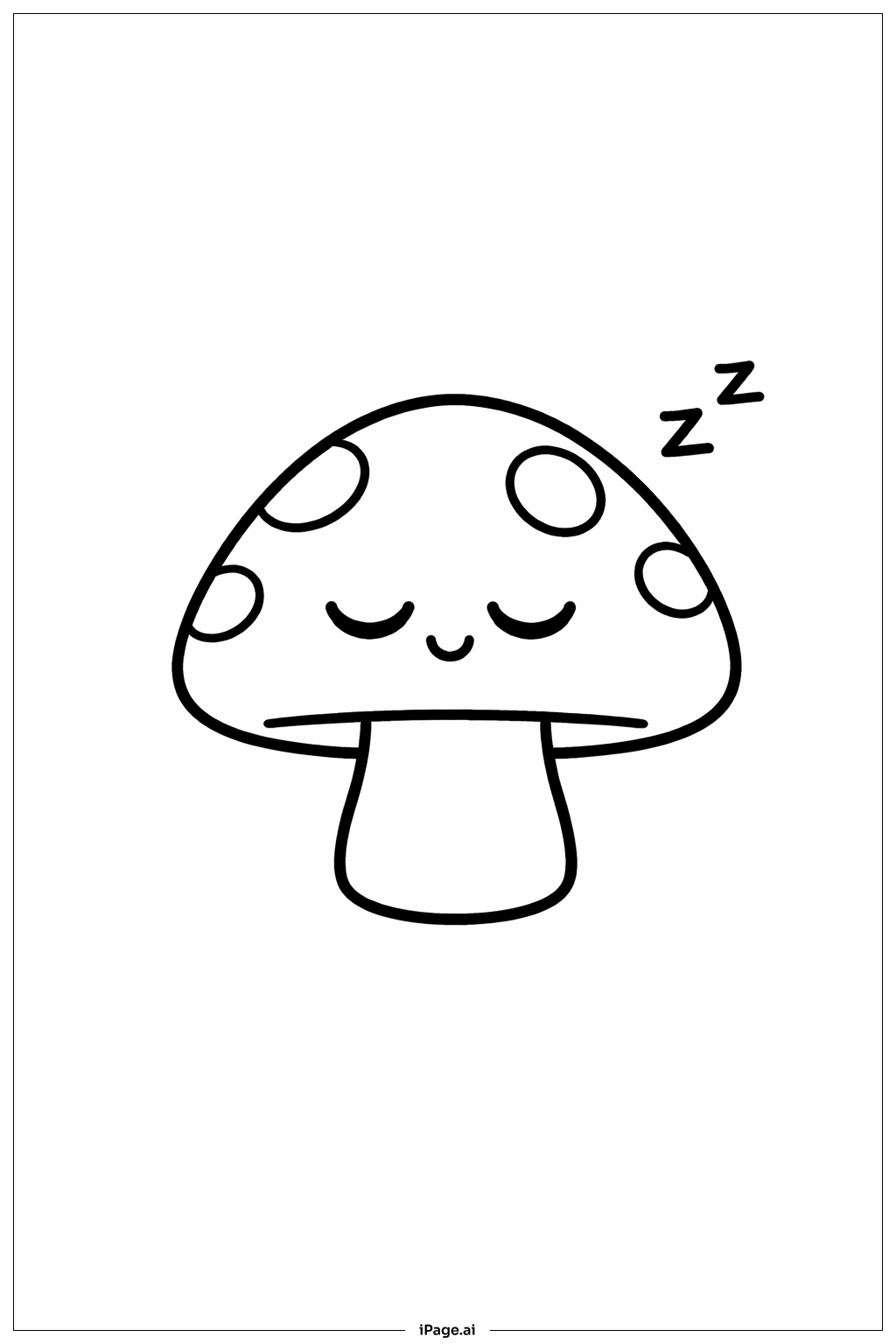
Coloring tips: How to color Sleepy Mushroom coloring page well?
For the mushroom cap, consider using warm red or orange tones with white or cream spots to create a classic toadstool look. Alternatively, try soft pastels like lavender, pink, or mint green for a dreamy, fantasy feel. The stem can be colored in light beige, cream, or pale yellow to give it a natural appearance. For the face, use gentle peach or light pink for a warm, sleepy glow on the cheeks. The eyes and mouth can be colored in soft brown or dark gray to maintain the gentle expression. Consider adding subtle shading around the edges of the cap and stem using slightly darker versions of your base colors to create dimension. You might also add a light blue or purple shadow beneath the mushroom to ground it in its space. For a magical nighttime theme, try deep purple or blue tones with glowing yellow spots.
Coloring challenges: Which parts are difficult to color and need attention for Sleepy Mushroom coloring page?
• Spot Consistency: The circular spots on the mushroom cap need to be colored uniformly to maintain visual balance. Children may find it challenging to stay within these small circular boundaries, especially if the spots vary in size. Using the tip of a colored pencil or marker carefully will help achieve neat, even coverage without bleeding into the surrounding cap area.
• Smooth Color Blending: Creating a smooth, even tone across the large mushroom cap area can be difficult for younger colorists. The curved surface of the cap may tempt children to color in different directions, which can create visible stroke marks and uneven patches. Practicing consistent coloring strokes in one direction and applying even pressure throughout will result in a more polished appearance.
• Facial Feature Precision: The small, delicate facial features including the closed eyes, smile, and any cheek details require careful attention and fine motor control. These tiny areas need steady hands to avoid coloring outside the lines. Younger children might find it helpful to use finer-tipped coloring tools for these details, while older children can practice precision techniques.
• Dimensional Shading: Adding depth and dimension to make the mushroom appear rounded rather than flat presents an advanced challenge. Understanding where to place lighter and darker shades to suggest the curve of the cap and the cylindrical shape of the stem requires spatial awareness. Beginners can start with flat colors, while more experienced colorists can experiment with gradual shading techniques to enhance realism.
Benefits of coloring books: Advantages of drawing Sleepy Mushroom coloring page
Coloring this Sleepy Mushroom offers wonderful benefits for children. The simple, rounded shapes help younger children develop fine motor skills and hand-eye coordination while building confidence through achievable goals. The peaceful, sleepy expression introduces emotional recognition, helping children identify and discuss feelings of calmness and rest. The mix of large areas like the cap and smaller details like the facial features allows colorists to practice both broad strokes and precise control. This gentle character encourages creativity in color choice, whether selecting realistic mushroom colors or imaginative fantasy palettes. The repetitive action of coloring the spots provides a meditative, calming activity that can help children relax and focus. Completing this friendly character brings a sense of accomplishment and can be displayed proudly. The whimsical nature theme also opens opportunities for conversations about forests, nature, and bedtime routines, making it both an artistic and educational experience.