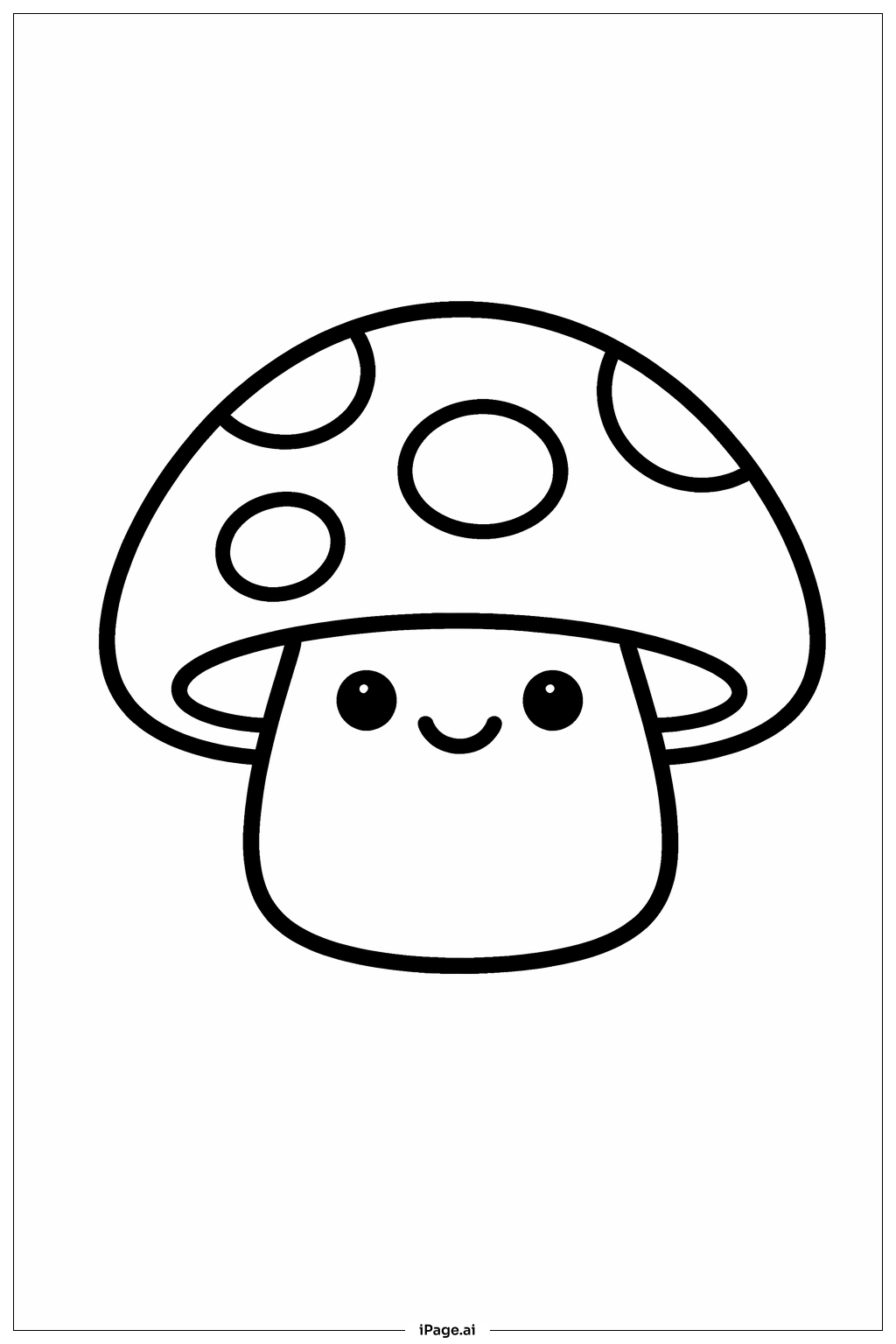
Coloring tips: How to color Mushroom Buddy coloring page well?
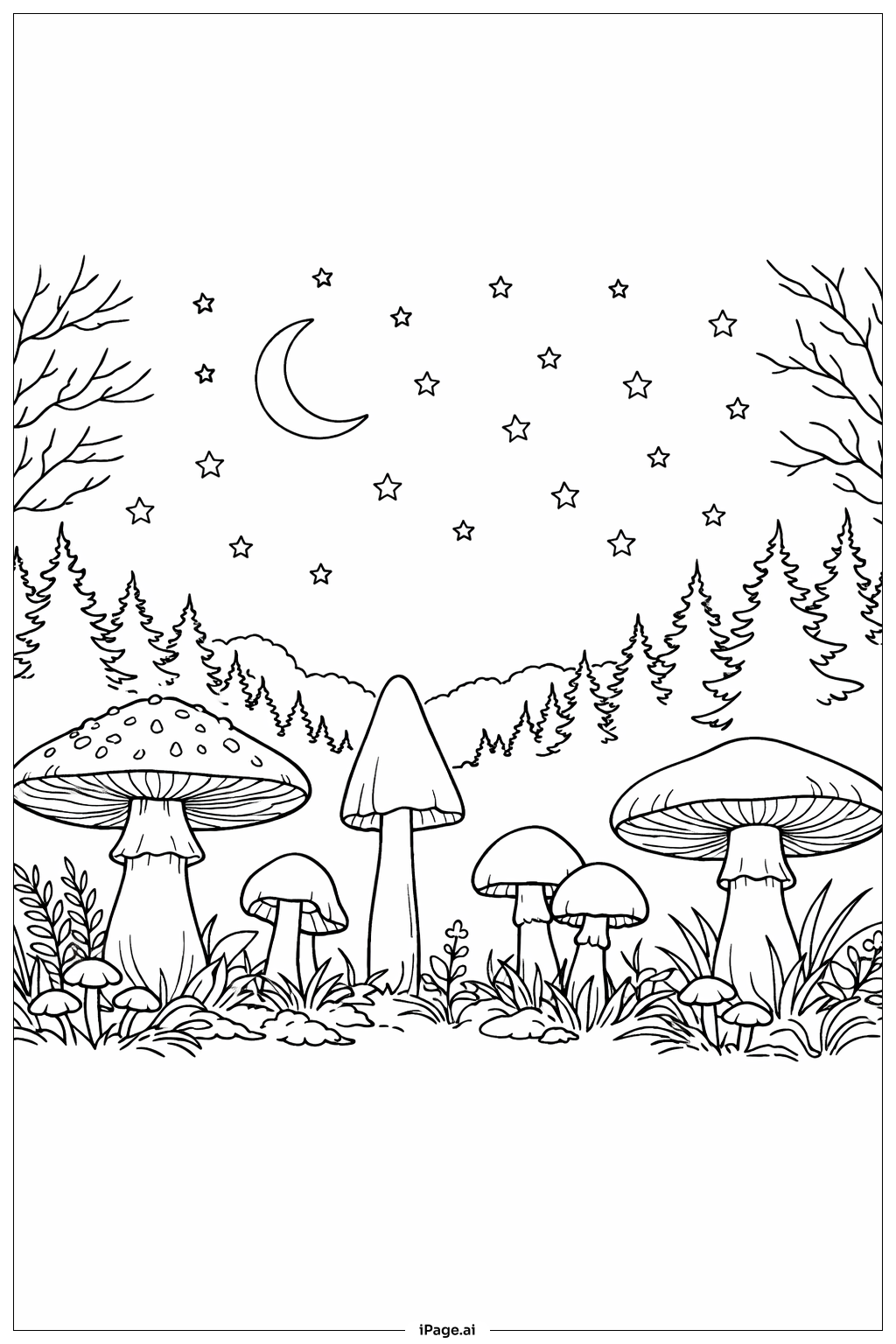
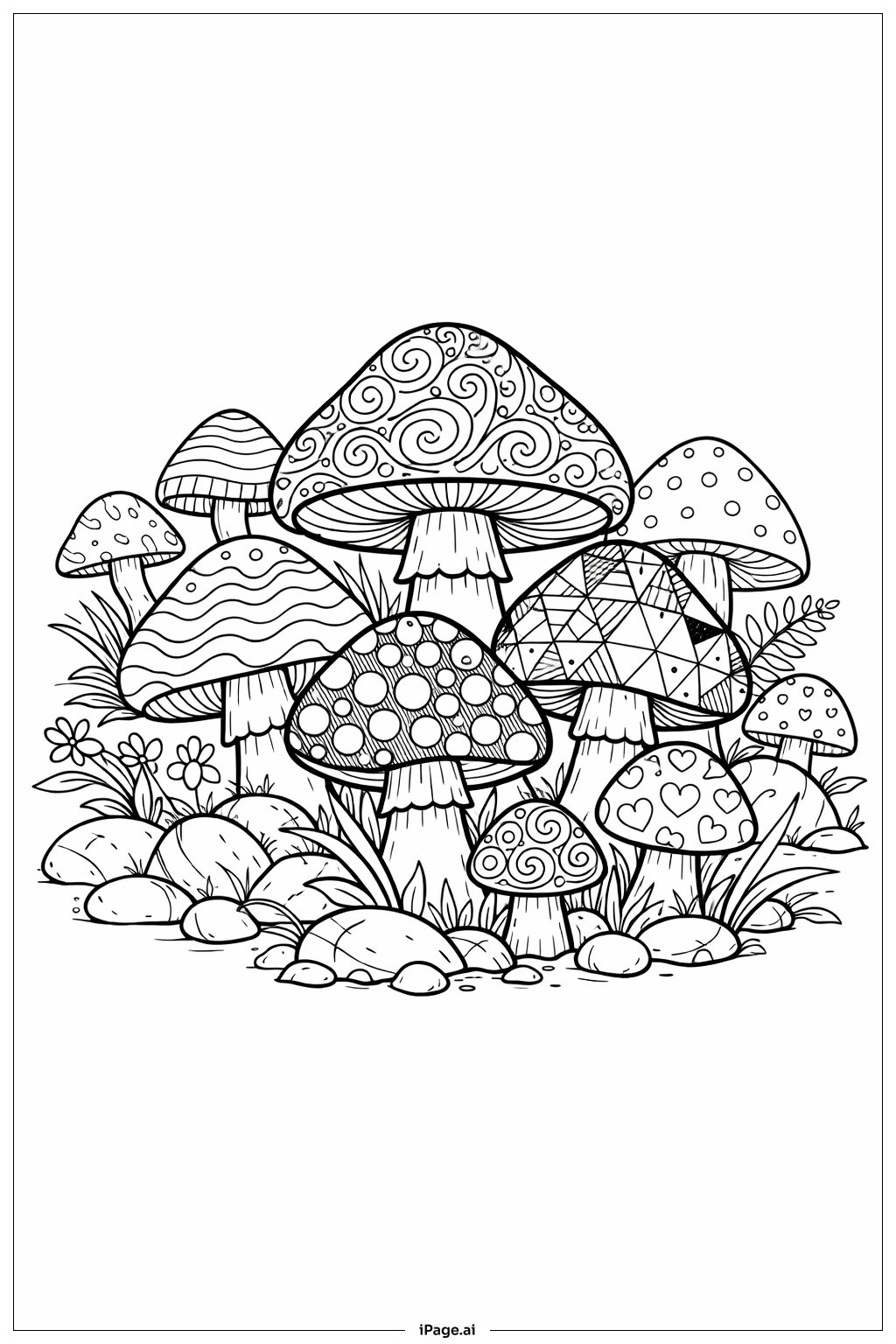
Start with the main mushroom cap using bright red or orange tones, which are traditional for toadstool mushrooms. Color the spots on the cap in white or cream to create classic contrast. For the cheerful face, use soft peach or light yellow for the skin area, with rosy pink cheeks to enhance the friendly expression. The stem can be colored in light tan, beige, or soft yellow. The smaller mushrooms offer opportunities to experiment with different color combinations like purple, pink, or blue for a fantasy effect. Color the grass and ground elements in various shades of green to create depth. Use yellow or gold for the stars, and soft pink or red for the hearts. Consider adding light blue or purple shadows under the mushrooms to create dimension and make your artwork pop.
Coloring challenges: Which parts are difficult to color and need attention for Mushroom Buddy coloring page?
• Spot Pattern Consistency: The circular spots on the mushroom cap require careful attention to keep colors uniform and within the lines. Young children may find it challenging to color each small circle neatly without going outside the boundaries, especially when using markers or crayons that can bleed.
• Fine Detail Elements: The small decorative features like hearts, stars, and sparkles scattered around the image contain tiny spaces that can be difficult to color precisely. These elements require good hand-eye coordination and fine motor control, particularly for younger colorists who are still developing these skills.
• Facial Expression Details: The mushroom's face includes curved lines for the eyes and mouth that need different colors or shading to stand out properly. Children must decide whether to outline these features or fill them in, and how to make the facial expression clear and expressive without muddying the colors.
• Layering and Depth: Creating visual depth between the main mushroom and the smaller background mushrooms requires understanding of color relationships. Choosing colors that make the central character stand out while keeping the smaller mushrooms complementary can be conceptually challenging for beginners.
• Texture Representation: The stem has subtle texture lines that suggest dimension. Deciding whether to color over these lines uniformly or use them as guides for shading and highlighting requires planning and technique that may be advanced for some young artists.
Benefits of coloring books: Advantages of drawing Mushroom Buddy coloring page
Coloring this Mushroom Buddy page helps children develop essential fine motor skills through controlled hand movements, especially when working on the small spots and decorative details. The friendly character design encourages emotional connection and creative storytelling, allowing kids to imagine adventures for their mushroom friend. The variety of elements, from large areas like the cap to tiny details like stars, accommodates different skill levels and keeps children engaged throughout the activity. This image promotes color recognition and decision-making as children choose palettes and combinations. The repetitive circular spots provide a meditative, calming activity that can reduce stress and improve focus. Completing this cheerful scene builds confidence and provides a sense of accomplishment, especially when children see their finished artwork displayed proudly.