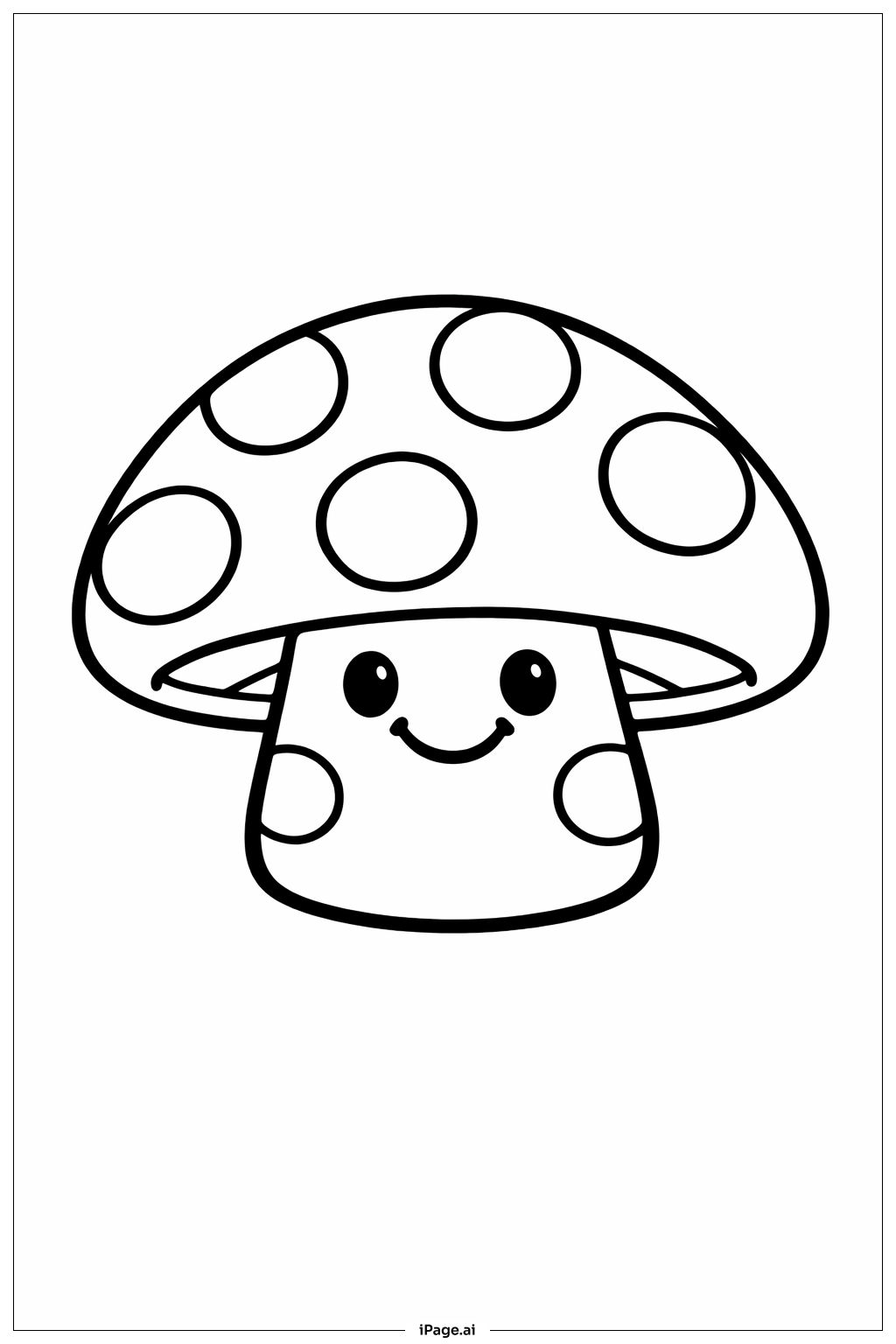
Coloring tips: How to color Happy Spot Mushroom coloring page well?
Start with the mushroom cap using bright red or orange as the base color, then fill the spots with white or cream to create that classic toadstool look. You could also try purple, pink, or blue for a magical fairy-tale effect. For the stem, use white, beige, or light tan to contrast nicely with the cap. Color the happy face with rosy pink cheeks and keep the eyes white with black pupils for maximum expressiveness. The ground can be green, brown, or even rainbow colors for added fun. Try adding shading by pressing harder on one side of the cap and stem to create dimension. You can also experiment with patterns inside the spots or add extra details like tiny sparkles around the mushroom to make it look magical.
Coloring challenges: Which parts are difficult to color and need attention for Happy Spot Mushroom coloring page?
• Spot Placement and Size Variation: The mushroom cap features multiple circular spots of different sizes scattered across its surface. Keeping each spot neatly colored within its boundaries requires careful attention and steady hand control. Younger children may find it challenging to stay inside the smaller spots while maintaining consistent color intensity across all of them. This exercise helps develop fine motor precision and patience.
• Facial Feature Detailing: The happy face includes eyes, a wide smile, and potentially rosy cheeks that need delicate coloring. The eyes require careful work to maintain the bright, lively expression by choosing contrasting colors for pupils and whites. Coloring the smile without going outside the lines while keeping it vibrant adds another layer of difficulty. These small areas demand concentration and precise crayon or marker control.
• Color Contrast and Balance: Achieving visual harmony between the cap, spots, stem, and face requires thoughtful color selection. Children must consider which colors work well together and how to make each element stand out without creating visual chaos. Deciding whether to use realistic mushroom colors or imaginative fantasy hues involves creative decision-making. Balancing warm and cool tones throughout the image helps create an appealing finished piece.
• Even Coverage on Larger Areas: The mushroom cap and stem contain relatively large spaces that need smooth, even coloring without streaks or gaps. Maintaining consistent pressure and direction while filling these areas can be tiring for small hands. Children must learn to color patiently in one direction or use circular motions to avoid patchy results, which teaches endurance and technique refinement.
Benefits of coloring books: Advantages of drawing Happy Spot Mushroom coloring page
Coloring this Happy Spot Mushroom helps children develop essential fine motor skills through controlled movements needed for staying within lines and filling various sized areas. The cheerful character design makes the activity enjoyable and less frustrating, encouraging kids to practice longer and build confidence. Working with the circular spots provides excellent practice for hand-eye coordination and spatial awareness. The simple yet engaging composition allows children to make creative color choices, fostering imagination and self-expression. Younger kids can use basic colors and broad strokes, while older children can experiment with shading techniques, color blending, and adding extra decorative details. This flexibility makes it suitable for multiple age groups and skill levels. The friendly face of the mushroom creates an emotional connection, making the coloring experience more meaningful and memorable while teaching about nature in a fun, approachable way.