Coloring tips: How to color Sleeping Monkey On Branch coloring page well?
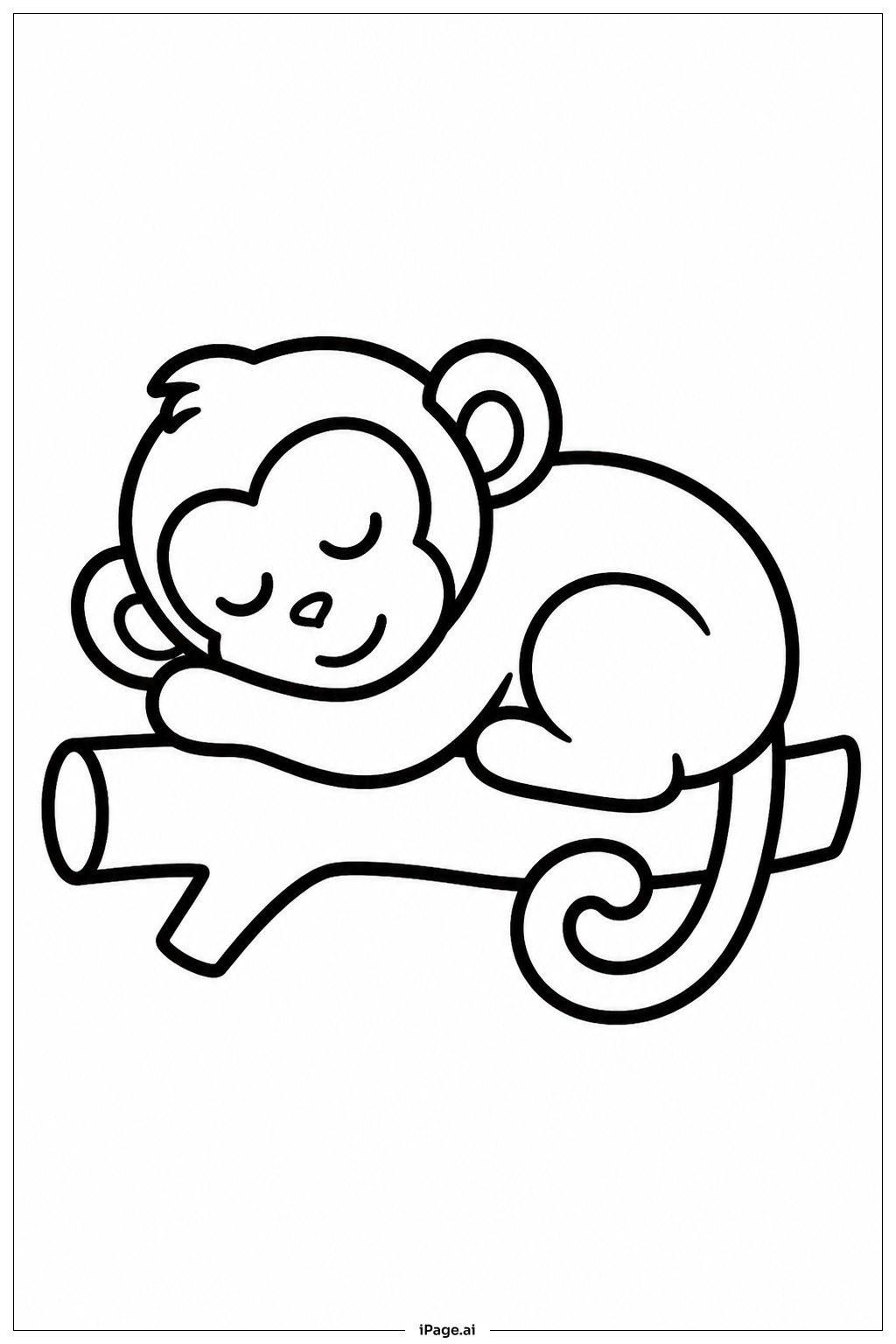
Start with the monkey's body using warm brown or golden tan shades. Add darker brown tones along the edges and under the arms to create depth and a furry texture. Use a lighter cream or peach tone for the monkey's face, palms, and belly to show the softer skin areas. Color the closed eyelids with a gentle pink or soft brown. For the tree branch, use medium or dark brown with gray highlights to show the bark's rough texture. The leaves can be colored in various shades of green — mix light green, dark green, and even a little yellow to make them look lively and natural. Keep the background simple with a light sky blue or soft yellow to suggest a warm, sunny day in the treetops. Take your time blending colors to make the monkey look cozy and real.
Coloring challenges: Which parts are difficult to color and need attention for Sleeping Monkey On Branch coloring page?
• Fur Texture Details: The monkey's fur is made up of many small, flowing lines packed closely together. Coloring each section while following the direction of the fur strokes can be tricky. Using short, light pencil strokes in the same direction as the drawn lines will help create a realistic and fluffy look.
• Facial Expression Shading: The monkey's face has subtle curves around the closed eyes, nose, and mouth. These small areas require careful shading with lighter and darker tones to bring out the peaceful sleeping expression. Using a fine-tipped tool or a sharpened pencil works best for this delicate area.
• Branch and Bark Texture: The tree branch has an uneven, rough surface filled with curves and grain lines. Coloring it realistically means layering multiple shades of brown and gray. Blending these tones smoothly without making the bark look flat can be a challenge, especially in the narrow grooves.
• Overlapping Elements: The monkey's tail, arms, and legs overlap with parts of the branch and leaves. These overlapping sections require careful color transitions so each element stays visually separate. Choosing slightly different shades for each overlapping part helps define the boundaries clearly.
• Leaf Variation: Multiple leaves appear around the branch at different angles. Giving each leaf its own natural look by varying the green tones and adding subtle vein lines inside takes patience and a steady hand, especially where the leaves overlap or tuck behind the branch.
Benefits of coloring books: Advantages of drawing Sleeping Monkey On Branch coloring page
Coloring this sleeping monkey image offers a wide range of wonderful benefits for kids and young artists. First, it helps build fine motor skills as children carefully fill in the monkey's fur, tiny facial features, and detailed branch textures. These small, precise movements strengthen hand muscles and improve pencil control over time. Second, it encourages creativity and color exploration. Choosing shades for the fur, leaves, and branch gives children the freedom to express themselves and experiment with color mixing. Third, the calm and peaceful nature of the image — a monkey quietly resting — naturally promotes a relaxed and focused mindset. This kind of quiet concentration can reduce stress and help children practice patience. Fourth, completing the full image gives a real sense of accomplishment, building confidence and motivation to take on new creative challenges. Finally, talking about the image — where monkeys live, what they eat, why they sleep in trees — turns coloring into a fun learning experience about nature and wildlife. It is a simple activity with big rewards for young minds.