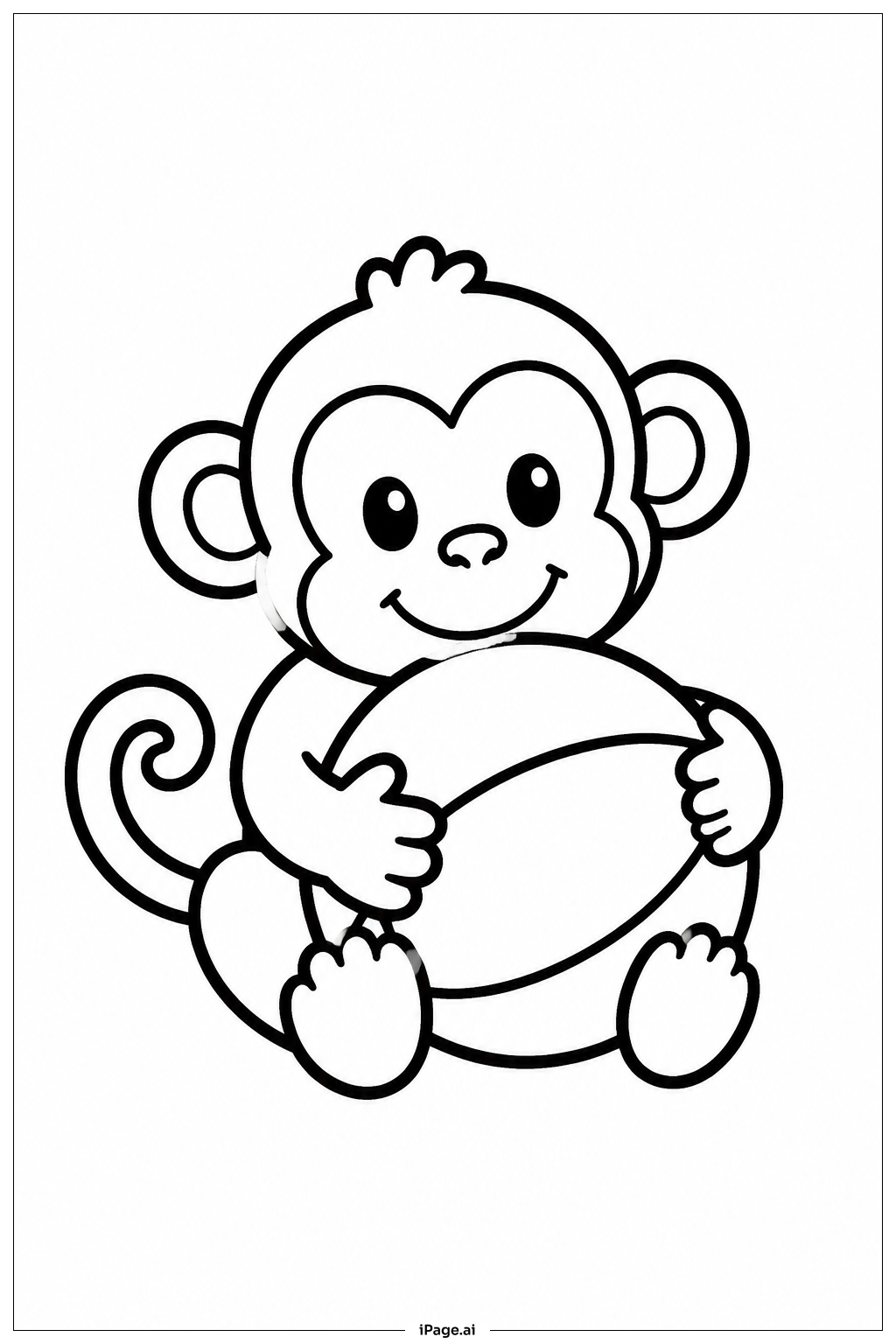
Coloring tips: How to color Playful Monkey With Ball coloring page well?
Start with the monkey's body using warm brown tones. Use a lighter tan or cream color for the face, ears, palms, and belly to show the softer skin areas. Add a medium brown for shading along the arms, legs, and around the tail to give the fur some depth. The tail can have a gradient from dark brown at the base to lighter at the tip. For the ball, try bold primary colors like red, blue, or yellow for each panel to make it pop. Add bright white highlights on the ball to show a shiny surface. Use light orange or golden tones around the monkey's cheeks to give it a warm, glowing look. Keep the background simple with a soft sky blue or pale green to let the monkey stay the star of the page.
Coloring challenges: Which parts are difficult to color and need attention for Playful Monkey With Ball coloring page?
• Fur Texture and Layering: The monkey's body is covered with short lines suggesting fur. Coloring each line or working with the fur direction takes patience. Using short, feathery strokes with colored pencils can help create a realistic fluffy look, but staying within the small fur lines without going over edges can be tricky for younger colorists.
• Facial Expression Details: The monkey's face has small, closely spaced features including eyes, a nose, and a wide smile. These tiny areas require a fine-tipped tool to fill in neatly. Accidentally blending the eye color into the surrounding face area can flatten the expression and lose the monkey's personality.
• Tail Shading and Curve: The long curling tail has a natural curve that calls for smooth color blending from dark to light. Achieving a consistent gradient along such a winding shape is challenging, especially for beginners who may end up with patchy or uneven color transitions.
• Ball Panel Separation: The ball is divided into curved panels that must each be colored differently to look realistic and three-dimensional. Keeping clean, sharp edges between each panel without smudging requires steady hands and careful tool control, especially along the curved boundary lines.
• Contrast Between Monkey and Ball: Since both the monkey and ball are central subjects, balancing their colors so neither one overpowers the other is a visual challenge. Choosing colors with enough contrast to separate the two elements while still making them look like they belong together in the same scene takes thoughtful color planning.
Benefits of coloring books: Advantages of drawing Playful Monkey With Ball coloring page
Coloring this fun monkey scene brings a wide range of benefits for kids and beginners alike. First, it helps build fine motor skills as children carefully fill in small areas like the monkey's face, fingers, and fur lines. This kind of precise hand movement strengthens the muscles used for writing and drawing. Second, choosing colors for the monkey's fur, skin, and the ball encourages creative thinking and personal expression. Kids learn that there is no single right answer and feel proud of their unique choices. Third, focusing on staying inside the lines and completing the image builds patience and concentration, skills that carry over into school and daily life. Fourth, the playful subject matter makes the coloring experience fun and emotionally uplifting. Finishing a bright, cheerful monkey page gives children a real sense of accomplishment. Fifth, working through the color choices and shading challenges introduces basic art concepts like contrast, shading, and color harmony in a low-pressure, enjoyable way. Overall, this page turns screen-free time into a productive and joyful creative experience.