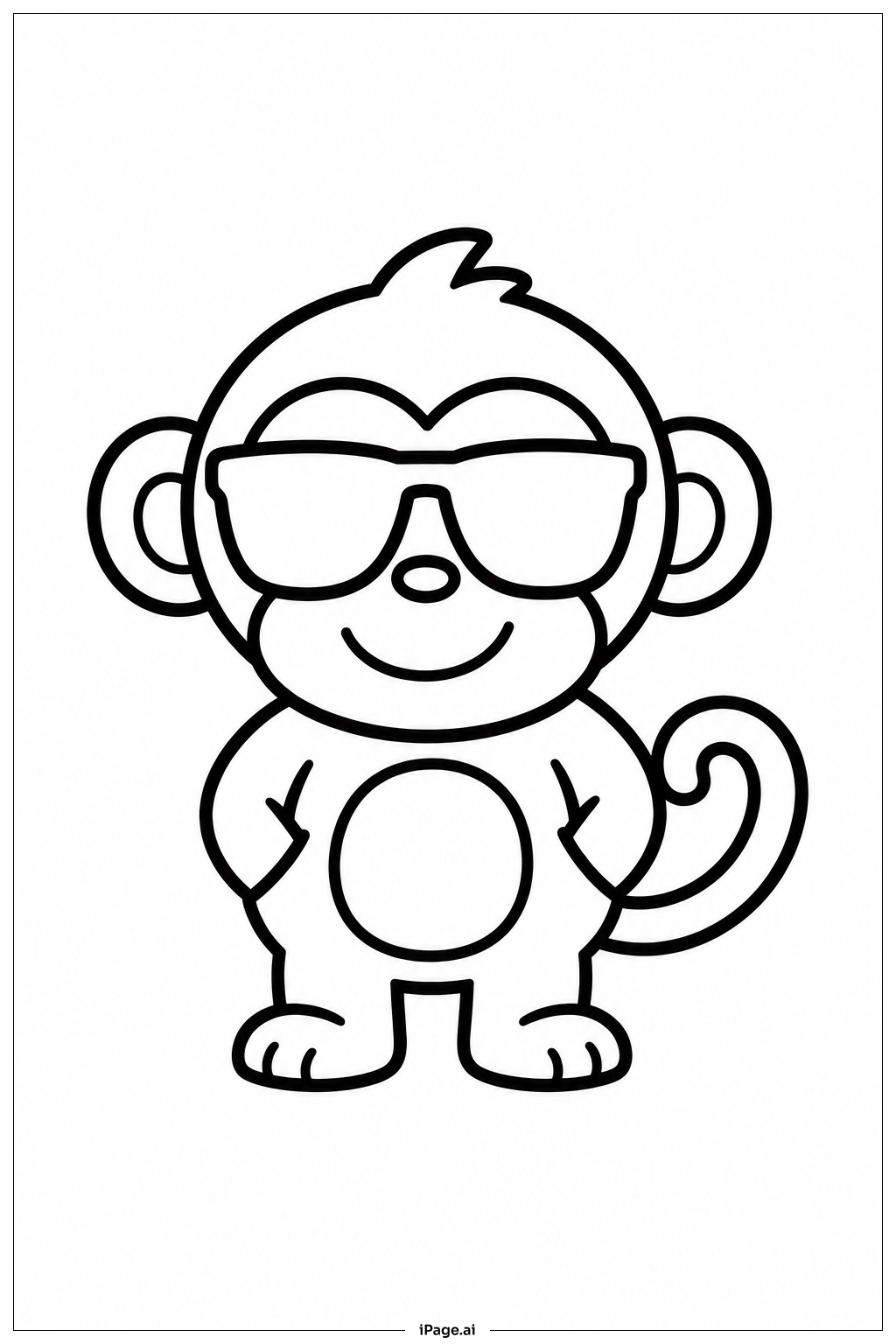
Coloring tips: How to color Monkey With Sunglasses coloring page well?
For this fun monkey, bright and lively colors work best. Use warm browns or tans for the monkey’s fur to make it look soft and friendly. For the sunglasses, try bold colors like red, blue, or green to make them stand out and look stylish. You can experiment with shades on the sunglasses to show reflections or shine. The background can be colored with light sky blues or tropical greens to give a jungle vibe. Using different shades of brown will add depth to the monkey’s fur and make it more interesting. Don’t forget to color the monkey’s ears and tail slightly lighter or darker than the body to give balance.
Coloring challenges: Which parts are difficult to color and need attention for Monkey With Sunglasses coloring page?
• Small Details on Sunglasses: The sunglasses have rounded frames and highlights that require careful coloring inside narrow spaces to keep the lines neat.
• Facial Expression: Capturing the smile and eyes hidden behind the glasses needs attention to ensure the monkey’s happy look is preserved.
• Tail Curves: The tail curling around requires consistent shading to maintain its rounded shape and avoid it blending with the body.
• Fur Texture: Coloring the fur uniformly while showing patches and slight differences in tone can be challenging but adds realism.
• Contrast Between Sunglasses and Face: The dark sunglasses need to contrast well with the lighter face without overpowering it, requiring thoughtful color choices and layering.
Benefits of coloring books: Advantages of drawing Monkey With Sunglasses coloring page
Coloring this image helps children develop fine motor skills as they carefully fill in the sunglasses and facial details. It encourages creativity by allowing them to choose bold colors for the sunglasses and fur shades. The image also promotes focus and patience because of the detailed areas like the tail and face. Additionally, coloring the cheerful monkey can boost mood and inspire a sense of fun. It offers a perfect balance of simple shapes and moderate complexity, suitable for kids aged 4–16 to build confidence and enjoy the process.