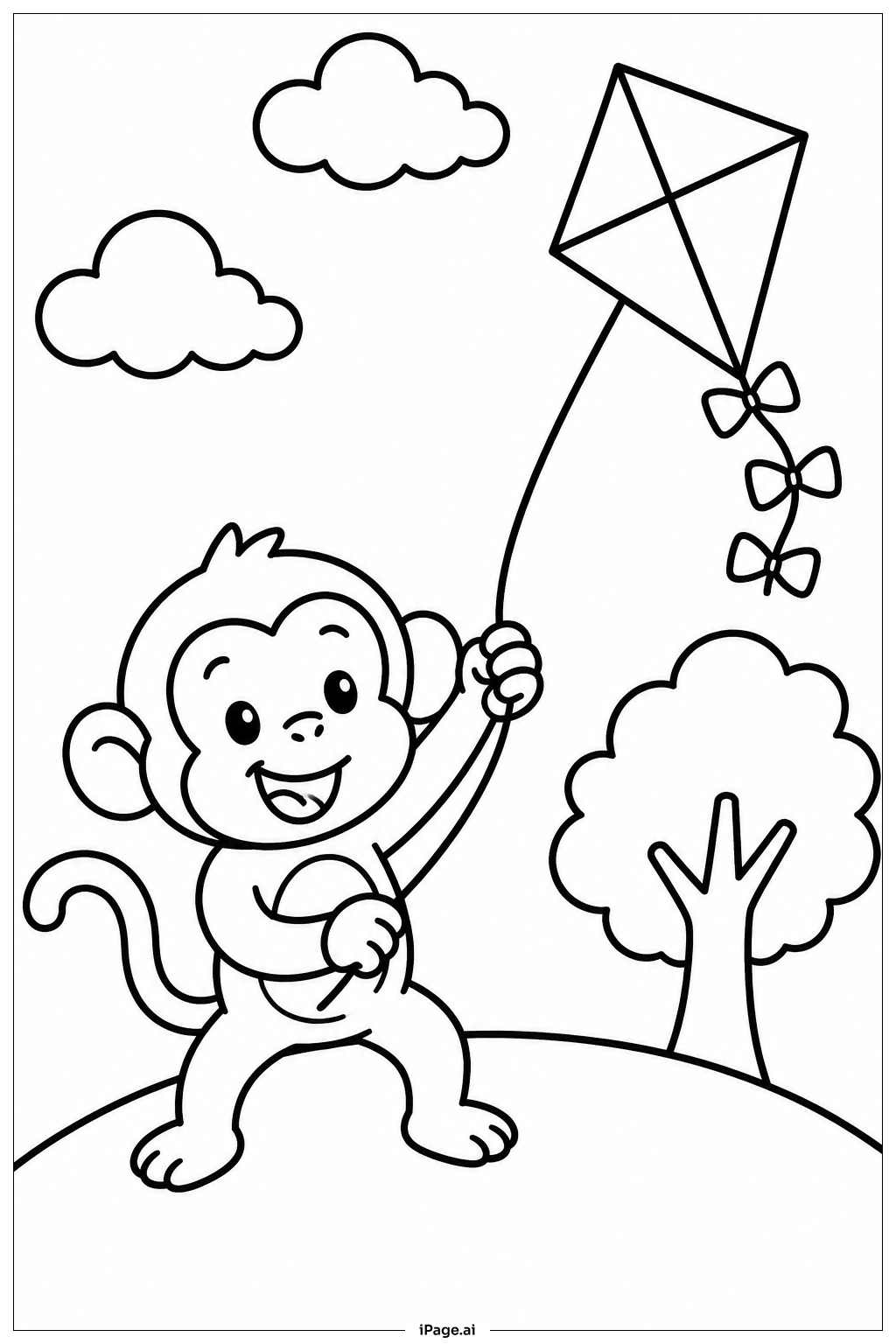
Coloring tips: How to color Monkey With Kite coloring page well?
Start with the monkey's body. Use warm browns or tans for the fur. Add a lighter shade on the belly, face, hands, and feet to show contrast. Give the monkey a rosy or peachy nose and friendly dark eyes. For the kite, go bold and bright. Try red, yellow, blue, and orange sections to make it pop. The kite tails can be colorful stripes or a single fun color like purple or green. Use a light blue for the sky background. If there is grass or hills, color them in soft greens. Keep the string a simple gray or light yellow. Use darker shades around the edges of shapes to add depth. Children can experiment freely with any colors they love. There are no wrong choices here. The goal is to have fun and let your imagination run wild.
Coloring challenges: Which parts are difficult to color and need attention for Monkey With Kite coloring page?
• Monkey Fur Texture: The monkey's fur requires careful shading to look realistic and natural. You need to layer at least two shades of brown, one for the base coat and a darker tone for shadow areas around the arms, legs, and face outline. Blending smoothly without leaving harsh lines can be tricky, especially for younger children.
• Small Facial Features: The monkey's face has small details like eyes, a nose, and a smile. These tiny areas need a steady hand and fine-tipped coloring tools. Using the wrong size marker or crayon in this area can easily fill outside the lines and make the face look messy.
• Kite Sections and Symmetry: The kite is divided into multiple sections. Keeping each section a different color while maintaining a balanced and visually pleasing look takes planning. Younger colorists may find it hard to stay within the thin dividing lines between each kite segment.
• Flowing Kite Tails: The tails of the kite are long, curved, and narrow. Coloring inside these thin ribbon-like shapes without going outside the borders is one of the hardest parts of this image. Colored pencils work better than thick markers for this area.
• Background Space: The open sky and ground area can feel overwhelming for beginners. Deciding how to fill a large background evenly, without streaks or uneven patches, requires patience and consistent coloring pressure. Using soft strokes in one direction helps achieve a smooth finish.
Benefits of coloring books: Advantages of drawing Monkey With Kite coloring page
Coloring this fun image of a monkey flying a kite offers many great benefits for children and beginners alike. First, it helps improve hand-eye coordination. Staying within the lines of detailed shapes like the kite and the monkey's face trains the hands to move with more control and precision. Second, it builds focus and patience. Children learn to slow down, pay attention to small details, and work through a task from start to finish. Third, it sparks creativity. Choosing colors for the kite, the sky, and the monkey encourages kids to think imaginatively and express themselves freely. Fourth, it supports emotional well-being. The playful and joyful theme of a monkey flying a kite brings happiness and a sense of calm. Coloring is a relaxing activity that can reduce stress and anxiety in children. Fifth, it teaches color awareness and contrast. Experimenting with light and dark shades helps young colorists understand how colors interact. Overall, this image is a wonderful, engaging, and educational coloring experience for Boys and Girls of all skill levels.